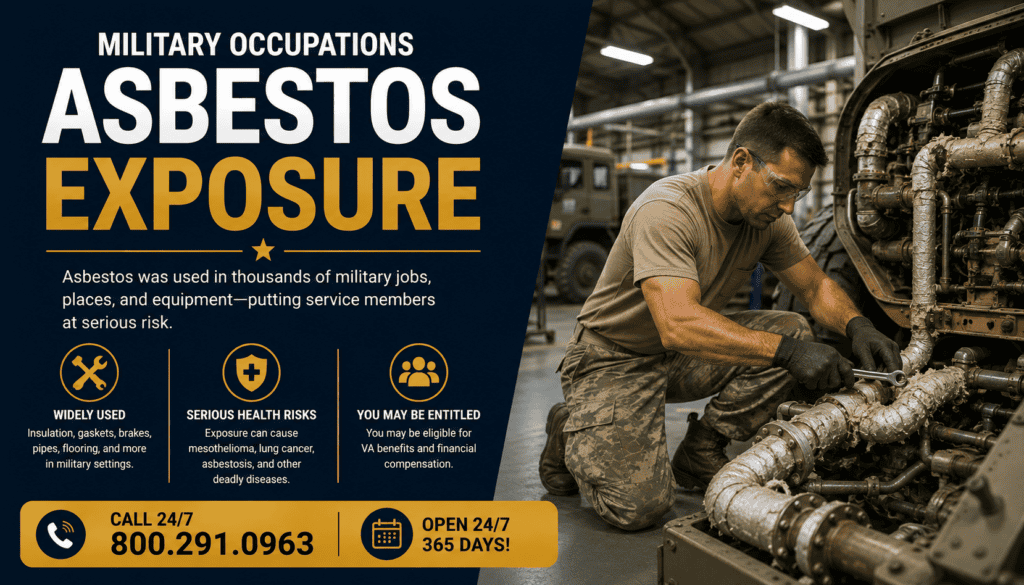
Military Occupations Asbestos Exposure
Military occupations asbestos exposure research should focus on the veteran’s branch, MOS, rating or AFSC, service dates, duty stations, equipment, and actual daily work. Historical military asbestos use affected many occupations, but a job title by itself does not prove exposure.
Veterans can strengthen an occupational exposure history by connecting their duties to ships, aircraft, vehicles, buildings, mechanical systems, products, and maintenance records. Technical manuals, personnel files, work records, part information, and specific coworker statements can help establish where and how exposure may have occurred.
Military Occupations Asbestos Exposure
Military occupations asbestos exposure research should begin with the veteran’s branch, military occupational specialty or rating, duty stations, units, service dates, and actual daily tasks. Historical military asbestos use affected many work environments, but an occupation title alone does not prove that a veteran encountered asbestos.
The strongest exposure history connects a specific job to equipment, buildings, ships, aircraft, vehicles, products, maintenance procedures, or nearby work that could have disturbed asbestos-containing material.
Military Occupations to Investigate
Occupations involving repair, maintenance, construction, mechanical systems, utilities, vehicles, aircraft, and ships may warrant closer asbestos-exposure research when the service period overlaps documented asbestos use.
- Boiler and engine-room personnel
- Pipefitters, plumbers, and steam-system workers
- Electricians and electrical maintenance personnel
- Aircraft mechanics and flight-line maintenance crews
- Vehicle and heavy-equipment mechanics
- Machinists, welders, and metalworkers
- Construction, engineering, and demolition personnel
- Shipyard, repair, and overhaul workers
Occupations Across Military Branches
Job titles and occupational codes differ among the Army, Navy, Air Force, Marine Corps, Coast Guard, and National Guard. Research should use the terminology and records specific to the veteran’s branch and service period.
- Army: MOS codes, motor pools, engineering units, maintenance shops, depots, and installations
- Navy: ratings, ships, shipyards, engine rooms, boiler spaces, aviation units, and shore facilities
- Air Force: AFSCs, aircraft maintenance, civil engineering, vehicle maintenance, power systems, and base facilities
- Marine Corps: MOS codes, vehicle maintenance, aviation, engineering, utilities, and base facilities
- Coast Guard: ratings, cutters, engineering spaces, aviation maintenance, stations, and repair facilities
Workplaces and Equipment Linked to Occupational Exposure
The work environment can be as important as the occupational title. Veterans may have performed the same specialty in several settings with very different equipment and materials.
- Ships, engine rooms, boiler rooms, and shipyards
- Aircraft hangars, flight lines, and maintenance shops
- Motor pools, vehicle shops, and maintenance depots
- Power plants, mechanical rooms, and utility tunnels
- Barracks, hospitals, warehouses, and administrative buildings
- Construction sites, demolition projects, and renovation areas
Asbestos-Containing Materials to Research
VA identifies historical military asbestos use in insulation, friction products, brakes, gaskets, cements, adhesives, and other heat-resistant materials. Whether a veteran encountered a particular asbestos-containing product requires evidence tied to the job, place, product, and service period.
- Pipe, boiler, and thermal insulation
- Brake and clutch friction materials
- Gaskets, seals, packing, and valve materials
- Fireproofing and heat-resistant products
- Flooring, roofing, siding, and building materials
- Adhesives, cements, and joint compounds
How Military Work Could Disturb Asbestos
Potential exposure often depended on what the veteran or nearby workers actually did. Cutting, sanding, scraping, drilling, removing, replacing, grinding, or cleaning older materials could release fibers when those materials contained asbestos.
Document the task, frequency, tools, component condition, cleanup method, ventilation, protective equipment, and distance from nearby maintenance or construction work.
Military Records That Can Help Document Exposure
- DD-214 and Official Military Personnel File records
- MOS, rating, AFSC, unit, and duty-assignment records
- Performance evaluations and qualification records
- Ship, aircraft, vehicle, or equipment assignments
- Technical manuals, work orders, and maintenance records
- Base, shipyard, depot, or facility records
- Procurement records, part numbers, NSNs, and manufacturer information
- Specific firsthand coworker statements
A chronological work history can help connect occupational duties to documented equipment, products, facilities, and maintenance activities.
Mesothelioma and Medical Follow-Up
Veterans concerned about past asbestos exposure should tell their medical provider about their military occupation, work locations, equipment, maintenance duties, and approximate exposure dates. Asbestos-related diseases can develop decades after exposure.
Persistent shortness of breath, chest pain, unexplained weight loss, or a continuing cough should be evaluated by a qualified medical professional. Occupational history alone cannot diagnose disease.
VA Benefits, Trust Funds and Legal Options
VA disability compensation may be available when evidence shows military asbestos exposure, a related health condition, and a connection between the condition and service exposure. Occupational and service records can be important evidence when reconstructing where and how exposure occurred.
Separate asbestos trust fund or civil claims may depend on identifying responsible products or companies, exposure evidence, and applicable deadlines.
Frequently Asked Questions
Which military occupations had the highest potential for asbestos exposure?
Mechanical, engineering, shipboard, aviation-maintenance, vehicle-maintenance, construction, utility, and repair occupations often deserve closer investigation, but exposure must be evaluated from the veteran’s actual duties and records.
Does an MOS, rating, or AFSC prove asbestos exposure?
No. It can identify likely duties and work environments, but product, equipment, facility, maintenance, and service-period evidence is needed to establish a specific exposure history.
Can veterans document exposure without remembering product names?
Yes. Military records, technical manuals, equipment histories, procurement information, part numbers, and detailed coworker statements may help identify products later.
Can VA benefits and asbestos trust claims both be investigated?
They have different eligibility and proof requirements. The available options depend on the veteran’s diagnosis, service evidence, identified products or companies, and applicable rules.
Confirmed Sources
Review Your Military Occupational Exposure History
Write down your branch, MOS, rating or AFSC, units, duty stations, service dates, daily tasks, equipment, vehicles, aircraft, ships, buildings, and maintenance work. Preserve available records and clearly distinguish documentation from recollection.
Call 800.291.0963 for a no-obligation case evaluation and to speak with a real person 24/7, 365 days a year. Mesothelioma Help Center is not a law firm or medical provider.
Disclaimer: General information only—not legal or medical advice. This website is not a law firm. Exposure, VA eligibility, liability and deadlines vary by case and jurisdiction. Do not disturb suspected asbestos. Past results do not guarantee future outcomes.