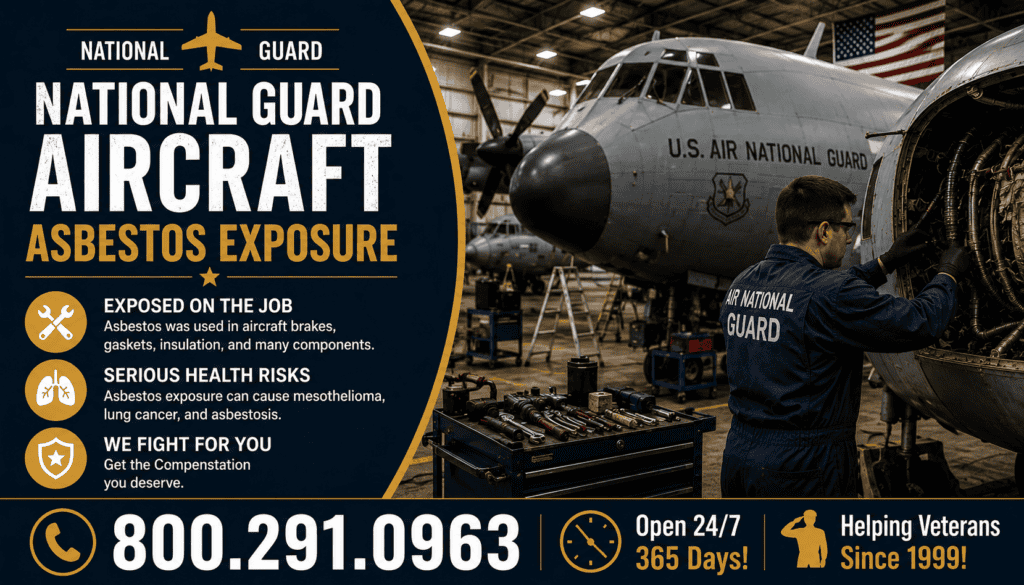
National Guard Aircraft Asbestos Exposure
National Guard aircraft have supported homeland defense, disaster response, search-and-rescue operations, medical evacuations, firefighting, troop transportation, cargo missions, reconnaissance, pilot training, and tactical operations for decades. Throughout much of the twentieth century, however, many military aircraft and their support systems contained asbestos because the mineral provided dependable resistance to heat, friction, fire, electricity, and chemical damage.
Before safer substitutes became widely available, aircraft manufacturers and military suppliers incorporated asbestos into aviation brakes, engine gaskets, heat shields, firewalls, electrical insulation, seals, packing materials, fire-resistant blankets, and other components exposed to elevated temperatures. These products could release microscopic asbestos fibers when they deteriorated or were disturbed during inspections, repairs, replacement, and overhaul work.
Aircraft mechanics, crew chiefs, engine specialists, avionics technicians, electricians, sheet metal personnel, structural repair specialists, hydraulic technicians, inspectors, and ground-support equipment mechanics could encounter asbestos while maintaining National Guard aircraft. Pilots, flight crews, supervisors, warehouse personnel, and other workers could also experience exposure when maintenance activities contaminated shared work areas.
The danger was not limited to aircraft components. Older hangars, aviation maintenance shops, warehouses, boiler rooms, utility buildings, and administrative facilities frequently contained asbestos insulation, pipe covering, floor tiles, ceiling materials, roofing products, electrical equipment, and fireproof construction materials.
Because asbestos-related diseases often take several decades to develop, former National Guard aviation personnel may not connect a recent diagnosis of mesothelioma, asbestos-related lung cancer, asbestosis, or pleural disease with aircraft duties performed many years earlier.
This guide explains why asbestos was used in National Guard aircraft, which aircraft components may have contained it, how aviation maintenance released asbestos fibers, and which National Guard personnel may have faced the greatest exposure risks.
Related resources include National Guard Asbestos Exposure, National Guard Equipment Asbestos Exposure, and National Guard Personnel and Jobs Asbestos Exposure.
━━━━━━━━━━━━━━━━━━━━━━━━━━━━━━━━━━━━
🛩️ Why National Guard Aircraft Contained Asbestos
For much of the twentieth century, asbestos was considered useful for military aviation because it could tolerate extreme operating temperatures while remaining durable and relatively lightweight. Aircraft manufacturers, military contractors, component suppliers, and replacement-parts companies incorporated asbestos into products intended to improve aircraft safety and performance.
Aircraft engines generated substantial heat during normal operation. Braking systems, exhaust assemblies, electrical equipment, cockpit heaters, auxiliary power units, and hydraulic systems also operated under conditions that required dependable insulation and heat protection.
Asbestos helped reduce heat transfer, limit fire damage, control friction, protect electrical systems, and insulate personnel from hot aircraft components. It could be woven into fabric, compressed into brake material, mixed into gaskets, formed into insulation, or incorporated into sealants and other aviation products.
National Guard aircraft often remained in service for many years and required repeated inspections, maintenance, replacement parts, and overhauls. Even after manufacturers reduced their use of asbestos, older components and replacement parts could remain in aircraft inventories and maintenance facilities.
Personnel did not always know which products contained asbestos. Components were often handled as ordinary maintenance materials without asbestos warnings, specialized respiratory protection, controlled work areas, or modern decontamination procedures.
Related resources include National Guard Aircraft Mechanics Asbestos Exposure, National Guard Equipment Manufacturers Asbestos Exposure, and U.S. Military Aircraft Asbestos Exposure.
━━━━━━━━━━━━━━━━━━━━━━━━━━━━━━━━━━━━
🔥 Why Asbestos Was Used in Military Aviation
Military aircraft operated under demanding conditions involving high temperatures, vibration, pressure changes, moisture, fuel, hydraulic fluids, mechanical stress, and possible fire hazards. Aviation engineers needed materials that could protect essential systems without failing during normal operations.
Asbestos was selected for aviation products because it resisted flame, heat, friction, electricity, corrosion, and chemical damage. It also provided durability for components expected to withstand repeated takeoffs, landings, inspections, repairs, and changes in operating temperature.
Aircraft brakes were a particularly important application. Friction generated during landing could create intense heat, and asbestos-containing brake materials were used to help control that heat. Engine gaskets, exhaust seals, firewalls, insulation, and protective blankets also benefited from asbestos resistance to fire and elevated temperatures.
Electrical systems presented another potential exposure source. Asbestos-containing wiring insulation, panel materials, and protective coverings were used in some equipment because asbestos did not conduct electricity and could tolerate heat generated by electrical systems.
Although these characteristics made asbestos valuable to aircraft manufacturers, fibers released from damaged or disturbed products could enter the air and be inhaled by maintenance personnel and nearby workers.
Related resources include National Guard Aviation Support Equipment Asbestos Exposure, National Guard Electrical Equipment Asbestos Exposure, and National Guard Firefighters Asbestos Exposure.
━━━━━━━━━━━━━━━━━━━━━━━━━━━━━━━━━━━━
⚙️ Aircraft Components That Commonly Contained Asbestos
Asbestos could be present in numerous aircraft components and aviation support systems. The products used depended on the aircraft model, manufacturer, production year, maintenance history, replacement parts, and assigned military mission.
Potential asbestos-containing aircraft components included:
• Brake linings and brake pads
• Engine and exhaust gaskets
• Heat shields and thermal insulation
• Engine-compartment insulation
• Firewalls and fire-resistant panels
• Electrical wiring insulation
• Electrical panels and protective coverings
• Hydraulic-system gaskets and seals
• Valve and pump packing
• Adhesives and sealants
• Clutch and friction components
• Cockpit and cabin heater insulation
• Auxiliary power unit components
• Soundproofing and vibration-control materials
• Fire-resistant blankets, gloves, and protective fabrics
These products could become hazardous when they wore down, cracked, dried out, frayed, or were disturbed during aircraft maintenance. Removing old brakes, scraping gasket residue, cutting insulation, opening electrical assemblies, or disassembling engine systems could release fibers into a hangar or repair shop.
Ground-support equipment presented additional risks. Aircraft tugs, mobile generators, compressors, heaters, fire-response vehicles, maintenance stands, and material-handling equipment could contain asbestos brakes, clutches, gaskets, insulation, and electrical components.
Related resources include National Guard Ground Support Equipment Asbestos Exposure, National Guard Automotive Brake Equipment Asbestos Exposure, and National Guard Power Generation Equipment Asbestos Exposure.
━━━━━━━━━━━━━━━━━━━━━━━━━━━━━━━━━━━━
🛠️ Aircraft Maintenance and Repair Exposure
Aircraft maintenance was one of the most significant potential asbestos-exposure pathways within National Guard aviation operations. Aircraft required routine inspections, preventive maintenance, brake replacement, engine repair, gasket removal, electrical work, hydraulic-system service, structural repairs, and major component overhauls.
Maintenance personnel could disturb asbestos when removing access panels, opening engine compartments, replacing worn brakes, scraping old gaskets, repairing heaters, removing insulation, servicing auxiliary power units, or rebuilding mechanical systems.
Sanding, drilling, grinding, scraping, brushing, cutting, and wire-wheeling asbestos-containing materials could create airborne dust. Earlier maintenance practices sometimes involved compressed air, which could spread brake and component dust throughout the work area instead of safely capturing it.
Enclosed or poorly ventilated aircraft hangars could allow fibers to remain suspended or settle on floors, workbenches, tools, uniforms, aircraft surfaces, and nearby equipment. Sweeping or blowing accumulated dust could make settled fibers airborne again.
Personnel working nearby could inhale asbestos even when they did not directly repair the affected component. Inspectors, supervisors, pilots, flight crews, supply personnel, and workers assigned to adjacent maintenance stations could share the same contaminated air.
Related resources include National Guard Aircraft Maintenance Facilities Asbestos Exposure, National Guard Aircraft Hangars Asbestos Exposure, and National Guard Maintenance Workers Asbestos Exposure.
━━━━━━━━━━━━━━━━━━━━━━━━━━━━━━━━━━━━
👨🔧 National Guard Aviation Personnel Most at Risk
Nearly anyone working around older military aircraft could potentially encounter asbestos, but personnel whose duties involved maintenance, repair, inspection, and component replacement generally faced greater opportunities for repeated exposure.
Higher-risk National Guard aviation occupations included aircraft mechanics, helicopter mechanics, fixed-wing mechanics, crew chiefs, engine mechanics, avionics technicians, aircraft electricians, sheet metal personnel, structural repair specialists, hydraulic technicians, fuel-system mechanics, inspectors, welders, maintenance supervisors, aircraft recovery teams, and ground-support equipment mechanics.
Supply and logistics personnel could handle boxes of replacement brakes, gaskets, seals, insulation, protective fabrics, and other asbestos-containing parts. Warehouse employees could encounter fibers released from deteriorating packaging or damaged materials stored for extended periods.
Firefighters and crash-rescue personnel could encounter asbestos during aircraft fires, emergency landings, crash recovery, damaged-aircraft removal, and cleanup operations. Heat, impact, cutting, and structural damage could disturb asbestos-containing aircraft components.
Pilots and flight crews were not typically responsible for major mechanical repairs, but they could enter hangars and aircraft undergoing maintenance or spend time around contaminated equipment and work clothing.
Exposure risk depended on the aircraft serviced, years of service, maintenance specialty, assigned facility, frequency of repairs, ventilation, protective equipment, and specific components handled during a veteran’s career.
Related resources include National Guard Personnel and Jobs Asbestos Exposure, National Guard Logistics Personnel Asbestos Exposure, and National Guard Firefighters and Crash Rescue Asbestos Exposure.
━━━━━━━━━━━━━━━━━━━━━━━━━━━━━━━━━━━━
✈️ Fixed-Wing National Guard Aircraft and Asbestos Exposure
For decades, the Army National Guard and Air National Guard operated a wide variety of fixed-wing aircraft supporting homeland security, tactical airlift, reconnaissance, cargo transportation, disaster relief, firefighting, medical evacuation, and combat readiness. Many aircraft manufactured before the 1980s incorporated asbestos-containing materials within engines, braking systems, insulation, electrical components, heaters, auxiliary power units, and structural assemblies.
Aircraft mechanics servicing cargo aircraft, transport aircraft, surveillance platforms, and utility aircraft routinely removed worn brakes, replaced engine gaskets, repaired electrical systems, serviced hydraulic equipment, and rebuilt mechanical assemblies that could contain asbestos products. These maintenance procedures frequently disturbed aging materials capable of releasing microscopic asbestos fibers into surrounding work areas.
Common fixed-wing aircraft historically operated by National Guard units included the C-130 Hercules, C-12 Huron, C-23 Sherpa, C-26 Metroliner, RC-26 surveillance aircraft, F-16 Fighting Falcon, A-10 Thunderbolt II, KC-135 Stratotanker, and numerous earlier aircraft retired from active service.
Many aircraft remained operational for decades, requiring repeated maintenance cycles throughout their service life. As aircraft aged, insulation deteriorated, brake components wore down, gaskets became brittle, and engine compartment materials required replacement, increasing opportunities for occupational asbestos exposure.
Related resources include U.S. Military Aircraft Asbestos Exposure, C-130 Hercules Asbestos Exposure, and Fighter Jet Asbestos Exposure.
━━━━━━━━━━━━━━━━━━━━━━━━━━━━━━━━━━━━
🚁 National Guard Helicopters and Asbestos Exposure
National Guard aviation units have operated helicopters for troop transport, search and rescue, firefighting, disaster response, medical evacuation, engineering support, reconnaissance, and emergency operations throughout the United States.
Many helicopters manufactured before asbestos regulations changed utilized asbestos-containing products within engines, exhaust systems, braking components, insulation, heaters, seals, clutches, electrical systems, and fire-resistant materials. Routine maintenance often required removal and replacement of these aging components.
Helicopter mechanics frequently worked in confined engine compartments where deteriorated insulation and engine gaskets could release airborne asbestos fibers. Sheet metal work, transmission repairs, heater servicing, and structural rebuilding also increased exposure opportunities.
Aircraft such as the UH-1 Huey, UH-60 Black Hawk, CH-47 Chinook, AH-64 Apache, OH-58 Kiowa, and earlier utility helicopters required thousands of scheduled maintenance hours throughout their operational lives.
Related resources include Helicopter Asbestos Exposure, UH-1 Huey Asbestos Exposure, and CH-47 Chinook Asbestos Exposure.
━━━━━━━━━━━━━━━━━━━━━━━━━━━━━━━━━━━━
🏢 Aircraft Hangars and Aviation Facilities
Aircraft themselves were only one source of asbestos exposure. National Guard aviation facilities frequently contained asbestos within their construction materials and mechanical systems.
Older hangars often incorporated asbestos insulation surrounding steam pipes, boilers, HVAC systems, utility tunnels, roofing materials, ceiling tiles, wall panels, electrical equipment, flooring, pipe coverings, and fireproof construction products.
Maintenance shops also housed air compressors, industrial boilers, machine tools, generators, welding equipment, pumps, electrical switchgear, and heating systems that frequently incorporated asbestos-containing gaskets, insulation, brake materials, packing, and friction products.
When building renovations, equipment repairs, or maintenance projects disturbed these materials, airborne asbestos fibers could spread throughout the facility, potentially exposing mechanics, supervisors, supply personnel, flight crews, inspectors, contractors, and visitors.
Related resources include National Guard Aircraft Hangars Asbestos Exposure, National Guard Aircraft Maintenance Facilities Asbestos Exposure, and National Guard Boiler Equipment Asbestos Exposure.
━━━━━━━━━━━━━━━━━━━━━━━━━━━━━━━━━━━━
🩺 Health Risks of Aircraft Asbestos Exposure
Inhaling asbestos fibers can cause permanent medical conditions that may not develop until decades after military service has ended. Once inhaled, microscopic fibers can become lodged within the lungs, pleura, or abdominal lining, where they may remain for many years.
Diseases associated with occupational asbestos exposure include:
- Malignant mesothelioma
- Asbestos-related lung cancer
- Asbestosis
- Pleural plaques
- Pleural thickening
- Pleural effusions
- Other chronic respiratory disorders
Common symptoms include persistent coughing, chest pain, shortness of breath, unexplained weight loss, fatigue, recurring respiratory infections, and fluid surrounding the lungs.
Because these illnesses often develop 20 to 50 years after exposure, veterans experiencing symptoms should inform their physician about their National Guard aviation service and any aircraft maintenance duties they performed.
Related resources include Mesothelioma Symptoms, Asbestos Lung Cancer, and Mesothelioma Diagnosis.
━━━━━━━━━━━━━━━━━━━━━━━━━━━━━━━━━━━━
📋 Documenting National Guard Aircraft Exposure
Building a detailed exposure history can help veterans better understand where asbestos exposure may have occurred and support future medical or legal claims.
Helpful documentation may include:
- DD Form 214
- National Guard service records
- Unit assignments
- MOS or AFSC history
- Performance evaluations
- Aircraft maintenance records
- Flight logs
- Technical manuals
- Training records
- Civilian employment records
- Witness statements from fellow service members
- Medical records documenting asbestos-related disease
Even veterans who cannot remember the exact asbestos-containing products they handled may still establish occupational exposure through military records and documented maintenance practices involving older aircraft.
Related resources include Military Service Records for Asbestos Claims, National Guard Personnel and Jobs Asbestos Exposure, and Mesothelioma Diagnosis.
━━━━━━━━━━━━━━━━━━━━━━━━━━━━━━━━━━━━
⚖️ Legal Options After National Guard Aircraft Asbestos Exposure
Veterans diagnosed with mesothelioma or another asbestos-related disease may have several legal options depending upon their exposure history and the companies responsible for manufacturing asbestos-containing products.
Potential legal options may include:
- Asbestos product liability lawsuits
- Asbestos trust fund claims
- Wrongful death claims for surviving family members
- Claims involving civilian employment after military service
- Claims involving secondary occupational exposure
Each person’s circumstances differ depending upon service history, occupational exposure, diagnosis, applicable statutes of limitation, and the companies involved.
Related resources include National Guard Mesothelioma Lawsuits, National Guard Wrongful Death Claims, and National Guard Statute of Limitations.
━━━━━━━━━━━━━━━━━━━━━━━━━━━━━━━━━━━━
💰 Asbestos Trust Fund Claims
Many companies that manufactured asbestos-containing products later established asbestos bankruptcy trust funds to compensate individuals diagnosed with qualifying asbestos-related diseases.
Eligible veterans may qualify for compensation if they can demonstrate exposure to asbestos-containing products manufactured by participating companies and meet the medical criteria established by each trust.
Trust fund claims are separate from VA disability benefits and may be available even when exposure occurred during military service.
Related resources include National Guard Asbestos Trust Fund Claims, Asbestos Trust Funds, and Mesothelioma Compensation.
━━━━━━━━━━━━━━━━━━━━━━━━━━━━━━━━━━━━
🇺🇸 VA Benefits for National Guard Veterans
Veterans diagnosed with asbestos-related diseases may qualify for Department of Veterans Affairs benefits if their illness is connected to qualifying military service.
Potential benefits may include disability compensation, VA health care, travel reimbursement, Dependency and Indemnity Compensation (DIC) for eligible survivors, and additional programs depending upon the veteran’s circumstances.
Preparing a well-documented claim with medical evidence, military records, and occupational history may improve the likelihood of a successful outcome.
Related resources include VA Benefits for National Guard Asbestos Exposure, VA Mesothelioma Benefits, and Military Veterans Asbestos Exposure.
━━━━━━━━━━━━━━━━━━━━━━━━━━━━━━━━━━━━
📞 Free National Guard Aircraft Case Evaluation
If you or a loved one served in the National Guard and later developed mesothelioma, asbestos lung cancer, asbestosis, or another asbestos-related illness after working around military aircraft, you may have legal and financial options available.
An experienced asbestos attorney can review your military service, identify potential asbestos-containing products associated with your aircraft and maintenance duties, determine whether asbestos trust fund claims or lawsuits may apply, and explain your available options during a free, no-obligation consultation.
Call or Chat 24/7 — 800.291.0963
- ✅ Free Case Evaluation
- ✅ Nationwide Representation
- ✅ Experienced Mesothelioma Attorneys
- ✅ No Fees Unless Compensation Is Recovered
Request your free review today.