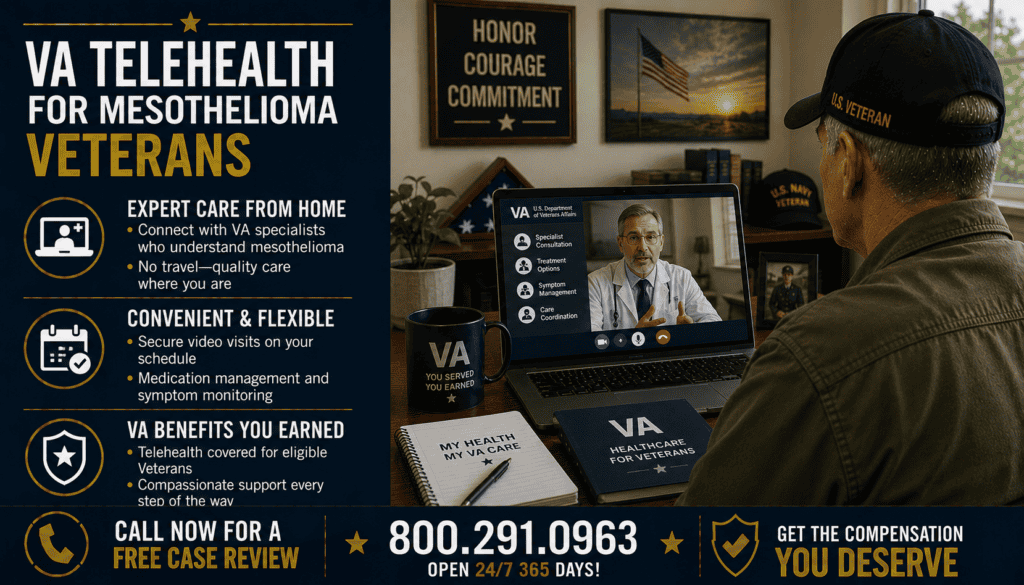
VA Telehealth For Mesothelioma Veterans
VA telehealth can help some veterans discuss symptoms, results, and treatment plans remotely. The clinical need and available VA services determine whether a virtual visit fits.
Video visits cannot replace imaging, procedures, infusions, or urgent assessment. Prepare records and caregiver questions for both virtual and in-person care.
How VA Telehealth Can Support Mesothelioma Care
VA telehealth allows eligible veterans to meet with members of their VA care team using approved virtual services. For a patient with mesothelioma, some discussions about test results, symptoms, medications, follow-up, and treatment planning may be suitable for a video visit. VA Video Connect can connect veterans with clinicians and specialists, depending on the appointment and clinical need. For related care and benefit questions, consult Navy VA Benefits For Mesothelioma using the veteran’s own medical and service history.
A virtual visit cannot replace every part of cancer care. A biopsy, imaging study, infusion, procedure, or hands-on examination may require an in-person setting. The care team determines when telehealth is appropriate; the patient should ask what a scheduled visit will and will not cover.
VA health care eligibility and any specialty referral must be considered separately from a disability compensation decision. A veteran can ask the VA care team whether a virtual option is available for the particular clinical question, even if an exposure claim is still being researched.
See VA Health Care for Mesothelioma for enrollment and referral context.
For related Navy exposure research, review Navy Medical Health Asbestos Exposure.
Visits That May Be Suitable for Video
A video visit may work for reviewing pathology or imaging reports, discussing treatment choices, monitoring side effects, coordinating medicines, or checking how a patient is managing symptoms. The clinician may ask questions or observe the patient on video but cannot perform every physical assessment remotely.
Specialist access can sometimes involve a distant VA clinician. VA describes VA Video Connect as a way to meet with a care team and potentially reach specialists across the country. Actual availability depends on the patient’s VA facility, provider schedule, clinical needs, and current VA processes.
Supportive care discussions may include pain management, nutrition, emotional health, caregiver questions, and goals of care. Ask whether a caregiver should join and whether consent or a guest invitation is needed. VA has published guidance on inviting a guest to a video visit.
| Topic | Virtual Discussion | Possible In-Person Need |
|---|---|---|
| Pathology or scan review | Explain results and next steps | Tissue procedure or imaging |
| Treatment planning | Discuss options and preferences | Examination or therapy delivery |
| Symptoms | Review changes and medicine effects | Urgent assessment if clinically needed |
| Care coordination | Arrange records and referrals | Tests or procedures at a facility |
The patient should know whether the appointment is with a primary clinician, oncologist, pulmonary specialist, social worker, or another member of the team. A visit to review a scan is different from an appointment intended to evaluate a new physical finding. Tell the scheduler when the reason for the visit changes so the team can decide whether video is still suitable.
Virtual visits can reduce travel burdens during treatment, but they also require preparation. If the patient tires easily, send records and a short question list ahead of time when the care team offers an approved route. A caregiver can help take notes with permission, allowing the patient to focus on the discussion.
For related Navy exposure research, review Navy Family Secondhand Asbestos Exposure.
Schedule and Prepare for VA Video Connect
Ask the VA care team whether a visit can be scheduled by video and how the appointment invitation will arrive. Confirm the time zone, telephone backup, and whom to call if the connection fails. Use current instructions from VA Video Connect because software and access steps may change.
Before the visit, check the device, browser or app, camera, microphone, and internet connection. Choose a private, well-lit location and have the device charged. VA offers help resources for veterans who lack adequate connectivity or equipment, and ATLAS locations may provide a private telehealth space in some communities.
Prepare one page with diagnosis, pathology date, treatments already received, current medicines, new symptoms, questions, and contact details for any outside oncologist. Have images and reports transferred through the approved care channels before the appointment, if the clinician requests them. Holding up a report to a camera is rarely a complete substitute for the actual medical record.
Invite a trusted caregiver if the patient wishes, following VA’s guest process. Discuss privacy and permissions before sharing sensitive medical details during the call.
On appointment day, join early enough to solve basic audio or camera problems. Put the camera at eye level, reduce background noise, and have a phone within reach. A patient using oxygen, assistive devices, or a translator should tell the team in advance rather than spending the clinical time resolving logistics.
VA technology and guest features change, so rely on the current appointment instructions. If a link looks unexpected, contact the care team through an official VA channel to verify it. Do not send pathology, identification documents, or sensitive photographs through an unverified message.
For related Navy exposure research, review Navy Asbestos Exposure Timeline.
Records and Questions to Bring
The clinical team needs an accurate current record: pathology reports, imaging, staging information if established, treatment summary, medications, allergies, and symptoms. A concise Navy exposure history can add context, including ship or shore assignment, work involving potentially disturbed materials, and relevant civilian jobs.
Use the Navy Veterans Medical Exposure Profile to organize service details without making the virtual visit a substitute for a formal exposure investigation. The clinician can ask follow-up questions and decide which details bear on care.
Write down the three most urgent questions before the visit. Examples include whether a pathology review is needed, who coordinates the next scan, what treatment options fit the diagnosed site and subtype, and which symptoms require same-day contact. Ask the clinician to restate the plan and clarify who will communicate test results.
Keep the after-visit summary, orders, referral details, and the date the next appointment is expected. If the veteran also sees a non-VA doctor, ask how the two teams will share changes in medication or treatment.
Ask whether the specialist needs the actual scan images or pathology slides, not only a report. Transferring these may require a formal records request or communication between laboratories. Note the date and recipient of each request and confirm that the files arrived before the appointment. A virtual consultation is more useful when the clinician can review the source records.
At the end of the visit, repeat the action items: who orders tests, who will call with results, whether another video or in-person appointment is planned, and what to do if symptoms change. Save the written summary and compare it with the verbal plan; ask for clarification if they differ.
When In-Person or Urgent Care Is Needed
Telehealth is a clinical tool, not a universal substitute for examination or treatment. A clinician may need to assess breathing, obtain imaging, perform a procedure, administer medication, or evaluate a changing condition in person. Follow the care team’s instructions for tests and appointments.
For severe or rapidly worsening symptoms, seek prompt appropriate medical evaluation rather than waiting for a routine video slot or an online reply. The patient’s current care plan should identify who to call for urgent symptoms and where to go after hours.
Video quality can also limit assessment. If sound or picture fails, use the agreed backup method and reschedule when needed. Do not assume a message was received or that a prescription was changed until the care team confirms it.
Patients can ask the team which symptoms are safe to address at the next scheduled virtual appointment and which need contact sooner. Written instructions reduce uncertainty for family caregivers.
Before ending a video appointment, ask how a new concern should be reported and whether secure messaging is appropriate for nonurgent follow-up. A message portal is not a substitute for urgent assessment. Clarify who is monitoring any ordered test and when to call if a result has not arrived. This follow-up plan is particularly valuable when the patient sees clinicians at different facilities.
Technology and Accessibility Support
VA describes several ways to access telehealth, including home video and community-based ATLAS spaces. It also describes support for qualifying veterans who need a video-capable device or connectivity assistance. Availability can vary; ask the local VA team which services apply.
If hearing, vision, language, mobility, or cognitive needs make video visits difficult, tell the scheduling team in advance. Ask about accessibility features, interpretation, caregiver participation, or another appropriate visit type. A telephone conversation may be offered for some needs, but the clinical team determines whether it can address the question.
Test the appointment link before the visit using VA’s current guidance. Avoid joining from a shared public device if privacy cannot be protected. A trusted helper can assist with setup if the veteran wants them present and the care team’s process allows it.
A telehealth visit should still have a clear clinical purpose and documented follow-up. Technology support solves access problems; it does not decide whether a biopsy, infusion, or hands-on assessment can occur remotely.
If a household internet connection is unreliable, ask about an ATLAS location or another supported setting before the appointment. Confirm whether a quiet, private room and onsite technical help are available. These locations can reduce travel to a major center for conversations, although a specialist still may require an in-person visit for examination or treatment.
Veterans with limited comfort using video can ask for setup assistance in advance. A short practice call may prevent the appointment from being spent on connection problems. The scheduling team can explain which alternatives are appropriate if video remains inaccessible.
Treatment Coordination and Benefits Distinctions
The National Cancer Institute describes surgery, radiation therapy, chemotherapy, immunotherapy, and other mesothelioma treatments. A video specialist visit can help discuss such possibilities, but treatment choices depend on the diagnosis, disease extent, patient health, and clinical judgment. Availability and coverage are individual questions.
Community care outside VA has its own eligibility and authorization process. A telehealth discussion with a VA provider does not automatically authorize care from a non-VA specialist. Confirm referrals, approved services, and records transfer before making outside appointments expected to be covered by VA.
VA disability compensation for asbestos exposure is separate from health care access. It involves evidence of a condition, military asbestos contact, and a medical connection under VA rules. A virtual oncology visit may help document care but does not by itself establish service connection.
For further guidance, review VA Health Care for Mesothelioma and VA Benefits and Claims for Veterans With Mesothelioma.
Telehealth can also connect with a care transition. After a hospital stay or outside consultation, ask when the VA team will receive discharge information and who is responsible for follow-up. A scheduled virtual visit is only useful if the clinician has access to the updated medication list, procedures, and results.
If a family member is managing appointments, obtain the patient’s permission for sharing information and ask how to record contact preferences. Clear communication among the veteran, caregiver, VA team, and outside clinician helps prevent missed referrals or duplicate instructions.
Frequently Asked Questions
Can every mesothelioma appointment be done by telehealth?
No. Some discussions may be virtual, while procedures, imaging, treatment delivery, or hands-on examination require in-person care.
Does VA Video Connect guarantee a nationwide specialist appointment?
No. Availability depends on clinical need, scheduling, VA services, and the individual care plan.
Can a caregiver join?
VA provides a process to invite a guest to some video visits. Ask the team how to arrange it with the veteran’s consent.
What if I have no adequate internet or device?
Ask VA about current technology assistance, ATLAS locations, or another suitable appointment option.
Should I wait for a video visit if breathing suddenly worsens?
No. Seek timely medical evaluation according to the care team’s urgent-care instructions.
Does telehealth replace a VA disability claim?
No. Care and compensation are distinct processes.
Review Your Navy Service History
Gather the veteran’s service and diagnosis records, treatment history, and relevant exposure details. Discuss clinical decisions with a qualified health professional and VA benefits with an accredited representative.
Call 800.291.0963 for a no-obligation case review, or submit your case here. For medical decisions, speak with a qualified clinician; for VA claims, consider a VA-accredited representative.
Keep the original records and label uncertain details. A vessel, rating, or diagnosis alone cannot determine a specific claim outcome.
Summary and Next Steps
VA telehealth may make it easier for a Navy veteran with mesothelioma to discuss results, symptoms, treatment options, and referrals with a care team. Ask whether the specific visit can be virtual, prepare the clinical records, test the connection, and get a clear plan for in-person or urgent needs.
Confirmed Sources
- VA Telehealth Services
- VA Video Connect
- VA Telehealth at Home
- VA ATLAS
- VA — Video Visit Guest
- VA Health Care Eligibility
- NCI Mesothelioma Treatment
Disclaimer: General information only—not legal or medical advice. This website is not a law firm. Exposure, VA eligibility, liability and deadlines vary by case and jurisdiction. Do not disturb suspected asbestos. Past results do not guarantee future outcomes.