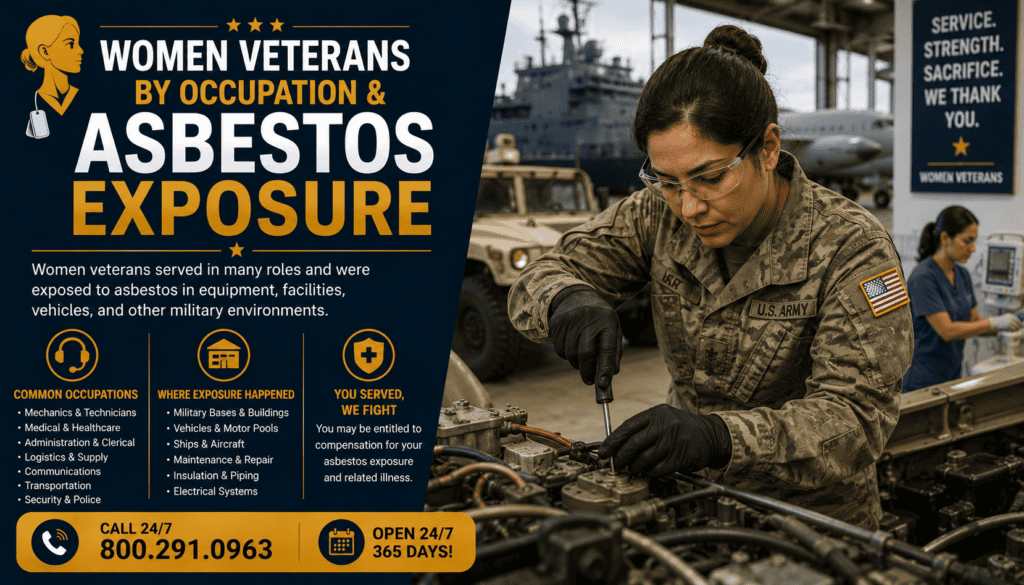
Women Veterans by Occupation Asbestos Exposure
Women veterans by occupation asbestos exposure research should focus on the veteran’s military specialty, service dates, duty stations, work areas, equipment, and actual daily tasks. VA identifies construction, shipyard, insulation, demolition, carpentry, friction-product, and related work as occupational settings where asbestos exposure may have occurred.
Women veterans can strengthen an occupational exposure history by connecting their duties to specific buildings, ships, equipment, products, maintenance activities, or renovation work. Service records, specialty information, technical records, and specific coworker statements can help establish where and how exposure may have occurred.
Women Veterans by Occupation Asbestos Exposure
Women veterans may have encountered asbestos through military occupations involving construction, maintenance, shipyards, mechanical systems, renovation, demolition, friction products, insulation, and older buildings. Exposure research should focus on actual duties and work environments rather than assumptions based on gender or job title.
VA evaluates asbestos-related disability claims case by case. A strong occupational history connects the veteran’s specialty, duty station, service dates, tasks, equipment, products, and nearby work to evidence showing where asbestos exposure may have occurred.
Military Occupations to Investigate
VA identifies several occupational categories associated with possible military asbestos exposure. Women veterans who served in these or comparable specialties may need a detailed review of their actual duties and service environment.
- Shipyard and shipboard maintenance work
- Insulation, pipe, boiler, and mechanical work
- Carpentry and construction
- Building renovation and demolition
- Manufacturing or installation of flooring and roofing products
- Vehicle, brake, clutch, and friction-product servicing
- Welding and related repair work
Maintenance and Mechanical Occupations
Maintenance occupations can involve older equipment, mechanical spaces, brakes, gaskets, valves, insulation, adhesives, and other heat-resistant materials. VA specifically identifies friction products such as clutch facings and brake linings among products relevant to asbestos-exposure research.
Document the equipment serviced, component removed or replaced, tools used, cleanup methods, frequency of the work, and whether other personnel were disturbing older materials nearby.
Construction, Renovation and Demolition
VA identifies construction, carpentry, demolition of old buildings, insulation work, flooring, roofing, cement sheet, pipes, and related products as areas where military asbestos exposure may have occurred.
Women veterans who worked in engineering, facilities, utilities, construction, renovation, or building maintenance should document the specific buildings, materials, projects, and dates involved.
Shipyard and Shipboard Occupations
VA guidance identifies Navy ships and shipyards as important historical asbestos-exposure settings. Women veterans whose duties placed them aboard older ships, in shipyards, below deck, or near repair and overhaul work may need occupation- and location-specific research.
The relevant evidence can include ship assignments, ratings, work centers, overhaul periods, maintenance records, technical manuals, and firsthand statements about the work performed.
Administrative, Medical and Support Occupations
Some women veterans served in occupations that did not directly handle mechanical or construction materials but worked in older military buildings where asbestos-containing materials may have been installed. Building presence alone does not establish harmful exposure.
Research should identify whether renovation, damaged materials, maintenance, demolition, or other disturbance occurred in the veteran’s work area during the relevant period.
Documenting Occupation and Exposure
- DD Form 214 or equivalent separation records
- Official Military Personnel File records
- MOS, rating, AFSC, specialty, and qualification records
- Duty stations, units, ships, squadrons, and assignments
- Performance evaluations and training records
- Technical manuals, work orders, and maintenance records
- Facility, shipyard, equipment, and procurement records
- Specific firsthand coworker statements
National Archives guidance notes that OMPFs may contain duty stations, assignments, training, qualifications, performance information, and separation documents.
Mesothelioma and Medical Follow-Up
Women veterans concerned about military asbestos exposure should tell their health-care provider about their occupation, duty stations, work areas, maintenance or construction duties, and approximate exposure dates. VA notes that asbestos-related disease symptoms may not appear until decades after exposure.
Persistent breathing problems, chest pain, unexplained weight loss, or a continuing cough should be evaluated by a qualified medical professional. An occupational history alone cannot diagnose disease.
VA Benefits and Occupational Evidence
VA states that asbestos-related disability compensation may be available when a veteran has a health condition caused by asbestos and had contact with asbestos during military service. Evidence includes medical records, service records listing the veteran’s job or specialty, and medical evidence connecting military exposure to the condition.
Veterans Benefits Administration guidance also notes that evidence of military asbestos exposure may include the veteran’s military occupational specialty and where the veteran was stationed.
Frequently Asked Questions
Were women veterans at risk for military asbestos exposure?
Potential exposure depended on the veteran’s occupation, duties, work environment, service period, and whether asbestos-containing material was disturbed. VA’s asbestos guidance applies to veterans based on exposure circumstances rather than gender.
Which occupations should women veterans investigate?
Shipyard, insulation, demolition, carpentry, construction, maintenance, welding, boiler, friction-product, flooring, roofing, and related work can warrant closer review when supported by the veteran’s service history.
Can an office or medical occupation involve asbestos exposure?
Possible exposure would require evidence of disturbed asbestos-containing material in the work environment, such as renovation, damaged building materials, maintenance, or demolition. Working in an older building alone does not prove exposure.
What records can establish a woman’s military occupation?
DD214 documents, OMPFs, specialty records, duty assignments, evaluations, training records, and unit or facility documentation can help establish occupational history.
Confirmed Sources
Review Your Military Occupation and Exposure History
Write down your branch, specialty, units, duty stations, service dates, daily tasks, equipment, buildings, ships, maintenance work, and nearby construction or repair activity. Preserve records that support each part of the occupational history and distinguish documentation from recollection.
Call 800.291.0963 for a no-obligation case evaluation and to speak with a real person 24/7, 365 days a year. Mesothelioma Help Center is not a law firm or medical provider and does not determine VA eligibility.
Disclaimer: General information only—not legal or medical advice. This website is not a law firm. Exposure, VA eligibility, liability and deadlines vary by case and jurisdiction. Do not disturb suspected asbestos. Past results do not guarantee future outcomes.