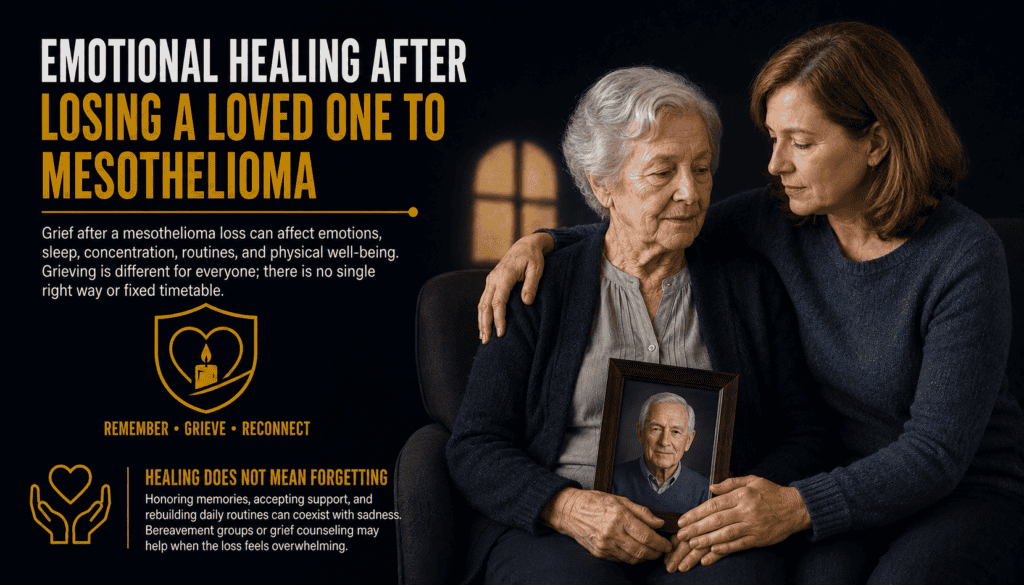
Emotional Healing After Losing a Loved One to Mesothelioma
Compassionate grief support and practical resources for families
Losing someone to mesothelioma can bring deep sadness alongside exhaustion from months or years of illness and caregiving. This guide offers flexible ways to find support, honor memories, and recognize when additional help could make a difference. You do not need to grieve in any particular way.
🧭 On This Page
Understanding Grief After Mesothelioma
Grief may begin before a death and continue in changing forms afterward. There is no required sequence, timetable, or correct way to mourn. Some people feel sadness, anger, relief that suffering has ended, guilt, numbness, or several feelings at once. These responses do not measure how much you loved the person.
| Experience | What it may feel like | A supportive response |
|---|---|---|
| Sadness | Missing everyday conversations or routines | Allow time to remember and ask for company |
| Numbness | Feeling disconnected or unable to cry | Avoid pressuring yourself to feel differently |
| Relief | Relief that painful symptoms have ended | Recognize that relief and love can coexist |
| Anger | Frustration about illness, exposure, or circumstances | Talk with a trusted person without judging the feeling |
Getting Through the First Days and Weeks
Immediately after a death, ordinary tasks can feel overwhelming. Focus on essentials: hydration, food, rest, necessary calls, and a small number of practical decisions. Ask one trusted person to coordinate offers of help. Postpone optional decisions when possible, and keep important documents in one place.
| Need | Small next step | Who can help |
|---|---|---|
| Meals | Keep easy foods available | Friend or neighbor |
| Sleep | Maintain a gentle bedtime routine | Family member |
| Arrangements | Write down decisions and contacts | Designated coordinator |
| Communication | Share one update with relatives | Trusted spokesperson |
Gentle Ways to Cope Day by Day
Consider short walks or seated time outdoors if comfortable, journaling, music, prayer or reflection if meaningful to you, and regular contact with someone who listens. These practices can provide comfort but do not eliminate grief. If a strategy increases distress, stop and choose another.
| Practice | How to try it | Adjust when needed |
|---|---|---|
| Memory journal | Write one memory or feeling | Use a voice note instead |
| Connection | Arrange a brief call | Send a text if talking is hard |
| Movement | Try a gentle activity | Rest or sit outdoors |
| Ritual | Light a candle or revisit a tradition safely | Create a private alternative |
Supporting Family Members Who Grieve Differently
Partners, adult children, siblings, and friends may react differently or want different amounts of conversation. Avoid comparing grief or assigning someone the role of staying strong. Ask what kind of support is wanted, divide urgent tasks fairly, and revisit plans as needs change.
| Situation | Helpful approach | Avoid |
|---|---|---|
| One person wants to talk | Offer a time to listen | Forcing others to participate |
| Someone needs solitude | Check in without pressure | Assuming they do not care |
| Family tension | Discuss one decision at a time | Treating different grief styles as disloyalty |
| Caregiving exhaustion | Offer respite and practical help | Expecting instant recovery |
Helping Children and Teenagers After a Death
Use clear, age-appropriate words such as “died” rather than confusing euphemisms. Explain that the child did not cause the illness or death. Invite questions, keep familiar routines where possible, and inform school staff or counselors when appropriate. Children may move in and out of grief while playing or studying.
| Age or situation | Possible need | Supportive action |
|---|---|---|
| Young child | Concrete explanation and reassurance | Use simple words and repeat answers |
| School-age child | Permission to ask questions | Offer drawing, play, or conversation |
| Teenager | Privacy and choice | Offer trusted adults and peer support |
| School transition | Consistency | Coordinate with school counselor |
Honoring Memories and Finding Meaning
A continuing connection can take many forms: a photo album, favorite recipe, recorded stories, a small gathering, or an act of service. You do not need to find a positive meaning in the death. Choose rituals that fit your beliefs, resources, and energy, and change them over time.
| Memory idea | Low-pressure option | Consideration |
|---|---|---|
| Photo collection | Choose a few favorites | Ask before sharing private images |
| Story project | Record one short story | Let relatives opt out |
| Anniversary | Plan a quiet activity | Leave room to change plans |
| Legacy gesture | Support a cause or help a neighbor | No donation is required |
When to Seek Counseling or Urgent Help
Grief counseling, a bereavement group, a primary-care clinician, or a mental health professional may help when distress feels unmanageable or interferes persistently with daily life. Seek urgent medical evaluation for severe physical symptoms. If you or someone else is in immediate danger, call 911. In the United States, call or text 988 for immediate suicide and emotional-crisis support.
| Concern | Next step | Why |
|---|---|---|
| Persistent inability to manage basic needs | Contact a clinician or grief counselor | Assessment and individualized support |
| Severe sleep or appetite problems | Tell a healthcare professional | Check physical and mental health |
| Thoughts of suicide or immediate danger | Call 988 or 911 as appropriate | Immediate crisis support |
| Child struggling at school or home | Ask pediatrician or school counselor | Age-appropriate evaluation |
Important: 988 provides crisis support in the United States; it does not replace emergency medical services. Call 911 for immediate danger.
Bereavement Resources and a Simple Support Plan
Hospice programs may provide bereavement services for families, including some families whose loved one did not receive hospice care; availability varies by provider. Ask the former care team, local hospice, hospital social worker, or primary-care office for local referrals. National resources below offer additional information, but verify current service availability directly.
| Time frame | Practical action | Support contact |
|---|---|---|
| Today | Choose one person to contact | Friend, relative, or faith/community contact |
| This week | Ask about bereavement services | Hospice or hospital social worker |
| This month | Review daily functioning and support needs | Primary care or counselor |
| As needed | Revisit the plan | Trusted support network |
Frequently Asked Questions
Is it normal to feel relief after a loved one dies?
Yes. Relief that suffering has ended can coexist with sadness, anger, and love. If guilt becomes overwhelming, a grief counselor may help.
How long does grief last?
There is no universal timetable. Grief often changes over time; seek professional support if distress persistently prevents daily functioning or raises safety concerns.
What should I say to a grieving family member?
Try “I’m here to listen” or offer a specific task, such as bringing a meal. Avoid telling them how they should feel.
How do I explain a mesothelioma death to a child?
Use clear, age-appropriate language, say that the child did not cause the death, invite questions, and maintain reassuring routines.
Can hospice help after someone has died?
Many hospice organizations offer bereavement services. Ask the hospice or a local provider about eligibility, duration, and costs.
Should I keep my loved one’s belongings?
There is no deadline. Keep important documents secure and make decisions about personal items at a pace that works for you.
What if family members grieve differently?
Differences are common. Ask about individual needs, avoid comparisons, and consider family counseling if conflict continues.
When is grief an emergency?
If there is immediate danger, call 911. In the United States, call or text 988 for suicidal thoughts or emotional crisis; seek urgent medical care for serious physical symptoms.
Related Mesothelioma Support Resources
Explore mesothelioma support, grief support and bereavement resources for families, talking with children about terminal illness, mesothelioma and mental health, and caregiver and family resources.
Authoritative Support Resources
For general grief and bereavement information, see the National Cancer Institute bereavement resource and National Institute on Aging grief and mourning information. For immediate U.S. crisis support, visit 988 Suicide & Crisis Lifeline. Availability and eligibility for local services should be confirmed directly.
Support and Information
Call 800.291.0963 • Live chat 24/7, 365 days a year.
Submit Your Case using the form below.
⚕️ Legal & Medical Information Disclaimer
This information is educational and is not medical, mental health, or legal advice. Consult qualified professionals about individual needs. For immediate danger call 911; in the U.S., call or text 988 for crisis support.