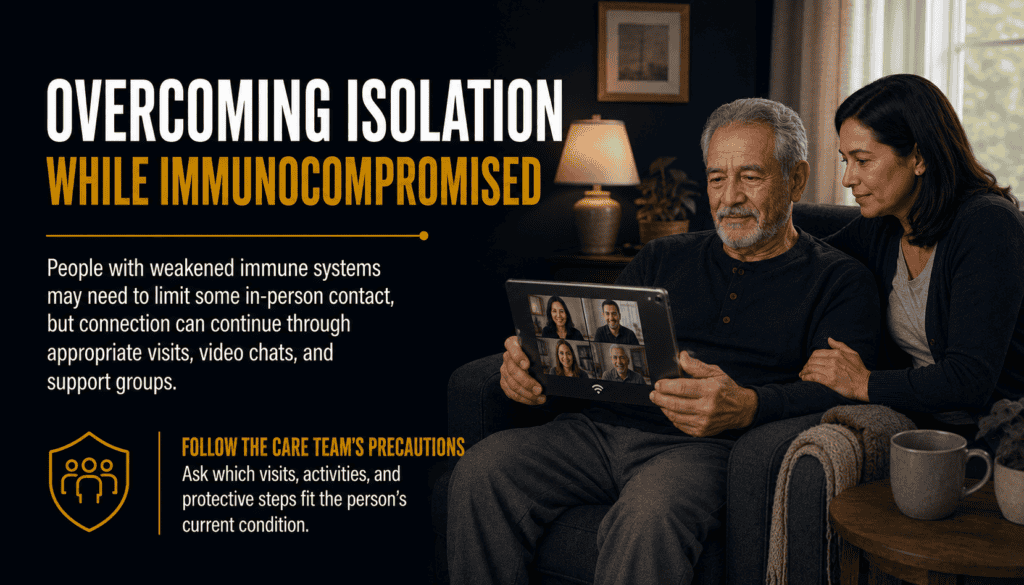
Overcoming Isolation While Immunocompromised With Mesothelioma
Mesothelioma treatment can make social life more complicated, especially when infection precautions, fatigue or breathing symptoms limit visits. You can protect your health while finding ways to stay connected. The right precautions depend on your individual situation and should come from your oncology team.
Why isolation can happen
An immunocompromised state means the immune system is less able to fight certain infections. Not everyone with mesothelioma is immunocompromised, and a diagnosis alone does not establish your infection risk. Chemotherapy, some other medicines, low blood counts and other medical conditions can affect risk. Ask your oncology team what applies to you. Isolation may also result from fatigue, breathlessness, transportation difficulties or fear of infection—even without immune suppression.
| Situation | What it can mean | Helpful response |
|---|---|---|
| Treatment-related low blood counts | Some treatments can reduce infection-fighting cells; risk varies. | Ask your oncology team whether you need specific precautions. |
| Avoiding respiratory infections | Crowded indoor spaces can increase exposure to respiratory viruses. | Discuss masking, ventilation and visit plans with your care team. |
| Fatigue or breathlessness | Travel and long conversations may be exhausting. | Choose shorter calls or visits at comfortable times. |
| Emotional strain | Reduced contact can lead to loneliness or sadness. | Tell your care team and a trusted person how you feel. |
Create a personalized connection plan
Write down your care team’s advice rather than adopting a blanket rule from the internet. Identify two or three people who can help you maintain contact. Decide how often you want check-ins and whether you prefer calls, messages, video chats or short visits. You can change your plan as treatment and energy levels change.
| Question for your team | Why it matters |
|---|---|
| Am I currently immunocompromised or neutropenic? | Precautions should match your actual medical situation. |
| Which symptoms require an immediate call? | Your team can give an individualized fever and emergency plan. |
| Are in-person visits appropriate? | Decisions depend on treatment, local illness and visitor health. |
| What precautions should visitors take? | Discuss illness screening, hand hygiene, masking and ventilation. |
| Can I attend a support group? | Ask about virtual options or medically appropriate in-person groups. |
Ways to connect with less exposure
Connection does not have to mean a crowded gathering. A short conversation, shared movie watched remotely, letter, or regular photo exchange can preserve relationships. For in-person contact, ask your team about precautions appropriate to your risk. People with fever, cough or other possible contagious symptoms should postpone visits. No single precaution eliminates infection risk.
| Option | How to make it manageable | Consideration |
|---|---|---|
| Phone call | Arrange a ten-minute check-in. | Good when video is tiring. |
| Video visit | Invite one person or a small group. | Use a familiar, easy-to-access app. |
| Text or voice note | Reply when you have energy. | Tell friends a delayed reply is okay. |
| Outdoor visit | Choose a comfortable accessible space. | Ask your team whether it is appropriate; weather and air quality matter. |
| Indoor visit | Discuss ventilation and other precautions. | Postpone when anyone is ill; follow clinician advice. |
| Online support group | Ask a cancer center or nonprofit about facilitated groups. | Protect your privacy and leave groups that feel unhelpful. |
Build a low-pressure daily routine
Try predictable, flexible contact instead of filling every hour. Let people know when you need quiet time. If fatigue, pain or breathing symptoms interfere with connection, report them to your care team; symptom management and palliative care can support quality of life alongside cancer treatment.
| Time | Possible activity | Low-energy alternative |
|---|---|---|
| Morning | Send one check-in message. | Use an emoji or prerecorded voice note. |
| Midday | Enjoy a brief hobby with a friend remotely. | Listen to a shared playlist. |
| Afternoon | Take an approved gentle activity break. | Sit by a window or in a comfortable outdoor spot. |
| Evening | Call a loved one for ten minutes. | Exchange a goodnight text. |
Ask family and friends for specific help
Many people want to help but do not know what is useful. A shared calendar can distribute calls, errands and rides without overwhelming one caregiver. Ask before sharing health updates with a group; the patient controls who receives personal information whenever they are able to decide.
| Need | Example request |
|---|---|
| Regular company | “Could you call me Tuesday and Friday for ten minutes?” |
| Technology | “Can you help me set up a video call and show me how to join?” |
| Practical support | “Could you drop groceries at the door this week?” |
| Appointment support | “Would you join my appointment by phone if the clinic allows it?” |
| Emotional support | “I need you to listen rather than solve this today.” |
Recognize when loneliness needs more support
Loneliness is not a personal failure. Cancer-center social workers, counselors, chaplains and support groups may offer different kinds of help. If mood symptoms persist, worsen, or interfere with daily life, speak with a qualified clinician. For immediate danger, call emergency services. The U.S. 988 Suicide & Crisis Lifeline provides crisis support by call or text.
| Experience | Potential next step |
|---|---|
| Persistent sadness or anxiety | Tell your oncology team and ask about counseling or psycho-oncology. |
| Withdrawal from enjoyable activities | Ask whether fatigue, pain, sleep or mood needs assessment. |
| Caregiver exhaustion | Discuss respite, social work and shared responsibilities. |
| Feeling unsafe or thinking of self-harm | Seek immediate help; in the U.S., call or text 988, or call emergency services for imminent danger. |
Know the infection warning signs
Do not wait for a routine appointment if your oncology team has instructed you to call about fever or infection symptoms. Fever thresholds and treatment plans vary; follow the specific instructions provided by your clinicians. The CDC notes that fever during chemotherapy may be a medical emergency. Avoid starting or stopping medicines or supplements based on general online advice.
| Sign or situation | What to do |
|---|---|
| Fever or chills during treatment | Contact your oncology team immediately according to its fever plan; fever during chemotherapy can be urgent. |
| New or worsening shortness of breath | Seek prompt medical evaluation; severe or sudden breathing difficulty requires emergency care. |
| New cough or possible infection | Tell your team, especially if you are immunocompromised. |
| Someone planning a visit is sick | Postpone in-person contact and connect remotely. |
| Unclear instructions | Ask your oncology team for a written after-hours contact plan. |
Support resources and next steps
Start with one action today: ask your team about infection precautions, schedule one manageable conversation, or request a referral to an oncology social worker. For related guidance, read Mesothelioma Support, Mesothelioma and Mental Health, Caregiver Support and Family Resources, and Creating a Mesothelioma Support Calendar.
| Resource | What it offers |
|---|---|
| National Cancer Institute | Patient information about coping with cancer and support services. |
| American Cancer Society | Cancer support programs and information. |
| CancerCare | Counseling and support resources; availability and eligibility vary. |
| Your cancer center | Social work, patient navigation and individualized infection guidance. |
| 988 Suicide & Crisis Lifeline | Immediate U.S. crisis support by call or text. |
Frequently asked questions
Does everyone with mesothelioma have a weakened immune system?
No. Risk depends on treatment, blood counts, medications and individual health. Ask your oncology team to assess your situation.
Can I see family in person during treatment?
Possibly. Your care team can advise based on your current risk, visitor symptoms and appropriate precautions.
Is an outdoor visit always safe?
No setting is risk-free. Weather, air quality, accessibility and your individual infection risk also matter.
What if I am too tired for video calls?
Try brief phone calls, texts, voice notes or letters. Explain that you may reply later.
How do I tell friends to postpone when they are sick?
A simple message works: “I would love to see you, but my care team wants me to avoid illness exposure. Can we call instead?”
Can a support group help with loneliness?
Some people find peer groups useful. Ask your cancer center about facilitated virtual groups and choose what feels comfortable.
When should I call about a fever?
Follow your oncology team’s fever instructions immediately. Fever during chemotherapy can be an emergency; do not wait for the next appointment.
When should I ask for mental health help?
Ask when sadness, anxiety or isolation persists or disrupts daily life. Seek urgent support if you feel unsafe or have thoughts of self-harm.
Medical and support references
These resources provide general information. Consult your treating clinicians for personal medical advice.
- CDC: Watch Out for Fever — infection guidance for people receiving chemotherapy.
- National Cancer Institute: Coping With Cancer — emotional and practical support.
- American Cancer Society: Coping With Cancer — support information.
- CancerCare — counseling and support programs.
- 988 Suicide & Crisis Lifeline — U.S. crisis support.
Support and next steps
Questions about mesothelioma resources or your options? Call 800.291.0963. Live chat is available 24/7, 365 days a year.
Submit Your Case using the form below.