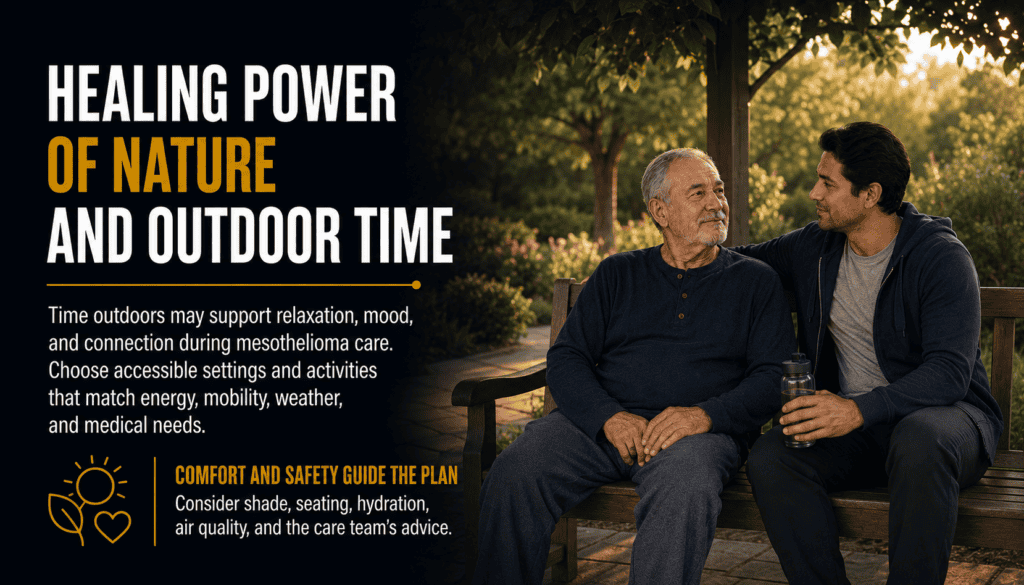
The Healing Power of Nature and Outdoor Time for Mesothelioma Patients
Gentle ways to enjoy outdoor spaces while prioritizing comfort and safety
A quiet garden or a few minutes of fresh air can be meaningful for some people living with mesothelioma. This guide offers flexible, low-pressure ideas, explains safety considerations and helps families plan around changing energy levels. Outdoor time is optional and is not a substitute for medical treatment.
What Nature Can—and Cannot—Offer
Time outdoors may provide a change of scenery, social connection and a chance to enjoy familiar routines. Some people find a garden, a shaded patio or a view of trees calming. These are comfort and quality-of-life activities—not treatments for mesothelioma, and they should never replace prescribed care.
Evidence about green spaces and well-being comes largely from broader populations; it does not establish that outdoor time improves mesothelioma survival, shrinks tumors or reverses treatment effects. A person who feels no benefit should not feel pressured to participate.
| Possible goal | Low-effort option | Keep in mind |
|---|---|---|
| Enjoy a change of scenery | Sit by an open window or on a shaded porch | Indoor time is equally valid on difficult days |
| Connect with loved ones | Share a short garden visit | Ask whether conversation or quiet company is preferred |
| Move gently | Walk a few steps on level ground if cleared | Stop before exhaustion; use prescribed mobility aids |
| Find a calming focus | Notice birds, plants or changing light | No need to practice a formal mindfulness technique |
Plan Around Energy and Treatment
Ask the oncology team what activities are appropriate, particularly after surgery, during chemotherapy or immunotherapy, when using supplemental oxygen, or if breathlessness, dizziness, anemia, low blood counts or balance problems are present. Follow individual restrictions for exertion, wound care, infection prevention and sun exposure.
Choose the easiest time of day, arrange a place to sit and keep the outing optional. A five-minute visit can be enough. Fatigue varies, so the plan should be easy to cancel without guilt.
| Check | Practical question | Response |
|---|---|---|
| Medical guidance | Has the care team restricted activity or crowds? | Follow the individualized plan |
| Energy | Is the patient already tired or short of breath? | Choose a window view or rest instead |
| Route | Are there stairs, uneven surfaces or long distances? | Use an accessible, level alternative |
| Return plan | Can we get home or indoors immediately? | Keep transportation and seating close |
Gentle Outdoor Activities
Choose an activity the person actually enjoys. Watching birds, tending a single potted plant, sitting near flowers, listening to rain from a covered porch or taking a brief wheelchair-accessible stroll can all count. Gardening that involves heavy lifting, digging or dusty soil may be inappropriate during treatment; check with the care team first.
For movement guidance tailored to the diagnosis, see exercise for mesothelioma patients.
| Activity | Lower-energy version | Potential adjustment |
|---|---|---|
| Garden visit | Sit near plants | Choose shade and a nearby restroom |
| Nature walk | Walk a short, flat loop | Bring mobility support and a companion |
| Birdwatching | Watch from a chair | Use binoculars only if comfortable |
| Plant care | Water one indoor plant | Avoid dusty soil or mold exposure if advised |
Outdoor Safety and Warning Signs
Heat, cold, smoke, pollen, air pollution and high humidity can make breathing more difficult. Check local conditions and avoid outdoor activity when air quality is poor or temperatures are extreme. Use shade, weather-appropriate clothing and fluids if permitted by the medical team. Some cancer treatments increase sensitivity to sunlight; ask the oncology team about sun protection.
Stop the activity and seek medical advice for new or worsening breathlessness, dizziness, chest discomfort, unusual weakness or fever. Severe trouble breathing, fainting or persistent chest pain warrants emergency evaluation. Do not change oxygen flow or medications without the prescribing clinician’s instructions.
| Situation | Safer response | Escalation |
|---|---|---|
| Smoke or poor air quality | Stay inside with cleaner air | Discuss persistent respiratory symptoms with clinician |
| Extreme heat or cold | Reschedule or enjoy an indoor view | Seek help for heat illness symptoms |
| New breathlessness | Stop, rest and follow care plan | Emergency care if severe or sudden |
| Unsteady walking | Use a seated or accessible option | Ask care team about fall prevention |
Bring Nature Indoors When Needed
Outdoor time is not a requirement. When leaving home is uncomfortable or unsafe, try a comfortable chair near a window, a nature photograph, a short recording of birdsong or a safe indoor plant. Keep the room comfortable and avoid fragrances, pollen or mold that trigger symptoms.
For patients managing pain, breathlessness or fatigue, comfort comes first. See the broader mesothelioma support resources for additional practical help.
| Situation | Option | Comfort priority |
|---|---|---|
| Mostly bedbound | View sky or trees from bed | Positioning as advised by care team |
| Uses a wheelchair | Accessible patio or paved path | Safe transfers and nearby shade |
| Staying indoors | Window view or nature video | Avoid overstimulation |
| Prefers quiet | Listen to wind or rain | Respect the person’s preference |
How Caregivers Can Help
Offer choices rather than prescribing an activity: “Would you like to sit outside for a few minutes, look out the window, or rest?” Prepare seating, a charged phone and any prescribed supplies. Stay nearby if falls or breathlessness are concerns, but let the patient decide when to stop.
Caregivers also need breaks. Use the caregiver support and family resources page to plan shared responsibilities. Emotional support may also be helpful; read mesothelioma and mental health.
| Before | During | After |
|---|---|---|
| Ask permission and check symptoms | Stay flexible; avoid urging exertion | Ask whether it was enjoyable |
| Set up shade and seating | Watch for fatigue or discomfort | Allow time to recover |
| Check accessibility and weather | Keep return route simple | Share concerns with care team if needed |
Build a Flexible Nature Routine
A supportive routine is based on preferences, not targets. The patient might choose a morning window view on Monday, a short shaded porch visit on Wednesday and no activity on Friday. A symptom or energy diary can help identify what feels manageable without turning outdoor time into another obligation.
When planning family assistance, a mesothelioma support calendar can coordinate rides, visits and caregiver breaks.
| Day | Optional activity | Alternative |
|---|---|---|
| Monday | Five minutes on shaded patio | Look at trees through a window |
| Wednesday | Short accessible garden visit | Watch a nature program |
| Friday | Sit outdoors with a loved one | Rest or talk indoors |
| Weekend | Patient chooses whether to repeat | No activity required |
Questions and Trusted Resources
Ask the treating team: Are there activity restrictions? Is the current breathlessness expected? Should we avoid crowds, soil, heat or sun exposure? What symptoms require a call? Can physical therapy, rehabilitation, palliative care or social work help us adapt enjoyable activities?
Trusted medical and public-health resources
- National Cancer Institute: Coping With Cancer — support and symptom-management information.
- National Cancer Institute: Fatigue — understanding cancer-related fatigue.
- CDC: Air Quality — environmental air-quality information.
- AirNow — U.S. local air-quality reports.
These resources provide general guidance; the oncology team’s individualized advice takes priority. External links should be checked during publication.
| Topic | Question |
|---|---|
| Activity | What amount of movement is safe for me right now? |
| Breathing | What change in breathlessness needs urgent assessment? |
| Treatment | Do my medications or blood counts change sun or infection precautions? |
| Support | Could rehabilitation, palliative care or social work help? |
Frequently Asked Questions
Can nature cure mesothelioma?
No. Time in nature may be enjoyable or comforting, but it is not a cancer treatment and has not been shown to cure mesothelioma.
How long should someone with mesothelioma stay outside?
There is no universal duration. Follow the care team’s guidance and the patient’s symptoms; even a brief seated visit may be enough.
Is walking outside safe during chemotherapy?
It depends on treatment effects, blood counts, balance and symptoms. Ask the oncology team about activity and infection precautions.
What if outdoor air makes breathing worse?
Go indoors, stop the activity and follow the medical plan. Seek urgent care for severe or sudden breathing difficulty.
Can a patient use oxygen while outside?
Follow the prescribing clinician’s instructions for equipment, flow and transport. Keep oxygen away from smoking and flames.
Does gardening pose any risks during cancer treatment?
Soil, dust, mold, lifting and sun exposure may pose problems for some patients. Ask the care team; observing plants is an alternative.
What if the patient does not want to go outside?
Respect that preference. Rest, indoor nature views and other personally meaningful activities are valid choices.
How can family members make outings easier?
Offer options, arrange accessible seating and a quick return route, monitor for discomfort and let the patient decide when to stop.
Related Support Resources
Get Mesothelioma Support
Call 800.291.0963. Live chat is available 24/7, 365 days a year. Submit Your Case using the form below.
⚕️ Legal & Medical Information Disclaimer
This page provides general information, not medical or legal advice. Consult your treating team before changing activities, oxygen or treatment. An attorney can explain legal options for individual circumstances.
🔍 Indexing Tags — Editor Use Only
SEO Title: The Healing Power of Nature and Outdoor Time for Mesothelioma Patients
SEO Title Count: 70
Meta Description: Explore gentle outdoor activities for mesothelioma patients, safety tips, and caregiver support. Call 800.291.0963; 24/7 chat, 365 days a year.
Meta Description Count: 143
SEO Score: 9.8/10 — provisional editorial target; requires live checks.