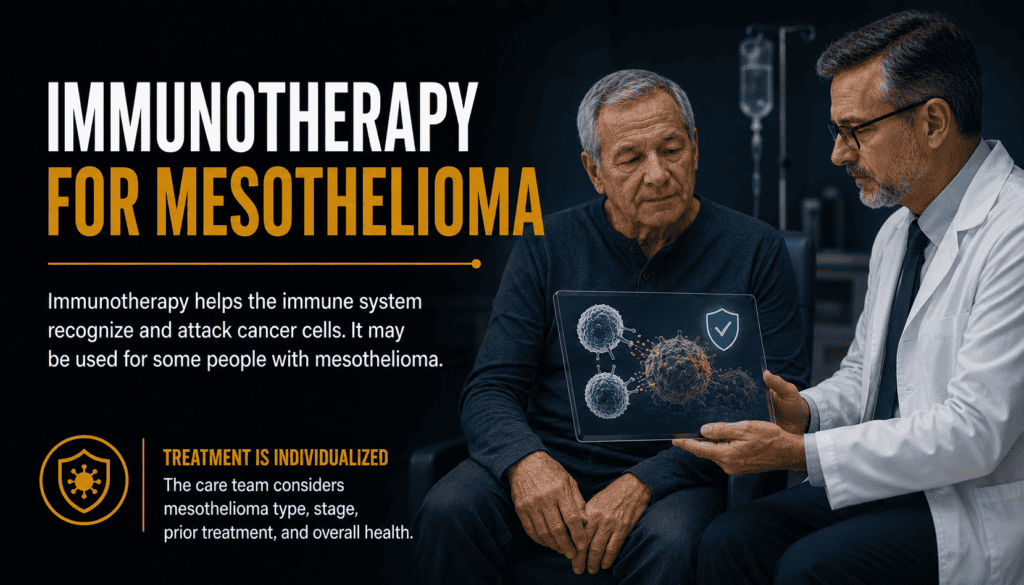
Immunotherapy for Mesothelioma: Drugs, Benefits, Side Effects and Treatment Decisions
A patient-friendly guide to immune checkpoint treatments, practical decisions and questions for your oncology team.
Immunotherapy is an established treatment option for certain people with pleural mesothelioma. It helps the immune system recognize and attack cancer, but it does not work for everyone and can cause serious immune-related side effects. Your treatment choice depends on the location and extent of disease, pathology, other health conditions, treatment goals and preferences. This guide distinguishes FDA-approved regimens from treatments still under investigation.
What Is Immunotherapy for Mesothelioma?
Immunotherapy uses medicines that change how the immune system responds to cancer. The checkpoint inhibitors used in mesothelioma block signals that ordinarily restrain immune cells. They are systemic treatments, usually delivered by intravenous infusion, rather than surgery or radiation directed at one site.
In advanced pleural mesothelioma, doctors may consider immunotherapy alone as a two-drug combination or immunotherapy combined with chemotherapy. Immunotherapy is not synonymous with a cure; the goals may include slowing progression, extending life and maintaining quality of life. See the broader mesothelioma treatment overview.
| Term | Meaning for patients |
|---|---|
| Checkpoint inhibitor | Medicine that blocks an immune-system braking signal. |
| First-line therapy | Treatment used first for advanced disease. |
| Unresectable | Cancer that cannot be removed surgically in the treating team’s assessment. |
| Systemic treatment | Medicine that travels throughout the body. |
How Immune Checkpoint Inhibitors Work
Immune cells called T cells can attack abnormal cells, but checkpoints such as PD-1 and CTLA-4 help prevent excessive immune activity. Some tumors exploit these signals to avoid attack. Nivolumab and pembrolizumab target PD-1; ipilimumab targets CTLA-4. Blocking these checkpoints may strengthen an anticancer response, although some tumors remain resistant.
Because these medicines also remove restraints on normal immune activity, inflammation can develop in healthy organs. An immune-related complication may occur during treatment or after it ends. Your oncology team should give you an emergency contact number and a plan for reporting symptoms.
| Drug | Checkpoint targeted | How used in mesothelioma |
|---|---|---|
| Nivolumab (Opdivo) | PD-1 | Combined with ipilimumab in a first-line FDA-approved regimen for unresectable malignant pleural mesothelioma. |
| Ipilimumab (Yervoy) | CTLA-4 | Combined with nivolumab in that regimen. |
| Pembrolizumab (Keytruda) | PD-1 | Combined with pemetrexed and platinum chemotherapy for first-line unresectable advanced or metastatic malignant pleural mesothelioma. |
FDA-Approved Immunotherapy Options
Two important first-line immunotherapy-containing approaches have FDA approval for specified pleural mesothelioma populations. The indications are not automatically interchangeable with peritoneal mesothelioma. Ask your oncologist to confirm the exact current prescribing information, your diagnosis and your insurance coverage.
| Regimen | FDA-approved setting | What patients should understand |
|---|---|---|
| Nivolumab + ipilimumab | First-line unresectable malignant pleural mesothelioma in adults. | Two immune checkpoint medicines; chemotherapy is not part of this combination. |
| Pembrolizumab + pemetrexed + platinum chemotherapy | First-line unresectable advanced or metastatic malignant pleural mesothelioma in adults; approved September 17, 2024. | Combines an immune checkpoint medicine with chemotherapy; chemotherapy-related and immune-related toxicities both matter. |
| Other immune combinations | May be investigated or used in other settings under specialist guidance. | A clinical-trial result or off-label use is not the same as an FDA-approved mesothelioma indication. |
Official references: NCI nivolumab drug information and FDA pembrolizumab combination approval. These options should be discussed alongside multimodal therapy when appropriate.
Who May Be Eligible for Immunotherapy?
An oncologist evaluates confirmed pathology, whether the cancer is pleural or peritoneal, extent of disease, previous treatment, overall health and the risk of immune complications. A mesothelioma specialist can help assess difficult cases, particularly when surgery, other treatments or clinical trials are being considered.
| Consideration | Why it matters |
|---|---|
| Confirmed diagnosis and location | Pleural approvals should not be assumed to apply to every mesothelioma location. |
| Stage and resectability | Helps identify the treatment setting and available regimens. |
| Prior treatment | First-line approvals and treatment after recurrence are different decisions. |
| Autoimmune disease or organ transplant | Checkpoint therapy may create additional risks; specialist evaluation is essential. |
| Current medicines and organ function | Steroids, other immunosuppressants and baseline organ problems can affect planning. |
| Personal goals | Treatment burden, travel, symptom relief and quality of life should shape decisions. |
Biomarker results may add context, but the 2025 ASCO pleural mesothelioma guideline advises against using PD-L1, tumor mutational burden or microsatellite instability alone to select between chemotherapy and immunotherapy. Ask how your full clinical picture informs the recommendation.
Potential Benefits: What the Clinical Trials Found
Clinical trials show that some immunotherapy regimens improve survival across study groups compared with chemotherapy alone. A median is the point at which half the participants had experienced the measured event; it cannot predict how long any individual will live. Studies enroll defined patient populations and should not be compared head-to-head unless designed for that purpose.
| Study and population | Reported result | Interpretation |
|---|---|---|
| CheckMate 743: 605 previously untreated patients with advanced pleural mesothelioma | Median overall survival 18.1 months with nivolumab + ipilimumab versus 14.1 months with chemotherapy at the prespecified interim analysis. | A population-level survival improvement; individual benefit varies. |
| KEYNOTE-483: 440 patients with previously untreated unresectable advanced or metastatic pleural mesothelioma | Median overall survival 17.3 months with pembrolizumab + chemotherapy versus 16.1 months with chemotherapy alone. | Supports FDA approval of the combination; not a direct comparison with nivolumab + ipilimumab. |
Sources: NCI treatment evidence summary and FDA KEYNOTE-483 review. Ask your team about response likelihood, how long treatment might continue, and what would prompt a change in approach.
Need help now? Call 800.291.0963 / Live chat available 24/7, 365 days a year / Submit Your Case.
Side Effects and When to Call Your Care Team
Fatigue, rash, itching and diarrhea may occur. More serious immune-related inflammation can affect the lungs, colon, liver, thyroid or other hormone-producing glands, kidneys, heart or nervous system. If chemotherapy is part of the regimen, low blood counts, nausea and other chemotherapy effects may also occur. Your team will monitor symptoms and laboratory results.
| Possible problem | Symptoms to report promptly |
|---|---|
| Lung inflammation (pneumonitis) | New or worsening cough, shortness of breath or chest discomfort. |
| Bowel inflammation (colitis) | Persistent or severe diarrhea, blood in stool or abdominal pain. |
| Liver inflammation | Yellowing skin or eyes, dark urine or significant upper-abdominal pain. |
| Hormone-gland problems | Severe fatigue, headache, dizziness, unusual thirst or major mood/temperature changes. |
| Severe infusion or allergic reaction | Breathing difficulty, facial swelling, fainting or sudden severe symptoms. |
Seek emergency medical help for severe breathing difficulty, chest pain, confusion, fainting or a rapidly worsening reaction. For new symptoms, contact your oncology team rather than waiting for the next infusion. Do not start or stop prescribed medicines, including steroids, without clinician direction.
What Happens Before, During and After Treatment?
Before treatment, the team confirms pathology and staging, reviews medical history and medications, obtains baseline laboratory tests and explains the infusion schedule. During treatment, nurses check symptoms and vital signs; clinicians review bloodwork and may order scans at intervals. A response may involve tumor shrinkage or stable disease, but scans can sometimes be difficult to interpret and require specialist review.
| Step | Practical preparation |
|---|---|
| Before the first infusion | Bring pathology, scan reports, medication list and questions about expected benefits and risks. |
| Infusion day | Confirm visit length, transportation and who to call about a reaction. |
| Between visits | Keep a daily symptom log and report changes early. |
| Response assessment | Ask which scan findings or symptoms will define benefit or progression. |
| Treatment change or completion | Request a follow-up plan; delayed immune-related effects remain possible. |
If you are seeking a specialist review, see mesothelioma doctors and second opinions.
Questions to Ask and Next Steps
Bring a written list to your appointment. Ask whether your pathology confirms pleural mesothelioma, why a particular regimen is being offered, what the realistic goals are, and whether a clinical trial is appropriate. Consider asking a family member to take notes with your permission.
| Question | Why ask it? |
|---|---|
| Which regimen fits my exact diagnosis and why? | Clarifies eligibility and the rationale for the plan. |
| What benefit was seen in patients like me? | Places trial averages in personal context. |
| Which symptoms require a same-day call or emergency care? | Creates a safety plan before treatment starts. |
| How will you monitor and measure response? | Sets expectations for blood tests, scans and follow-up. |
| What if treatment does not work or causes severe side effects? | Identifies alternatives and supportive care. |
| What will insurance cover, including infusions and travel? | Helps anticipate practical costs. |
Patients may also want to discuss symptom-focused care alongside anticancer treatment; supportive or palliative care can be provided at any stage. For trial searches, use the NCI clinical trials search. For broader planning, visit mesothelioma treatments.
Frequently Asked Questions About Mesothelioma Immunotherapy
Is immunotherapy a cure for mesothelioma?
No regimen guarantees a cure. Immunotherapy may slow disease or extend survival for some patients; outcomes vary and require individualized discussion.
Which immunotherapy drugs are approved for pleural mesothelioma?
Nivolumab with ipilimumab and pembrolizumab with pemetrexed plus platinum chemotherapy have FDA-approved first-line indications in specified pleural mesothelioma settings.
Can patients with peritoneal mesothelioma receive immunotherapy?
Some may be considered for immunotherapy through individualized specialist decisions or clinical trials, but pleural-specific FDA indications should not be assumed to cover peritoneal disease.
Is immunotherapy the same as chemotherapy?
No. Checkpoint immunotherapy changes immune responses; chemotherapy directly interferes with rapidly dividing cells. Some regimens combine both.
Do I need a PD-L1 test before treatment?
Your oncologist may order biomarkers for clinical context, but ASCO guidance says PD-L1, TMB and MSI should not independently determine the choice of chemotherapy versus immunotherapy for pleural mesothelioma.
How long does immunotherapy last?
Duration depends on the drug regimen, response, side effects and prescribing guidance. Some first-line trial regimens continued immunotherapy for up to two years.
Can side effects begin after treatment stops?
Yes. Immune-related problems may develop during treatment or afterward; report new symptoms and tell other clinicians about prior checkpoint therapy.
What if immunotherapy stops working?
The oncology team may reassess scans and pathology, consider other systemic treatment or clinical trials, and provide symptom-directed care. Options depend on previous treatment and health.
Official Medical Sources and Further Reading
- National Cancer Institute: Malignant Mesothelioma Treatment (PDQ), health professionals
- National Cancer Institute: Mesothelioma Treatment, patients
- FDA: Pembrolizumab plus chemotherapy approval, September 17, 2024
- ASCO: Treatment of Pleural Mesothelioma Guideline Update
Medical evidence and approvals can change. Ask your oncology team to check current prescribing information and guidelines for your situation.
Get Help After a Mesothelioma Diagnosis
Call 800.291.0963 to discuss available assistance. Live chat is available 24/7, 365 days a year. Submit Your Case to ask about possible legal options. Contacting us does not guarantee compensation, a particular case outcome or medical results.
⚕️ Legal & Medical Information Disclaimer
This page provides general educational information, not individualized medical or legal advice. Treatment decisions require a qualified oncology team; legal deadlines and eligibility depend on the facts and applicable law. Consult licensed professionals about your circumstances.