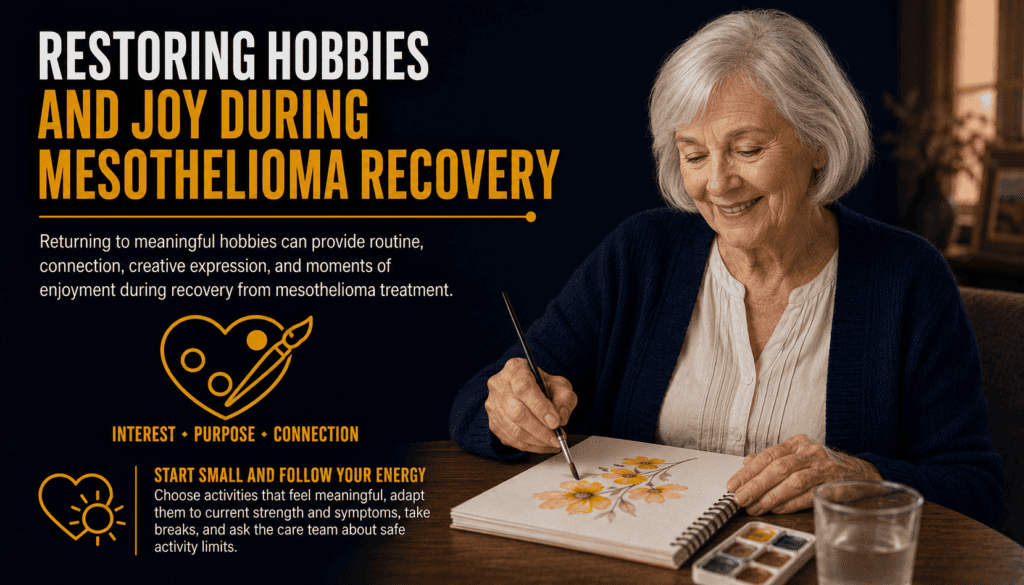
Restoring Hobbies and Joy During Mesothelioma Recovery
Gentle, flexible ways to reconnect with meaningful activities during treatment and beyond
Mesothelioma can interrupt the activities that make daily life feel familiar. You may be able to reconnect with a favorite pastime by changing its pace, setting or format. This guide offers practical ideas without suggesting that hobbies can treat cancer or that everyone should feel positive.
Why Hobbies and Enjoyment Still Matter
Living with mesothelioma can change energy, breathing, mobility and daily routines. A familiar hobby may offer pleasure, identity, connection or a sense of choice even when treatment is demanding. Enjoyment is not a medical treatment, and nobody needs to feel cheerful or productive to be coping well.
“Recovery” may mean recuperating after a procedure, adjusting between treatments or finding a comfortable routine while living with serious illness. It does not imply that every person will recover from mesothelioma. Ask the care team what activities fit your current condition.
| What matters to you | Possible activity | Flexible goal |
|---|---|---|
| Creativity | Sketching or photography | Enjoy one image, not a finished project |
| Connection | Cards or shared music | Spend a few comfortable minutes together |
| Calm | Birdwatching or listening to music | Stop whenever you wish |
Restart Gently: A Step-by-Step Approach
Begin by naming something you used to enjoy, then identify the smallest version that feels possible now. Choose a time of day when symptoms are better controlled, set out supplies beforehand and arrange a comfortable chair. Try a short session and reassess how you feel during and afterward. There is no required duration or pace.
Tell your clinician about new exercise or activities involving exertion, especially after surgery or when you have breathing problems, anemia, balance concerns or treatment side effects. Rest is a valid choice. A hobby should fit around medical care, not replace it.
| Step | Example | Adjustment |
|---|---|---|
| Choose | Gardening | Start with looking at plants from a chair |
| Prepare | Gather a small pot and tools | Ask someone to carry supplies |
| Try | Water one plant | Pause or stop if symptoms increase |
| Reflect | Did it feel enjoyable? | Change the activity rather than push through |
Low-Energy and Seated Hobbies
Reading, audiobooks, puzzles, drawing, knitting, music, family storytelling and seated crafts can be adapted for limited stamina. If hand numbness, pain or concentration difficulties interfere, use larger tools, audio formats or a partner. Choose activities that are personally appealing rather than following a prescribed “healing hobby” list.
Keep supplies within easy reach to reduce repeated standing and bending. For people using supplemental oxygen, follow the equipment supplier’s fire-safety instructions and avoid flames, smoking and other ignition sources. Do not use paints, solvents or dusty craft materials in poorly ventilated areas.
| Barrier | Adaptation | Example |
|---|---|---|
| Fatigue | Short, optional sessions | Listen to one song |
| Hand discomfort | Large-grip tools | Thicker drawing pen |
| Difficulty concentrating | Simple steps | Short audiobook chapter |
| Limited mobility | Seated setup | Tabletop planting |
Nature and Outdoor Interests With Precautions
Someone who enjoys the outdoors may prefer a shaded patio, a window bird feeder, container plants or a short accompanied visit to a nearby accessible garden. Check with the clinical team about activity restrictions, infection precautions and whether heat, cold or poor air quality could worsen symptoms. Use seating and a route that allows an easy return.
Avoid disturbing old insulation or other suspected asbestos-containing materials during home-improvement hobbies. Never sand, cut or remove suspect material yourself. If outdoor activity causes unusual breathlessness, dizziness, chest discomfort or exhaustion, stop and seek appropriate medical guidance.
| Interest | Lower-effort version | Safety consideration |
|---|---|---|
| Gardening | Seated container garden | Avoid heavy lifting and dust |
| Walking | Brief accessible path | Discuss exertion limits with clinician |
| Photography | Photos from a window | Keep device and seating accessible |
See our related guide to nature and outdoor time.
Adapt Activities Around Symptoms and Treatment
Fatigue, pain, nausea, breathlessness and emotional distress may vary from day to day. Coordinate enjoyable activities with prescribed symptom-management plans, meal times and rest. If symptoms are poorly controlled, ask the oncology or palliative-care team about ways to improve comfort; palliative care can be provided alongside cancer treatment.
Do not push through new or worsening symptoms to meet an activity goal. Sudden severe shortness of breath, severe chest pain, fainting or other potentially life-threatening symptoms require emergency evaluation. Contact the care team promptly for new symptoms, fever during treatment or a marked decline in function.
| How you feel | Possible choice | When to reconsider |
|---|---|---|
| Comfortable and alert | Short seated craft | Symptoms begin to rise |
| Tired | Listen to music or rest | Rest is more helpful |
| Breathless with usual tasks | Pause activities and contact care team as advised | Sudden or severe symptoms need urgent care |
| Overwhelmed | Decline plans or ask for company | Persistent distress merits support |
For activity planning, see exercise for mesothelioma patients; exercise advice is distinct from hobby guidance.
When Joy Feels Difficult or Different
People may grieve lost abilities or feel frustrated that a beloved hobby is no longer possible in the same form. Those feelings deserve acknowledgment, not correction. Consider keeping one meaningful part of the activity: discussing books instead of reading for hours, directing a family recipe instead of cooking, or watching a sporting event instead of participating.
If sadness, anxiety, loss of interest or hopelessness persists or interferes with daily life, tell a healthcare professional. Counseling, social work, spiritual care or other support may help according to individual preferences. If there is immediate danger of self-harm, seek emergency help; in the United States, call or text 988 for crisis support.
| Experience | Supportive response | Resource |
|---|---|---|
| Grief about limitations | Acknowledge the loss | Trusted person or counselor |
| Pressure to stay positive | Allow mixed feelings | Care team or support group |
| Persistent distress | Ask for clinical assessment | Oncology social worker or mental health professional |
Read mesothelioma and mental health for additional support.
Build a Personal Joy Plan
A one-page plan can make favorite activities easier to arrange without turning them into obligations. List two or three interests, the simplest version of each, needed supplies, a helper if desired and symptoms that mean it is time to stop. Review the plan as treatment or energy levels change. Let the patient make the final choice whenever possible.
Family members can add hobby time to a shared calendar only with the patient’s agreement. Protect rest, appointments and privacy. If an activity requires travel, consider transport, access to restrooms, seating, medication timing and whether the destination can accommodate mobility equipment.
| Prompt | Example answer |
|---|---|
| Something I miss | Playing guitar |
| Small version to try | Listen to favorite recordings |
| Help I want | Friend brings headphones |
| My stop signal | Pain or fatigue increases |
| Backup choice | Rest or postpone without guilt |
Related reading: mesothelioma support resources and the role of a family medical advocate.
Frequently Asked Questions
Can hobbies cure mesothelioma?
No. Hobbies may offer enjoyment and connection, but they do not treat or cure cancer and should not replace medical care.
How soon after surgery can I restart a hobby?
Ask your surgical team about restrictions, wound care and safe activity. Timing depends on the procedure, symptoms and recovery.
What if I am too tired to do anything?
Rest is appropriate. If fatigue is new, severe or persistent, tell your care team; a short listening activity is optional, not a requirement.
Are outdoor hobbies safe during treatment?
It depends on your health, treatment, weather and exposure risks. Ask your care team about activity and infection precautions.
Should family members encourage a patient to stay busy?
Offer choices without pressure. The patient can decline, stop early or prefer quiet time.
What if a favorite hobby is no longer physically possible?
Keep a meaningful element if desired, such as watching, teaching, discussing or adapting equipment; it is also okay to grieve the change.
Can a hobby help with anxiety or depression?
Enjoyable activities may be supportive, but persistent anxiety or depression deserves professional assessment and appropriate care.
When should I stop an activity and seek help?
Stop if symptoms worsen. Seek emergency care for sudden severe breathlessness, severe chest pain or fainting; contact your care team for other new or concerning symptoms.
Authoritative Resources and Further Reading
Use these established patient-care resources to discuss symptoms, physical activity and emotional support with your care team. Individual recommendations depend on your clinical circumstances.
Find Support for Your Next Step
Call 800.291.0963. Live chat is available 24/7, 365 days a year. Submit Your Case using the form below. Contacting us does not guarantee eligibility for compensation.
⚕️ Legal & Medical Information Disclaimer
This article provides general information, not medical diagnosis, treatment advice or legal advice. Consult your healthcare team before changing activity during treatment or recovery; ask a qualified attorney about individual legal questions.
Make Hobbies Social Without Creating Pressure
Shared activities can make it easier to connect without requiring a long conversation about illness. Invite a friend to listen to music, sort photographs, watch a favorite show or work on a simple craft. Tell visitors that the plan may change or end early. Video calls and asynchronous messages are alternatives when travel or infection concerns make visits difficult.
Ask loved ones to offer specific, manageable choices rather than assuming what the patient wants. Respect a decision to spend time alone. Support groups can provide connection, but they are optional and not everyone finds the same format helpful.
Explore caregiver and family resources and a shared support calendar.