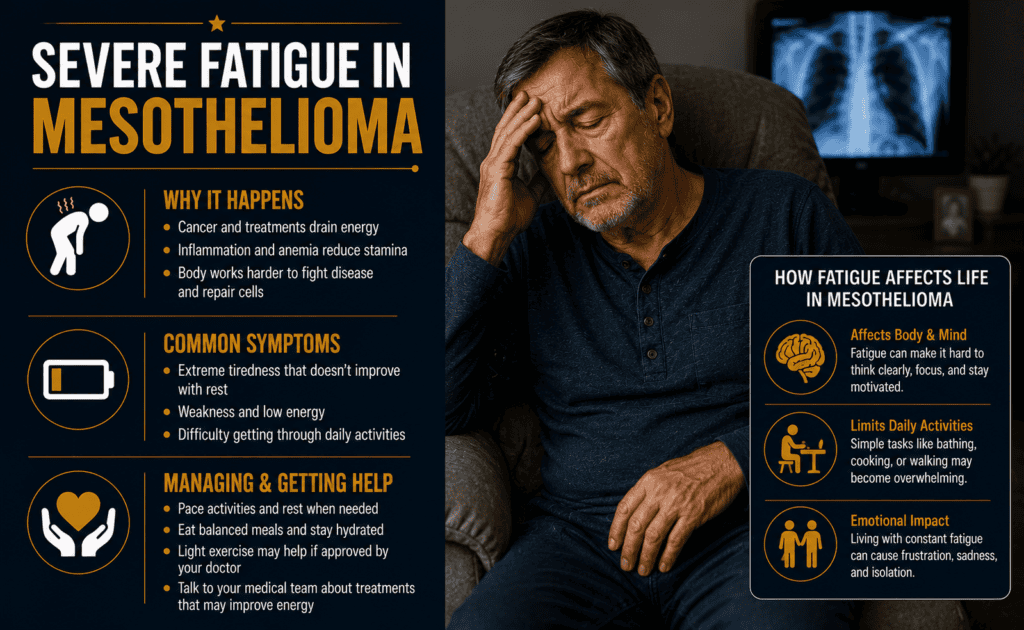
Severe Fatigue in Mesothelioma
Causes, warning signs, medical evaluation, and practical ways to manage overwhelming cancer-related exhaustion.
Severe fatigue in mesothelioma is more than feeling sleepy after a busy day. It can make showering, preparing a meal, holding a conversation, or walking across a room feel unusually difficult. Some people feel exhausted despite sleeping, while others notice worsening energy during treatment. Fatigue deserves attention because several contributing problems may be treatable, even when the cancer itself also plays a role. Learn about other mesothelioma symptoms and discuss new or worsening exhaustion with your cancer care team.
Important: Sudden severe weakness, confusion, fainting, chest pain, or new difficulty breathing should not be assumed to be ordinary cancer fatigue. Seek urgent medical assessment; call emergency services for severe or rapidly developing symptoms.
What Severe Fatigue Feels Like
Cancer-related fatigue may involve physical, emotional, and mental exhaustion. It can be disproportionate to recent activity and may not resolve after a full night of sleep. The National Cancer Institute (NCI) describes it as a common effect of cancer and cancer treatment, with severity varying considerably between individuals.
| Experience | What a patient may notice |
|---|---|
| Physical exhaustion | Heavy limbs, slow movement, needing assistance with everyday tasks. |
| Mental fatigue | Difficulty concentrating, remembering instructions, or following a conversation. |
| Unrefreshing rest | Waking up exhausted even after spending sufficient time in bed. |
| Reduced stamina | Activities that were previously easy require frequent pauses. |
Fatigue is not a diagnosis by itself. It can occur with pleural or peritoneal mesothelioma and can also arise from medication effects, another illness, or several overlapping causes. A symptom pattern and clinical assessment are more useful than guessing from tiredness alone.
| Fatigue | Ordinary tiredness |
|---|---|
| May occur after minimal exertion | Often follows substantial exertion or insufficient sleep. |
| May persist despite rest | Usually improves with sleep or rest. |
| May interfere with basic self-care | Typically permits routine activities after recovery. |
Why Mesothelioma Can Cause Severe Fatigue
Mesothelioma can contribute to fatigue through inflammation, reduced appetite, weight and muscle loss, pain, disturbed sleep, and the demands of treatment. Pleural disease may add breathing difficulties, while abdominal symptoms from peritoneal disease may make eating and activity harder. These associations do not prove that a particular symptom is caused by tumor progression.
| Potential contributor | Why it matters | What to discuss |
|---|---|---|
| Anemia | Fewer red blood cells can reduce oxygen delivery and cause exhaustion. | Blood count and the reason for anemia. |
| Pain and poor sleep | Repeated waking and physical stress can deplete energy. | Pain timing, sleep quality, medication review. |
| Poor intake or dehydration | Low calorie or fluid intake can worsen weakness. | Dietitian assessment and hydration guidance. |
| Infection | Illness can cause fatigue and may require prompt treatment. | Fever, chills, new cough or other changes. |
Therapy may also contribute. Surgery requires recovery; chemotherapy, immunotherapy, and radiation can produce fatigue or side effects that intensify it. The timing of symptoms relative to treatment can help the oncology team investigate.
| Treatment context | Possible fatigue-related issue |
|---|---|
| After surgery | Healing demands, pain, reduced mobility, medication effects. |
| During systemic therapy | Treatment-related fatigue, anemia, appetite change, infection risk. |
| After radiation | Fatigue may build during a treatment course and take time to improve. |
| Supportive medications | Some pain medicines and sleep medicines may cause drowsiness. |
See mesothelioma treatment options and sleep difficulties with mesothelioma for related information.
Fatigue Patterns and Symptom Tracking
A short fatigue diary helps distinguish persistent exhaustion from sudden deterioration and makes appointments more productive. Record when fatigue starts, how severe it feels, whether rest helps, and what else happens at the same time. A 0–10 rating can be useful as a personal tracking tool, but it is not a diagnostic test.
| Record | Example of useful detail |
|---|---|
| Severity | “7 out of 10 at 2 p.m.; unable to prepare lunch.” |
| Timing | Worse two days after treatment or consistently in the morning. |
| Associated symptoms | Breathlessness, dizziness, pain, fever, nausea, poor sleep. |
| Food and fluids | Less appetite or drinking than usual. |
Bring your notes and medication list to appointments. Tell your team whether fatigue prevents bathing, dressing, eating, or taking medicines. Changes in function can matter more than a single number.
| Pattern | Possible follow-up |
|---|---|
| Sudden onset | Prompt evaluation for an acute medical problem. |
| Gradual worsening | Review disease symptoms, blood counts, sleep, nutrition, medications. |
| Worse after treatment | Discuss timing and expected recovery with the treating team. |
| Exhaustion plus poor intake | Assess dehydration, nausea, swallowing, and nutrition. |
When Fatigue Needs Urgent Attention
Severe fatigue should not be dismissed when it is new, worsening, or preventing basic care. Contact the oncology team promptly if you are unable to complete essential tasks, have fever or signs of infection, become dizzy, or cannot maintain food and fluid intake. A caregiver should report meaningful changes even if the patient minimizes them.
| Situation | Suggested response |
|---|---|
| Severe or new shortness of breath, chest pain, fainting | Seek emergency care immediately. |
| New confusion, one-sided weakness, difficulty speaking | Call emergency services immediately. |
| Fever or chills during cancer treatment | Contact the oncology team urgently using its fever instructions. |
| Unable to get out of bed or manage essential care | Contact a clinician right away for assessment. |
For more detail on breathing-related symptoms, see shortness of breath in mesothelioma. Never drive yourself if faint, confused, or severely breathless.
| What to tell the clinician | Why it helps |
|---|---|
| When the change began | Identifies sudden versus gradual decline. |
| Other symptoms | Helps identify infection, anemia, dehydration, or breathing problems. |
| Recent treatment and medications | Highlights potential treatment or drug effects. |
How Clinicians Evaluate Severe Fatigue
There is no single blood test that proves cancer-related fatigue. Clinicians review symptoms, activity limits, medications, treatment dates, sleep, nutrition, mood, and physical findings. Testing depends on the history and examination; common considerations include a complete blood count for anemia and tests guided by suspected infection, dehydration, or metabolic problems.
| Assessment | Purpose |
|---|---|
| Symptom and functional history | Measures how fatigue affects daily living. |
| Medication review | Looks for sedating drugs and interactions. |
| Blood count | Checks for anemia or other blood-cell changes. |
| Targeted additional tests | Investigates causes suggested by symptoms and examination. |
Breathing symptoms may lead to additional examination or imaging. Fatigue alone cannot establish whether mesothelioma has progressed, and imaging decisions should be individualized. Learn about mesothelioma diagnosis and imaging tests.
| Question to bring | Useful reason |
|---|---|
| “Could anemia be contributing?” | Clarifies whether a treatable blood problem exists. |
| “Could my medications be making me drowsy?” | Prompts a supervised medication review. |
| “Do I need nutrition or physical therapy support?” | Connects symptoms to practical services. |
Medical Treatments and Symptom Relief
Treatment is individualized and often begins with correcting contributors rather than prescribing a general “energy medicine.” Depending on the findings, a clinician may address anemia, infection, pain, sleep disturbance, dehydration, poor nutrition, or medication-related drowsiness. Do not start iron, stimulants, steroids, or supplements without medical advice: each has specific indications and risks.
| Identified problem | Clinician-directed approach |
|---|---|
| Anemia | Determine the cause; consider appropriate treatment based on severity and circumstances. |
| Pain | Adjust the pain plan while monitoring sedation. |
| Sleep disruption | Address pain, nighttime symptoms, routines, and sleep disorders. |
| Low intake | Dietitian support and treatment of nausea or other barriers. |
Supportive and palliative care can help at any stage of illness; it is not limited to hospice or the end of life. Teams may coordinate symptom control, physical therapy, nutrition, and caregiver resources alongside cancer-directed treatment.
| Support service | Potential role |
|---|---|
| Palliative care | Coordinates relief of fatigue-related symptoms and quality-of-life concerns. |
| Registered dietitian | Tailors calories, protein, fluids, and eating strategies. |
| Physical or occupational therapy | Plans safe activity and adaptations for daily tasks. |
| Social work | Helps organize practical support and caregiving needs. |
Explore palliative care for mesothelioma and managing pain and symptoms.
Energy Conservation, Nutrition and Movement
Energy conservation means spending limited energy on what matters most, not remaining in bed all day. Prioritize essential tasks, sit while preparing food or bathing when safe, take planned breaks, and ask others to handle strenuous chores. Short, gentle activity can help some people, but the care team should approve an appropriate plan, especially when breathing problems, dizziness, or weakness are present.
| Daily strategy | Practical example |
|---|---|
| Pace activities | Break a shower and dressing into separate steps. |
| Prioritize | Schedule an important appointment at your best time of day. |
| Position and equipment | Use a stable chair for meal preparation if safe. |
| Ask for help | Arrange rides, groceries, or meal preparation. |
Try to maintain regular sleep and wake times. Short daytime naps may help, but long naps can interfere with nighttime sleep. For people with poor appetite, smaller frequent meals and guidance from a dietitian may be more manageable than large meals. Fluid advice should be individualized if a clinician has recommended restrictions.
| Food and rest issue | Helpful discussion |
|---|---|
| Low appetite | Ask about small meals, nutrient-dense foods, and symptom treatment. |
| Weight or muscle loss | Request dietitian input and assessment for cachexia. |
| Trouble sleeping | Review nighttime pain, breathing, medicines, and sleep habits. |
| Unsafe walking | Ask for mobility evaluation and fall-prevention support. |
Related reading: mesothelioma diet and nutrition, approaches to managing fatigue, and cognitive fog and confusion.
Need help now? Call 800.291.0963 / Live chat available 24/7, 365 days a year / Submit Your Case.
Frequently Asked Questions
Is severe fatigue a symptom of mesothelioma?
Yes. Fatigue is a recognized general symptom of mesothelioma, but it can also have other causes. A clinician should assess persistent or worsening exhaustion.
Why am I exhausted even after sleeping?
Cancer-related fatigue may not resolve with rest. Pain, anemia, treatment effects, poor nutrition, and sleep disruption may contribute.
Can chemotherapy make fatigue worse?
Yes. Chemotherapy can contribute to fatigue directly and through problems such as anemia or reduced appetite. Tell your oncology team when symptoms peak.
Could anemia explain my weakness?
Anemia can cause fatigue, breathlessness, and lightheadedness. A blood count and medical evaluation help determine whether it is present and why.
When should I seek urgent help?
Seek emergency care for chest pain, severe breathing difficulty, fainting, or new neurologic symptoms. Contact your oncology team promptly for fever, sudden deterioration, or inability to manage basic tasks.
Should I stay in bed until fatigue goes away?
Not necessarily. Prolonged inactivity may worsen weakness. Ask your care team about a safe balance of rest and gentle movement.
Are supplements or stimulants proven treatments?
No supplement or stimulant is a universal treatment for cancer fatigue. Do not start them without discussing safety and evidence with your treating clinician.
Can palliative care help even if I am receiving treatment?
Yes. Palliative care can be provided alongside cancer treatment to address fatigue, pain, breathing difficulties, and practical support.
| Takeaway | Next step |
|---|---|
| Fatigue has multiple possible causes | Report new or worsening symptoms and ask for an assessment. |
| Treatable contributors may exist | Review anemia, infection, medications, sleep, and nutrition. |
| Daily adjustments can help | Use pacing, appropriate activity, and caregiver support. |
Confirmed Medical Sources
- National Cancer Institute: Cancer Fatigue — causes, evaluation, and management.
- National Cancer Institute: Anemia and Cancer Treatment — symptoms and evaluation.
- American Cancer Society: Signs and Symptoms of Mesothelioma — mesothelioma symptom overview.
- MedlinePlus: Coping With Cancer—Managing Fatigue — self-care and when to contact a clinician.
Get Help and Explore Your Options
If you or a loved one has mesothelioma and questions about potential asbestos exposure or legal options, help is available. Call 800.291.0963. Live chat is available 24/7, 365 days a year. Submit Your Case using the form below.
Eligibility and compensation depend on individual circumstances. No recovery or outcome is guaranteed.
⚕️ Legal & Medical Information Disclaimer
This article provides general educational information, not a diagnosis, medical treatment plan, or legal advice. Seek individualized guidance from qualified medical and legal professionals. For emergency symptoms, seek immediate medical care.