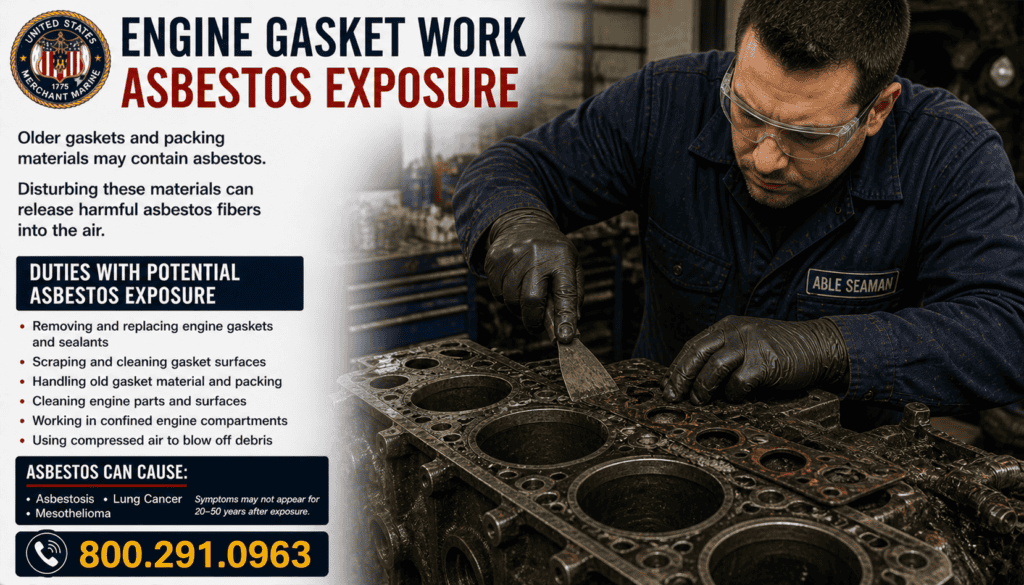
Engine Gasket Work Asbestos Exposure
Some historical engine and exhaust gaskets used asbestos-containing materials because of their ability to tolerate heat and seal demanding joints. Mechanics and engine rebuilders could encounter dust while removing or preparing certain older gasket materials.
The risk cannot be established from an engine model alone. Product composition, replacement history, work methods and the years of service are central to assessing possible asbestos exposure.
Historical Asbestos Use in Engine Gaskets
EPA has described historical asbestos-containing beater-add gaskets and their use in internal-combustion and exhaust-manifold applications. Some materials combined asbestos fibers with binders to create heat-resistant sealing sheets. Other engine gaskets were made without asbestos, and formulations evolved.
The fact that a vehicle or machine was manufactured in an earlier decade does not prove every installed gasket contained asbestos. Replacement parts could differ from factory components, and service records may help identify what was actually handled.
Gaskets served different functions within an engine. A gasket at a hot exhaust connection faced different service demands from a seal in a cooler assembly. Product-specific records matter more than the broad label engine gasket.
When reconstructing an older exposure, distinguish a documented product from a possible product. A photograph, purchase order or eyewitness account may establish different parts of the story. The strongest chronology states the evidence for each assertion, gives an approximate date when exact dates are unavailable, and identifies what still needs checking. This approach also helps avoid confusing a product category with a particular manufacturer or a current non-asbestos formulation.
Engine Locations and Gasket Types
Possible locations included exhaust manifolds, engine joints and other interfaces requiring a durable seal. The temperature, pressure and chemical environment influenced gasket selection. Cylinder-head, manifold and ancillary equipment gaskets may have had different constructions.
Avoid treating all engine seals as one product. A mechanic who removed an exhaust-manifold gasket may have performed different work from someone replacing a rubber oil seal. Identify the actual component and repair operation.
A rebuilt engine may contain parts supplied by multiple companies. The engine manufacturer, gasket maker, distributor and repair shop should not automatically be treated as the same entity.
A useful interview asks what the worker actually did on an ordinary day: which surfaces were opened, which tools were used, where waste went and whether coworkers performed dusty work nearby. The answers can vary greatly even within one occupation. Avoid assuming that every task involved asbestos. The relevant question is whether a particular asbestos-containing material was disturbed under conditions that could produce inhalable dust.
Removal, Scraping and Surface Preparation
Potential dust-generating tasks included scraping old gasket residue from mating surfaces, wire brushing, sanding or cutting replacement gasket stock. The extent of airborne fiber release depended on whether asbestos was present, the material’s condition and the technique used.
Workers sometimes repeated the same operation on many engines during a shift. A detailed history should capture frequency, tools, enclosed work areas, ventilation and cleanup methods rather than relying on a vague statement that engines were repaired.
Mechanics may recall using scrapers, wire wheels or solvents. These details matter because disturbance methods influence whether dust was created; the presence of asbestos must still be independently established.
Records from several sources can sometimes corroborate one another. A job title establishes employment, a service ticket may identify a repair, and a catalog may describe the composition of a part sold during that period. None of these records necessarily proves every remaining element alone. Keep originals or clear copies, note where they came from and avoid changing old documents to make the timeline appear more certain.
Automotive and Industrial Work Settings
Exposure questions may arise in automotive repair garages, diesel rebuild shops, fleet depots, farm equipment repair, marine engine rooms and industrial maintenance facilities. These settings involved different engines, suppliers and repair practices.
A fleet mechanic might service multiple vehicle generations, while an industrial mechanic might maintain a stationary engine for years. The worksite and equipment inventory can help identify relevant gasket brands and approximate dates.
Engine service frequency varied. A mechanic rebuilding engines daily had a different task pattern from a vehicle owner completing one occasional repair. A careful account should describe actual work without exaggeration.
For someone who is currently concerned about material in a workplace or building, do not attempt to identify asbestos by sight or disturb a suspected component. Appropriate inspection, sampling and controls belong with qualified professionals following applicable rules. This safety question is different from the retrospective legal question of whether a person encountered a specific product decades earlier. Both deserve careful handling.
Identifying Replacement Gaskets and Suppliers
Service manuals, parts invoices, stockroom logs, packaging photographs, supplier catalogs and maintenance records may help identify a historical gasket. A replacement installed years after an engine was built may not match the original material.
Coworker accounts can clarify which components were commonly stocked and how residue was removed. Claims about a manufacturer should be grounded in actual product records or reliable testimony, not a brand associated with an unrelated engine part.
Packaging and invoices can help identify aftermarket parts. If the original paperwork is unavailable, dated parts catalogs and witness accounts may narrow the possibilities, but uncertainty should be stated.
Manufacturers may have offered several versions of a product over time. A modern online listing, an old advertisement and a current company name may refer to different materials or corporate entities. Look for the part number, installation date and supplier where possible. If records are missing, a responsible article should acknowledge uncertainty rather than turn a general industry practice into a definite claim about an individual.
Medical Risks and Exposure Documentation
Asbestos is a recognized cause of mesothelioma. A long delay between exposure and diagnosis is common. A clinician must assess the medical condition, while an exposure history helps describe the work that may be relevant to legal review.
Keep pathology reports and treatment summaries, but do not interrupt care to reconstruct old job details. A trusted relative can help list garages, employers, coworkers and repair periods when the patient is occupied with treatment.
Medical records establish diagnosis and treatment, not which gasket supplied an exposure. Product identification, employment history and medical evidence play different roles in evaluating a potential claim.
Mesothelioma symptoms and treatment choices should be discussed with a medical professional. Work-history details may be relevant to understanding potential exposures, but they cannot substitute for pathology or other clinical evidence. Families may find it useful to maintain separate medical, employment and legal folders so that each professional receives the records relevant to their role without mixing assumptions into established facts.
Lawsuit and Trust Fund Considerations
Potential options may include a personal-injury lawsuit or asbestos bankruptcy trust claim, depending on the products, responsible entities and legal requirements. A gasket-related claim is not automatic merely because an engine was repaired.
The evidence may need to connect a particular gasket to asbestos content and exposure. Trusts use their own criteria; defendants in lawsuits may dispute identification or causation. Deadlines vary, and qualified counsel can evaluate available paths.
Asbestos trust claims are governed by individual trust procedures. A general article about automotive trusts cannot establish that a particular engine gasket or claimant meets those criteria.
Different compensation routes can have different documentation rules, deadlines and disclosure obligations. A trust claim is not necessarily the same as a lawsuit against an operating company. Nor does identifying a historical asbestos product guarantee that a particular person qualifies for compensation. A case review should clarify the legal theory, the evidence still needed, who would handle the matter and what costs or fees could apply.
Steps for Mechanics and Families
Start with an employer-by-employer timeline and note engine types, years, gasket jobs, removal tools and replacement suppliers. Identify whether old gaskets were scraped, cut or mechanically abraded. List coworkers who observed the tasks and any retained records.
Separate facts personally remembered from information inferred later. Preserve invoices and photographs without disturbing suspected asbestos materials. Clear documentation supports an informed review and reduces the risk of overstating a claim.
Families can preserve a worker’s account in their own words, including approximate dates and coworkers’ names. Avoid leading questions that encourage certainty where the worker remembers only part of the history.
Families can prepare a brief summary before speaking with an attorney: diagnosis and date, principal jobs, relevant tasks, approximate exposure years, product names remembered and documents available. It is appropriate to say “unknown” when a detail cannot be recalled. Ask how time limits may apply, which records are most useful and how medical priorities can be respected during any review.
An engine’s service history can be more informative than its model year. Over a long working life, a vehicle or stationary engine may have received several replacement gaskets from different suppliers. A shop might use factory parts on some jobs and aftermarket inventory on others. Ask whether the mechanic installed precut gaskets, trimmed sheet material or removed hardened residue from the engine surface. Record how often the work occurred and whether it happened indoors. An accurate description of scraping methods, cleanup procedures and ventilation may also help distinguish an occasional repair from repetitive occupational maintenance. A coworker’s description of shop practices may help, but should not be substituted for evidence about a particular product. Where available, parts invoices, engine rebuild logs and dated photographs can clarify the sequence without assuming that all gaskets used during that period contained asbestos.
❓ Frequently Asked Questions
Did all engine gaskets contain asbestos?
No. Composition depended on product, supplier and year.
Could scraping old gaskets release asbestos?
Yes, if the gasket contained asbestos and the removal disturbed fibers.
Do replacement gaskets matter?
Yes. Replacement products may differ from original equipment.
What records can identify gasket brands?
Parts invoices, service manuals, stockroom records and packaging may help.
Are engine repairs enough to prove a claim?
No. Specific exposure, medical and legal evidence may be required.
Can a family request a case review?
Yes. Families can seek information, subject to authorization and applicable law.
Sources and References
Authoritative background: EPA — Learn About Asbestos; OSHA — Asbestos Overview; EPA — Historical Product Uses; EPA — Chrysotile Asbestos Risk Management. Product-specific claims require independent supporting evidence.
📞 Get the Mesothelioma Help & Compensation You Deserve — Contact Us Today!
After a mesothelioma diagnosis, we can help you organize asbestos exposure information and understand potential compensation options. Eligibility and outcomes depend on individual facts and applicable rules.
For 25+ years, we have helped veterans, workers, and families find information and explore their next steps.
📲 Contact Us Today — Three Easy Ways!
CALL: 800.291.0963 for a free case review.
LIVE CHAT: Available 24/7/365 through the website.
CONTACT FORM: Use the form below.
Disclaimer: This information is not be considered as legal or medical advice. Mesothelioma Help Center is not a law firm or medical provider and does not determine legal or VA eligibility.