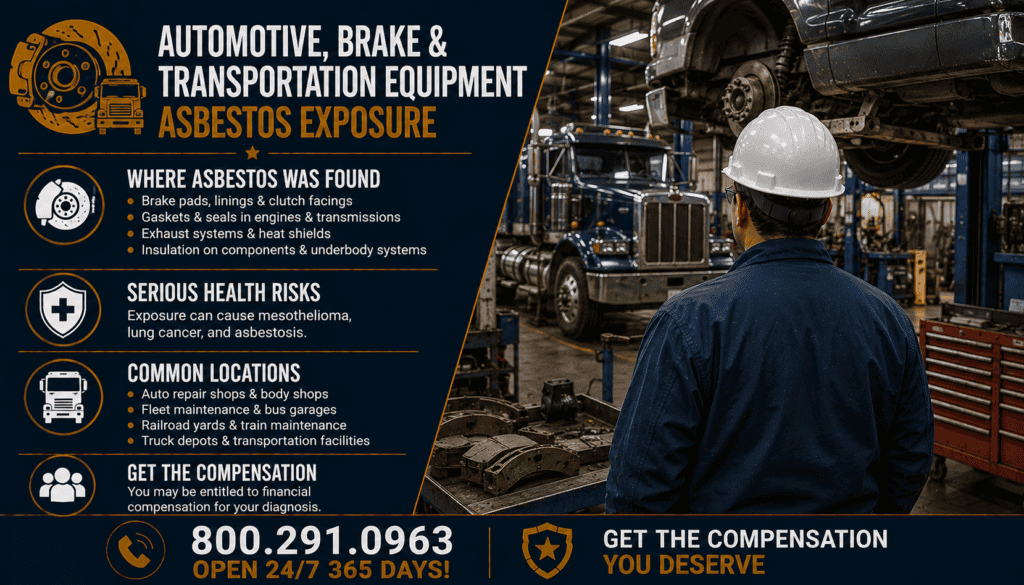
Automotive, Brake & Transportation Equipment Asbestos Exposure
Some older automotive and transportation equipment may have used asbestos-containing brake linings, clutch facings, gaskets, heat-resistant materials or other friction components. Mechanics and other workers could potentially encounter asbestos dust when certain parts were inspected, removed, repaired or replaced.
Not every vehicle or component contained asbestos. The manufacturer, model, component, year, replacement-part history and actual repair work are important when evaluating possible exposure.
Automotive, Brake and Transportation Equipment Asbestos Exposure Overview
Cars, trucks and other transportation equipment depend on friction, sealing, electrical and heat-resistant components. Historically, asbestos was used in some automotive brakes and clutches because of its heat-resistant properties.
Potential exposure is most relevant when an asbestos-containing component was actually present and disturbed. Simply driving, operating or being near a vehicle does not establish asbestos exposure.
Types of Automotive and Transportation Equipment
Exposure investigations may involve passenger vehicles, trucks, fleet vehicles, industrial transportation equipment and other machines with brake, clutch or mechanical systems.
Equipment histories can be complicated because original components may have been replaced many times. A vehicle’s age alone does not prove that its brakes, clutches or other parts contained asbestos.
Asbestos-Containing Components
Depending on manufacturer, model, year and replacement parts, historical components that may warrant investigation include:
- drum-brake shoes and brake linings;
- certain disc-brake friction materials;
- clutch facings;
- gaskets and sealing materials;
- heat-resistant insulation or barriers; and
- other friction or high-temperature components.
EPA notes that some, but not all, automotive brakes and clutches may contain asbestos. Asbestos content cannot reliably be determined simply by looking at a brake or clutch component.
Brake and Clutch Asbestos Exposure
Brake and clutch work deserves particular attention because removing a wheel, brake drum, brake disc assembly or clutch cover can expose accumulated dust. If the friction component contains asbestos, that dust may contain inhalable asbestos fibers.
OSHA requires specified engineering controls and work practices for professional automotive brake and clutch inspection, disassembly, repair and assembly when asbestos-containing materials may be involved. These requirements reflect the potential for repair activities to disturb asbestos-containing friction material.
Maintenance, Repair and Disturbance Pathways
Potential fiber release is more plausible when asbestos-containing friction or sealing material is disturbed. Relevant activities can include:
- removing brake drums, shoes, pads or related friction parts;
- removing or servicing clutch assemblies;
- cutting, grinding, drilling, beveling or machining friction material;
- scraping or replacing gaskets;
- cleaning accumulated brake or clutch dust; and
- handling contaminated clothing, tools or work-area debris.
EPA warns against using compressed air or dry cleaning methods on brake and clutch assemblies because these practices can spread dust. Actual exposure depends on whether asbestos was present, how the component was disturbed, frequency and duration of work, proximity, ventilation and dust-control practices.
Need help identifying older automotive or brake components? Call 800.291.0963. Live chat available 24/7, 365 days a year. Submit Your Case.
Workers Potentially Exposed
Potentially relevant workers may include automotive mechanics, brake and clutch technicians, fleet mechanics, truck mechanics, maintenance workers, equipment mechanics and workers who cleaned repair areas or handled dusty work clothing.
A job title does not establish exposure. An investigation should identify the vehicles or equipment serviced, specific parts handled, repair procedures, years of work and conditions in the shop or maintenance area.
Possible secondhand asbestos exposure also requires evidence of an actual pathway, such as asbestos-containing dust carried from repair work on clothing, shoes, tools or belongings.
Evidence That May Identify Asbestos-Containing Parts
- vehicle or equipment manufacturer, make, model and year;
- brake, clutch or gasket manufacturer and part number;
- parts catalogs, service manuals and technical bulletins;
- packaging, labels and safety data or historical product information;
- repair orders and maintenance records;
- purchase invoices and replacement-part records;
- shop, employer, union or military records;
- historical photographs and equipment inventories;
- coworker, mechanic or supervisor statements; and
- laboratory analysis of surviving material where appropriate.
Identifying a vehicle or parts manufacturer may help focus research, but manufacturer identification alone does not establish asbestos content, exposure, causation or legal responsibility. Evidence may also be evaluated when determining how products can be linked to defendants.
Health, Legal and Compensation Considerations
Inhaling asbestos fibers can cause serious disease, including mesothelioma, lung cancer and asbestosis. A history of automotive or brake work does not by itself diagnose an asbestos-related disease or establish individual medical causation.
Depending on the evidence and circumstances, legal options may be available after documented exposure to asbestos-containing automotive or transportation components. Deadlines and eligibility are case-specific, and compensation is not guaranteed.
Related Equipment and Exposure Resources
These resources cover closely related automotive work, friction components, transportation equipment and exposure evidence.
Automotive and Transportation Equipment
- Automotive Equipment Asbestos Exposure
- Brake Equipment Asbestos Exposure
- Grinder Equipment Asbestos Exposure
- Shipbuilding Tool Equipment Asbestos Exposure
- Equipment Asbestos Exposure
Workplace and Equipment Resources
- Asbestos Exposure in High-Risk Jobs
- Asbestos Exposure in Job Sites
- Asbestos Exposure in Buildings
- Military Equipment Asbestos Exposure
- Product Liability and Worker Safety Laws
Products, Manufacturers and Exposure Evidence
Automotive and Brake Equipment Asbestos Exposure FAQs
Did all older automotive brakes contain asbestos?
No. EPA states that some, but not all, automotive brakes may contain asbestos. The specific part and its history matter.
Could older clutches contain asbestos?
Yes, certain clutch facings historically used asbestos, but a particular clutch should not be assumed to contain asbestos without supporting evidence.
Can you identify asbestos brake parts by looking at them?
No. EPA states that asbestos-containing and non-asbestos brake or clutch components cannot reliably be distinguished by appearance alone.
How could brake repair release asbestos fibers?
If a brake contains asbestos, inspection, removal, machining or cleaning can disturb dust that may contain asbestos fibers.
Why is compressed-air cleaning a concern?
Compressed air can blow brake or clutch dust into the work area, potentially increasing airborne exposure when asbestos is present.
Can vehicle age prove asbestos exposure?
No. Age may guide research, but component identification and actual work history are needed to evaluate exposure.
Can automotive work create secondhand exposure?
It may when asbestos-containing dust was actually carried away on clothing, shoes, tools or belongings. A family relationship alone does not prove exposure.
Does automotive asbestos exposure automatically qualify someone for compensation?
No. Eligibility depends on exposure evidence, medical information, jurisdiction and other case-specific circumstances. Compensation is not guaranteed.
Get Help Reviewing Automotive, Brake and Transportation Equipment Exposure
If you or a family member has been diagnosed with mesothelioma, asbestos-related lung cancer or another asbestos-related disease and you are trying to identify older automotive, brake or transportation components, we can help organize information that may be relevant.
Call 800.291.0963 to discuss the vehicles, equipment, parts, manufacturers, repair work, job sites and years of possible exposure you remember. Live chat is available 24/7, 365 days a year. Submit Your Case using the form below.
Prior exposure does not automatically establish a legal claim. Eligibility depends on the evidence, diagnosis, jurisdiction and other circumstances, and compensation is not guaranteed.
⚕️ Legal & Medical Information Disclaimer
This page provides general educational information and is not medical or legal advice. The information does not establish asbestos exposure, diagnosis, causation, liability, claim eligibility or compensation. Medical concerns should be discussed with a qualified healthcare professional, and legal questions should be reviewed with a qualified attorney.