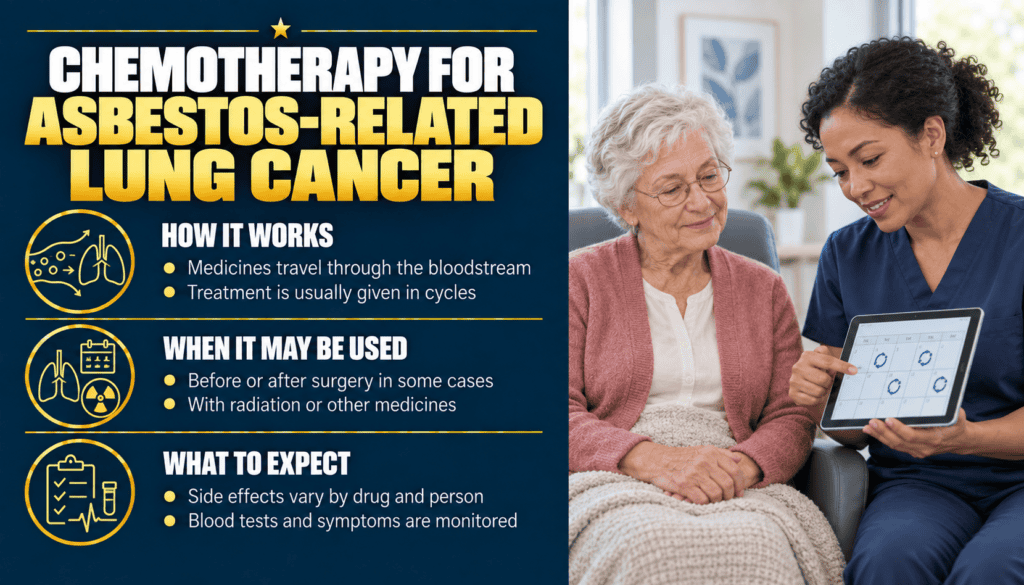
Chemotherapy for Asbestos-Related Lung Cancer
Chemotherapy can be an important treatment for asbestos-related lung cancer, but the treatment plan is based on the cancer’s type, stage, pathology, molecular findings, previous treatment, and the patient’s overall health—not on asbestos exposure alone. Chemotherapy drugs circulate through the bloodstream and can reach cancer cells throughout the body, which makes systemic treatment useful in several stages of lung cancer.
Chemotherapy may be used before surgery, after surgery, with radiation therapy, with immunotherapy, or as a primary treatment for advanced or recurrent disease. The exact drugs and schedule depend heavily on whether the patient has non-small cell lung cancer (NSCLC) or small cell lung cancer (SCLC).
This page is a child of the Asbestos Lung Cancer Treatment hub within the broader Diagnosed With Lung Cancer silo. Patients considering an operation can also review Surgery for Asbestos-Related Lung Cancer, while diagnostic information is available at Diagnosing Asbestos-Related Lung Cancer.
💉 How Chemotherapy Treats Lung Cancer
Chemotherapy uses anticancer drugs that kill cancer cells or interfere with their ability to grow and divide. Most lung cancer chemotherapy is systemic, meaning the medicine travels through the bloodstream and can reach cancer cells beyond the original lung tumor.
Because chemotherapy affects rapidly dividing cells, it can also affect healthy tissues. This is why treatment can cause side effects involving the blood cells, digestive system, hair follicles, nerves, kidneys, hearing, and other organs depending on the drugs used.
Oncologists select chemotherapy based on the specific lung cancer rather than simply labeling a case “asbestos lung cancer.” Asbestos exposure may be relevant to why the disease developed, but the tumor’s medical characteristics determine the treatment approach.
📋 When Chemotherapy Is Used
Chemotherapy can serve different purposes at different points in lung cancer care.
| When Chemotherapy Is Used | Potential Purpose |
|---|---|
| Before surgery | Treat cancer systemically before an operation and, in selected cases, help reduce the amount of disease. |
| After surgery | Reduce the risk from microscopic cancer cells that may remain after the visible tumor is removed. |
| With radiation | Treat selected locally advanced cancers using combined therapy. |
| With immunotherapy | Provide systemic treatment using complementary approaches in appropriate NSCLC and SCLC settings. |
| Advanced or metastatic cancer | Control cancer throughout the body, relieve symptoms, and potentially extend survival. |
| Recurrent cancer | Treat disease that has returned after earlier therapy. |
Not every patient needs chemotherapy, and not every patient receives it at the same point in treatment. Stage, pathology, molecular findings, surgical eligibility, prior therapy, and general health all influence the decision.
🫁 Chemotherapy for Non-Small Cell Lung Cancer
Non-small cell lung cancer accounts for most lung cancers. Chemotherapy remains an important treatment option, but modern NSCLC care increasingly combines chemotherapy decisions with molecular testing and immunotherapy selection.
Common chemotherapy drugs used in NSCLC can include platinum drugs such as cisplatin or carboplatin and other agents such as pemetrexed, paclitaxel, docetaxel, gemcitabine, or vinorelbine. The exact combination depends on histologic subtype, stage, kidney function, overall health, previous treatment, and whether immunotherapy or targeted therapy is part of the plan.
| NSCLC Situation | How Chemotherapy May Fit |
|---|---|
| Selected operable disease | May be given before or after surgery, sometimes with immunotherapy. |
| Locally advanced disease | May be combined with radiation and followed or accompanied by other systemic therapy when appropriate. |
| Metastatic disease | May be combined with immunotherapy or other systemic treatments depending on biomarkers and tumor type. |
| Recurrent disease | May be considered based on prior treatment, tumor characteristics, and patient condition. |
Some patients with actionable molecular alterations may receive targeted therapy rather than a conventional chemotherapy-first approach. Appropriate biomarker testing is therefore an important part of modern NSCLC treatment planning.
🧬 Chemotherapy for Small Cell Lung Cancer
Chemotherapy is central to the treatment of small cell lung cancer because SCLC tends to grow rapidly and can spread early.
Platinum-based chemotherapy combined with etoposide has long been a standard backbone of SCLC treatment. Depending on whether the disease is limited-stage or extensive-stage, chemotherapy may be combined with radiation therapy or immunotherapy.
Limited-stage SCLC
Many patients with limited-stage SCLC receive chemotherapy together with chest radiation. Selected patients with very early surgically treated disease may receive chemotherapy after surgery.
Extensive-stage SCLC
For many patients with extensive-stage disease, a platinum drug plus etoposide may be combined with an immune checkpoint inhibitor when appropriate. Treatment decisions depend on current guidelines, medical history, prior therapy, organ function, and other patient-specific factors.
🔪 Chemotherapy Before or After Lung Cancer Surgery
Chemotherapy may be incorporated into a surgical treatment plan for selected NSCLC patients.
Neoadjuvant chemotherapy
Neoadjuvant treatment is given before surgery. The goal is to treat microscopic disease early and, in some cases, reduce the tumor burden before an operation. Modern treatment may combine chemotherapy with immunotherapy in selected patients.
Adjuvant chemotherapy
Adjuvant chemotherapy is given after surgery. Even when a surgeon removes all visible cancer, microscopic cancer cells may remain elsewhere in the body. Adjuvant systemic therapy may reduce the risk of recurrence in appropriately selected patients.
Whether chemotherapy is appropriate after surgery depends on the pathologic stage, lymph nodes, tumor characteristics, molecular findings, surgical results, and the patient’s health.
For details about operative treatment, see Surgery for Asbestos-Related Lung Cancer.
🛡️ Chemotherapy With Immunotherapy or Radiation
Chemotherapy is frequently combined with other forms of lung cancer treatment.
Chemotherapy and immunotherapy
Immunotherapy helps the immune system recognize or attack cancer. In appropriate patients, chemotherapy and immune checkpoint inhibitors may be used together. This approach is used in several NSCLC and SCLC settings.
Chemotherapy and radiation
Chemoradiation uses chemotherapy and radiation as part of the same overall treatment strategy. It is commonly considered for certain locally advanced lung cancers and is an important approach in limited-stage SCLC.
The timing and sequencing of treatment can affect both effectiveness and side effects. Patients should receive a plan individualized by their oncology team rather than assuming that every combination applies to every stage.
📅 Chemotherapy Cycles and Treatment Monitoring
Chemotherapy is commonly delivered in cycles. A treatment cycle includes a period when chemotherapy is given followed by time for the body to recover. The schedule varies by drug combination and treatment goal.
Before and during treatment, clinicians may monitor:
- Blood cell counts
- Kidney and liver function
- Weight and nutrition
- Neurologic symptoms
- Hearing when certain drugs are used
- Breathing and overall performance status
- Tumor response through imaging
- Treatment side effects
Doses can sometimes be adjusted, delayed, or changed if side effects become significant. Patients should report symptoms promptly rather than attempting to manage serious treatment effects without medical guidance.
⚠️ Chemotherapy Side Effects
Side effects depend on the drugs, doses, treatment schedule, combination therapies, age, organ function, and other health conditions. Not every patient experiences every side effect.
| Possible Side Effect | Why It Can Occur |
|---|---|
| Fatigue | Cancer treatment, anemia, sleep disruption, nutrition changes, and other factors can contribute. |
| Nausea or vomiting | Some chemotherapy agents activate pathways involved in nausea; preventive medicines can often help. |
| Low blood counts | Chemotherapy can temporarily suppress bone marrow production of blood cells. |
| Infection risk | Low white blood cell counts can reduce the body’s ability to fight infection. |
| Neuropathy | Certain drugs can damage peripheral nerves, causing numbness, tingling, or pain. |
| Kidney or hearing effects | Some platinum drugs can affect kidney function or hearing and require monitoring. |
| Hair loss | Some chemotherapy drugs affect rapidly dividing hair-follicle cells. |
A fever during chemotherapy can be medically significant, particularly when white blood cell counts are low. Patients should follow their oncology team’s instructions about when to call urgently or seek emergency care.
❓ Frequently Asked Questions
Is chemotherapy used to treat asbestos-related lung cancer?
Yes. Chemotherapy is used in many NSCLC and SCLC treatment plans. Whether it is appropriate depends on the cancer type, stage, molecular findings, previous treatment, and the patient’s health.
Are there special chemotherapy drugs only for asbestos lung cancer?
No. Lung cancer linked to asbestos is generally treated according to the same tumor type and stage principles used for other lung cancers. Asbestos exposure helps explain potential causation rather than creating a separate chemotherapy category.
What chemotherapy drugs are used for non-small cell lung cancer?
Regimens may include cisplatin or carboplatin with drugs such as pemetrexed, paclitaxel, gemcitabine, docetaxel, or other agents. The exact regimen depends on the tumor subtype, biomarkers, stage, and patient factors.
What chemotherapy is commonly used for small cell lung cancer?
A platinum drug such as cisplatin or carboplatin combined with etoposide is a widely used chemotherapy backbone. Other treatments may be combined with it depending on stage and current treatment recommendations.
Can chemotherapy be given before lung cancer surgery?
Yes. Selected patients receive neoadjuvant chemotherapy before surgery, sometimes together with immunotherapy. The goal is to treat disease systemically before the operation.
Can chemotherapy be given after surgery?
Yes. Adjuvant chemotherapy may be recommended after surgery for selected patients based on pathologic stage, lymph nodes, tumor characteristics, and other factors.
Can chemotherapy and immunotherapy be given together?
Yes. Combination chemotherapy and immunotherapy are used in several lung cancer settings. Eligibility depends on cancer type, stage, biomarkers, prior treatment, and the patient’s health.
Does asbestos exposure change which chemotherapy I receive?
Usually not by itself. The chemotherapy regimen is generally determined by the cancer’s histology, stage, biomarkers, organ function, previous treatment, and overall medical condition. Other asbestos-related lung disease may affect treatment tolerance.
📞 Chemotherapy After an Asbestos-Related Lung Cancer Diagnosis?
If you or a family member is receiving chemotherapy for lung cancer after years in construction, shipyards, industrial facilities, military service, mechanical trades, power generation, refineries, or another potentially exposed setting, medical treatment should remain the priority. At the same time, documenting old asbestos exposure may help determine whether legal options should be investigated.
Call 800.291.0963 to discuss jobs, military assignments, worksites, equipment, and materials that may be relevant to historical asbestos exposure. Live help is available 24/7, 365 days a year.
Submit Your Case for a case-specific review of potential asbestos exposure and legal options. Eligibility depends on diagnosis, exposure evidence, responsible companies or trusts, jurisdiction, and applicable filing deadlines.
For additional legal information, visit Lung Cancer Asbestos Lawsuit.
⚕️ Legal & Medical Information Disclaimer
This page provides general educational information only. It does not establish a diagnosis, treatment plan, medical causation, legal liability, VA eligibility, or entitlement to compensation. Consult qualified medical and legal professionals about your specific situation.