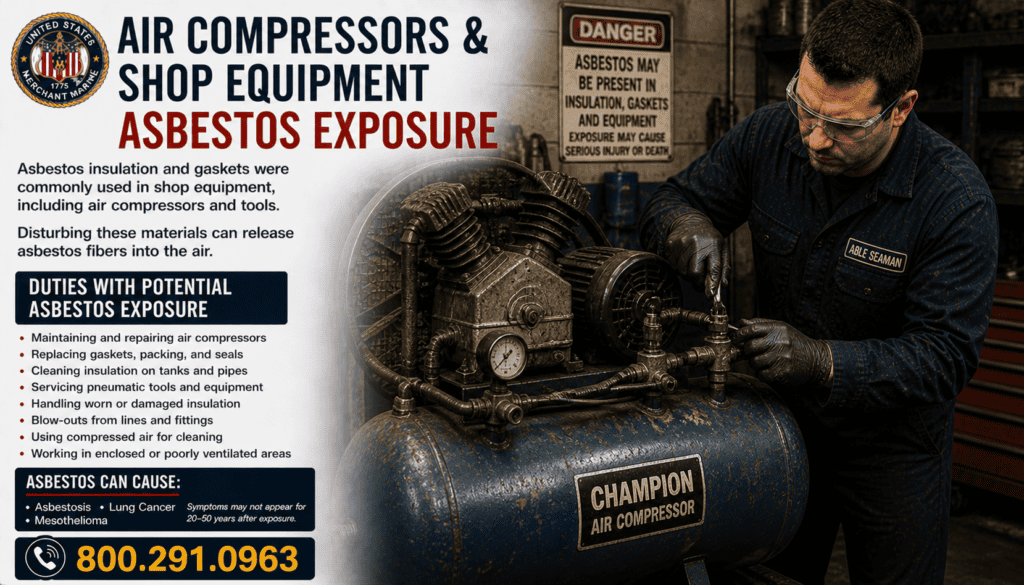
Air Compressors & Shop Equipment Asbestos Exposure
Some older air compressors and shop equipment may have incorporated asbestos-containing gaskets, packing, insulation or other heat-resistant sealing materials.
Not every compressor or shop machine contained asbestos. Whether asbestos was present depends on the manufacturer, model, component, year, maintenance history and surrounding equipment.
Air Compressors and Shop Equipment Asbestos Exposure Overview
Air compressors and related shop equipment were widely used in factories, maintenance shops, shipyards, garages, industrial plants and military facilities.
Potential asbestos exposure was more plausible during maintenance, repair, overhaul or component replacement when asbestos-containing gaskets, packing, insulation or friction materials were disturbed.
Equipment age alone does not prove asbestos content.
Asbestos-Containing Compressor and Shop Components
Depending on the equipment and year, asbestos-containing materials may have been used in:
- compressor gaskets and flange seals;
- packing around shafts, valves or fittings;
- thermal insulation near hot components;
- heat-resistant panels or barriers;
- certain friction or brake materials on associated shop equipment; and
- other replaceable sealing materials.
Some systems may have used asbestos only in replaceable components or connected piping rather than in the compressor housing itself.
Where Compressors and Shop Equipment Were Used
Compressed-air and shop systems supported maintenance, fabrication, manufacturing, ship repair, automotive work and industrial operations.
Air compressors could be connected to pumps, valves, tanks, piping, pneumatic tools and other machinery.
Because these systems involved multiple components, the actual asbestos source may have been a gasket, packing material, insulated pipe or nearby machine rather than the compressor itself.
Maintenance, Repair and Overhaul Exposure Pathways
Potential fiber release is more plausible when asbestos-containing materials are physically disturbed. Relevant tasks could include:
- opening compressor housings;
- scraping old gaskets from flanges;
- replacing packing or seals;
- removing insulated piping;
- servicing connected valves, pumps or tanks;
- overhauling older shop machinery; and
- cleaning dust and debris after maintenance.
Actual exposure depends on asbestos content, material condition, work method, frequency, duration, proximity, ventilation and cleanup practices.
Trying to identify asbestos in older air compressors or shop equipment? Call 800.291.0963. Live chat available 24/7, 365 days a year. Submit Your Case.
Gaskets, Packing and Insulation Materials
Historical compressor and shop systems could use heat-resistant sealing and insulation materials where pressure, friction or elevated temperatures were present.
Workers repairing equipment might disturb gaskets, valve packing, insulated lines or other asbestos-containing components during routine service or overhaul.
Historical parts records and service documentation may help distinguish asbestos-containing components from later non-asbestos replacements.
Workers and Workplaces Linked to Shop Equipment
Potentially relevant workers may include mechanics, millwrights, maintenance technicians, machinists, pipefitters, shipyard workers, industrial workers and military maintenance personnel.
Relevant settings may include factories, machine shops, shipyards, garages, power facilities, industrial plants and military maintenance areas.
A job title, worksite or presence near compressors or shop equipment does not by itself establish asbestos exposure.
Evidence That May Identify Asbestos-Containing Components
Useful evidence may include:
- manufacturer, brand and model information;
- equipment serial numbers and nameplates;
- service manuals and parts lists;
- maintenance and overhaul records;
- purchase orders and invoices;
- shop equipment inventories;
- product labels and packaging;
- asbestos surveys and abatement records;
- historical photographs;
- employment, union or military records;
- coworker or supervisor statements; and
- laboratory analysis of surviving material where appropriate.
Identifying the equipment manufacturer may help narrow the investigation, but it does not automatically establish that asbestos-containing components were present or disturbed.
Health, Legal and Compensation Considerations
Asbestos exposure is associated with mesothelioma, asbestos-related lung cancer, asbestosis and other asbestos-related disease. Working around compressors or shop equipment does not diagnose disease or establish individual medical causation.
Depending on the evidence and circumstances, legal options may be available after documented exposure to specific asbestos-containing compressor, sealing or shop components.
A legal review may consider equipment identification, component records, job duties, frequency and duration, worksite, diagnosis, jurisdiction and filing deadlines. Compensation is not guaranteed.
Related Equipment and Exposure Resources
Use these related pages to learn more about compressors, pumps, valves, sealing materials and other possible asbestos exposure sources.
Compressors, Pumps and Valves
- Electrical, Generator & Power Equipment Asbestos Exposure
- Air Compressor Equipment Asbestos Exposure
- Pumps, Valves, Compressors & Sealing Equipment Asbestos Exposure
- Pump Equipment Asbestos Exposure
- Valve Equipment Asbestos Exposure
- Gasket Equipment Asbestos Exposure
- Equipment Asbestos Exposure
Power, Machinery and Insulation Resources
- Generator Equipment Asbestos Exposure
- Electrical Equipment Asbestos Exposure
- Nuclear Equipment Asbestos Exposure
- Insulation, Fireproofing & Heat Protection Equipment Asbestos Exposure
- Manufacturing Machinery Equipment Asbestos Exposure
Other Asbestos Exposure Resources
Air Compressors and Shop Equipment Asbestos Exposure FAQs
Did all older air compressors contain asbestos?
No. Asbestos use varied by manufacturer, model, component and year.
Where might asbestos be found around an older compressor?
Potential sources could include gaskets, packing, insulated piping, heat-resistant barriers or connected equipment.
Could compressor repair create asbestos exposure?
Potentially, if asbestos-containing gaskets, packing or insulation were scraped, cut, removed or replaced during service.
Could shop machinery use asbestos-containing sealing materials?
Potentially. Some historical equipment used asbestos-containing gaskets, packing or other heat-resistant components.
Could connected piping be an asbestos source?
Yes. Some older piping systems used asbestos-containing insulation or sealing materials.
Can equipment age prove asbestos content?
No. Age may help identify a historical period, but records or material evidence are needed to determine whether asbestos was actually present.
Does identifying the equipment manufacturer prove asbestos exposure?
No. The evidence must connect specific asbestos-containing components to actual work activities and a plausible exposure pathway.
Does compressor or shop equipment exposure automatically qualify someone for compensation?
No. Eligibility depends on exposure evidence, medical information, jurisdiction and other case-specific circumstances. Compensation is not guaranteed.
Get Help Reviewing Air Compressor and Shop Equipment Asbestos Exposure
If you or a family member has been diagnosed with mesothelioma, asbestos-related lung cancer or another asbestos-related disease and you are trying to identify older compressor or shop equipment, we can help organize information that may be relevant.
Call 800.291.0963 to discuss what you remember about the equipment, manufacturer, worksite, job duties and years of possible exposure. Live chat is available 24/7, 365 days a year. Submit Your Case using the form below.
Prior exposure does not automatically establish a legal claim. Eligibility depends on the evidence, diagnosis, jurisdiction and other circumstances, and compensation is not guaranteed.
⚕️ Legal & Medical Information Disclaimer
This page provides general educational information and is not medical or legal advice. The information does not establish asbestos exposure, diagnosis, causation, liability, claim eligibility or compensation. Medical concerns should be discussed with a qualified healthcare professional, and legal questions should be reviewed with a qualified attorney.