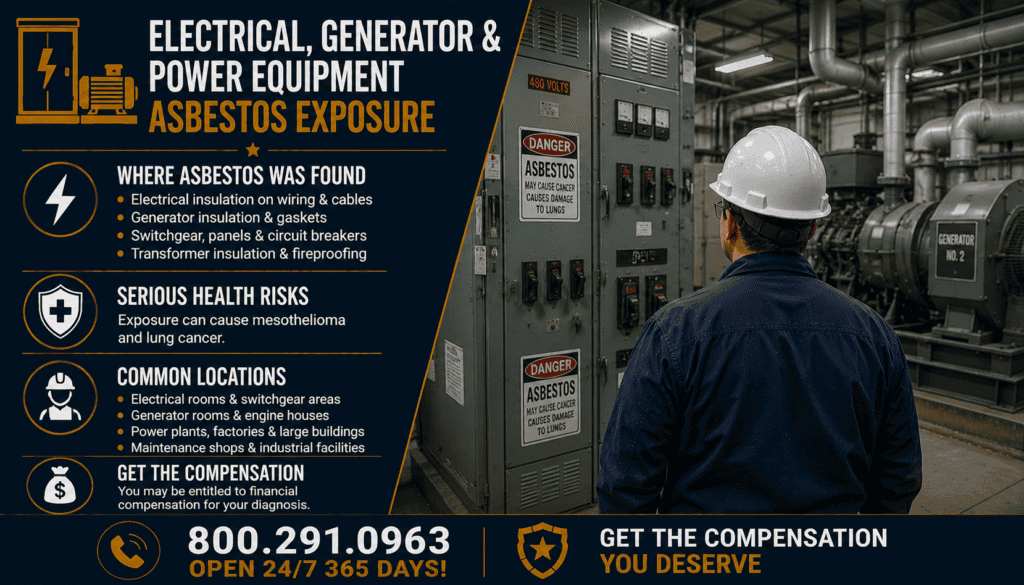
Electrical, Generator & Power Equipment Asbestos Exposure
Electrical, generator, and power equipment played a vital role in nearly every industrial, commercial, military, transportation, municipal, and utility facility built throughout much of the twentieth century. Whether producing electricity, distributing power, operating manufacturing equipment, or supplying emergency backup systems, these electrical systems relied heavily on asbestos because of its exceptional resistance to heat, electricity, and fire.
For decades, asbestos was incorporated into electrical insulation, generators, transformers, switchgear, circuit breakers, control panels, electrical cabinets, bus ducts, motor control centers, arc barriers, wiring insulation, and numerous power distribution components. The material helped prevent electrical fires, insulated high-voltage equipment, and protected workers from heat generated during normal operation.
Workers were often exposed not only while installing electrical equipment but also during decades of maintenance, troubleshooting, rebuilding, and modernization. Electricians, generator mechanics, power plant employees, maintenance mechanics, industrial engineers, utility workers, shipyard electricians, military personnel, HVAC technicians, and construction workers routinely encountered asbestos while replacing electrical components, upgrading power systems, repairing generators, or renovating older facilities.
Electrical equipment rarely operated alone. Generators connected to boilers, pumps, compressors, turbines, transformers, switchgear, electrical panels, and extensive cable systems. As a result, maintenance workers frequently encountered multiple asbestos-containing products during a single repair project.
Many older electrical systems remained in service for forty, fifty, or even sixty years before modernization. During that time, insulation deteriorated, electrical equipment required rebuilding, and outdated systems were replaced, creating repeated opportunities for asbestos fibers to become airborne.
Because asbestos-related diseases often develop decades after exposure, former electrical workers are only now receiving diagnoses of mesothelioma, asbestos-related lung cancer, and asbestosis. Understanding how asbestos was used throughout electrical and power equipment remains an important step in documenting occupational exposure.
This authority hub explains how asbestos was used in electrical systems, generators, transformers, switchgear, and power equipment, identifies the occupations most frequently exposed, examines common asbestos-containing components, and outlines important information regarding asbestos diseases, documentation, prevention, and legal options.
⚡ What You’ll Learn in This Guide
This comprehensive guide covers:
- Why asbestos was used in electrical equipment
- Electrical generators
- Industrial generators
- Emergency backup generators
- Electrical distribution systems
- Transformers
- Switchgear
- Circuit breakers
- Electrical panels
- Motor control centers
- Bus ducts
- Electrical insulation
- Wiring systems
- Power distribution equipment
- Common asbestos-containing components
- High-risk occupations
- Maintenance and repair exposure
- Electrical modernization projects
- Mesothelioma and asbestos-related diseases
- Exposure documentation
- Legal options
- Prevention
- Frequently asked questions
Electrical equipment exposure often overlaps with industrial machinery, boilers, HVAC systems, power plants, military equipment, commercial buildings, transportation facilities, manufacturing plants, and utility systems. Understanding both the equipment and the facility where it operated is often essential when reconstructing an individual’s asbestos exposure history.
🧱 Why Asbestos Was Used in Electrical & Power Equipment
Electrical systems generated heat, carried high voltages, and required dependable insulation capable of preventing electrical failures and reducing fire hazards.
Manufacturers selected asbestos because it:
- Resisted heat
- Provided electrical insulation
- Reduced fire risks
- Withstood electrical arcing
- Improved equipment durability
- Protected wiring
- Strengthened insulating materials
- Extended equipment life
- Was inexpensive and widely available
Rather than being limited to one component, asbestos was incorporated throughout entire electrical systems.
Common applications included:
- Electrical insulation
- Generator insulation
- Transformer insulation
- Arc barriers
- Switchgear insulation
- Circuit breaker insulation
- Electrical panel components
- Bus duct insulation
- Cable insulation
- Heat-resistant panels
As electrical equipment aged, routine maintenance and modernization frequently disturbed these asbestos-containing materials.
⚙️ Electrical Generators
Generators supplied electrical power for factories, hospitals, military installations, commercial buildings, ships, power plants, municipal facilities, and emergency backup systems.
Older generators commonly contained asbestos within:
- Internal insulation
- Electrical windings
- Heat shields
- Gaskets
- Panel insulation
- Terminal insulation
- Wiring insulation
- Fire-resistant barriers
Generator maintenance often required partial disassembly, exposing mechanics to asbestos-containing insulation and electrical components.
🔋 Industrial and Emergency Generators
Industrial facilities depended upon large generators to maintain production during power failures or to provide primary electrical power.
Generators were commonly installed in:
- Manufacturing plants
- Power stations
- Refineries
- Chemical plants
- Hospitals
- Universities
- Government facilities
- Military bases
- Water treatment plants
- Commercial buildings
Maintenance mechanics routinely repaired cooling systems, electrical connections, insulation, and associated power distribution equipment.
🔌 Electrical Distribution Systems
Electrical distribution systems delivered power throughout entire facilities.
Major components included:
- Switchgear
- Transformers
- Circuit breakers
- Bus ducts
- Motor control centers
- Distribution panels
- Control cabinets
- Electrical conduits
Asbestos insulation helped protect both equipment and personnel from heat and electrical faults.
⚡ Switchgear and Circuit Breakers
Switchgear controlled, protected, and isolated electrical equipment throughout industrial and commercial facilities.
Common asbestos-containing components included:
- Arc barriers
- Insulating panels
- Heat-resistant liners
- Electrical insulation
- Fireproof partitions
- Gaskets
Electricians servicing older switchgear frequently encountered deteriorating insulation while replacing electrical components.
🔄 Transformers
Transformers converted electrical voltage for safe distribution throughout buildings and industrial facilities.
Older transformers sometimes incorporated asbestos within:
- Internal insulation
- Heat-resistant barriers
- Gaskets
- Electrical insulation boards
- Protective panels
Utility workers and electricians often serviced these units during modernization projects.
🖥️ Electrical Panels and Control Equipment
Electrical panels, motor control centers, and distribution cabinets were installed throughout factories, schools, hospitals, commercial buildings, military installations, and municipal facilities.
Potential asbestos-containing materials included:
- Panel insulation
- Arc-resistant barriers
- Electrical insulating boards
- Heat-resistant backing materials
- Gaskets
- Fireproof partitions
Electrical upgrades frequently required disturbing these materials.
🏭 Common Buildings Where Electrical Equipment Was Used
Electrical and power equipment operated in nearly every major building type.
Examples include:
- Manufacturing plants
- Power plants
- Schools
- Universities
- Hospitals
- Hotels
- Office buildings
- Apartment buildings
- Government buildings
- Military facilities
- Shipyards
- Railroad facilities
- Airports
- Water treatment plants
- Chemical plants
- Oil refineries
- Paper mills
- Textile mills
Because these facilities often contained boilers, pumps, compressors, HVAC systems, and other asbestos-containing equipment, electricians frequently encountered multiple exposure sources throughout a single workday.
🔧 Electrical Maintenance, Repairs, and Equipment Modernization
Routine maintenance created some of the greatest opportunities for asbestos exposure involving electrical, generator, and power equipment. While electricians and electrical installers encountered asbestos during original construction, maintenance personnel often experienced repeated exposure over many years while servicing aging electrical systems.
Electrical equipment required periodic inspection, testing, troubleshooting, rebuilding, cleaning, and replacement to remain reliable. Before technicians could repair many components, they often had to remove asbestos-containing insulation boards, arc barriers, panel liners, gaskets, wiring insulation, or heat-resistant materials. As these products aged, they became increasingly brittle and susceptible to releasing asbestos fibers when disturbed.
Unlike a single installation project, maintenance work occurred continuously throughout the life of a facility. Electricians servicing factories, power plants, schools, hospitals, military installations, office buildings, and utility systems often worked around older electrical equipment for decades.
Common maintenance activities associated with asbestos exposure included:
- Generator rebuilding
- Electrical panel replacement
- Switchgear maintenance
- Transformer servicing
- Circuit breaker replacement
- Motor control center repairs
- Electrical cabinet upgrades
- Bus duct repairs
- Cable replacement
- Electrical room renovations
- Emergency generator maintenance
- Equipment modernization
- Utility system upgrades
- Facility shutdown maintenance
Major modernization projects frequently involved removing outdated electrical equipment that had remained in service since the 1940s, 1950s, or 1960s.
🧰 Common Asbestos-Containing Electrical Components
Electrical equipment contained numerous specialized components designed to withstand heat, electrical arcing, vibration, and continuous operation.
Electrical Insulation
Electrical insulation represented one of the largest historical uses of asbestos within power equipment.
Common applications included:
- Insulating boards
- Electrical barriers
- Arc-resistant panels
- Terminal insulation
- Heat-resistant liners
- Wiring insulation
As insulation deteriorated over time, repairs sometimes generated airborne asbestos fibers.
Generator Insulation
Older generators frequently contained asbestos within:
- Coil insulation
- Heat shields
- Internal barriers
- Gaskets
- Terminal insulation
- Access panel insulation
Generator overhauls often required removing these materials before internal components could be repaired.
Transformer Components
Transformers sometimes incorporated asbestos-containing:
- Insulating boards
- Heat-resistant barriers
- Gaskets
- Protective liners
Repairing or replacing these components occasionally exposed workers to asbestos dust.
Switchgear Components
Switchgear assemblies commonly included:
- Arc barriers
- Heat-resistant insulation
- Fire-resistant partitions
- Electrical insulating panels
- Gaskets
Electrical technicians servicing switchgear frequently encountered deteriorating insulating materials.
Circuit Breakers
Older industrial circuit breakers occasionally incorporated asbestos-containing insulating materials around high-temperature electrical contacts.
Maintenance projects involving these systems sometimes disturbed internal insulation during repairs or replacement.
👷 Occupations at Highest Risk
Although many employees worked around electrical equipment, several occupations historically experienced the greatest asbestos exposure.
Electricians
Electricians installed, repaired, upgraded, and maintained electrical systems throughout virtually every industry.
Typical responsibilities included:
- Generator maintenance
- Electrical panel replacement
- Switchgear repairs
- Transformer installation
- Wiring upgrades
- Motor control center maintenance
- Circuit breaker replacement
Many of these projects involved disturbing asbestos-containing insulation installed decades earlier.
Generator Mechanics
Generator mechanics rebuilt and repaired emergency generators, industrial generators, and power generation equipment.
Routine work often included:
- Generator disassembly
- Insulation replacement
- Gasket replacement
- Bearing repairs
- Electrical testing
- Internal cleaning
Repeated generator rebuilds could result in long-term occupational asbestos exposure.
Power Plant Electricians
Power generation facilities contained extensive electrical equipment interconnected with boilers, turbines, transformers, and switchgear.
Electricians working in these facilities frequently encountered asbestos insulation surrounding multiple systems.
Industrial Maintenance Mechanics
Maintenance mechanics often serviced both electrical equipment and associated mechanical systems.
Projects frequently included:
- Generator repairs
- Pump maintenance
- Compressor servicing
- Electrical troubleshooting
- Equipment modernization
Because several systems were repaired simultaneously, workers often encountered asbestos from multiple sources during the same project.
Utility Workers
Utility companies maintained electrical substations, transformers, switchgear, and power distribution equipment throughout electrical transmission systems.
Maintenance of older utility equipment sometimes involved disturbing asbestos-containing insulation.
HVAC Technicians
Large commercial HVAC systems often relied upon electrical control equipment, motor control centers, and generators.
Technicians working on these systems occasionally encountered asbestos within electrical components and surrounding mechanical rooms.
🏭 Industries Where Electrical Equipment Exposure Was Common
Electrical and power equipment operated throughout nearly every major industry.
Examples include:
- Manufacturing plants
- Power plants
- Chemical facilities
- Oil refineries
- Steel mills
- Paper mills
- Textile mills
- Food processing plants
- Commercial office buildings
- Hospitals
- Universities
- Military installations
- Shipyards
- Railroad facilities
- Airports
- Water treatment plants
- Wastewater treatment facilities
- Municipal utility systems
Regardless of industry, electricians frequently encountered similar electrical equipment manufactured during decades when asbestos use remained widespread.
🏗️ Facility Modernization and Electrical Upgrades
As electrical technology advanced, older facilities required repeated modernization projects.
Common upgrades included:
- Generator replacement
- Transformer replacement
- Switchgear modernization
- Circuit breaker replacement
- Electrical panel upgrades
- Motor control center replacement
- Cable replacement
- Distribution system expansion
- Emergency power upgrades
- Electrical room renovations
During these projects, contractors often removed asbestos-containing insulation that had remained undisturbed for many years.
Modernization projects frequently involved electricians, maintenance mechanics, engineers, contractors, plumbers, HVAC technicians, and construction crews working simultaneously.
👨👩👧 Secondhand Asbestos Exposure
Electricians and electrical maintenance personnel sometimes carried asbestos fibers home on contaminated work clothing.
Family members could be exposed while:
- Washing dusty uniforms
- Handling contaminated jackets
- Cleaning work boots
- Shaking dusty clothing
- Greeting loved ones returning from work
Medical studies have documented mesothelioma among spouses and children whose only known asbestos exposure resulted from contaminated work clothing brought home from industrial or commercial facilities.
🫁 Diseases Associated with Electrical Equipment Asbestos Exposure
Long-term occupational exposure involving electrical equipment has been associated with several serious asbestos-related diseases.
Disease development depends upon factors such as:
- Duration of exposure
- Frequency of exposure
- Fiber concentration
- Fiber type
- Individual susceptibility
- Smoking history
- Time since exposure
Most asbestos-related diseases develop decades after exposure.
Mesothelioma
Mesothelioma is a rare and aggressive cancer affecting the lining surrounding the lungs, abdomen, heart, or testes.
The overwhelming majority of diagnosed cases have been associated with asbestos exposure.
Lung Cancer
Workers exposed to asbestos have an increased risk of lung cancer, particularly those who also smoked cigarettes.
Symptoms may include:
- Persistent cough
- Chest pain
- Shortness of breath
- Weight loss
- Fatigue
- Coughing blood
Asbestosis
Asbestosis is a chronic scarring disease caused by inhaling asbestos fibers over many years.
Common symptoms include:
- Progressive shortness of breath
- Dry cough
- Chest tightness
- Reduced exercise tolerance
Pleural Disease
Pleural plaques and diffuse pleural thickening are common markers of previous asbestos exposure and may contribute to long-term respiratory impairment.
📋 Documenting Electrical Equipment Asbestos Exposure
Because asbestos-related diseases usually appear decades after exposure, documenting employment history and equipment assignments is extremely important.
Helpful records include:
- Employment records
- Union records
- Job descriptions
- Electrical maintenance logs
- Generator service records
- Facility names
- Equipment inventories
- Construction records
- Renovation documents
- Product manuals
- Training records
- Photographs
- Coworker statements
Workers should document every facility where they installed, repaired, rebuilt, or maintained electrical equipment, generators, transformers, switchgear, or power distribution systems.
Even temporary assignments may later help identify significant asbestos exposure sources.
⚖️ Legal Options After Electrical, Generator & Power Equipment Asbestos Exposure
Workers diagnosed with mesothelioma or another asbestos-related disease often discover that their exposure occurred decades before symptoms first appeared. Electrical systems, generators, transformers, switchgear, and power equipment were installed in virtually every industrial, commercial, institutional, military, municipal, and utility facility throughout much of the twentieth century, making asbestos exposure involving electrical equipment widespread across many occupations.
Individuals exposed while installing, operating, maintaining, repairing, rebuilding, or replacing electrical and power equipment may have legal options depending upon their work history and the asbestos-containing products involved.
Potential claims may involve:
- Manufacturers of electrical insulation
- Generator manufacturers
- Transformer manufacturers
- Switchgear manufacturers
- Circuit breaker manufacturers
- Electrical panel manufacturers
- Insulation manufacturers
- Equipment suppliers
- Contractors
- Other companies responsible for producing or distributing asbestos-containing products
Potential compensation may include:
- Medical expenses
- Lost wages
- Loss of future earning capacity
- Pain and suffering
- Travel expenses for specialized medical treatment
- Home healthcare costs
- Wrongful death compensation for eligible surviving family members
Many electricians and maintenance workers serviced equipment produced by numerous manufacturers throughout their careers. A thorough exposure investigation often identifies multiple asbestos-containing products and job sites that contributed to long-term occupational exposure.
Readers interested in additional information should also review companion resources covering asbestos trust funds, occupational asbestos exposure, mesothelioma lawsuits, and asbestos legal options.
📁 Preserving Your Exposure History
Mesothelioma and other asbestos-related diseases often appear twenty to fifty years after exposure. For this reason, preserving employment history and documenting the electrical equipment serviced throughout a career may become an important part of reconstructing exposure.
Helpful records include:
- Employment records
- Union membership records
- Social Security employment history
- Payroll records
- Job descriptions
- Electrical maintenance logs
- Generator service records
- Equipment inventories
- Facility maintenance records
- Construction documents
- Renovation records
- Product manuals
- Training records
- Facility names
- Building locations
- Photographs
- Coworker contact information
- Witness statements
Workers should also document the specific types of electrical equipment they maintained.
Examples include:
- Generators
- Transformers
- Switchgear
- Circuit breakers
- Motor control centers
- Electrical panels
- Distribution equipment
- Bus ducts
- Power distribution cabinets
- Emergency power systems
- Electrical substations
- Industrial control systems
Documenting both the equipment and the facilities where it was located often helps identify asbestos-containing products encountered during a worker’s career.
🦺 Preventing Future Exposure
Although modern electrical equipment is generally manufactured without asbestos-containing insulation, many older systems remain in operation throughout the United States.
Before beginning maintenance or modernization projects, workers and employers should consider several important safety practices.
Recommended precautions include:
- Determine when electrical equipment was manufactured.
- Assume older insulation and electrical barriers may contain asbestos until properly evaluated.
- Schedule asbestos inspections before major repairs or demolition.
- Avoid drilling, sanding, grinding, or breaking suspect insulating materials unnecessarily.
- Follow established asbestos safety procedures.
- Use qualified asbestos professionals when removal is necessary.
- Wear appropriate protective equipment during regulated work.
- Maintain inspection and maintenance documentation.
Planning electrical upgrades carefully helps reduce unnecessary asbestos exposure for electricians, contractors, maintenance personnel, and building occupants.
🏗️ Electrical Modernization and Facility Upgrades
Many commercial, industrial, government, and institutional buildings continue replacing aging electrical infrastructure with modern equipment.
Typical projects include:
- Generator replacement
- Transformer replacement
- Switchgear upgrades
- Circuit breaker modernization
- Electrical panel replacement
- Motor control center upgrades
- Emergency generator installation
- Distribution system expansion
- Utility system improvements
- Electrical room renovations
Although replacement equipment generally does not contain asbestos, surrounding insulation, ceiling materials, wall systems, flooring, pipe insulation, and older electrical components may still remain in place.
Asbestos inspections remain an important part of modernization projects involving buildings constructed before the widespread reduction in asbestos use.
🌎 Environmental and Workplace Safety
Improper handling of asbestos-containing electrical insulation may affect more than the electricians performing the work.
Airborne asbestos fibers may contaminate:
- Electrical rooms
- Generator rooms
- Switchgear rooms
- Mechanical rooms
- Utility tunnels
- Maintenance shops
- Equipment storage areas
- Adjacent offices
- Production areas
- Nearby occupied work spaces
Professional containment procedures, controlled work practices, specialized filtration systems, and proper waste disposal help reduce contamination and protect workers throughout the facility.
Responsible asbestos management benefits employees, contractors, visitors, tenants, patients, students, and surrounding communities.
❓ Frequently Asked Questions
Did all older electrical equipment contain asbestos?
Not every electrical component contained asbestos, but asbestos was widely used in electrical insulation, generators, transformers, switchgear, circuit breakers, electrical panels, insulating boards, arc barriers, and related power equipment manufactured during much of the twentieth century.
Which workers experienced the greatest exposure?
Electricians, generator mechanics, power plant electricians, utility workers, maintenance mechanics, industrial engineers, HVAC technicians, shipyard electricians, military electricians, and electrical contractors historically experienced the greatest occupational exposure.
Was electrical equipment used only in power plants?
No. Electrical equipment was installed in factories, schools, hospitals, commercial buildings, military installations, apartment complexes, hotels, transportation facilities, government buildings, water treatment plants, ships, and countless other locations.
Can family members develop asbestos-related diseases?
Yes. Workers sometimes carried asbestos fibers home on contaminated clothing, boots, gloves, or tools. Medical research has documented mesothelioma among spouses and children exposed through contaminated work clothing.
Should older electrical equipment be inspected before upgrades?
Yes. Electrical equipment manufactured before widespread asbestos regulations should be evaluated before demolition, major repairs, rebuilding, or replacement begins.
Can electricians develop mesothelioma?
Yes. Electricians who spent years installing, repairing, rebuilding, and maintaining older electrical systems have developed mesothelioma and other asbestos-related diseases following occupational asbestos exposure.
What should I do if I believe I was exposed years ago?
Preserve employment records, identify every facility where you worked around electrical equipment, document the equipment you maintained, discuss your exposure history with your physician, and learn about your legal options if you receive an asbestos-related diagnosis.
🧠 What You Should Do Next
Electrical, generator, and power equipment formed the backbone of modern industry, commercial construction, public utilities, transportation systems, military installations, and institutional buildings throughout the twentieth century. Because asbestos was incorporated into electrical insulation, generators, transformers, switchgear, circuit breakers, electrical panels, and numerous other power system components, generations of electricians, generator mechanics, utility workers, maintenance personnel, engineers, and contractors experienced repeated occupational exposure.
If you or someone you love has been diagnosed with mesothelioma, asbestos-related lung cancer, asbestosis, or another asbestos-related disease, carefully document every facility where you installed, repaired, maintained, or rebuilt electrical and power equipment. Include the types of generators, transformers, switchgear, electrical panels, and distribution systems you worked on, along with the industries and buildings where the work was performed. Even maintenance completed decades ago may help identify significant asbestos exposure sources.
Gather employment records, preserve maintenance documentation whenever possible, identify former coworkers who can help verify your work history, and understand your medical and legal rights. A detailed occupational history is often one of the most valuable tools for identifying where asbestos exposure occurred.
If you have questions about electrical, generator, or power equipment asbestos exposure or would like to discuss your work history with an experienced asbestos case team, call 800.291.0963.