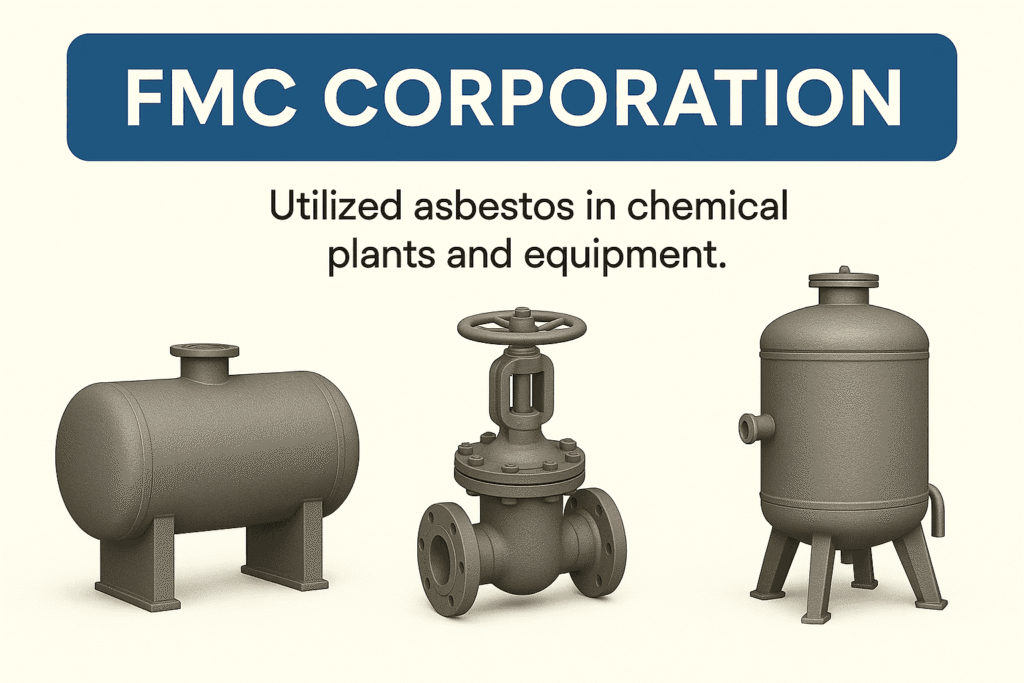
FMC Corporation Asbestos Exposure & Mesothelioma Claims
FMC Corporation asbestos exposure questions often involve historical pump equipment, its internal sealing components, and maintenance performed years after installation. A worker may remember Northern or Peerless rather than FMC. The useful starting point is the equipment actually serviced, the material disturbed, the work dates, and the evidence supporting each detail.
For a family facing mesothelioma, a pump nameplate can provide a lead, but it does not identify every gasket, packing ring, or insulation material used during the pump’s service life. Keep the equipment maker, replacement-part supplier, and employer separate so that a product history remains accurate and useful.
🏭 FMC, Northern, and Peerless Pump Identification
Federal court records address FMC in connection with former Northern and Peerless pump businesses. These records demonstrate why historical trade names matter. They do not establish that every pump connected with those names contained asbestos or that every worker at a facility encountered asbestos from that equipment.
The asbestos company information can help organize manufacturer names. Record exactly what appears on a nameplate, manual, work order, or purchase record, including model and serial numbers where available. A modern corporate name should not replace the original wording in the underlying document or witness account.
Equipment ownership and maintenance histories can span several employers and supply arrangements. If a facility changed owners, retain the dates and earlier plant names. A pump installed under one owner may have been rebuilt repeatedly by contractors working for later owners, using replacement materials from different suppliers.
Begin with one equipment entry at a time: manufacturer or trade name, operating area, service, identifying number, and supported dates. If the person remembers only a row of pumps, retain that limitation. A facility inventory may narrow the possibilities without justifying a claim that the person serviced every listed unit.
⚙️ Pump Gaskets, Packing, and External Insulation
A pump assembly and the materials installed in or around it are distinct identification questions. A casing gasket seals a joint; shaft packing performs another function; external thermal insulation surrounds equipment or piping. Their suppliers, replacement dates, and compositions may differ even when they are associated with one pump.
The gasket product information explains a broader material category. For an individual history, identify the actual part handled rather than assume every gasket was asbestos-containing. Preserve part numbers, package labels, maintenance instructions, and dated purchasing references that may establish what was supplied for the repair.
The equipment exposure information provides context for the machinery, while building asbestos information concerns surrounding materials. Fireproofing above a pump room is not necessarily an FMC product. Insulation on adjacent piping should likewise remain a separate possible source unless supporting records establish its relationship to the equipment supplier.
A replacement kit may contain several pieces, and an invoice may identify the kit without describing each material. Keep the kit number and date rather than assign composition from memory. A current parts listing can help identify dimensions or compatibility but should not automatically be treated as describing a historical formulation.
🛠️ Pump Overhauls and Seal Replacement Work
Describe the repair sequence as the worker remembers it. Did the person open a casing, remove a joint seal, replace shaft packing, assist another mechanic, or clear the work area afterward? These are questions to resolve, not a list of duties that should be assigned automatically to anyone who worked near a pump.
For gasket removal, distinguish a preformed part from material cut on site. Record who supplied the replacement and whether the worker saw its packaging. The maker of the pump body may be different from the maker of a sheet used by maintenance staff to prepare a replacement seal.
For packing replacement, identify the component and the work performed without equating every sealing material with asbestos. A storeroom requisition or contractor invoice may help clarify the product. If the record names only packing and contains no formulation information, keep that question unresolved until further evidence is available.
Frequency also matters to an accurate chronology. A mechanic assigned to one overhaul has a different history from someone who rebuilt pumps routinely. Use approximate intervals when exact dates are unavailable, and identify the basis for the estimate instead of converting an occasional assignment into continuous daily contact.
🏭 Power Plants, Refineries, and Marine Assignments
At power plants, record the unit, equipment location, and service where known. A station can contain pumps from multiple makers, installed and modified during different projects. Plant employment alone does not identify the equipment maintained by a particular worker or the composition of materials removed during those jobs.
For refinery work, a process-unit number, turnaround schedule, or job package may be more useful than a general plant name. Distinguish work performed in a maintenance shop from work on equipment in the operating unit. A removed pump may be serviced elsewhere before returning to the plant.
For shipyard and marine work, identify the vessel, repair period, compartment, and employer. A worker may recall a pump brand from a manual without personally opening that pump. Keep familiarity with the equipment separate from firsthand knowledge of a repair and the material actually disturbed.
The wider jobsite information can help families sort assignments by location. When records cover several facilities, avoid transferring a confirmed equipment or product finding from one site to another. Similar machinery, common ownership, or the same contractor does not establish identical material histories at every location.
📅 Original Parts and Later Replacement Materials
An original-equipment specification and a later maintenance invoice answer different questions. One may describe what was supplied when the pump was installed; the other may identify a replacement used decades afterward. Keep both in the chronology and note which actual repair the worker recalls performing or observing.
The federal FMC decision reviewed in the sources illustrates the importance of evidence linking a person to particular components or products. Its outcome concerned the evidence and legal framework of that case. It should not be presented as a universal finding about every FMC-related pump or as current legal advice for another worker.
Create separate entries when a sealing material, service contractor, or equipment configuration changed. A retrofit can alter part requirements. If a pump was relocated, record both locations where supported; do not assume an installation drawing describes every later operating configuration or the materials eventually used during field repairs.
When a witness says the parts were always the same, ask what supports that recollection. Did the person order them, read packaging, or simply see similar-looking rings? Preserve the answer without demanding a particular brand. Similar dimensions and appearance do not necessarily establish the same manufacturer or material composition.
📂 Manuals, Work Orders, and Supporting Evidence
Useful records include equipment inventories, manuals with revision dates, overhaul reports, stock requisitions, purchase orders, contractor invoices, and photographs of complete nameplates. Preserve project numbers and attachments. A cropped brand image can lose model information or the location needed to connect the record to the worker’s assignment.
The exposure evidence information discusses records that may support a claim review. Separate what each item establishes: employment, equipment identity, part supply, task, or date. An employment record and a parts invoice can complement each other, but neither should automatically be treated as proving every element of the history.
Witness accounts should identify personal observations. A purchaser may remember the supplier but never see the repair; a mechanic may perform the repair without knowing the original manufacturer of the removed part. Those are useful but different accounts. Keep their limits visible rather than combine them into an unsupported statement.
Potential household exposure requires a separate description of clothing or work items brought home, handling, and dates. Do not infer it from pump maintenance alone. Do not handle old gaskets, packing residue, or work clothing to collect evidence; existing photographs and records can be reviewed without disturbing retained materials.
🩺 Mesothelioma Diagnosis and Medical Records
A mesothelioma diagnosis must be established through medical evaluation. A pump brand or maintenance history cannot diagnose disease, and medical confirmation does not identify a particular equipment maker as a source. The occupational chronology and clinical documentation address different questions that need to remain accurate.
Keep pathology reports, relevant imaging summaries, dates of diagnosis, and treating-provider details. Ask the medical team how to obtain complete copies and share them securely. Continue care while work records are collected; treatment decisions should not wait for an old equipment manual or a former contractor’s reply.
If the diagnosis is another asbestos-related condition, use its actual name. Do not describe every lung cancer or breathing problem as mesothelioma. Different conditions can require different medical evidence for a legal review, and an old workplace screening should not be assumed to establish a later specialist diagnosis.
For deceased workers, preserve available medical and death records and any earlier claims paperwork. Identify who has firsthand knowledge of pump work and who can authorize requests or act for the estate. A knowledgeable relative or coworker does not automatically have signing authority for every legal or administrative step.
⚖️ FMC-Related Legal Questions and Claim Review
Potential mesothelioma legal claims depend on product evidence, the responsible entities, medical records, applicable law, and deadlines. A company being named in another lawsuit is not proof of liability in a new case. A qualified representative should assess the actual maintenance and supply history rather than rely on a general equipment list.
The asbestos trust information describes a separate compensation mechanism. Do not invent an FMC-specific trust or assume a pump manufacturer has one because other asbestos companies do. A reviewer may examine other documented products in the work history, but each possible route needs its own factual and legal basis.
For trust and lawsuit coordination, retain earlier applications, settlements, and releases. An old claim may contain useful site and product details, but statements should be checked before reuse. Ask promptly about filing deadlines rather than assume a record request or another program’s filing preserves every possible claim.
For families considering a claim after a death, clarify legal authority and preserve medical, work, and prior-case records. Ask what evidence is missing, who will obtain it, and how costs are handled. A pump nameplate is a useful lead; it is not a prediction of approval, compensation, or payment timing.
❓ Frequently Asked Questions
Does an FMC or Peerless Nameplate Prove Asbestos Exposure?
No. It can identify equipment, but not every gasket, packing material, or insulation product associated with it. The repair task, dates, part history, and actual material need supporting evidence. A nameplate should begin a focused record search rather than replace that evidence.
Were Replacement Seals Always Supplied by the Pump Maker?
That should not be assumed. Maintenance departments or contractors may obtain replacements separately. Preserve package names, part numbers, invoices, and the dates of the actual repair. The pump body and a later sealing component can have different manufacturers.
What If I Remember Northern Rather Than FMC?
Keep the name exactly as remembered and look for manuals, nameplates, or equipment records. Historical trade and corporate names may both matter. Do not change the witness’s recollection into a different company name without noting the documentary basis for the connection.
Can One Court Decision Determine Every FMC Claim?
No. Decisions concern particular evidence, parties, facts, and legal rules. The cited historical case illustrates why a product connection matters; it is not a universal outcome or a substitute for current legal advice about a different person’s work history.
Should I Remove an Old Gasket for Evidence?
No. Do not scrape, cut, open equipment, or transport suspected material to document a history. Preserve existing paperwork and photographs instead. Qualified professionals can advise about material assessment where needed without asking workers or relatives to disturb old components.
Sources
📞 Get the Mesothelioma Help & Compensation You Deserve — Contact Us Today!
After a mesothelioma diagnosis, contact us for help organizing medical and exposure information and understanding potential compensation options. Eligibility depends on the evidence and the applicable claim requirements.
We have 25+ years helping veterans, workers, and families seek information and assistance after asbestos-related diagnoses.
📲 Contact Us Today — Three Easy Ways!
CALL: 800.291.0963 — Request a free case review.
LIVE CHAT: Available 24/7/365 through the website’s chat feature.
CONTACT FORM: Send your information using the form below.
Disclaimer: This information is not be considered as legal or medical advice. Mesothelioma Help Center is not a law firm or medical provider and does not determine legal or VA eligibility.