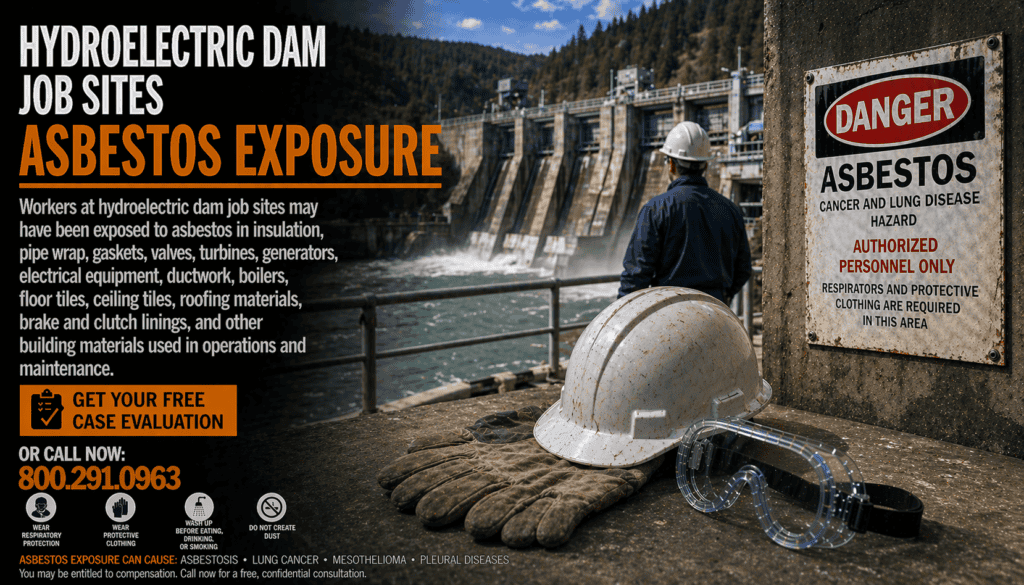
💧 Hydroelectric Dam Job Sites Asbestos Exposure
Older hydroelectric dam facilities operated equipment and facilities where asbestos-containing insulation, sealing products, friction materials or building components were sometimes used. Potential exposure depended on the particular equipment, materials, dates and work performed in powerhouses, turbine halls, control buildings, workshops and auxiliary heating systems.
If you or someone in your family has been diagnosed with mesothelioma or asbestos-related lung cancer, identifying specific duties, contractors and products can help medical teams and legal advisers assess the next steps. A job title or facility name alone does not prove exposure.
🏭 Where Asbestos Was Found
At hydroelectric dam facilities, the relevant asbestos question is which materials were installed or disturbed in particular work areas. The following locations can help workers organize memories and employment records without assuming every facility used the same products.
Turbine and Generator Halls
Turbine and generator halls at hydroelectric dam facilities can involve older insulated systems, mechanical equipment or building materials. Maintenance logs, construction dates and equipment specifications may help determine what was present and when work disturbed it.
For more specific information relevant to this work history, see Millwrights Asbestos Exposure. This resource may help identify relevant jobs, equipment, medical questions or potential claim documentation.
For more specific information relevant to this work history, see Boilermakers Asbestos Exposure. This resource may help identify relevant jobs, equipment, medical questions or potential claim documentation.
For more specific information relevant to this work history, see Army Corps Power Plant Projects Asbestos Exposure. This resource may help identify relevant jobs, equipment, medical questions or potential claim documentation.
Powerhouse Mechanical Galleries
Powerhouse mechanical galleries at hydroelectric dam facilities can involve older insulated systems, mechanical equipment or building materials. Maintenance logs, construction dates and equipment specifications may help determine what was present and when work disturbed it.
Auxiliary Boilers and Heating Rooms
Auxiliary boilers and heating rooms at hydroelectric dam facilities can involve older insulated systems, mechanical equipment or building materials. Maintenance logs, construction dates and equipment specifications may help determine what was present and when work disturbed it.
Control Buildings and Maintenance Shops
Control buildings and maintenance shops at hydroelectric dam facilities can involve older insulated systems, mechanical equipment or building materials. Maintenance logs, construction dates and equipment specifications may help determine what was present and when work disturbed it.
| Work Area or Task | What to Document |
|---|---|
| Turbine and generator halls | Dates, equipment, product names, maintenance activities and possible witnesses |
| Powerhouse mechanical galleries | Dates, equipment, product names, maintenance activities and possible witnesses |
| Auxiliary boilers and heating rooms | Dates, equipment, product names, maintenance activities and possible witnesses |
👷 Workers and Daily Jobs
Exposure histories should identify tasks and nearby trades, not only a job title. Workers in hydroelectric dam facilities may have encountered dust from their own repair tasks or work performed by contractors.
Turbine Mechanics and Machinists
Turbine mechanics and machinists should document actual tasks, years of service and nearby repairs. Relevant details include who handled insulation, gaskets or friction materials, whether visible dust was produced, and whether contractors performed equipment replacements.
For more specific information relevant to this work history, see Pipefitters Asbestos Exposure. This resource may help identify relevant jobs, equipment, medical questions or potential claim documentation.
For more specific information relevant to this work history, see Power Plants Asbestos Exposure. This resource may help identify relevant jobs, equipment, medical questions or potential claim documentation.
For more specific information relevant to this work history, see Food Processing Plant Job Sites Asbestos Exposure. This resource may help identify relevant jobs, equipment, medical questions or potential claim documentation.
Electricians and Generator Technicians
Electricians and generator technicians should document actual tasks, years of service and nearby repairs. Relevant details include who handled insulation, gaskets or friction materials, whether visible dust was produced, and whether contractors performed equipment replacements.
Pipefitters and Maintenance Crews
Pipefitters and maintenance crews should document actual tasks, years of service and nearby repairs. Relevant details include who handled insulation, gaskets or friction materials, whether visible dust was produced, and whether contractors performed equipment replacements.
Construction, Renovation and Demolition Trades
Construction, renovation and demolition trades should document actual tasks, years of service and nearby repairs. Relevant details include who handled insulation, gaskets or friction materials, whether visible dust was produced, and whether contractors performed equipment replacements.
| Work Area or Task | What to Document |
|---|---|
| Turbine mechanics and machinists | Dates, equipment, product names, maintenance activities and possible witnesses |
| Electricians and generator technicians | Dates, equipment, product names, maintenance activities and possible witnesses |
| Pipefitters and maintenance crews | Dates, equipment, product names, maintenance activities and possible witnesses |
🧱 Products and Equipment
Some historical industrial and construction products contained asbestos because of its heat resistance and durability. Product identification requires information about manufacturer, model, replacement dates and composition.
Turbine Seals and Mechanical Packing
Turbine seals and mechanical packing are relevant only where a specific product contained asbestos. Workers can look for manufacturer names, parts lists, old purchase records, job orders and witness accounts rather than relying on general assumptions.
For more specific information relevant to this work history, see Electricians Asbestos Exposure. This resource may help identify relevant jobs, equipment, medical questions or potential claim documentation.
For more specific information relevant to this work history, see Power Plant Workers Asbestos Exposure. This resource may help identify relevant jobs, equipment, medical questions or potential claim documentation.
For more specific information relevant to this work history, see Power Plant Equipment & Systems Asbestos Exposure. This resource may help identify relevant jobs, equipment, medical questions or potential claim documentation.
Generator and Electrical Insulation
Generator and electrical insulation are relevant only where a specific product contained asbestos. Workers can look for manufacturer names, parts lists, old purchase records, job orders and witness accounts rather than relying on general assumptions.
Pipe Coverings and Auxiliary Boiler Insulation
Pipe coverings and auxiliary boiler insulation are relevant only where a specific product contained asbestos. Workers can look for manufacturer names, parts lists, old purchase records, job orders and witness accounts rather than relying on general assumptions.
Flooring, Panels and Other Older Building Products
Flooring, panels and other older building products are relevant only where a specific product contained asbestos. Workers can look for manufacturer names, parts lists, old purchase records, job orders and witness accounts rather than relying on general assumptions.
| Work Area or Task | What to Document |
|---|---|
| Turbine seals and mechanical packing | Dates, equipment, product names, maintenance activities and possible witnesses |
| Generator and electrical insulation | Dates, equipment, product names, maintenance activities and possible witnesses |
| Pipe coverings and auxiliary boiler insulation | Dates, equipment, product names, maintenance activities and possible witnesses |
🌫️ How Exposure Occurred
Asbestos fibers can become airborne when asbestos-containing materials are cut, scraped, removed, sanded or otherwise disturbed. Intact materials do not create the same exposure conditions as dust-producing work.
Removing and Replacing Insulation
Removing and replacing insulation may generate airborne fibers if the material being disturbed contained asbestos. Risk varies with the task, duration, work practices, ventilation and protective controls; only site-specific information can establish the conditions.
For more specific information relevant to this work history, see Maintenance Mechanics Asbestos Exposure. This resource may help identify relevant jobs, equipment, medical questions or potential claim documentation.
For more specific information relevant to this work history, see Power Generation Plant Job Sites Asbestos Exposure. This resource may help identify relevant jobs, equipment, medical questions or potential claim documentation.
For more specific information relevant to this work history, see Industrial Plants Mesothelioma Lawsuit. This resource may help identify relevant jobs, equipment, medical questions or potential claim documentation.
Opening Pumps, Valves and Machinery
Opening pumps, valves and machinery may generate airborne fibers if the material being disturbed contained asbestos. Risk varies with the task, duration, work practices, ventilation and protective controls; only site-specific information can establish the conditions.
Disturbing Older Building Materials
Disturbing older building materials may generate airborne fibers if the material being disturbed contained asbestos. Risk varies with the task, duration, work practices, ventilation and protective controls; only site-specific information can establish the conditions.
Working Near Other Trades
Working near other trades may generate airborne fibers if the material being disturbed contained asbestos. Risk varies with the task, duration, work practices, ventilation and protective controls; only site-specific information can establish the conditions.
🩺 Mesothelioma After Workplace Exposure
Mesothelioma can appear decades after asbestos exposure. Symptoms and imaging findings are not sufficient to diagnose it; specialists may recommend tissue sampling and pathology review.
For more specific information relevant to this work history, see Mesothelioma Treatments. This resource may help identify relevant jobs, equipment, medical questions or potential claim documentation.
For more specific information relevant to this work history, see Mesothelioma Diagnosis. This resource may help identify relevant jobs, equipment, medical questions or potential claim documentation.
Symptoms and Diagnosis
Symptoms and diagnosis deserves careful discussion with a qualified medical team. Bring prior occupational information, imaging reports, pathology results and questions about treatment options or specialist referrals.
Specialist Review and Treatment
Specialist review and treatment deserves careful discussion with a qualified medical team. Bring prior occupational information, imaging reports, pathology results and questions about treatment options or specialist referrals.
Supporting a Family Member
Supporting a family member deserves careful discussion with a qualified medical team. Bring prior occupational information, imaging reports, pathology results and questions about treatment options or specialist referrals.
🫁 Asbestos-Related Lung Cancer
Asbestos exposure is an established cause of lung cancer. Individual diagnosis, exposure history and other risk factors should be reviewed by qualified clinicians.
For more specific information relevant to this work history, see Asbestos Lung Cancer Lawsuits. This resource may help identify relevant jobs, equipment, medical questions or potential claim documentation.
Asbestos and Lung Cancer
Asbestos and lung cancer should be discussed with clinicians familiar with occupational exposure. Smoking and asbestos can jointly increase lung cancer risk, but a smoking history does not rule out a contribution from asbestos.
Smoking and Other Exposures
Smoking and Other Exposures should be discussed with clinicians familiar with occupational exposure. Smoking and asbestos can jointly increase lung cancer risk, but a smoking history does not rule out a contribution from asbestos.
Medical and Legal Questions
Medical and Legal Questions should be discussed with clinicians familiar with occupational exposure. Smoking and asbestos can jointly increase lung cancer risk, but a smoking history does not rule out a contribution from asbestos.
📋 Work History and Evidence
A useful work history connects specific locations and periods with job duties, maintenance records, coworkers and products. Keep medical documentation separate from assumptions about exposure.
Work Dates and Job Assignments
Work dates and job assignments can help establish a timeline. Useful records include employment documents, union records, maintenance schedules, photographs, product catalogs and statements from former coworkers.
Equipment, Suppliers and Contractors
Equipment, suppliers and contractors can help establish a timeline. Useful records include employment documents, union records, maintenance schedules, photographs, product catalogs and statements from former coworkers.
Medical and Employment Records
Medical and employment records can help establish a timeline. Useful records include employment documents, union records, maintenance schedules, photographs, product catalogs and statements from former coworkers.
⚖️ Compensation and Legal Options
People diagnosed with asbestos-related illnesses may have legal options depending on exposure evidence, responsible parties, jurisdiction and filing deadlines. No particular award or eligibility can be guaranteed.
For more specific information relevant to this work history, see What Are Asbestos Trust Funds?. This resource may help identify relevant jobs, equipment, medical questions or potential claim documentation.
Potential Legal Claims
Potential legal claims can involve different documentation and deadlines. An experienced attorney can evaluate potential claims; veterans can also ask an accredited representative about possible VA benefits.
Bankruptcy Trust Funds
Bankruptcy trust funds can involve different documentation and deadlines. An experienced attorney can evaluate potential claims; veterans can also ask an accredited representative about possible VA benefits.
Veterans and Family Considerations
Veterans and family considerations can involve different documentation and deadlines. An experienced attorney can evaluate potential claims; veterans can also ask an accredited representative about possible VA benefits.
📚 Confirmed Sources
- OSHA Asbestos Standard for General Industry
- National Cancer Institute: Asbestos Exposure and Cancer Risk
- ATSDR: Asbestos Toxicological Profile
❓ Frequently Asked Questions
Was Asbestos Used at Hydroelectric Dam Facilities?
Some older facilities used asbestos-containing insulation, seals, friction materials and construction products. Exact materials varied by site, system and year.
Does Working at Hydroelectric Dam Facilities Prove Asbestos Exposure?
No. Work history helps identify possible exposure, but a specific material, task and time period must be evaluated.
Can Family Members Develop Asbestos-related Disease?
Family exposure is possible when fibers are carried home on clothing or equipment. Individual circumstances and medical advice matter.
What Should Someone Do After a Mesothelioma Diagnosis?
Ask a specialist about diagnosis and treatment, retain medical records and document prior work with potential asbestos-containing materials.
Can a Worker with Asbestos-related Lung Cancer Seek Compensation?
Legal options depend on diagnosis, evidence, applicable laws and filing deadlines. An attorney can evaluate an individual claim.
🧭 Summary
If you worked at hydroelectric dam facilities and now face mesothelioma or asbestos-related lung cancer, preserve medical records and identify the years, work areas, equipment and materials involved. A medical specialist and qualified legal adviser can explain options based on your individual circumstances.
GET THE COMPENSATION YOU DESERVE
Find out if you may qualify for asbestos compensation today.
Call 800.291.0963 or Submit Your Case Here.
Helping people for more than 25 years. Open 24/7, 365 days!
Disclaimer: Mesothelioma Help Center is not a law firm or medical provider and does not determine legal or VA eligibility. This information is not individualized medical or legal advice.