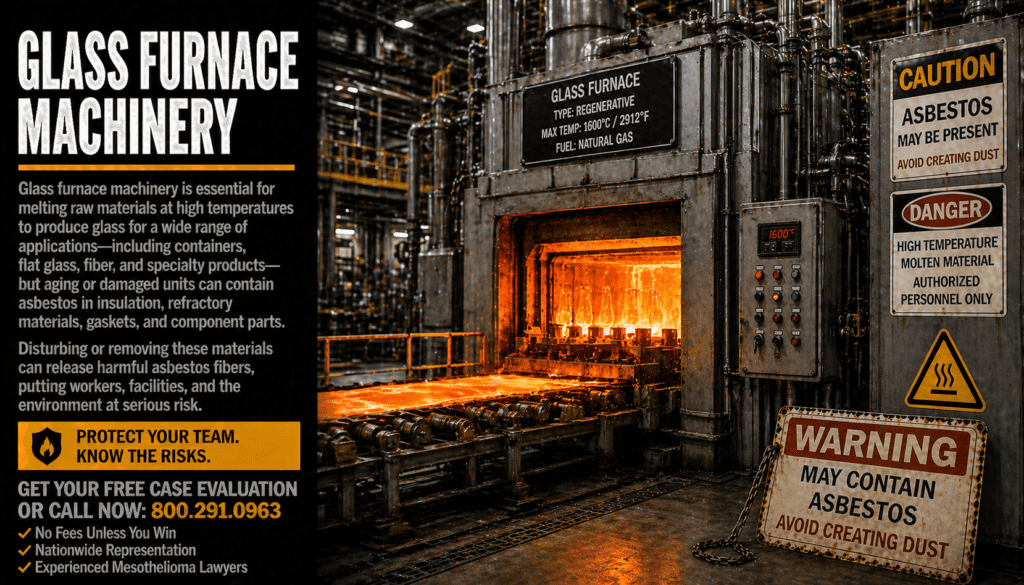
Glass Furnace Machinery Asbestos Exposure
Glass furnace machinery operated at extreme temperatures, and older glass manufacturing facilities sometimes used asbestos-containing insulation and sealing products on nearby equipment. Furnace operators, maintenance crews, and contractors could encounter these materials during repairs, rebuilds, and shutdowns.
Understanding possible exposure requires looking at the particular furnace, the surrounding heat-process systems, and the tasks performed. Glass furnace operations are different from metal foundry work, even when both involve high-temperature industrial machinery.
How Glass Furnaces Were Used in Industrial Plants
Glass manufacturing depends on intense, sustained heat. Batch ingredients are mixed, charged into a furnace, melted, refined, and delivered to forming equipment. The furnace may operate continuously for years, with crews performing inspections and maintenance around hot surfaces, burners, ducts, piping, and associated machinery. Different plants used tank furnaces, regenerative systems, recuperative furnaces, and smaller specialty furnaces. The equipment and the maintenance schedule varied according to the glass products being made.
Workers did not have to enter the furnace itself to encounter older thermal insulation. Exposure could occur while maintaining a burner assembly, repairing a heated pipe, opening an access door, replacing a seal, or working alongside another trade that disturbed insulation. The most important questions are what equipment was present, which materials were actually installed, and whether those materials were cut, scraped, removed, or otherwise disturbed.
Related information: Boilers, Furnaces & Heat-Process Machinery; Asbestos Exposure in Machinery.
Where Asbestos Could Be Found in Glass Furnace Machinery
Historically, some high-temperature industrial systems used asbestos-containing insulation, gaskets, packing, cloth, millboard, cement products, and other heat-resistant components. In a glass plant, possible locations included insulated piping near the furnace, flanged connections, valves, access doors, and auxiliary steam or heating systems. Asbestos was not necessarily present in every furnace, and the refractory brick or ceramic lining of a furnace should not automatically be described as asbestos.
The material itself matters. A plant could have asbestos insulation on a nearby steam line while using non-asbestos refractory brick in the furnace. Older equipment may also have been modified over time. A credible exposure assessment separates furnace lining materials from removable insulation and sealing products, and considers manufacturer records, maintenance purchases, and the actual work performed.
Related information: Asbestos Exposure in Equipment.
Furnace Rebuilds, Shutdowns, and Maintenance
Major rebuilds and scheduled shutdowns often brought several trades into the same confined work area. Crews might disconnect lines, remove worn gaskets, open equipment housings, strip old insulation, clean accumulated debris, and prepare surfaces for new components. If older asbestos-containing materials were disturbed without adequate controls, dust could become airborne and reach workers who were not performing the removal themselves.
Routine tasks could also matter. Repeated gasket changes, valve servicing, insulation patching, and repairs to heated equipment may have created opportunities for contact over many years. Exposure depends on the material, condition, task, work methods, and protective measures. A photograph of a furnace or a job title alone cannot establish that a particular worker inhaled asbestos fibers.
Related information: Shipyard Asbestos Exposure.
Glass Plant Workers and Trades Potentially Affected
Furnace operators, maintenance mechanics, pipefitters, millwrights, electricians, boiler technicians, insulators, laborers, and outside contractors could work in or near furnace areas. Operators might remain at a station while a maintenance crew repaired adjacent equipment. Contractors could move among multiple plants, making employer and job-site records particularly useful when reconstructing an exposure history.
The relevant question is not simply whether someone worked at a glass factory. It is whether their assignments brought them near asbestos-containing products during installation, repair, removal, cleanup, or nearby operations. Supervisors, co-workers, and purchasing records may help identify the specific machinery and materials in use during a worker’s employment.
Related information: High-Risk Jobs.
How Airborne Dust Could Reach Nearby Workers
Asbestos fibers may be released when asbestos-containing insulation or seals are disturbed. Cutting, scraping, sawing, dry sweeping, and handling deteriorated material can increase the potential for airborne dust. Workers performing nearby duties may also encounter fibers when dust spreads through shared work areas or settles on surfaces and clothing.
Not all visible industrial dust is asbestos. Glass plants also contain dust from batch ingredients, refractories, and other processes. Identifying a source requires more than recalling a dusty room. Work histories, product information, contemporaneous surveys, and industrial hygiene records can help distinguish possible asbestos exposure from other airborne hazards.
Related information: Foundry Furnace Machinery.
Differences Between Glass Furnaces and Foundry Furnaces
Glass furnaces melt glass-forming materials, while foundry furnaces melt metal for casting. Both can involve extreme temperatures and maintenance of industrial heat-process equipment, but they are not interchangeable job sites. Their furnace designs, operating cycles, ancillary systems, and historical material choices can differ substantially.
A glass furnace article should therefore address batch melting, glass refining, furnace regenerators, hot-end equipment, and plant maintenance. A foundry article should separately discuss cupolas, induction furnaces, metal-melting operations, and casting areas. Keeping those subjects distinct helps workers find information that actually matches their occupational history.
Related information: Foundry Furnace Machinery; Asbestos Exposure in Job Sites.
Health Concerns and Mesothelioma Diagnosis
Inhaling asbestos fibers can cause serious disease, including mesothelioma, lung cancer, and asbestosis. Mesothelioma is a cancer associated with asbestos exposure that may develop decades after exposure. Symptoms can include persistent shortness of breath, chest discomfort, fatigue, and unexplained weight loss, although these symptoms have many possible causes.
A person with symptoms should seek medical evaluation rather than trying to diagnose the cause from a past job title. Clinicians may consider occupational history alongside imaging, examination, and tissue testing when appropriate. People who worked around older furnace insulation should tell their healthcare team about the type of work, approximate dates, and any known asbestos-containing products.
Related information: Mesothelioma Symptoms.
Documenting a Glass Furnace Exposure History
Start with a timeline of employers, facilities, departments, dates, and specific duties. Record the names of furnaces, burners, valves, pipe systems, and insulation products if known. Note when shutdowns or rebuilds occurred, who performed removal work, and whether the work area was isolated or cleaned. A detailed description of a task can be more useful than a broad statement that a plant contained asbestos.
Useful supporting materials may include union records, Social Security employment histories, job descriptions, work orders, maintenance logs, invoices, photographs, and testimony from co-workers. Preserve original documents when possible. Product identification and legal responsibility are fact-specific; the presence of asbestos at one plant does not prove exposure for every worker at that facility.
Related information: Glass Furnace Machinery Asbestos Exposure.
Compensation Options for Workers and Families
People diagnosed with mesothelioma after occupational asbestos exposure may wish to review potential legal claims, asbestos bankruptcy trust claims, and other available benefits. Eligibility, filing deadlines, responsible parties, and required evidence vary by jurisdiction and individual circumstances. Families may also have questions about claims following the death of a loved one.
An experienced asbestos attorney can evaluate work history, medical documentation, and product evidence and explain which options may apply. A consultation does not establish eligibility or guarantee compensation. Because filing deadlines can apply, individuals should seek qualified advice promptly rather than assuming that the passage of many years eliminates all options.
Related information: Mesothelioma Lawsuit; Asbestos Trust Funds; Military Veterans Asbestos Exposure.
❓ Frequently Asked Questions
Did Every Glass Furnace Contain Asbestos?
No. Materials and equipment varied by plant, manufacturer, and period. Some asbestos-containing products were used on nearby insulation and seals, but a furnace or refractory lining should not be assumed to contain asbestos without evidence.
Which Tasks May Have Disturbed Asbestos?
Removing insulation, changing older gaskets, servicing valves, opening insulated equipment, and cleaning after maintenance may have disturbed asbestos-containing products where they were present.
Could Workers Nearby Have Been Exposed?
Potentially. Airborne fibers can move beyond the immediate task area, but exposure depends on the material, work methods, ventilation, distance, and duration.
Is Glass Furnace Work the Same as Foundry Work?
No. Glass melting and metal casting use different processes and equipment. Work histories should describe the actual facility and machinery involved.
How Long After Exposure Can Mesothelioma Appear?
Mesothelioma often develops after a long latency period, sometimes several decades. Only a qualified clinician can evaluate symptoms and diagnose disease.
What Records Help Establish Work History?
Employment dates, plant locations, maintenance logs, product records, union information, photographs, and co-worker accounts may help reconstruct tasks and potential exposure.
📞 Get the Mesothelioma Help & Compensation You Deserve — Contact Us Today!
If you or a loved one has been diagnosed with mesothelioma after possible workplace asbestos exposure, you can ask about available legal and compensation options.
Our team draws on more than 25 years of experience helping people seek information about asbestos-related claims.
📲 Contact Us Today — Three Easy Ways!
CALL: 800.291.0963 — Free case review.
LIVE CHAT: Available 24/7/365.
CONTACT FORM: Use the form below to send your information.
Disclaimer: This information is not be considered as legal or medical advice. Mesothelioma Help Center is not a law firm or medical provider and does not determine legal or VA eligibility.