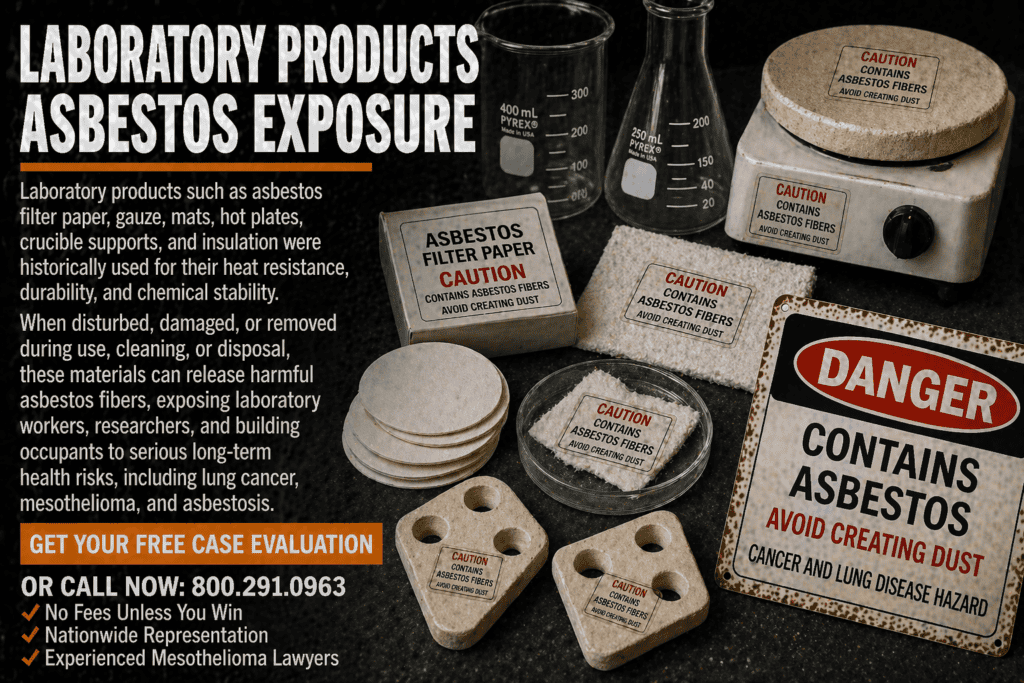
Laboratory Products Asbestos Exposure
Some older laboratory products and equipment used asbestos because it resisted heat, flame and chemical damage. Historically relevant materials could include heat-resistant mats, gloves, mitts, pads, insulation, gaskets, packing and protective components around heated equipment.
Working in a laboratory does not by itself prove asbestos exposure. Ordinary laboratory chemicals, glassware and modern equipment should not be assumed to contain asbestos. Exposure reconstruction should identify the specific historical product, component, manufacturer and work activity involved.
Laboratory Products and Historical Asbestos Use
Older laboratories often used burners, furnaces, ovens, hot plates, heating mantles, sterilizers and other high-temperature equipment. Asbestos-containing materials were historically selected in some applications because they tolerated heat and helped insulate work surfaces and equipment.
The asbestos-containing material was often a removable accessory or component rather than the laboratory instrument itself. Examples could include a heat-resistant pad, woven textile, gasket, insulation panel or sealing material.
Heat-Resistant Laboratory Asbestos Products
Depending on manufacturer and year, historically relevant laboratory products may include:
- asbestos-containing bench mats or heat pads;
- heat-resistant gloves and mitts;
- protective aprons or woven textiles;
- burner mats and heat shields;
- asbestos paper or millboard used as heat barriers;
- protective blankets or cloth;
- rope or tape used around heated equipment; and
- other specialty heat-resistant laboratory materials.
Modern laboratory heat-protection products frequently use non-asbestos substitutes, so age and product identification are important.
Laboratory Ovens, Hot Plates and Heated Equipment
Older laboratory ovens, furnaces, sterilizers and other heated equipment may have used asbestos-containing insulation, gaskets or heat-resistant panels, depending on manufacturer and production period.
Potentially relevant work could include opening equipment housings, replacing worn insulation, repairing door seals, servicing heating elements or removing deteriorated heat-protection materials.
See Oven Products Asbestos Exposure and Heating Products Asbestos Exposure for related information.
Gaskets, Packing and Insulation
Laboratories connected to industrial, medical, research or chemical facilities could also use pumps, valves, vacuum systems, sterilizers and other process equipment with historical asbestos-containing gaskets, packing or insulation.
Potential exposure could occur when gaskets were scraped from metal surfaces, packing was pulled from equipment or insulation was cut, removed or damaged during maintenance.
See Gasket Products Asbestos Exposure and Packing Products Asbestos Exposure for related product-specific information.
How Laboratory Asbestos Exposure Could Occur
Potential fiber release is more plausible when asbestos-containing material is cut, torn, frayed, scraped, broken, brushed, sanded or removed.
- handling worn or frayed heat-resistant gloves and mats;
- cutting or trimming asbestos cloth or paper;
- removing insulation from ovens or furnaces;
- scraping old gaskets from heated equipment;
- repairing deteriorated heat shields or panels;
- cleaning dust around aging thermal-protection materials;
- discarding damaged asbestos-containing lab accessories; and
- performing renovation or demolition in older laboratory spaces.
Actual exposure depends on asbestos content, product condition, work method, frequency, duration, proximity, ventilation and cleanup practices.
Worked with older laboratory heat-protection products or equipment? If you are trying to identify asbestos-containing mats, gloves, insulation, gaskets or other components, Call 800.291.0963. Live chat available 24/7, 365 days a year. Submit Your Case.
Laboratory Workers and Exposure Settings
Potentially relevant workers may include laboratory technicians, chemists, researchers, maintenance workers, equipment repair technicians, hospital or university laboratory employees, industrial hygienists and facility mechanics.
Relevant settings may include university laboratories, hospital laboratories, industrial research facilities, chemical laboratories, quality-control laboratories, testing facilities and older science classrooms.
A job title or laboratory location alone does not establish exposure. Product and task evidence remain important.
Evidence That May Identify Laboratory Product Exposure
Exposure reconstruction is strongest when evidence identifies the exact laboratory product or equipment component, manufacturer, work area and time period.
- manufacturer and model information;
- equipment manuals and parts lists;
- laboratory supply catalogs;
- purchase orders and invoices;
- product labels and packaging;
- maintenance and repair records;
- photographs of benches and equipment;
- facility asbestos surveys;
- abatement and renovation records;
- employment or institutional records;
- coworker or supervisor statements; and
- laboratory analysis of surviving materials where appropriate.
Medical records may document an asbestos-related diagnosis but do not establish which laboratory product was an exposure source.
Health, Legal and Compensation Considerations
Asbestos exposure is associated with mesothelioma, asbestos-related lung cancer, asbestosis and other asbestos-related disease. Working in a laboratory does not diagnose disease or establish individual medical causation.
Depending on the evidence and circumstances, legal options may be available after documented exposure to a specific asbestos-containing laboratory product or equipment component.
A legal review may consider product identification, manufacturer or supplier, employer or institution, work activities, frequency and duration, diagnosis, jurisdiction and filing deadlines.
Identifying a laboratory, institution or equipment manufacturer does not automatically establish liability. Legal responsibility is case-specific and depends on product evidence, exposure evidence and governing law.
Some matters may involve asbestos trust funds, but each trust has its own exposure and medical documentation requirements. Eligibility is not automatic, and compensation is not guaranteed.
Laboratory Products Asbestos Exposure FAQs
Were asbestos products used in laboratories?
Yes. Some older laboratories used asbestos-containing heat pads, gloves, textiles, insulation, gaskets and other heat-resistant materials.
Could laboratory bench mats contain asbestos?
Some historical heat-resistant bench mats or pads contained asbestos, depending on manufacturer and year.
Were asbestos gloves or mitts used in laboratories?
Some older high-heat protective gloves and mitts incorporated asbestos fibers.
Could laboratory ovens contain asbestos?
Potentially. Some older ovens, furnaces and heated equipment used asbestos-containing insulation, gaskets or heat-resistant panels.
Can damaged asbestos lab mats release fibers?
Potentially. Cutting, fraying, breaking or otherwise disturbing asbestos-containing material can increase the likelihood of fiber release.
Did laboratory chemicals contain asbestos?
Ordinary laboratory chemicals should not be assumed to contain asbestos. Historical concerns more often involve heat-resistant products and equipment components.
What evidence can identify laboratory asbestos exposure?
Supply catalogs, equipment records, labels, invoices, maintenance records, asbestos surveys, photographs and witness statements may help.
Does working in a laboratory automatically qualify someone for compensation?
No. Eligibility depends on product identification, exposure evidence, diagnosis, jurisdiction and other case-specific facts. Compensation is not guaranteed.
For related information, see Agricultural, Chemical & Industrial Process Products Asbestos Exposure, Chemical Products Asbestos Exposure, Textile Products Asbestos Exposure, Blanket Products Asbestos Exposure, Apron & Mitt Products Asbestos Exposure, Gasket Products Asbestos Exposure, Packing Products Asbestos Exposure, Oven Products Asbestos Exposure, Heating Products Asbestos Exposure, and the main Asbestos Exposure in Products guide.
Get Help Reviewing Laboratory Product Exposure
If you or a family member has been diagnosed with mesothelioma, asbestos-related lung cancer or another asbestos-related disease and you are trying to identify older laboratory heat pads, gloves, insulation, gaskets, ovens or other equipment components, we can help organize the product and exposure history that may be relevant.
Call 800.291.0963 to discuss what you remember about the laboratory, equipment, product manufacturer, work performed and years of possible exposure. Live chat is available 24/7, 365 days a year. Submit Your Case using the form below.
Prior exposure does not automatically establish a legal claim. Eligibility depends on the evidence, diagnosis, jurisdiction and other circumstances, and compensation is not guaranteed.
⚕️ Legal & Medical Information Disclaimer
This page provides general educational information and is not medical or legal advice. The information does not establish asbestos exposure, diagnosis, causation, liability, claim eligibility or compensation. Medical concerns should be discussed with a qualified healthcare professional, and legal questions should be reviewed with a qualified attorney.