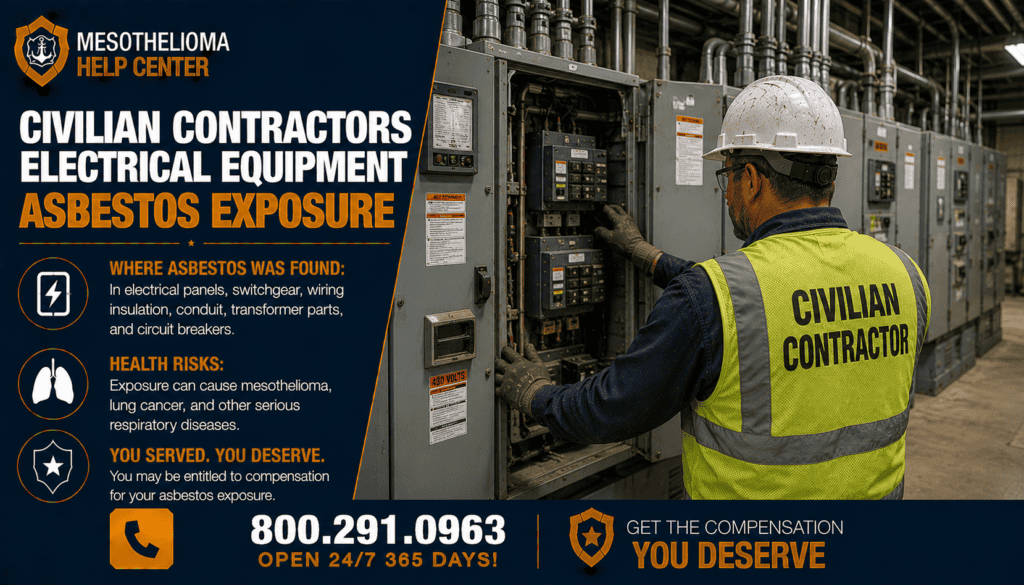
⚡ Civilian Contractors Electrical Equipment Asbestos Exposure
Civilian contractors may have encountered asbestos while installing, repairing, upgrading or removing older electrical equipment. Potential sources can include certain historical wire insulation, arc-resistant components, insulating boards, molded electrical parts, heat barriers and asbestos-containing materials surrounding electrical rooms or equipment.
Electrical work does not automatically prove asbestos exposure. A reliable history identifies the equipment, manufacturer, model, facility, dates, component, task, material condition, nearby work and protective controls.
🧭 On This Page
- Electrical systems and contractor roles
- Wiring, panels and heat-resistant materials
- Electrical maintenance exposure pathways
- Industries, facilities and nearby trades
- Verified electrical-equipment facts
- Current electrical and asbestos controls
- Health and household exposure risks
- Documenting electrical work and possible claims
- Frequently asked questions
🔌 Electrical Systems and Contractor Roles
Civilian contractors installed and maintained power-distribution, control and communication systems in industrial, military, commercial and institutional facilities. The work could involve switchgear, circuit breakers, panelboards, motor-control centers, transformers, generators, motors, bus systems, cable trays, terminal boards, control cabinets and older wiring.
Potentially relevant workers include electricians, electrical maintenance technicians, linemen, instrument technicians, motor-repair workers, generator technicians, engineers, inspectors, demolition crews and shutdown contractors. Duties may include troubleshooting, breaker replacement, rewiring, panel modification, motor or generator repair, cable removal, equipment cleaning and complete system replacement.
The type and age of equipment help direct research, but neither proves that a component contained asbestos. Manufacturers used many insulating and heat-resistant materials, and replacement parts may differ from the original assembly.
The Contractor Equipment and Machinery Asbestos Exposure hub organizes equipment-related pages. The Civilian Contractors Asbestos Exposure main guide connects machinery histories with jobs, products, worksites, health risks and legal options.
🧱 Wiring, Panels and Heat-Resistant Materials
Asbestos was historically used in some electrical and heat-resistant products. Categories that may require investigation include certain wire and cable insulation, braided sleeving, insulating boards, arc barriers, breaker components, terminal-board materials, molded phenolic parts, electrical-equipment gaskets and fire-resistant materials behind or around panels.
Electrical equipment can also be located beside unrelated asbestos-containing building materials. Cable penetrations may pass through fireproofing. Panels may be mounted on insulating backboards. Conduit and wiring may run above ceilings or through walls containing surfacing material, insulation or fire-resistant assemblies. These surrounding materials should be documented separately from internal equipment components.
Not every older cable, panel, breaker, transformer or control cabinet contained asbestos. Visual appearance alone cannot confirm composition. Product labels, drawings, specifications, safety information, manufacturer literature, purchase records and qualified material analysis provide stronger evidence.
OSHA’s hospital facilities guidance identifies electrical wiring insulation among products in which asbestos has been used. An OSHA interpretation involving steel-industry maintenance also notes that some electrical components and motors contain asbestos. These sources document possible uses, not the contents of every electrical system.
The Civilian Contractor Equipment Manufacturers Asbestos Use guide explains why equipment makers, component suppliers and replacement-part manufacturers should be researched separately.
🛠️ Electrical Maintenance Exposure Pathways
Potential asbestos exposure depends on whether an asbestos-containing material was present, disturbed and able to release fibers. Electrical tasks may bring a worker close to concealed, brittle or damaged material, but the equipment name alone does not establish an exposure.
Tasks that may deserve investigation include:
- Opening and cleaning older switchgear, breakers or control cabinets.
- Removing or replacing aged wire and heat-resistant cable insulation.
- Cutting or drilling an insulating panel, backboard or barrier.
- Rebuilding motors, generators or electrical components on a shop bench.
- Pulling cable through spaces containing damaged insulation or fireproofing.
- Drilling walls, ceilings or fire stops for new conduit and cable trays.
- Removing panels during renovations or demolition.
- Using compressed air, dry brushes or ordinary vacuums on dusty equipment.
- Working beside insulators, pipefitters or demolition crews disturbing other materials.
Material condition, tool choice, ventilation, distance, duration, frequency and cleanup method all matter. Electrical dust can contain many materials; it should not be identified as asbestos without supporting evidence.
📞 Need Help Identifying Old Electrical Equipment or Materials?
Panel schedules, breaker records, wiring diagrams, equipment tags and former coworkers may help connect a diagnosis with specific electrical systems and projects.
Call 800.291.0963, use our live chat 24/7/365 or tell us about the electrical work through the contact form for a free, confidential review.
🏭 Industries, Facilities and Nearby Trades
Older electrical equipment can be found in power plants, factories, refineries, chemical facilities, shipyards, military bases, hospitals, schools, commercial buildings, mines, water-treatment plants and transportation facilities. Equipment history may differ among buildings and even among rooms within the same facility.
Renovations and shutdowns often place electricians near maintenance workers, pipefitters, insulators, welders and demolition crews. An electrician may open a wall while another crew removes pipe insulation. A technician may service switchgear near insulated turbines, boilers or generators. Dust from surrounding construction or mechanical work can represent a different pathway from materials inside the electrical equipment.
Electrical rooms may also contain fireproofing, ceiling materials, flooring, wallboard systems, insulated piping or HVAC components. The history should identify who disturbed each material, how close the worker was and whether the space was enclosed or ventilated.
The Civilian Electricians Asbestos Exposure guide focuses on the occupation. Related work may also involve Civilian Maintenance Workers Asbestos Exposure or Civilian Construction Workers Asbestos Exposure.
📌 Verified Electrical-Equipment Facts
The following evidence defines the subject without assuming universal asbestos use:
- OSHA identifies electrical wiring insulation as one historical asbestos-product category.
- OSHA has acknowledged that some electrical components and motors contain asbestos and may require cleaning during maintenance.
- OSHA’s construction asbestos standard defines asbestos-containing material as material containing more than 1% asbestos and establishes requirements for covered construction work.
- An EPA technical document describes laminates used in transformer terminal boards, switchgear arc chutes, motor and generator slot wedges, supports and spacers. That source explains electrical applications for laminates but does not establish that every laminate contained asbestos.
- Electrical shock, arc-flash, stored-energy and asbestos hazards require separate evaluation and controls.
The strongest product evidence identifies the manufacturer, equipment type, model, serial or tag number, voltage class, component, installation date and maintenance period. A catalog or manual for the correct model and year is more reliable than a generic statement about a brand.
🦺 Current Electrical and Asbestos Controls
Current workers should not energize, open, scrape, drill or sample suspect legacy electrical material merely to determine its composition. Qualified personnel should review equipment labels, single-line diagrams, specifications, maintenance files, asbestos surveys and site procedures before work begins.
Electrical safety comes first. Equipment must be placed in an electrically safe work condition when required, with applicable lockout/tagout, verification and arc-flash procedures performed by qualified workers. Capacitors, batteries, generators and back-fed circuits may retain or introduce energy even after a disconnect is opened.
When asbestos is known or suspected, qualified personnel should determine applicable requirements and controls. Depending on the work, controls may include restricted access, containment, wet methods where electrically safe and permitted, HEPA-filtered equipment, exposure assessment, protective clothing, hygiene and a properly administered respiratory-protection program.
Water and energized electrical equipment can create a lethal hazard. No generic asbestos procedure should be applied without coordinating electrical isolation and site-specific controls. Compressed air, dry sweeping and ordinary shop vacuums can spread fine debris, and a disposable paper mask is not a substitute for required respiratory protection.
🫁 Health and Household Exposure Risks
Breathing asbestos fibers can increase the risk of mesothelioma, lung cancer, asbestosis and other asbestos-related disease. Symptoms may not appear until many years after exposure. Lead, PCBs, silica, metal dust, solvents and electrical-incident hazards are separate concerns and should be recorded independently.
A webpage cannot diagnose illness or determine its source. Former contractors should tell their clinician about employers, facilities, years, equipment types, wiring or panel work, surrounding materials and protective practices. The Civilian Contractor Asbestos Exposure Health Risks guide provides additional medical context.
Dust may leave a worksite on coveralls, boots, tools, vehicles and personal items when decontamination is inadequate. Household members who handled dusty clothing may have a separate potential exposure history. The Civilian Contractor Secondhand Asbestos Exposure guide explains how to document this pathway.
🗂️ Documenting Electrical Work and Possible Claims
Organize the history by employer, facility and project. Record:
- Employer, contractor, union local, department and supervisor.
- Facility, building, electrical room, production unit or military installation.
- Job title, dates, shifts, shutdowns and temporary assignments.
- Equipment manufacturer, type, model, tag, voltage and installation period.
- Breaker, panel, cable, board, barrier, motor or generator component involved.
- Exact installation, repair, cleaning, removal or demolition task.
- Tools, visible debris, ventilation, cleanup and protective equipment.
- Surrounding insulation, fireproofing or building materials disturbed nearby.
- Coworkers who can confirm equipment and routine work practices.
Preserve one-line diagrams, panel schedules, cable lists, equipment inventories, manufacturers’ manuals, specifications, work orders, outage records, invoices, asbestos surveys, photographs, union records and medical documents. A record that never says “asbestos” can still establish the worker, place, equipment, task and relevant time period.
Use the Civilian Contractor Asbestos Exposure Timeline to organize employment, projects, products and medical events. Do not return to an unsafe facility or collect wire, panel material or electrical dust as evidence.
A case may investigate component manufacturers, electrical-equipment companies, suppliers, contractors, premises owners, employers and other entities. Responsibility depends on the evidence and governing law. The Civilian Contractor Mesothelioma Lawsuit guide and Civilian Contractor Asbestos Trust Fund Claims guide explain possible claim paths.
Deadlines vary by jurisdiction and claim type. Review the Civilian Contractor Asbestos Statute of Limitations guide and seek case-specific advice promptly.
❓ Frequently Asked Questions
Did every older electrical panel or breaker contain asbestos?
No. Materials varied by equipment design, manufacturer, model, production period and repair history.
Where might asbestos be associated with electrical work?
Possible categories include certain historical wire insulation, insulating boards, arc-resistant components, molded parts, heat barriers and surrounding building materials.
Can an electrician be exposed without opening electrical equipment?
Potentially. Drilling through walls, pulling cable through contaminated spaces or working beside crews disturbing insulation or fireproofing can create separate pathways.
Does an equipment brand prove asbestos use?
No. Research should match the correct model, component and time period. Replacement parts may come from another manufacturer.
Can electrical dust be identified as asbestos by sight?
No. Electrical enclosures may contain many kinds of dust and degraded material. Reliable identification requires records or qualified analysis.
Should a worker wet suspect material inside a panel?
Not without a qualified, site-specific plan. Water near energized equipment can cause shock, arc or equipment damage. Electrical isolation and asbestos controls must be coordinated.
Should someone save old wire insulation or panel debris?
No. Do not disturb, transport or collect suspect material. Preserve records and photographs and use qualified professionals for current evaluation.
Are equipment tags and panel schedules useful?
Yes. They can connect a component with drawings, maintenance records, manufacturers, locations and project dates.
🚀 Trace the Electrical Equipment, Project and Materials Now
A breaker record, panel schedule, wiring diagram or former coworker may identify the equipment and products involved. Starting now can preserve evidence before facilities change, records disappear or memories fade.
Call 800.291.0963 now, use our live chat any time—24/7/365—or submit the electrical-equipment work history through our contact form for a free, confidential case review.