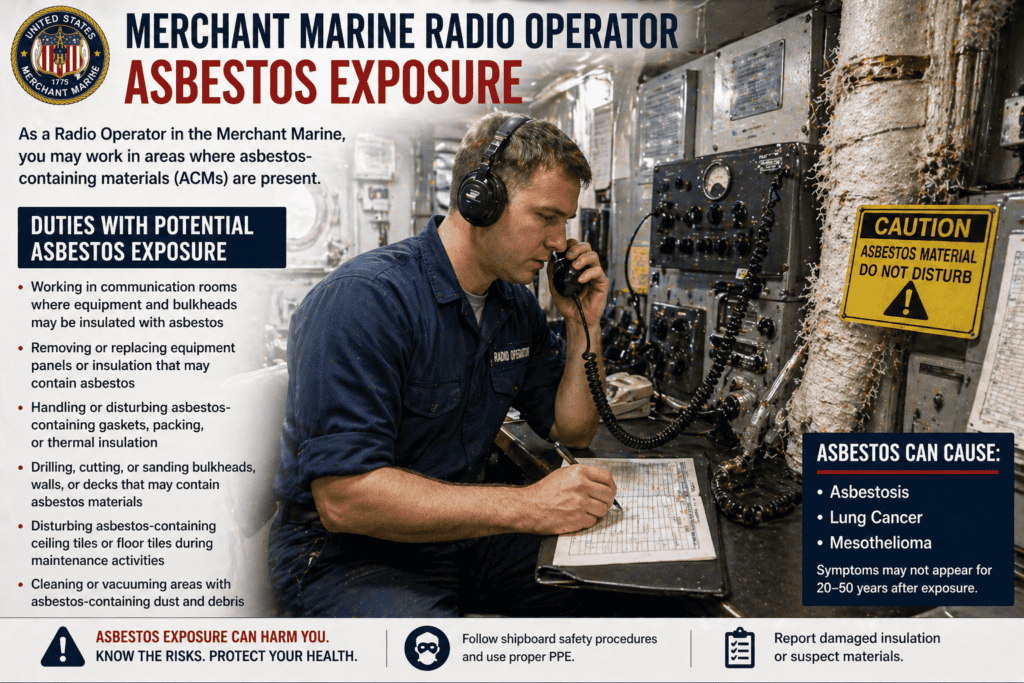
Merchant Marine Radio Operator Asbestos Exposure
Exposure, Evidence and Claims
Merchant Marine Radio Operator Asbestos Exposure requires a task-specific, historically accurate assessment rather than a conclusion based on a job title. A merchant marine radio operator handled maritime communications, monitored distress and operational traffic, maintained records, and sometimes worked near radio transmitters, receivers, cable routes, and electrical equipment. This page examines radio-room layouts and shipboard communications, possible asbestos-containing materials, and the evidence a person diagnosed with mesothelioma or a family member may need to investigate.
The relevant questions concern a named vessel, years aboard, compartment layout, equipment, and repairs—not an assumption that every maritime radio operator inhaled asbestos. A radio room is not an engine room: the relevant question is whether radio equipment, adjacent compartments, wiring penetrations, or repairs created a documented pathway for airborne fibers. This article keeps shipboard communications work distinct from boiler-room trades and explains how documentary evidence can support or rule out particular pathways.
Historical Role and Duties
Radio-room layouts and shipboard communications is the most useful starting point for this role. A merchant marine radio operator handled maritime communications, monitored distress and operational traffic, maintained records, and sometimes worked near radio transmitters, receivers, cable routes, and electrical equipment. Merchant mariners served aboard commercial vessels whose design, propulsion, and repair histories differed widely. The radio operator’s communications duties should not be collapsed into the engine department’s work. Some older ships used asbestos-containing insulation or electrical materials, but a particular radio-room product must be identified through records or credible testimony. For related background, see Merchant Marine workers asbestos exposure.
A communications equipment replacement could involve removal of cabinets, opening wall panels, or rerouting cable. To evaluate this possibility, identify the contractor, equipment model, service date, and material actually disturbed. Modern equipment design should not be projected backward onto an older vessel. Shipboard proximity must be reconstructed carefully. A radio room above deck may be remote from boiler insulation, while a different vessel’s wiring runs may pass through older protected bulkheads. Distinguish ordinary watchstanding from time spent near shipyard contractors opening panels or removing materials. A separate discussion of Merchant Marine ships asbestos exposure helps distinguish this role from neighboring exposure settings.
Where Exposure Might Have Occurred
Radio-room layouts and shipboard communications is the most useful starting point for this role. A merchant marine radio operator handled maritime communications, monitored distress and operational traffic, maintained records, and sometimes worked near radio transmitters, receivers, cable routes, and electrical equipment. A radio operator might spend long watches at a communications console, move through companionways, or be present during radio-equipment servicing. Possible dust pathways include a disturbed cable penetration, adjacent renovation, or material handled during a refit. None should be presumed from the title alone; the vessel layout and dates are essential. For related background, see Merchant Marine electrical equipment.
Voyage and overhaul timelines can reveal whether the worker was aboard during a shipyard period. A dry-dock record may show major repairs, but the mariner’s presence and work area still matter. Crew lists and shipping articles can establish overlap, while witnesses may describe where dust-producing work occurred. Useful maritime records can include shipping articles, discharge certificates, crew lists, voyage dates, vessel registries, deck logs, radio logs, refit documentation, and coworker recollections. A ship’s age is a clue, not a substitute for evidence about a specific task or material. A separate discussion of Merchant Marine electricians helps distinguish this role from neighboring exposure settings.
Materials and Disturbance Pathways
Radio-room layouts and shipboard communications is the most useful starting point for this role. A merchant marine radio operator handled maritime communications, monitored distress and operational traffic, maintained records, and sometimes worked near radio transmitters, receivers, cable routes, and electrical equipment. Radio equipment can contain multiple insulating materials, not all of them asbestos. Investigators should avoid treating every heat-resistant panel, wire wrap, or electronic component as asbestos-containing. Manufacturer specifications, part numbers, repair manuals, and laboratory findings may help resolve what a component actually contained. For related background, see Merchant Marine engine room equipment.
For a radio operator who also performed electrical maintenance, document the specific repairs rather than using the broad label “electrician.” Replacing a fuse is different from scraping old insulation or opening an insulated bulkhead. A credible narrative names the action, material, location, and approximate frequency. Mesothelioma is associated with asbestos exposure and often appears many years later. A physician should review the diagnosis and occupational history. Maritime claims may involve different legal regimes and limitation periods than military VA benefits; Merchant Marine service alone should not be described as automatically qualifying for VA asbestos compensation. A separate discussion of Merchant Marine maintenance facilities helps distinguish this role from neighboring exposure settings.
Reconstructing the Work Environment
Radio-room layouts and shipboard communications is the most useful starting point for this role. A merchant marine radio operator handled maritime communications, monitored distress and operational traffic, maintained records, and sometimes worked near radio transmitters, receivers, cable routes, and electrical equipment. Shipboard proximity must be reconstructed carefully. A radio room above deck may be remote from boiler insulation, while a different vessel’s wiring runs may pass through older protected bulkheads. Distinguish ordinary watchstanding from time spent near shipyard contractors opening panels or removing materials. For related background, see Merchant Marine dry docks.
Claims investigators may need vessel ownership history, operating companies, shipbuilders, equipment manufacturers, and contractors. These are separate possible lines of inquiry. A claimant should not assume that every company connected with a vessel made the asbestos-containing product at issue. Merchant mariners served aboard commercial vessels whose design, propulsion, and repair histories differed widely. The radio operator’s communications duties should not be collapsed into the engine department’s work. Some older ships used asbestos-containing insulation or electrical materials, but a particular radio-room product must be identified through records or credible testimony. A separate discussion of Merchant Marine cargo ships helps distinguish this role from neighboring exposure settings.
Records That May Support Exposure
Radio-room layouts and shipboard communications is the most useful starting point for this role. A merchant marine radio operator handled maritime communications, monitored distress and operational traffic, maintained records, and sometimes worked near radio transmitters, receivers, cable routes, and electrical equipment. Useful maritime records can include shipping articles, discharge certificates, crew lists, voyage dates, vessel registries, deck logs, radio logs, refit documentation, and coworker recollections. A ship’s age is a clue, not a substitute for evidence about a specific task or material. For related background, see Merchant Marine Liberty ships.
Families can preserve radio certificates, maritime credentials, logbooks, letters mentioning vessels, union or employer records, photographs, and names of shipmates. Record recollections in the witness’s own words and do not coach certainty where memory is incomplete. This preserves useful detail for medical and legal review. A radio operator might spend long watches at a communications console, move through companionways, or be present during radio-equipment servicing. Possible dust pathways include a disturbed cable penetration, adjacent renovation, or material handled during a refit. None should be presumed from the title alone; the vessel layout and dates are essential. A separate discussion of Merchant Marine asbestos exposure timeline helps distinguish this role from neighboring exposure settings.
Mesothelioma and Medical Evidence
Radio-room layouts and shipboard communications is the most useful starting point for this role. A merchant marine radio operator handled maritime communications, monitored distress and operational traffic, maintained records, and sometimes worked near radio transmitters, receivers, cable routes, and electrical equipment. Mesothelioma is associated with asbestos exposure and often appears many years later. A physician should review the diagnosis and occupational history. Maritime claims may involve different legal regimes and limitation periods than military VA benefits; Merchant Marine service alone should not be described as automatically qualifying for VA asbestos compensation. For related background, see Merchant Marine equipment manufacturers.
Radio operators often worked in relatively confined spaces where ventilation and compartment separation varied by ship. Whether a disturbance in another room affected the radio operator depends on doors, ducting, airflow, timing, and the work underway. An engine-room repair on the same ship does not by itself establish exposure in the radio room. Radio equipment can contain multiple insulating materials, not all of them asbestos. Investigators should avoid treating every heat-resistant panel, wire wrap, or electronic component as asbestos-containing. Manufacturer specifications, part numbers, repair manuals, and laboratory findings may help resolve what a component actually contained. A separate discussion of Merchant Marine mesothelioma lawsuit helps distinguish this role from neighboring exposure settings.
Compensation and Claim Considerations
Radio-room layouts and shipboard communications is the most useful starting point for this role. A merchant marine radio operator handled maritime communications, monitored distress and operational traffic, maintained records, and sometimes worked near radio transmitters, receivers, cable routes, and electrical equipment. Merchant mariners served aboard commercial vessels whose design, propulsion, and repair histories differed widely. The radio operator’s communications duties should not be collapsed into the engine department’s work. Some older ships used asbestos-containing insulation or electrical materials, but a particular radio-room product must be identified through records or credible testimony. For related background, see Merchant Marine trust fund claims.
A communications equipment replacement could involve removal of cabinets, opening wall panels, or rerouting cable. To evaluate this possibility, identify the contractor, equipment model, service date, and material actually disturbed. Modern equipment design should not be projected backward onto an older vessel. Shipboard proximity must be reconstructed carefully. A radio room above deck may be remote from boiler insulation, while a different vessel’s wiring runs may pass through older protected bulkheads. Distinguish ordinary watchstanding from time spent near shipyard contractors opening panels or removing materials. A separate discussion of Merchant Marine wrongful death lawsuits helps distinguish this role from neighboring exposure settings.
Practical Investigation Checklist
Radio-room layouts and shipboard communications is the most useful starting point for this role. A merchant marine radio operator handled maritime communications, monitored distress and operational traffic, maintained records, and sometimes worked near radio transmitters, receivers, cable routes, and electrical equipment. A radio operator might spend long watches at a communications console, move through companionways, or be present during radio-equipment servicing. Possible dust pathways include a disturbed cable penetration, adjacent renovation, or material handled during a refit. None should be presumed from the title alone; the vessel layout and dates are essential. For related background, see Merchant Marine limitations periods.
Voyage and overhaul timelines can reveal whether the worker was aboard during a shipyard period. A dry-dock record may show major repairs, but the mariner’s presence and work area still matter. Crew lists and shipping articles can establish overlap, while witnesses may describe where dust-producing work occurred. Useful maritime records can include shipping articles, discharge certificates, crew lists, voyage dates, vessel registries, deck logs, radio logs, refit documentation, and coworker recollections. A ship’s age is a clue, not a substitute for evidence about a specific task or material. A separate discussion of Merchant Marines asbestos exposure helps distinguish this role from neighboring exposure settings.
❓ Frequently Asked Questions
Does the radio operator title prove asbestos exposure?
No. A title alone does not identify an asbestos-containing product or an inhalation event. Review dates, duties, workspaces, repairs, and supporting records before drawing a conclusion.
What is the first record to obtain?
Review vessel names and years, radio-room location, communications equipment inventories, ship plans, voyage records, dry-dock periods, and witness descriptions of nearby repairs. The most useful starting document is the one that establishes where the individual actually worked during the period under investigation.
Can a mesothelioma diagnosis establish the source of exposure?
A diagnosis establishes a medical condition, not automatically which product or worksite caused exposure. Clinicians and qualified claims professionals can review the complete history.
Should a family wait to collect evidence?
No. Families can preserve documents and witness names promptly while obtaining individualized medical and legal guidance about applicable deadlines.
Editorial conclusion: For Merchant Marine Radio Operator Asbestos Exposure, the strongest next step is a dated account connecting real work locations to a specific disturbed material, supported by records and medical documentation. The questions in this article should guide investigation, not replace individual evaluation.
📞 Get the Mesothelioma Help & Compensation You Deserve — Contact Us Today!
Our team provides information for people diagnosed with mesothelioma and their families, drawing on 25+ years of helping people navigate asbestos-related questions. Contact does not guarantee eligibility, compensation, or a particular outcome.
📲 Contact Us Today — Three Easy Ways!
CALL: 800.291.0963 | LIVE CHAT: 24/7/365 | CONTACT FORM: Below
Disclaimer: This information is not be considered as legal or medical advice. Mesothelioma Help Center is not a law firm or medical provider and does not determine legal or VA eligibility.