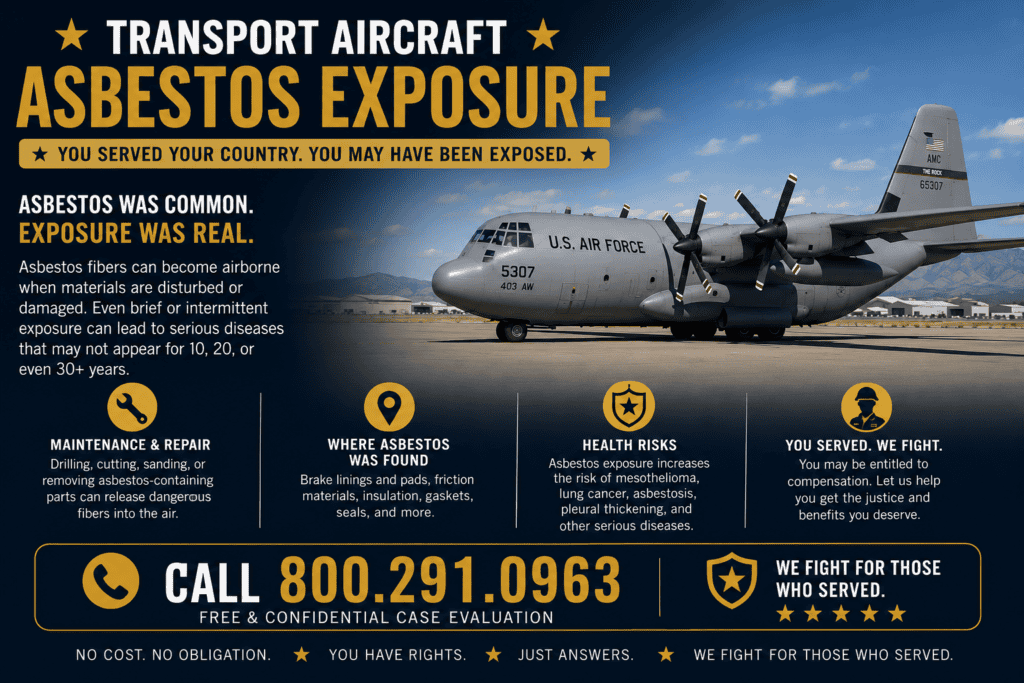
🛬 Transport Aircraft Asbestos Exposure
Military transport aircraft incorporated asbestos in HVAC systems, power generation equipment, engines, brakes, electrical insulation, and fireproofing—exposing mechanics, load crews, flight-line personnel, and maintenance workers during daily operations.
Transport aircraft move troops, vehicles, fuel, and supplies across the globe. These aircraft operate under heavy loads, extended flight hours, and frequent maintenance cycles. To manage heat, vibration, and fire risk, manufacturers relied heavily on asbestos throughout transport aircraft systems for decades.
From World War II through the Cold War and beyond, asbestos exposure was common during routine inspections, cargo operations, repairs, and hangar work. Many veterans and civilian workers who supported transport aircraft missions are now being diagnosed with mesothelioma, lung cancer, asbestosis, and pleural disease decades after exposure, long after leaving aviation service with the United States military.
🧱 Why Transport Aircraft Used Asbestos
Transport aircraft required durable materials capable of handling constant use.
Asbestos was widely used because it:
-
🔥 Withstood prolonged engine and exhaust heat
-
🛑 Provided reliable braking for heavy landings
-
⚙️ Insulated engines, generators, and auxiliary power units
-
🧯 Offered fire resistance for cargo bays and crew areas
-
🔌 Insulated extensive electrical wiring systems
-
💲 Reduced maintenance costs over long service lives
Because transport aircraft flew constantly, asbestos components were disturbed repeatedly.
⚙️ Where Asbestos Was Found in Transport Aircraft
Asbestos-containing materials were integrated throughout transport aircraft.
Common asbestos locations included:
-
🔥 Engine nacelle insulation and exhaust heat shields
-
🛑 Brake linings and clutch assemblies
-
⚙️ Auxiliary power units (APUs) and generators
-
🔌 Electrical wiring insulation and panels
-
🧱 Cargo bay insulation and fireproof panels
-
🛢️ Fuel system gaskets and seals
-
🌬️ HVAC and ventilation duct insulation
Maintenance and vibration caused these materials to break down and release fibers.
👷 Who Was Exposed to Transport Aircraft Asbestos
Exposure affected a wide range of aviation personnel.
High-risk roles included:
-
🧑🔧 Transport aircraft mechanics and engine technicians
-
🔌 Aircraft electricians and avionics technicians
-
📦 Loadmasters and cargo handling crews
-
🧯 Ground support and flight-line personnel
-
🏗️ Hangar maintenance and base facility workers
-
🧪 Inspection and testing specialists
Many workers were exposed daily over multi-year assignments.
🛠️ Transport Aircraft Maintenance Tasks That Released Asbestos
Routine operations frequently disturbed asbestos materials.
Common exposure activities included:
-
🛑 Replacing and grinding brake components
-
🔥 Removing engine insulation and exhaust shielding
-
⚙️ Servicing generators and APUs
-
🔧 Cutting, drilling, or sanding insulated panels
-
🧹 Cleaning dust from cargo bays and wheel wells
-
🏗️ Renovating hangars and maintenance facilities
These tasks often occurred in enclosed spaces where fibers accumulated.
📦 Cargo Bay & HVAC Asbestos Exposure
Transport aircraft posed unique risks due to airflow and cargo handling.
Asbestos exposure occurred when:
-
📦 Cargo operations disturbed insulated panels
-
🌬️ HVAC systems circulated contaminated air
-
🧹 Cleaning activities re-aerosolized settled fibers
-
🚛 Ground equipment with asbestos brakes spread dust
Personnel not directly involved in repairs were often exposed incidentally.
🏢 Transport Aircraft Hangars & Support Facilities
Asbestos was also present in transport aircraft infrastructure.
Hangars and maintenance buildings often contained:
-
🧱 Spray-on asbestos fireproofing
-
🧱 Insulated walls and ceilings
-
🪵 Vinyl asbestos floor tiles and mastics
-
🌬️ HVAC duct insulation
-
🧯 Fire-resistant coatings and panels
Heavy aircraft movement and vibration accelerated material deterioration.
⚠️ Why Transport Aircraft Asbestos Exposure Was Especially Dangerous
Transport aircraft exposure was severe because:
-
❌ Aircraft operated under constant heavy loads
-
❌ Maintenance occurred frequently and repetitively
-
❌ Large insulated surface areas released fibers
-
❌ Hangars trapped airborne asbestos
-
❌ Exposure often spanned long military careers
Many personnel inhaled asbestos for years without warnings or protection.
🫁 Diseases Linked to Transport Aircraft Asbestos Exposure
Medical research links this exposure to:
-
Mesothelioma (pleural and peritoneal)
-
Asbestos-related lung cancer
-
Asbestosis
-
Pleural plaques and pleural thickening
Symptoms typically appear 20–50 years after exposure.
⏳ Long Latency Period in Transport Aircraft Cases
Typical disease progression includes:
-
⏱️ Exposure during aviation service
-
⏱️ Decades without symptoms
-
⏱️ Gradual lung or tissue damage
-
⏱️ Diagnosis later in life
This latency often delays recognition of transport-related asbestos exposure.
⚖️ Legal Responsibility for Transport Aircraft Asbestos Exposure
Claims do not sue the military or federal government.
Instead, claims target:
-
🏭 Transport aircraft manufacturers
-
🏭 Engine, brake, and generator suppliers
-
🏭 Insulation and fireproofing manufacturers
-
🏭 Electrical and HVAC equipment suppliers
-
🏭 Companies that failed to warn workers
Many responsible companies later created asbestos trust funds.
🧑⚖️ How a Lawyer Can Help Transport Aircraft Asbestos Victims
An experienced asbestos lawyer can:
-
🔍 Identify transport aircraft models and components
-
📂 Reconstruct service and maintenance history
-
🏭 Link exposure to specific manufacturers
-
🏦 File asbestos trust fund claims
-
⚖️ Pursue lawsuits against solvent companies
-
🏛️ Coordinate VA disability benefits
-
👨👩👧 Handle wrongful death claims
You do not need product names—aviation asbestos records already exist.
❓ Frequently Asked Questions (FAQs)
❓ Did military transport aircraft contain asbestos?
Yes. Engines, HVAC, brakes, and insulation used asbestos extensively.
❓ I handled cargo, not repairs—was I still exposed?
Yes. Cargo bays and airflow spread asbestos fibers.
❓ Can I file a claim decades after exposure?
Yes. Claims usually begin at diagnosis.
❓ Can I receive VA benefits and file lawsuits?
Yes. These options are separate.
❓ Can families file claims?
Yes. Wrongful death claims are available.
📞 Help for Transport Aircraft Asbestos Exposure Victims
If you worked on or around military transport aircraft and were later diagnosed with mesothelioma, lung cancer, or another asbestos-related disease, you may still have strong legal options today.
📌 You May Be Eligible For:
-
Asbestos trust fund compensation
-
Product-liability lawsuits
-
VA disability benefits
-
Wrongful death claims for families
📞 Call 800-291-0963 for a free, confidential transport aircraft asbestos exposure review
⏱️ No upfront costs • Aviation-focused cases • Nationwide representation
Transport kept forces moving. You shouldn’t carry this burden now.