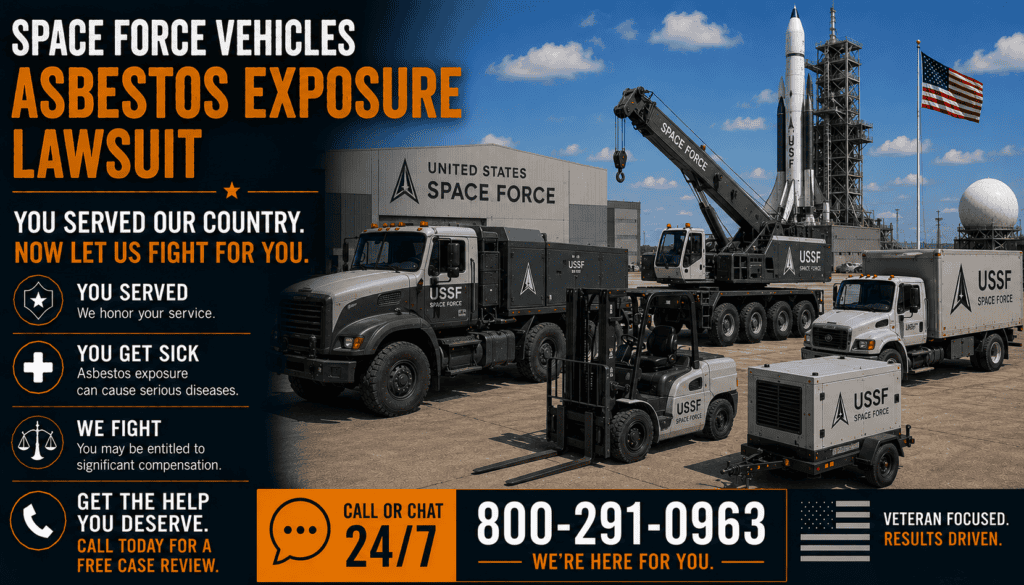
🚀 Space Force Vehicles Asbestos Exposure
Space Force ground-support vehicles and maintenance facilities may raise questions about historical asbestos exposure, particularly where older equipment or buildings originated under earlier military operations. The relevant evidence concerns actual components, work tasks, and dates.
The U.S. Space Force was established in 2019. Earlier asbestos exposure should be attributed to the correct service branch, employer, or contractor—not retrospectively described as decades of Space Force service.
🛰️ Space Force Vehicle Exposure: Historical Context
The U.S. Space Force was established on December 20, 2019. Its recent creation matters when evaluating asbestos claims: older vehicle-maintenance exposures at installations that now support Space Force missions may have occurred while those facilities operated under the Air Force or another organization. The service branch named on a current installation sign is not proof of a historical exposure.
Ground vehicles support installation security, transport, equipment movement, emergency response, and maintenance. A vehicle is not automatically an asbestos hazard because it operates at a space-related base. The relevant question is whether a particular vehicle contained an asbestos-bearing component during a documented repair or maintenance activity.
An accurate exposure history separates a Guardian’s post-2019 service from earlier Air Force service, civilian employment, and contractor work. Space Program Asbestos Exposure provides the broader setting for launch facilities and inherited infrastructure, while this page focuses on vehicle systems and maintenance.
Claims should not describe Guardians as having served in the Space Force in the 1970s or 1980s. Earlier exposure may still be relevant to a person who later transferred into Space Force service, but the record must identify the correct service, employer, worksite, and year.
🚚 Ground Support Vehicles and Equipment
Potentially relevant equipment includes older cargo trucks, utility pickups, service vans, buses, emergency-response vehicles, trailers, and specialized ground-support units. The model, manufacturing year, maintenance history, and parts specifications are more informative than a broad label such as “Space Force vehicle.”
Facilities that transitioned from Air Force to Space Force use may have retained some support equipment or maintenance shops. Whether a particular fleet vehicle was inherited, replaced, or maintained by a contractor requires documentation. Space Force Bases Asbestos Exposure explains why building and base histories should be reviewed separately from vehicle components.
Historical military vehicle exposure may involve brakes, clutches, gaskets, and thermal materials, but not every vehicle or part contained asbestos. An equipment list alone cannot establish that a worker inhaled asbestos fibers.
Fleet inventories and motor-pool logs can connect vehicle identification numbers to work orders. Such records help distinguish routine driving from tasks involving disassembly, sanding, grinding, or cleaning of potentially contaminated parts.
🛞 Brakes, Clutches, Gaskets, and Seals
Historically, some friction products used asbestos for heat resistance and durability. Brake linings, shoes, and clutch facings warrant product-specific review when older vehicles were serviced. The EPA notes that some, but not all, brakes and clutches may contain asbestos; visible dust alone cannot identify its composition.
Mechanics may have encountered dust during brake-drum removal, clutch disassembly, compressed-air cleaning, or replacement of worn components. The exposure assessment should identify the actual part number and whether the service procedure could release fibers. high-risk military asbestos components offers context for separating possible material types.
Engine, exhaust, transmission, and equipment gaskets are another category to examine. However, a gasket in a particular vehicle is not necessarily asbestos-containing, and replacement materials may differ from the original equipment. Procurement records and historical technical manuals can help resolve these differences.
Heat shields, insulating pads, and other thermal components should be assessed only where the actual design and product records support their presence. military asbestos products provides a broader view of materials used across older defense equipment.
🔧 Maintenance Tasks and Worker Roles
Exposure is more closely associated with disturbing asbestos-containing components than with merely riding in or driving a vehicle. Work such as brake relining, clutch replacement, gasket scraping, engine rebuilding, and cleanup may have released fibers when asbestos was actually present.
Assigned mechanics, contractor technicians, fleet supervisors, and personnel working nearby may have different exposure histories. vehicle mechanics and motor-pool crews can help organize the types of tasks that deserve review, without assuming that every crew member performed the same repairs.
Work orders should specify the component removed, the part installed, the maintenance date, and the shop location. A mechanic who performed a brake job in a separate service bay may have a different history from an administrative employee stationed in the same building.
Contractors may have maintained specialized equipment rather than uniformed Guardians. Employment records, service contracts, and witness statements can clarify who performed the work. military occupation records are most useful when they describe real duties, not merely a job title.
🏢 Installations, Shops, and Nearby Materials
Vehicle work can occur inside older maintenance buildings. In those settings, a potential exposure source may be building insulation, pipe covering, flooring, or renovation debris rather than a vehicle component. The source should be identified separately to avoid attributing every exposure to fleet equipment.
Older Air Force facilities may have been transferred or repurposed for space missions. Military Bases Asbestos Exposure addresses how construction dates, maintenance projects, and environmental records may help identify historical building materials.
A motor pool may contain several independent systems: the vehicle itself, shop heating, compressed-air lines, electrical equipment, and adjacent mechanical rooms. Exposure histories should distinguish work on each system and record the years in which suspected asbestos materials were present.
Building maintenance crews, security personnel, and vehicle mechanics should not be grouped together as though they shared identical exposure. A useful account identifies the specific room, task, disturbance, distance, frequency, and available supporting records.
📍 Where Exposure May Have Occurred
Possible exposure locations include fleet repair bays, parts warehouses, motor pools, maintenance depots, and older support buildings. Their relevance depends on the actual materials present and the work performed, not on the installation’s current Space Force designation.
For context, Space Force personnel asbestos exposure addresses a broader range of facility and occupational questions. The vehicle-specific assessment should remain focused on maintenance records, components, and corroborated duties.
Photographs can help identify a vehicle model or repair location, but they cannot by themselves prove that a brake lining or gasket contained asbestos. Material specifications and records from the same time period remain important.
| Work Area | Why It May Matter |
|---|---|
| Fleet repair bay | Brake and clutch service records may identify friction materials |
| Motor pool | Vehicle assignments and maintenance logs can clarify actual tasks |
| Parts warehouse | Packaging, inventories, and purchase orders may identify suppliers |
| Older maintenance building | Renovation and building-material records may identify nonvehicle sources |
| Specialized support-equipment shop | Technical manuals can distinguish components and replacement parts |
📁 Records and Evidence
Build a timeline with service dates, branch or civilian employer, installation, vehicle model, work assignment, maintenance activity, and known product information. A dated entry supported by a work order is stronger than a generalized claim about an entire base.
Official personnel records, assignment histories, contractor records, technical manuals, illustrated parts catalogs, purchasing files, and witness statements can be compared. Military Equipment Asbestos Exposure explains why component-level documentation is valuable when investigating older equipment.
Preserve original photographs and paperwork when possible. Medical records should be stored separately and shared securely. A diagnosis can establish a medical condition but does not independently establish which manufacturer supplied a vehicle part.
For people who worked on military support vehicles before joining the Space Force, the veterans’ exposure timeline can help distinguish the original exposure era from a later service affiliation.
| Record | What It Can Establish |
|---|---|
| Personnel and assignment records | Service branch, dates, duty station, and role |
| Vehicle maintenance orders | Specific equipment, repairs, and dates |
| Technical manuals and parts lists | Possible components and historical specifications |
| Procurement and warehouse records | Supplier, part number, and purchase period |
| Coworker statements | Firsthand accounts of tasks and nearby work |
| Pathology and medical records | Diagnosis, but not the identity of an exposure source |
🩺 Mesothelioma and Asbestos-Related Lung Cancer
Mesothelioma is a cancer associated with asbestos exposure, often diagnosed decades after relevant exposure. A person with mesothelioma should tell their clinical team about military service, civilian work, vehicle maintenance, and any known contact with asbestos-containing materials.
Asbestos exposure also increases the risk of lung cancer. Smoking is a separate major lung-cancer risk factor, and combined exposures can further increase risk. The diagnosis and causal assessment belong to qualified medical professionals rather than assumptions based on a particular vehicle model.
Not everyone who handled an older vehicle was exposed to asbestos, and not everyone who encountered asbestos develops disease. The relevant factors include material composition, activity, intensity, duration, and other medical considerations.
Patients can request copies of pathology, imaging, treatment records, and occupational histories. These documents support medical review and may also be relevant to a legal or VA benefits evaluation.
⚖️ Compensation, VA Benefits, and Questions
People diagnosed with asbestos-related diseases may wish to ask a qualified attorney about claims involving identifiable manufacturers or suppliers. Eligibility depends on exposure evidence, governing law, filing deadlines, and any prior claims. Neither Space Force service nor a diagnosis guarantees compensation.
VA disability claims require evidence under VA rules, including a qualifying condition and a connection to military service where required. Civilian-contractor exposure may involve different legal questions. veterans’ asbestos exposure resources can help families organize service-related information.
Asbestos bankruptcy trust claims are distinct from civil lawsuits and VA benefits. Each program has its own procedures, and statements about the same exposure history should be accurate and consistent across submissions.
Before submitting information, preserve work records and consult professionals who can evaluate the actual evidence. Avoid websites promising guaranteed payouts or treating every Space Force vehicle as a documented asbestos source.
🧰 Practical Steps for Documenting Vehicle Work
Start with a dated list of every installation and shop where vehicle maintenance occurred. For each assignment, identify whether the person was an active-duty Guardian, an Air Force member, a civilian employee, or a contractor. This distinction can affect which personnel files, maintenance contracts, and benefits records are relevant.
Next, record the vehicle model, component, maintenance operation, and approximate frequency of the task. If a brake or clutch assembly was replaced, try to locate the technical manual or purchase record applicable to that specific period. The presence of visible dust is not enough to establish asbestos content, and a modern replacement part may differ from an older one.
Finally, preserve firsthand witness accounts without suggesting product names to the witness. Ask what the person actually saw, which tasks occurred nearby, and how dates can be corroborated. If an installation was renamed or transferred, keep both its historical and current names in the timeline so that records can be requested from the appropriate organization.
❓ Frequently Asked Questions
Did Space Force vehicles contain asbestos in the 1970s?
The Space Force did not exist in the 1970s. Earlier Air Force or contractor vehicle work may be relevant to a person’s history, but should be documented under the correct organization and period.
Does driving a military vehicle prove asbestos exposure?
No. A credible assessment identifies an asbestos-containing component and a pathway by which fibers could have been released and inhaled.
Which vehicle parts deserve review?
Historically, some brake and clutch friction products, gaskets, and heat-resistant components contained asbestos. The specific model, part number, year, and replacement history matter.
Can a civilian contractor have a claim?
Possibly, depending on diagnosis, actual exposure, responsible parties, and applicable law. Civilian employment is not automatically treated as military service for VA benefits.
What records should families preserve?
Save service and employment histories, maintenance orders, parts documents, relevant witness contacts, and medical records. Preserve originals where possible.
📝 Summary
Space Force vehicle asbestos exposure questions require a careful timeline. Since the branch began in 2019, older exposure histories should identify earlier military or civilian service accurately. Potential asbestos hazards depend on verified components and maintenance activities, not the name of the service branch or a vehicle alone.
📚 Confirmed Sources
The U.S. Space Force establishment announcement confirms its December 2019 creation. The EPA guidance for brake and clutch repair workers explains potential exposure during maintenance of asbestos-containing friction products. The National Cancer Institute provides medical information on asbestos-related cancers. These sources do not establish that any specific Space Force vehicle contained asbestos.
Find out if you may qualify for asbestos compensation today.
Call 800.291.0963 — Help is available 24/7/365. 25+ years of experience.
This information is educational, not medical or legal advice. Mesothelioma Help Center is not a law firm or medical provider and does not determine legal or VA eligibility.