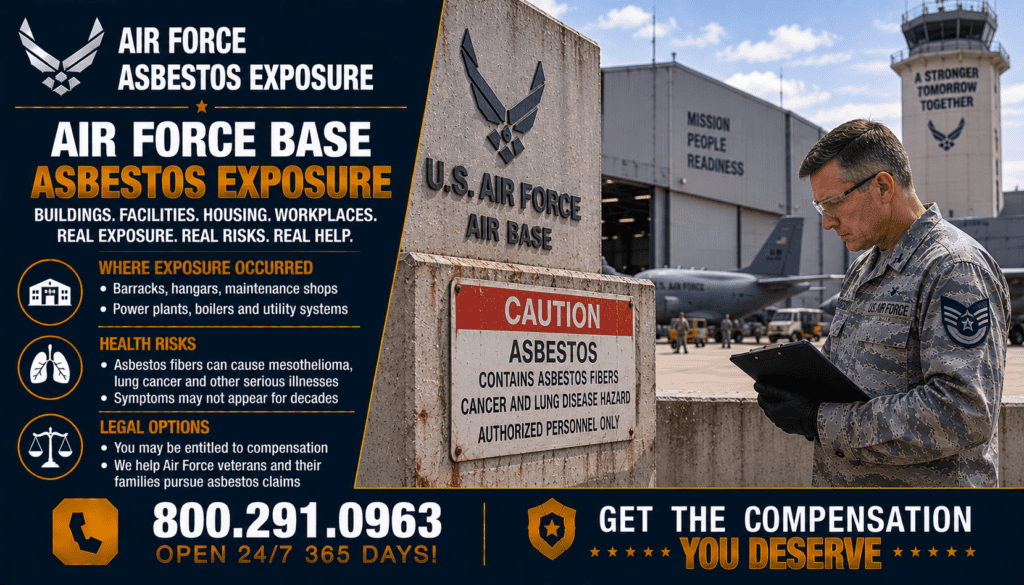
U.S. Air Force Asbestos Exposure
U.S. Air Force asbestos exposure may have occurred in several distinct service environments, including aircraft maintenance areas, flight lines, hangars, power plants, boiler rooms, vehicle shops, civil engineering projects and older base buildings. Historical military asbestos use included friction products, insulation and other heat-resistant materials, but the presence of asbestos varied by product, component, facility and time period.
For Air Force veterans, a useful exposure history goes beyond the fact that someone served at a particular base or in a particular squadron. It connects service dates, Air Force Specialty Code (AFSC), duty stations, aircraft or equipment, buildings, maintenance tasks and available technical or facility records to a specific asbestos-containing material that may have been disturbed.
✈️ Explore U.S. Air Force Asbestos Exposure Topics
- Air Force Base Asbestos Exposure — older hangars, shops, barracks, utility spaces and other base facilities.
- Air Force Power Plants & Boiler Rooms Asbestos Exposure — boilers, steam systems, pumps, valves, turbines and thermal insulation.
- Military Aircraft Asbestos Exposure — aircraft systems, components, maintenance and supporting aviation research.
- Military Aircraft Personnel Asbestos Exposure — mechanics, maintainers, crew chiefs, technicians and flight-line personnel.
- Military Occupations Asbestos Exposure — research AFSCs and actual military duties associated with possible exposure.
- Military Ranks & Asbestos Exposure — rank-related service roles, with exposure determined by actual duties and work environments.
🎖️ U.S. Air Force Asbestos Exposure Overview
The Air Force has operated complex aviation, industrial and support systems since becoming a separate military service in 1947. During portions of the twentieth century, asbestos-containing products were used widely in American construction, mechanical systems, transportation equipment and heat-resistant applications. Air Force exposure research can therefore involve both aviation work and the buildings and infrastructure needed to support air operations.
The most useful starting point is the veteran’s actual service history. The broader U.S. Military Veterans Asbestos Exposure resource can help place Air Force service within a complete military exposure timeline. Air Force-specific research should then narrow the history to bases, units, AFSCs, aircraft, vehicles, equipment and tasks.
| Air Force exposure area | What to investigate | Useful records |
|---|---|---|
| Aircraft and flight lines | Brakes, gaskets, insulation, heat-resistant components and maintenance work | Technical orders, parts catalogs, maintenance and squadron records |
| Bases and buildings | Older insulation, flooring, roofing, fireproofing, cement products and mechanical systems | Blueprints, specifications, work orders, renovation and abatement records |
| Utilities | Boilers, steam lines, pumps, valves, turbines and thermal insulation | Mechanical drawings, equipment records and maintenance files |
| Vehicles and support equipment | Historical friction materials, gaskets and heat-resistant components | Equipment manuals, part numbers and repair records |
| Civil engineering and maintenance | Construction, renovation, demolition and repair of older materials | AFSC records, project files, building records and witness statements |
None of these categories proves that an individual veteran was exposed. Product composition, dates, work practices, proximity, frequency, duration and whether asbestos-containing material was actually disturbed all matter.
✈️ Aircraft, Flight Lines & Maintenance
Aircraft maintenance is one of the major Air Force pathways worth investigating because aviation systems rely on friction, heat-control, sealing and electrical components. Some historical products in these categories contained asbestos. Research should identify the aircraft model, component, part or supplier, service period and maintenance activity rather than assuming an entire aircraft contained asbestos.
The Military Aircraft Asbestos Exposure resource provides aircraft-specific research. Veterans who remember particular mission types can also review Fighter Jet Asbestos Exposure, Bomber Aircraft Asbestos Exposure and Cargo Aircraft Asbestos Exposure. Personnel who supported aircraft from the ground can review Aircraft Ground Support Crews Asbestos Exposure.
Aircraft work to investigate
- Brake, wheel and landing-gear maintenance involving historical friction components
- Engine-area work involving gaskets, seals, insulation or heat protection
- Removal or replacement of older heat-resistant electrical or insulating materials
- Ground-support equipment and vehicle maintenance
- Cleaning or working near dusty component removal or repair
- Hangar maintenance where aircraft work and building-material disturbance occurred in the same environment
An aircraft assignment alone does not establish exposure. Technical orders, illustrated parts catalogs, part numbers, procurement records, overhaul files and manufacturer information can help determine what material was actually used during the veteran’s service period.
🏢 Air Force Bases, Hangars & Buildings
Air Force installations included far more than runways. Older bases could contain hangars, maintenance shops, barracks, family housing, hospitals, warehouses, administrative buildings, utility tunnels, heating plants and mechanical rooms. Some structures were built or renovated when asbestos-containing construction and mechanical materials were widely available.
Start with the Air Force Base Asbestos Exposure guide when a veteran remembers a particular installation or work building. The Base Hangars Asbestos Exposure resource focuses on hangars and aviation maintenance buildings, while Military Housing Asbestos Exposure addresses residential settings.
Base utility systems deserve separate attention. The Air Force Power Plants & Boiler Rooms Asbestos Exposure page covers boilers, steam lines, pumps, valves, turbines, gaskets, packing and thermal insulation used in utility environments.
| Facility | Historical materials to investigate |
|---|---|
| Hangars and shops | Insulation, flooring, roofing, fireproofing, mechanical-system materials and aircraft components |
| Boiler and power plants | Pipe and boiler insulation, gaskets, packing, valves, pumps and thermal materials |
| Barracks and housing | Some flooring, mastics, pipe insulation, roofing, siding and wall or ceiling materials |
| Utility tunnels | Steam piping, insulation, valves, pumps and mechanical components |
| Maintenance buildings | Building materials plus vehicle, aircraft and equipment components |
Major Air Force Bases and Asbestos Exposure
Asbestos-containing insulation, building materials, and mechanical equipment were historically used at many U.S. Air Force installations. Aircraft maintenance personnel, electricians, mechanics, construction workers, and other military personnel may have encountered asbestos during maintenance, repairs, and renovations.
Learn more about Major Air Force Bases Asbestos Exposure, including potential exposure locations, affected occupations, and materials associated with asbestos exposure.
👨🔧 Air Force Jobs, AFSCs & Personnel
Potential exposure depended more on what a service member actually did than on rank alone. AFSC history can help identify duties, training, equipment and work environments that deserve closer review. The Military Occupations Asbestos Exposure guide explains how occupational records can be combined with equipment and facility evidence.
Air Force specialties that may warrant investigation when the work involved documented asbestos-containing materials include aircraft maintenance, vehicle maintenance, civil engineering, plumbing, HVAC, electrical work, power production, boiler or utility work, construction, welding, firefighting and building maintenance. This does not mean every person in those specialties was exposed.
Questions that make an AFSC history more useful
- What was the veteran’s AFSC during each assignment?
- Which squadron, shop, work center or civil engineering unit was involved?
- Which aircraft, vehicles, boilers, generators or other equipment were serviced?
- Which buildings and work areas were entered regularly?
- Did the veteran remove, cut, scrape, grind, drill, sand or replace older material?
- Was dusty work performed nearby by coworkers or contractors?
🧱 Asbestos Products & Components to Investigate
Historical military asbestos products included friction products and heat-resistant materials. In an Air Force investigation, potentially relevant categories can include brakes, gaskets, valves, insulation, cements, adhesives, pipe coverings, flooring and other construction or mechanical products. Not every product in these categories contained asbestos.
| Product or component | Air Force setting | Evidence to seek |
|---|---|---|
| Brake and friction materials | Aircraft, vehicles and support equipment | Part number, supplier, technical order and replacement date |
| Gaskets and packing | Engines, pumps, valves, boilers and mechanical equipment | Equipment manual, parts list, procurement or maintenance record |
| Thermal insulation | Boilers, steam piping, power plants and mechanical rooms | Specifications, drawings, work orders and asbestos surveys |
| Building products | Hangars, barracks, housing, offices and shops | Blueprints, material schedules, renovation and abatement records |
| Heat-resistant electrical materials | Aircraft, electrical equipment and facility systems | Technical documents, component specifications and part records |
Appearance alone cannot reliably establish asbestos content. Manufacturer documents, product specifications, dated facility records, testing or other reliable historical evidence may be needed.
🛠️ How Air Force Asbestos Exposure May Have Occurred
Asbestos-containing material presents a greater concern when fibers can become airborne through damage, deterioration or disturbance. In an Air Force setting, potential disturbance could occur during maintenance, repair, renovation, demolition or component replacement.
- Removing or servicing historical aircraft or vehicle brake components
- Scraping or replacing older gaskets and packing
- Removing damaged pipe, boiler or equipment insulation
- Cutting, drilling, sanding or demolishing older building materials
- Repairing utility systems in boiler rooms, power plants or tunnels
- Cleaning dust and debris after maintenance or renovation
- Working close to coworkers or contractors disturbing confirmed asbestos-containing material
Nearby work should not automatically be treated as meaningful exposure. Distance, frequency, duration, ventilation, material condition and the activity that generated dust are important when reconstructing what happened.
📞 Reviewing an Air Force exposure history
If you served in the Air Force and were later diagnosed with mesothelioma, asbestos-related lung cancer or another asbestos-related disease, your AFSC, bases, aircraft, equipment and work history may help identify records worth investigating. Call 800.291.0963. Live chat is available 24/7, 365 days a year, or Submit Your Case.
📂 Records & Evidence for Air Force Veterans
A strong exposure history connects the veteran to a defined place, time, material and activity. The How Veterans Prove Military Asbestos Exposure resource can help organize the records used to reconstruct service history.
- DD-214 and Official Military Personnel File records
- AFSC history, training records and performance reports
- Squadron, unit and duty-station assignments
- Aircraft, vehicle and equipment assignments
- Technical orders, illustrated parts catalogs and maintenance manuals
- Part numbers, supply records and procurement documents
- Maintenance, overhaul, inspection and modification records
- Base maps, building numbers, blueprints and construction specifications
- Renovation, asbestos survey and abatement records when available
- Historical photographs and equipment nameplates
- Specific coworker, supervisor or contractor statements
- Medical and pathology records documenting the diagnosed condition
Build the history chronologically. Record each base, unit, AFSC, work area, aircraft or equipment type, task and date range separately. Civilian employment before and after military service should also be documented so medical and legal reviewers can evaluate the complete exposure history.
🫁 Health Risks, VA Benefits & Legal Options
Inhalation of asbestos fibers can cause serious diseases, including malignant mesothelioma, asbestos-related lung cancer and asbestosis. These illnesses can develop many years after exposure. An Air Force service history, however, does not by itself diagnose an asbestos-related disease or establish which exposure caused an individual illness.
Veterans concerned about past asbestos exposure or respiratory symptoms should discuss their military and occupational history with a qualified healthcare professional. The Help for Military Veterans Asbestos Exposure resource organizes additional veteran support and claim information. The Department of Veterans Affairs states that veterans may file disability compensation claims for health problems they believe are related to military asbestos exposure, and VA evaluates claims based on the required medical and service evidence.
VA disability compensation
VA identifies evidence such as medical records documenting the condition, service records showing the veteran’s job or specialty, and medical evidence connecting the condition with asbestos contact during military service. Eligibility is determined case by case.
Asbestos trust and civil claims
Separate legal options may sometimes involve manufacturers, suppliers, contractors or other entities associated with asbestos-containing products. These claims require their own product, exposure, company, medical, jurisdictional and timing evidence. Military service does not automatically establish a private claim, trust eligibility or compensation.
❓ Frequently Asked Questions
Did all Air Force veterans experience asbestos exposure?
No. Exposure depended on the veteran’s service period, AFSC, duty station, aircraft or equipment, building, product, task and whether asbestos-containing material was present and disturbed.
Which Air Force jobs may warrant closer asbestos research?
Aircraft and vehicle maintenance, civil engineering, utilities, power production, plumbing, HVAC, electrical, construction and building-maintenance work may warrant investigation when the duties involved historical asbestos-containing materials.
Could Air Force aircraft have contained asbestos components?
Some historical aviation friction, sealing, insulating and heat-resistant products contained asbestos. The specific aircraft, component, manufacturer, part number and service period should be researched rather than assuming every aircraft contained asbestos.
Could an Air Force base building be a source of exposure?
Potentially. Some older military buildings used asbestos-containing construction or mechanical products. Building specifications, renovation records, surveys and work history can help determine whether a specific facility contained asbestos.
Does an AFSC prove asbestos exposure?
No. An AFSC helps identify likely duties and work environments, but stronger evidence connects those duties to a documented asbestos-containing material and an activity capable of disturbing it.
What records should an Air Force veteran collect?
Useful records can include the DD-214, personnel file, AFSC history, unit and base assignments, technical orders, maintenance records, parts information, facility records, photographs and specific witness statements.
Can Air Force veterans apply for VA disability compensation for asbestos disease?
Potentially. VA states that veterans may be eligible when the required evidence supports both asbestos contact during military service and a health condition caused by that exposure. VA makes eligibility decisions case by case.
Can an Air Force veteran have legal options outside VA benefits?
Depending on the evidence and circumstances, asbestos trust or civil claims may be investigated separately from VA benefits. Requirements, responsible entities, filing deadlines and available compensation vary.
🎖️ Help for Air Force Veterans & Families
If an Air Force veteran has been diagnosed with mesothelioma, asbestos-related lung cancer or another asbestos-related disease, a focused review can organize service dates, AFSCs, bases, squadrons, aircraft, vehicles, equipment, buildings, maintenance tasks and product evidence. The goal is to distinguish documented exposure pathways from assumptions based only on military service.
Call 800.291.0963 to discuss an Air Force asbestos exposure history. Live chat is available 24/7, 365 days a year. You can also Submit Your Case.
No diagnosis, VA eligibility decision, lawsuit result, trust payment, compensation amount or claim outcome is guaranteed. Eligibility and legal options depend on the individual facts, evidence and applicable requirements.
⚕️ Legal & Medical Information Disclaimer
This page provides general educational information and is not medical or legal advice. It does not establish asbestos exposure, diagnosis, causation, liability, claim eligibility or compensation. Medical concerns should be discussed with a qualified healthcare professional, and legal questions should be reviewed with a qualified attorney.
📚 Confirmed Sources & Air Force Research
- U.S. Department of Veterans Affairs — Public Health: Asbestos
- U.S. Department of Veterans Affairs — Asbestos Exposure & Disability Compensation
- MesotheliomaHelp.Center — U.S. Military Veterans Asbestos Exposure
- MesotheliomaHelp.Center — Air Force Base Asbestos Exposure
- MesotheliomaHelp.Center — Air Force Power Plants & Boiler Rooms Asbestos Exposure
- MesotheliomaHelp.Center — Military Aircraft Asbestos Exposure
- MesotheliomaHelp.Center — Military Aircraft Personnel Asbestos Exposure
- MesotheliomaHelp.Center — Military Occupations Asbestos Exposure
- MesotheliomaHelp.Center — Military Ranks & Asbestos Exposure
- MesotheliomaHelp.Center — Military Products Asbestos Exposure
- MesotheliomaHelp.Center — Help for Military Veterans Asbestos Exposure