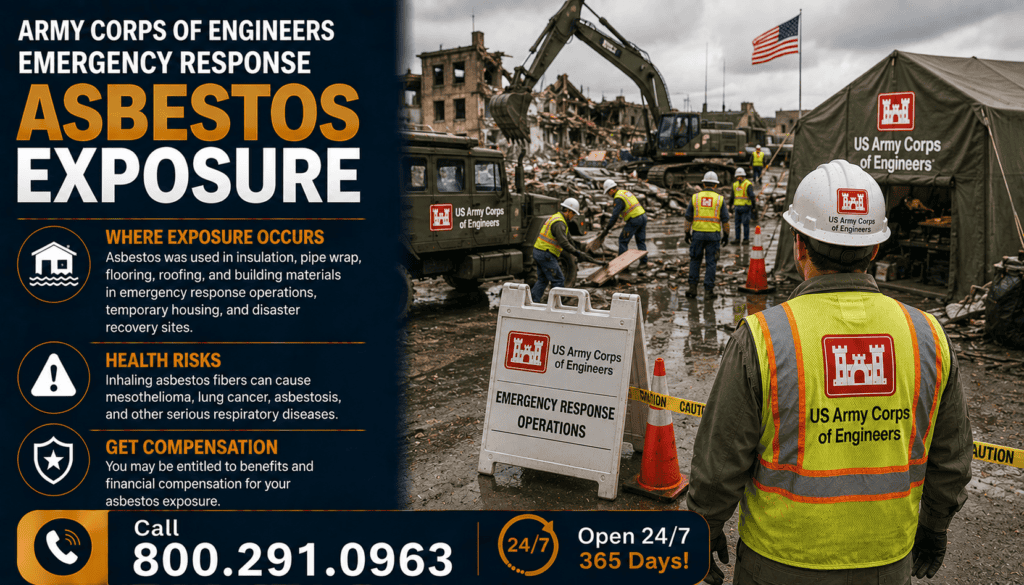
🚨 Army Corps Emergency Response Asbestos Exposure
Army Corps emergency response workers sometimes repaired damaged infrastructure, restored utilities, or cleared debris at older sites containing asbestos materials. Exposure depended on the specific tasks and products involved.
This page explains potential emergency-response exposure scenarios, related Army Corps occupations and equipment, medical concerns, records that can help identify asbestos products, and possible compensation options.
🚨 Emergency Response Work and Asbestos Exposure
The U.S. Army Corps of Engineers has supported disaster response, flood protection, infrastructure restoration, and emergency construction for decades. Some assignments required workers to enter older buildings or industrial sites where asbestos-containing materials were already installed. The relevant exposure question is not whether every emergency operation involved asbestos; it is which structures, materials, tasks, and dates applied to an individual worker.
Emergency response can compress planning and repair schedules. Crews may inspect damaged mechanical rooms, remove debris, restore utilities, or stabilize structures before normal renovation records are available. Disturbing deteriorated insulation, flooring, roofing, cement products, or equipment components can release asbestos fibers when those materials actually contain asbestos. Protective controls and qualified abatement are important whenever asbestos is suspected.
Historical flood-control projects and dam projects are useful related topics because response teams may work near pump stations, power systems, and aging infrastructure. Those connections help narrow a work history, but they do not establish exposure without site-specific evidence.
📍 Where Exposure May Have Occurred
Emergency assignments may involve damaged public buildings, military facilities, utility plants, waterways, and temporary operating sites. The presence of asbestos depends on the age, construction history, equipment, and work performed. The table below distinguishes likely material pathways rather than treating every disaster site as an asbestos site.
| Work Area or Task | Why Exposure May Have Occurred |
|---|---|
| Damaged mechanical rooms | Repairing older insulated piping, boilers, pumps, and valves could disturb legacy thermal insulation or packing. |
| Flooded municipal buildings | Removing damaged floor tiles, wall materials, or pipe insulation could disturb asbestos-containing products. |
| Pump and water-control stations | Overhauling pump seals, gaskets, and connected piping could generate dust from older components. |
| Emergency generator locations | Electrical restoration could involve legacy heat-resistant panels, gaskets, and insulated systems. |
| Debris staging and demolition | Breaking or loading mixed debris from older structures could disturb unidentified asbestos materials. |
| Temporary repair shops | Servicing older heavy equipment could involve friction materials, gaskets, and heat-resistant components. |
Related site histories include waterway facilities and military base construction and repair projects. The original building or equipment records remain more informative than a general job title.
👷 Emergency Response Tasks and Occupations
Different workers could encounter different materials on the same operation. Civil engineers might evaluate damaged structures and direct access, while construction inspectors might enter equipment spaces to document damage. Neither role alone proves airborne asbestos exposure. Proximity, time on site, material condition, and disturbance determine what additional evidence is needed.
Maintenance workers and mechanics could restore mechanical systems under emergency conditions. Their histories may involve cutting insulation, opening pumps, removing gaskets, or replacing worn equipment. Electricians may have worked around older electrical panels, generator rooms, and heat-resistant equipment components. Records should identify whether asbestos was present in the specific materials handled.
Project managers can help identify the contractors, work orders, material suppliers, and dates associated with a response. Even when a manager did not directly handle materials, their project documentation may be essential to reconstructing exposure for the crews who did.
⚙️ Equipment and Construction Materials
Emergency repair work often relies on pumps, portable power, heavy machinery, and replacement construction materials. Legacy pump equipment may have used asbestos-containing packing or gaskets in some historical configurations. Generator equipment and boiler systems may also have contained heat-resistant materials in older installations. Component identification is more reliable than assuming a whole machine contained asbestos.
For debris clearance and road restoration, heavy machinery could have required brake, clutch, or gasket servicing. The product’s model, manufacture date, repair history, and replacement parts matter. Emergency work may also involve replacing roofing, flooring, cement board, insulation, and fireproofing in older buildings.
For a closer examination of suppliers and product categories, see Army Corps Construction Material Manufacturers Asbestos Use. That article addresses manufacturers, historical building products, occupational exposure, and possible compensation considerations. Material specifications and invoices may help distinguish asbestos-containing products from later asbestos-free replacements.
📁 Exposure Evidence and Work Records
Establishing an exposure history usually requires more than a general account of disaster deployment. An effective chronology records the emergency event, worksite address, assignment dates, employer or unit, tasks, damaged materials, and names of witnesses. Site records may be held by government agencies, private contractors, local facility owners, or equipment manufacturers.
| Record or Evidence | What It May Establish |
|---|---|
| Deployment orders and time sheets | Dates, assigned location, employer, and duration of response work. |
| Work orders and incident reports | Specific repairs, demolition activities, affected rooms, and task sequences. |
| Building surveys and abatement records | Whether asbestos-containing materials were identified before or after emergency work. |
| Equipment maintenance logs | Machine models, gaskets, insulation, packing, and replacement components serviced. |
| Purchase orders and product invoices | Manufacturer names, material descriptions, and product delivery dates. |
| Photographs and coworker accounts | Visible work conditions, proximity to disturbed materials, and protective measures. |
| Medical and employment histories | Diagnosis dates, relevant jobs, and potential non-Corps exposure sources. |
Retain original documents and distinguish firsthand observations from assumptions. An asbestos survey after an event may identify materials remaining at the site but not necessarily the precise material disturbed during the response.
🩺 Mesothelioma and Asbestos-Related Lung Cancer
Inhalation of asbestos fibers can cause serious diseases, including mesothelioma, asbestos-related lung cancer, and asbestosis. These illnesses may appear decades after exposure. A diagnosis does not, by itself, identify the employer, project, or asbestos product responsible; work history and medical documentation are both important.
Army Corps Asbestos Exposure Health Risks explains why exposure duration, fiber release, and latency matter. Mesothelioma can affect the lining of the lungs or abdomen and requires specialist evaluation. Asbestos-related lung cancer involves different diagnostic and causation questions, including consideration of smoking and other occupational exposures.
Anyone experiencing persistent respiratory symptoms should seek medical evaluation rather than rely on website information. People with a confirmed diagnosis may wish to assemble pathology reports, imaging, specialist notes, and a detailed occupational timeline before discussing legal options.
⚖️ Mesothelioma Lawsuits and Compensation
Potential legal options depend on diagnosis, state law, product identification, employment status, and the responsible companies. Army Corps of Engineers Mesothelioma Lawsuit addresses potential claims tied to historical Corps-related work. Claims often focus on manufacturers or other legally responsible parties rather than assuming the Army Corps itself is a proper defendant.
Asbestos trust fund claims may be available where exposure can be linked to products of companies that established qualifying trusts. Each trust has its own medical and exposure requirements. The statute of limitations varies by jurisdiction and claim type, so an early case-specific review can matter.
Workers and families can also review Army Corps of Engineers Legal Options & Benefits for an overview of possible paths. Compensation is never automatic; eligibility and outcomes depend on evidence and applicable law.
🎖️ Veterans, Civilian Workers, and Family Exposure
Army Corps projects have involved military personnel, federal civilian employees, and private contractors. These categories have different benefit and legal frameworks. Veterans with qualifying service-related exposure and illness may explore VA benefits for mesothelioma; civilian employees and contractors should separately examine employment-based benefits and other applicable options.
Some workers may have brought dust home on clothing, boots, or equipment, potentially exposing household members. Army Corps Family Secondhand Asbestos Exposure discusses this separate exposure pathway. A family history should document the worker’s tasks, the likely materials, laundering practices, and the relevant years, rather than assuming all emergency deployments caused take-home exposure.
Survivors and families should preserve records even when the original worker is unavailable to provide a complete account. Project rosters, photographs, union or contractor records, and former coworker statements may help reconstruct historical conditions.
❓ Frequently Asked Questions
Did Every Army Corps Emergency Response Project Involve Asbestos?
No. Exposure depends on the specific site, age of materials, disturbance, and controls used. Some response operations involved newer infrastructure or tasks unrelated to asbestos-containing products.
Which Emergency Response Activities Deserve Closer Review?
Demolition of older buildings, removal of damaged insulation, repair of legacy pump and boiler systems, and handling mixed construction debris warrant examination when the materials may have contained asbestos.
Can Civilian Contractors Have Relevant Exposure Histories?
Yes. Private construction and maintenance contractors may have performed response work alongside government personnel. Employer records, subcontract agreements, and job logs help establish their assignments.
What If the Product Manufacturer Is Unknown?
Building specifications, invoices, equipment manuals, historic photographs, and coworker accounts may help identify the materials and manufacturers. Avoid guessing a brand without supporting records.
Does a Mesothelioma Diagnosis Prove Army Corps Exposure?
No. Medical records establish the disease, while employment, project, and product evidence are needed to evaluate possible sources of exposure.
Are Filing Deadlines the Same for Everyone?
No. Deadlines and eligibility vary by state, claim type, and individual circumstances. Prompt professional review can help prevent missed filing opportunities.
📚 Summary and Confirmed Sources
Army Corps emergency response assignments sometimes brought workers into older buildings, damaged infrastructure, and industrial equipment that historically used asbestos-containing materials. A careful review connects particular work tasks to identifiable materials, dates, and supporting records. Related Corps pages on flood-control projects, occupations, machinery, health risks, and compensation can help organize the relevant questions without replacing a site-specific assessment.
Confirmed Sources and Reference Material
The U.S. Environmental Protection Agency provides information about asbestos in buildings and safe handling. The Occupational Safety and Health Administration explains occupational asbestos hazards and regulatory requirements. The National Cancer Institute describes asbestos-related cancer risks. The Department of Veterans Affairs describes asbestos exposure and disability benefits for eligible veterans. These are general reference sources, not confirmation that any particular Corps project used asbestos.
Find out if you may qualify for asbestos compensation today.
Call 800.291.0963 — Help is available 24/7/365. 25+ years of experience.
This information is educational, not medical or legal advice. Mesothelioma Help Center is not a law firm or medical provider and does not determine legal or VA eligibility.