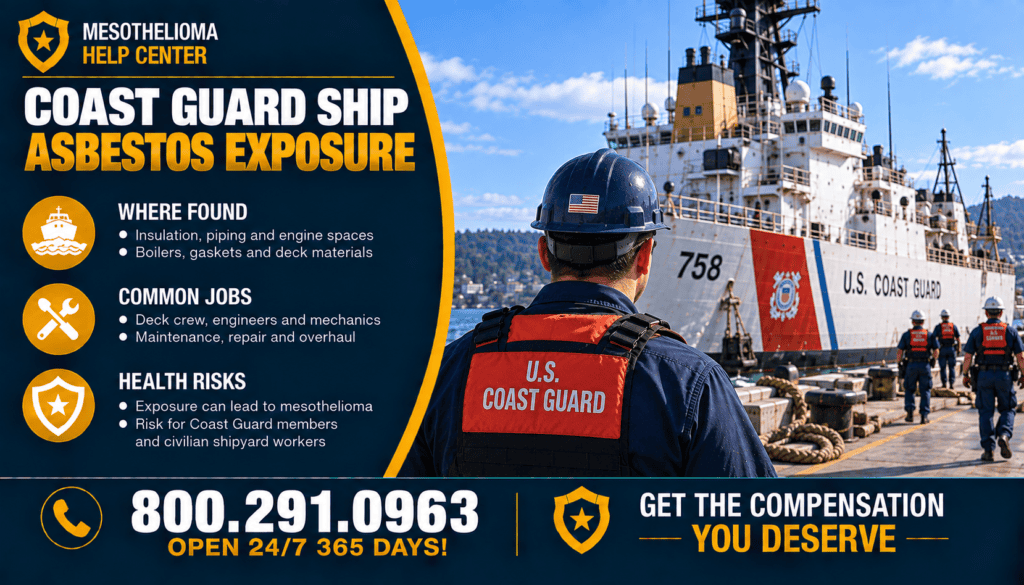
Coast Guard Ship Asbestos Exposure
Older Coast Guard ships and cutters can be important locations to investigate for historical asbestos exposure. Depending on the vessel, construction period, equipment, manufacturer, component, and era, some pipe insulation, boiler insulation, gaskets, packing, machinery insulation, fireproofing, deck materials, and other heat-resistant products may have contained asbestos.
Serving aboard an older Coast Guard vessel does not automatically prove asbestos exposure. A credible exposure history identifies the specific cutter or ship, compartment, equipment, material, maintenance task, and conditions under which asbestos-containing products may have been disturbed.
Veterans researching broader exposure can also review Coast Guard Equipment Asbestos Exposure, Coast Guard Jobs Asbestos Exposure, and Coast Guard Facilities Asbestos Exposure.
⚓ Why Coast Guard Ships May Present Asbestos Exposure Risk
Coast Guard vessels contain tightly integrated propulsion, mechanical, electrical, firefighting, piping, and habitability systems. Historically, asbestos was used in some marine applications because of its heat resistance, fire resistance, and insulating properties.
| Shipboard Condition | Why It May Matter |
|---|---|
| Confined machinery spaces | Engine rooms and boiler spaces may contain multiple potential asbestos sources. |
| Extensive piping systems | Steam, hot-water, and other piping may have used insulation, lagging, gaskets, or packing. |
| Frequent repair work | Maintenance can disturb older gaskets, insulation, packing, and fire-resistant materials. |
| Shipyard overhaul | Large-scale removal and replacement can disturb legacy shipboard materials. |
The actual asbestos content of each material or component should be verified rather than assumed.
🚢 Shipboard Areas and Systems to Investigate
| Shipboard Area / System | Potential Historical Asbestos Source | Related Guide |
|---|---|---|
| Engine rooms | Machinery insulation, gaskets, packing, piping, heat-resistant materials | Engine Rooms Asbestos Exposure on Coast Guard Vessels |
| Boiler rooms | Boiler insulation, refractory materials, pipe insulation, gaskets, packing | Boiler Rooms Asbestos Exposure on Coast Guard Ships |
| Piping systems | Pipe insulation, lagging, flange gaskets, valve packing | Ship Insulation & Pipe Lagging Asbestos Exposure – Coast Guard |
| Deck and auxiliary machinery | Friction materials, gaskets, packing, insulation | Coast Guard Equipment Asbestos Exposure |
| Habitability and interior spaces | Certain flooring, fireproofing, wall, ceiling, or insulation materials | Coast Guard Cutters Asbestos Exposure & Mesothelioma Lawsuit |
Not every Coast Guard vessel, compartment, insulation product, gasket, packing material, or interior finish contained asbestos. Vessel-specific evidence should be reviewed whenever possible.
🧰 Insulation, Gaskets, Packing, Fireproofing, and Ship Materials
Several material categories may be especially relevant in a historical Coast Guard ship exposure investigation.
- Pipe insulation and lagging
- Boiler and machinery insulation
- Flange and equipment gaskets
- Valve and pump packing
- Heat shields and thermal blankets
- Fire-resistant panels or fireproofing
- Certain deck, flooring, wall, or ceiling materials
- Certain refractory and sealing products
Asbestos content varied by manufacturer, product, installation date, vessel, and era. The presence of asbestos should not be inferred solely from a material’s age or shipboard use.
🔧 Ship Maintenance and Overhaul Tasks That May Disturb Asbestos
Potential exposure concerns can increase when confirmed asbestos-containing materials are removed, scraped, cut, drilled, sanded, replaced, or otherwise disturbed during maintenance or overhaul.
Tasks worth investigating include:
- Removing pipe insulation to access repairs
- Scraping old gaskets from flanges or machinery
- Replacing pump or valve packing
- Servicing boilers, engines, or auxiliary machinery
- Removing fire-resistant panels or insulation
- Opening walls, ceilings, or shipboard compartments
- Cleaning debris after repairs
- Working nearby while shipyard crews removed legacy materials
A veteran may have direct exposure from performing the work or bystander exposure from working nearby while asbestos-containing materials were disturbed.
👷 Crew, Engineering, Deck, and Bystander Exposure
Asbestos exposure aboard a Coast Guard vessel can vary by rating, department, work center, watchstanding location, and proximity to maintenance activity.
Potentially relevant personnel can include:
- Engineering personnel
- Machinist’s Mates
- Electrician’s Mates
- Damage Controlmen
- Boatswain’s Mates
- Maintenance personnel
- Other crew working near repair or overhaul activity
Assignment to a ship or department alone does not establish asbestos exposure. The history should connect the veteran to a specific asbestos-containing source and disturbance event.
📚 Coast Guard Ship Asbestos Exposure Guides
These ship-specific pages can help narrow an exposure investigation:
- Coast Guard Cutters Asbestos Exposure & Mesothelioma Lawsuit
- Engine Rooms Asbestos Exposure on Coast Guard Vessels
- Boiler Rooms Asbestos Exposure on Coast Guard Ships
- Ship Insulation & Pipe Lagging Asbestos Exposure – Coast Guard
These resources focus on vessel-specific compartments, equipment, materials, maintenance tasks, records, health risks, and legal options.
🩺 Mesothelioma, Lung Cancer, and Other Health Risks
Asbestos exposure is associated with mesothelioma, lung cancer, asbestosis, and certain other asbestos-related conditions. These diseases can develop after long latency periods, so historical Coast Guard ship exposure may remain medically relevant decades later.
Symptoms such as persistent cough, shortness of breath, chest pain, unexplained weight loss, or difficulty breathing require medical evaluation but do not establish asbestos causation by themselves.
Veterans concerned about historical shipboard exposure should provide healthcare professionals with a detailed Coast Guard and civilian occupational history.
⚖️ VA Benefits, Lawsuits, and Trust Fund Claims
A Coast Guard veteran diagnosed with an asbestos-related disease may be able to investigate more than one compensation path depending on the evidence.
| Potential Option | What May Need to Be Established |
|---|---|
| VA disability benefits | Current disease, military asbestos exposure, and service connection |
| Private asbestos lawsuit | Diagnosis, product exposure, responsible defendants, jurisdiction, and filing deadline |
| Asbestos trust fund claim | Trust-specific medical and exposure requirements |
| Wrongful death claim | Eligible claimant, diagnosis, exposure evidence, responsible parties, and filing deadline |
See Coast Guard Ship Asbestos Exposure Mesothelioma Lawsuit, Coast Guard Veterans Asbestos Trust Fund Claims, and VA Benefits vs. Coast Guard Mesothelioma Lawsuits.
🔎 What a Coast Guard Ship Exposure Review Should Examine
A useful exposure review should identify the veteran’s exact vessel, assignment dates, department, compartments, equipment, materials, maintenance work, and overhaul history.
- Specific Coast Guard cutter or ship
- Dates of assignment
- Rating, department, and work center
- Engine-room, boiler-room, deck, electrical, or maintenance duties
- Pipe insulation, machinery insulation, gaskets, packing, fireproofing, or interior materials disturbed
- Maintenance and shipyard overhaul periods
- Equipment manufacturers and product records
- Ship plans, engineering logs, and procurement files
- Possible asbestos trust connections
- VA service-connection evidence
Served aboard a Coast Guard ship and later developed mesothelioma or lung cancer? Call 800.291.0963 or Submit Your Case. Live help is available 24/7, 365 days a year.
❓ Frequently Asked Questions
Could Coast Guard ships contain asbestos?
Potentially. Some historical pipe insulation, boiler insulation, gaskets, packing, fireproofing, machinery insulation, and interior materials contained asbestos, but vessel- and product-specific evidence is needed.
Did every Coast Guard cutter contain asbestos?
No. Asbestos content varied by vessel, construction period, equipment, product, manufacturer, and modernization history.
Could engine-room work create asbestos exposure?
Potentially. Engine rooms may contain piping, machinery, gaskets, packing, and insulation that warrant investigation depending on the vessel and era.
Could boiler-room service involve asbestos?
Potentially. Some historical boiler insulation, refractory materials, pipe insulation, gaskets, and packing contained asbestos.
Could shipyard overhaul expose Coast Guard crews?
Potentially. Major overhaul can involve removal of insulation, piping materials, machinery components, fireproofing, and other legacy products.
What records can help prove shipboard exposure?
Personnel files, ship histories, deck and engineering logs, technical manuals, parts records, procurement files, shipyard records, witness statements, and medical records may help.
Can Coast Guard veterans file asbestos trust claims for ship exposure?
Potentially. Eligibility depends on whether exposure can be connected to companies or products covered by specific asbestos bankruptcy trusts.
Does serving aboard an older Coast Guard ship automatically prove a mesothelioma claim?
No. A claim requires medical evidence and a supported exposure history connecting the veteran to asbestos-containing materials or responsible companies.
📞 Coast Guard Veteran Diagnosed After Possible Shipboard Asbestos Exposure?
A strong shipboard exposure investigation starts with the veteran’s exact vessel, department, compartments, equipment, maintenance duties, overhaul periods, asbestos-containing materials, products, and manufacturers. Those details can help determine whether VA benefits, asbestos trust claims, a private lawsuit, or multiple options should be investigated.
Call 800.291.0963 to discuss the veteran’s Coast Guard shipboard exposure history. Live help is available 24/7, 365 days a year.
Submit Your Case for a case-specific review. Compensation and VA eligibility depend on diagnosis, exposure evidence, responsible companies, jurisdiction, and applicable requirements.
For ship-specific legal information, see Coast Guard Ship Asbestos Exposure Mesothelioma Lawsuit. For broader legal information, see Coast Guard Asbestos Exposure Legal Options.
⚕️ Legal & Medical Information Disclaimer
This page provides general educational information only. It does not establish diagnosis, causation, legal liability, VA eligibility, or compensation. Consult qualified medical and legal professionals about your situation.