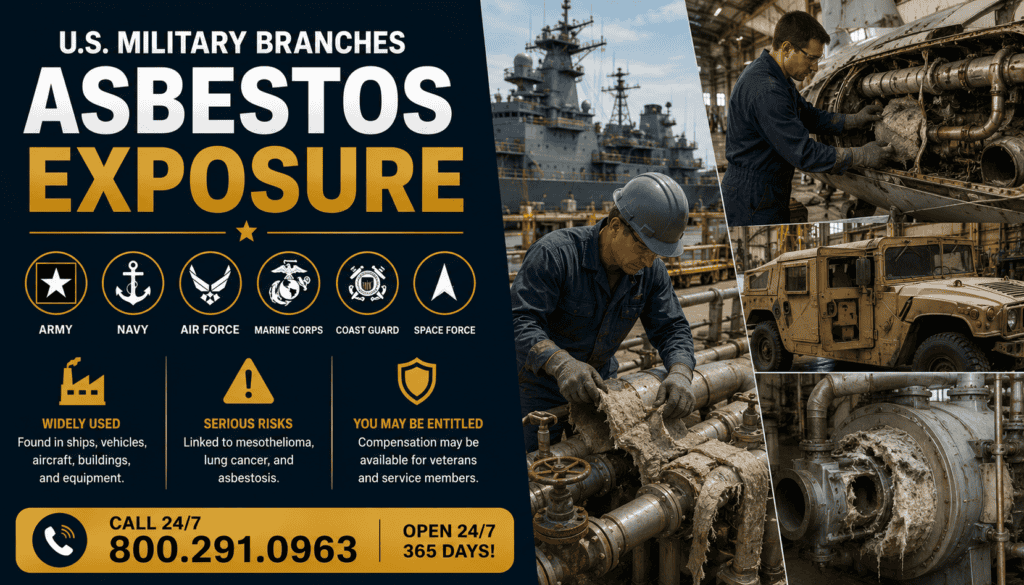
U.S. Military Branches Asbestos Exposure
The United States military relied on asbestos for nearly every major branch of service throughout much of the twentieth century. From World War II through the late 1970s—and in some facilities well into the 1980s—asbestos was considered an essential military material because it provided exceptional fire resistance, thermal insulation, electrical protection, and durability.
As a result, millions of veterans were exposed while serving aboard ships, maintaining aircraft, repairing military vehicles, constructing bases, operating power plants, or working inside military buildings.
Today, military veterans represent one of the largest occupational groups diagnosed with mesothelioma, asbestos lung cancer, asbestosis, and other asbestos-related diseases because of the widespread use of asbestos-containing products throughout the Armed Forces.
This Military Branches authority hub serves as the central resource for every branch of military service and connects to detailed pages covering each branch, its occupations, facilities, equipment, vehicles, ships, aircraft, and historical asbestos exposure risks.
🔴━━━━━━━━━━━━━━━━━━━━━━━━━━━━━━━━━━━━
🎯 What You’ll Learn
This authority guide provides an overview of asbestos exposure throughout every major military branch while directing readers to more detailed resources.
You’ll discover:
- Why the military relied so heavily on asbestos
- Which military branches experienced the highest exposure risks
- Where asbestos was used aboard ships, aircraft, vehicles, weapons systems, and military installations
- Which military occupations were most heavily exposed
- How military contractors supplied asbestos-containing products to the Department of Defense
- Why asbestos diseases often develop 20–60 years after military service
- Where to find detailed branch-specific asbestos exposure information
Use this hub to explore our complete military asbestos library, including:
- U.S. Navy Veterans Asbestos Exposure
- U.S. Army Veterans Asbestos Exposure
- U.S. Air Force Veterans Asbestos Exposure
- U.S. Marine Corps Veterans Asbestos Exposure
- U.S. Coast Guard Veterans Asbestos Exposure
- Merchant Marine Asbestos Exposure
- Army Corps of Engineers Asbestos Exposure
- National Guard Asbestos Exposure
- U.S. Navy Seabees Asbestos Exposure
- Department of Defense Asbestos Exposure
- Pentagon Asbestos Exposure
🔴━━━━━━━━━━━━━━━━━━━━━━━━━━━━━━━━━━━━
⚠️ Why the U.S. Military Used So Much Asbestos
For decades, asbestos was viewed as one of the most valuable industrial materials available. Military engineers needed materials capable of withstanding intense heat, fire, explosions, saltwater corrosion, chemicals, and heavy mechanical wear.
Because asbestos was inexpensive and readily available, it became a standard component in military construction and equipment.
Military specifications commonly required asbestos in:
- Ships
- Aircraft
- Tanks
- Armored vehicles
- Military trucks
- Missile facilities
- Boilers
- Steam systems
- Pipe insulation
- Electrical systems
- Aircraft brakes
- Vehicle clutches
- Gaskets
- Pumps
- Turbines
- Compressors
- Fireproof doors
- Building insulation
- Roofing
- Flooring
- Ceiling materials
- Heating systems
- Barracks
- Hospitals
- Warehouses
- Ammunition depots
- Maintenance shops
Thousands of private manufacturers supplied these products under Department of Defense contracts, resulting in asbestos being installed throughout nearly every military installation and branch of service.
Learn more about military procurement and government facilities in our Department of Defense Asbestos Exposure and Pentagon Asbestos Exposure guides.
🔴━━━━━━━━━━━━━━━━━━━━━━━━━━━━━━━━━━━━
🪖 Every Military Branch Had Unique Asbestos Exposure Risks
Although the Navy is most frequently associated with asbestos exposure, every military branch used asbestos extensively.
Exposure depended largely on a service member’s job assignment, equipment, work environment, and duty station rather than simply the branch they served in.
For example:
- Sailors often encountered asbestos aboard ships and submarines.
- Soldiers worked around asbestos in tanks, motor pools, maintenance depots, and Army installations.
- Airmen maintained aircraft containing asbestos brakes, insulation, and engine components.
- Marines combined both naval and ground combat exposure risks.
- Coast Guardsmen operated vessels with machinery nearly identical to Navy ships.
- Seabees routinely constructed buildings using asbestos-containing construction materials.
- Merchant Mariners worked aboard cargo vessels heavily insulated with asbestos.
- Army Corps of Engineers personnel encountered asbestos during military construction projects.
- National Guard members often trained and worked in aging facilities built when asbestos use was standard.
Each branch developed different patterns of exposure, which is why this Military Branches hub serves as the starting point for exploring every military asbestos topic in greater detail.
🔴━━━━━━━━━━━━━━━━━━━━━━━━━━━━━━━━━━━━
⚓ U.S. Navy Veterans Asbestos Exposure
The U.S. Navy Veterans Asbestos Exposure hub covers the military branch with the highest documented rate of asbestos exposure.
Nearly every Navy vessel built during much of the twentieth century contained asbestos in:
- Boiler rooms
- Engine rooms
- Turbine spaces
- Steam piping
- Pumps
- Valves
- Electrical equipment
- Bulkheads
- Fireproof doors
- Deck coverings
- Gaskets
- Pipe insulation
Personnel with elevated exposure included:
- Boiler Technicians
- Machinist’s Mates
- Hull Technicians
- Pipefitters
- Electrician’s Mates
- Damage Controlmen
- Shipfitters
- Welders
- Firemen
The Navy hub also connects to detailed resources covering military ships, submarines, aircraft carriers, naval occupations, shipyards, and naval facilities.
🔴━━━━━━━━━━━━━━━━━━━━━━━━━━━━━━━━━━━━
🎖️ U.S. Army Veterans Asbestos Exposure
The U.S. Army Veterans Asbestos Exposure hub explains how asbestos affected soldiers serving in combat units, engineering commands, logistics operations, and military installations.
Army asbestos exposure commonly occurred in:
- Barracks
- Base hospitals
- Motor pools
- Tank maintenance facilities
- Ammunition depots
- Boiler plants
- Warehouses
- Utility tunnels
- Training facilities
- Vehicle repair shops
- Maintenance depots
Equipment frequently containing asbestos included:
- Tanks
- Armored vehicles
- Trucks
- Generators
- Braking systems
- Clutches
- Engine gaskets
- Mechanical insulation
Many Army veterans also worked alongside the Army Corps of Engineers Asbestos Exposure organization on major military construction and infrastructure projects.
🔴━━━━━━━━━━━━━━━━━━━━━━━━━━━━━━━━━━━━
✈️ U.S. Air Force Veterans Asbestos Exposure
The U.S. Air Force Veterans Asbestos Exposure hub explores asbestos exposure throughout military aviation operations.
Asbestos was commonly used in:
- Aircraft brake systems
- Engine insulation
- Firewalls
- Heat shields
- Electrical wiring
- Hydraulic systems
- Hangars
- Boiler plants
- Power stations
- Radar facilities
- Aircraft maintenance shops
Personnel at increased risk included:
- Aircraft Mechanics
- Crew Chiefs
- Electricians
- Civil Engineers
- Sheet Metal Workers
- Firefighters
- HVAC Technicians
- Base Maintenance personnel
The Air Force authority section links to aircraft-specific pages, occupations, air bases, aviation equipment, and maintenance operations.
🔴━━━━━━━━━━━━━━━━━━━━━━━━━━━━━━━━━━━━
🦅 U.S. Marine Corps Veterans Asbestos Exposure
The U.S. Marine Corps Veterans Asbestos Exposure hub examines asbestos exposure among Marines who served both ashore and aboard Navy vessels.
Marine Corps personnel frequently encountered asbestos while working in:
- Amphibious assault ships
- Marine aircraft
- Vehicle maintenance facilities
- Base utilities
- Barracks
- Boiler systems
- Construction projects
- Combat engineering operations
- Maintenance shops
Higher-risk occupations included:
- Vehicle Mechanics
- Aircraft Mechanics
- Combat Engineers
- Electricians
- Welders
- Maintenance Technicians
- Utilities personnel
The Marine Corps hub also connects readers to Marine bases, occupations, aircraft, military vehicles, engineering operations, and historical asbestos exposure throughout Marine Corps service.
🔴━━━━━━━━━━━━━━━━━━━━━━━━━━━━━━━━━━━━
🌊 U.S. Coast Guard Veterans Asbestos Exposure
The U.S. Coast Guard Veterans Asbestos Exposure hub explains how Coast Guard personnel encountered asbestos while operating cutters, buoy tenders, patrol boats, icebreakers, rescue vessels, aviation facilities, and shore installations.
Although smaller than the Navy, the Coast Guard used many of the same shipbuilding standards and engineering systems. As a result, asbestos-containing insulation, gaskets, pumps, valves, turbines, electrical equipment, and fireproof construction materials were found throughout many Coast Guard vessels.
Common exposure locations included:
- Engine rooms
- Boiler rooms
- Fire rooms
- Steam piping
- Mechanical spaces
- Pipe insulation
- Pumps
- Valves
- Turbines
- Electrical switchboards
- Deck coverings
- Bulkheads
- Ship repair facilities
Personnel with increased exposure included:
- Machinery Technicians
- Enginemen
- Damage Control personnel
- Electricians
- Marine Inspectors
- Welders
- Shipfitters
- Civil Engineering crews
The Coast Guard hub also links to detailed pages covering cutters, occupations, bases, shipyards, and support facilities.
🔴━━━━━━━━━━━━━━━━━━━━━━━━━━━━━━━━━━━━
🚢 Merchant Marine Asbestos Exposure
The Merchant Marine Asbestos Exposure hub documents asbestos exposure among Merchant Mariners who supported U.S. military operations during World War II, Korea, Vietnam, and later conflicts.
Merchant Marine cargo ships, tankers, troop transports, Liberty Ships, Victory Ships, and other commercial vessels used construction methods similar to Navy ships, resulting in extensive asbestos use throughout propulsion systems and living quarters.
Asbestos was commonly found in:
- Boiler rooms
- Engine rooms
- Steam piping
- Pumps
- Turbines
- Exhaust systems
- Pipe insulation
- Gaskets
- Packing materials
- Fireproof bulkheads
- Ventilation systems
Occupations with elevated exposure included:
- Chief Engineers
- Assistant Engineers
- Oilers
- Firemen
- Wipers
- Electricians
- Machinists
- Engine room crews
Continue to our Merchant Marine authority section for detailed information covering:
- Ship types
- Military cargo vessels
- Occupations
- Equipment
- Ports and shipyards
- Legal options
- Asbestos trust funds
- Health risks
🔴━━━━━━━━━━━━━━━━━━━━━━━━━━━━━━━━━━━━
🏗️ Army Corps of Engineers Asbestos Exposure
The Army Corps of Engineers Asbestos Exposure hub examines asbestos exposure among one of the military’s largest engineering and construction organizations.
For decades, Corps personnel designed, built, renovated, and maintained military bases, dams, ports, hospitals, airfields, warehouses, and government facilities using construction materials that routinely contained asbestos.
Exposure frequently occurred during:
- New construction
- Building renovation
- Demolition
- Mechanical repairs
- Utility installations
- Industrial maintenance
- Flood control projects
- Military infrastructure upgrades
Common asbestos-containing materials included:
- Pipe insulation
- Boilers
- Cement products
- Roofing
- Floor tile
- Fireproofing
- HVAC insulation
- Mechanical equipment
- Electrical insulation
Visit the Army Corps authority hub and its supporting pages covering:
- Projects
- Military facilities
- Occupations
- Equipment
- Construction operations
- Historic engineering projects
🔴━━━━━━━━━━━━━━━━━━━━━━━━━━━━━━━━━━━━
🪖 National Guard Asbestos Exposure
The National Guard Asbestos Exposure hub explains how Army National Guard and Air National Guard members encountered asbestos while training and serving in older military installations.
Many Guard armories, maintenance facilities, aviation support buildings, and training centers were constructed when asbestos-containing materials were standard throughout military construction.
Exposure commonly occurred during:
- Vehicle maintenance
- Aircraft maintenance
- Boiler repairs
- Building renovations
- HVAC maintenance
- Equipment servicing
- Utility work
- Construction projects
Personnel with higher exposure risks included:
- Vehicle Mechanics
- Aircraft Mechanics
- Electricians
- Engineers
- HVAC Technicians
- Construction specialists
- Maintenance personnel
The National Guard hub also links to Guard facilities, occupations, equipment, and deployment-related exposure information.
🔴━━━━━━━━━━━━━━━━━━━━━━━━━━━━━━━━━━━━
⚒️ U.S. Navy Seabees Asbestos Exposure
The U.S. Navy Seabees Asbestos Exposure hub focuses on one of the military’s highest-risk construction organizations.
Seabees built:
- Naval bases
- Airfields
- Ports
- Bridges
- Fuel facilities
- Hospitals
- Warehouses
- Housing
- Utilities
- Combat engineering projects
Construction materials used throughout much of the twentieth century frequently contained asbestos.
Seabees routinely handled:
- Pipe insulation
- Cement board
- Roofing
- Flooring
- Fireproof wall systems
- Boilers
- HVAC equipment
- Electrical insulation
- Mechanical systems
Higher-risk occupations included:
- Builders
- Steelworkers
- Utilitiesmen
- Construction Electricians
- Equipment Operators
- Engineering Aides
- Construction Mechanics
Our Seabees authority section examines occupations, projects, military construction materials, and historical asbestos use.
🔴━━━━━━━━━━━━━━━━━━━━━━━━━━━━━━━━━━━━
🛡️ Department of Defense (DoD) Asbestos Exposure
The Department of Defense Asbestos Exposure hub explores how asbestos was incorporated into military facilities supporting every branch of service.
Department of Defense specifications historically required fire-resistant insulation and durable construction materials for:
- Administrative headquarters
- Warehouses
- Aircraft hangars
- Vehicle maintenance centers
- Ammunition depots
- Missile facilities
- Communications buildings
- Medical centers
- Family housing
- Utility plants
- Research laboratories
Military personnel, civilian employees, engineers, contractors, mechanics, electricians, firefighters, plumbers, and maintenance workers may all have encountered asbestos while working in DoD facilities.
The Department of Defense authority section also connects readers to military contractors, government buildings, installations, and equipment associated with asbestos exposure.
🔴━━━━━━━━━━━━━━━━━━━━━━━━━━━━━━━━━━━━
🏛️ Pentagon Asbestos Exposure
The Pentagon Asbestos Exposure hub examines asbestos use inside one of America’s most recognizable military buildings.
Constructed during World War II, the Pentagon incorporated many building materials commonly used during that period, including asbestos insulation and fireproofing.
Historical asbestos-containing materials included:
- Pipe insulation
- Boiler insulation
- Mechanical rooms
- Floor tile
- Ceiling materials
- Fireproof coatings
- HVAC systems
- Wall systems
- Utility infrastructure
Military personnel, civilian employees, engineers, maintenance workers, and contractors assigned to the Pentagon may have encountered asbestos during maintenance and renovation projects.
Our Pentagon authority pages explore the building’s construction history, modernization efforts, asbestos abatement projects, and documented exposure risks.
🔴━━━━━━━━━━━━━━━━━━━━━━━━━━━━━━━━━━━━
⚖️ Military Veterans Diagnosed with Mesothelioma
Many veterans diagnosed today were exposed to asbestos decades earlier. Mesothelioma has a latency period that commonly ranges from 20 to 60 years, meaning symptoms often do not appear until long after military service has ended.
Veterans may also develop:
- Asbestos lung cancer
- Asbestosis
- Pleural plaques
- Pleural thickening
- Other asbestos-related respiratory diseases
Because many veterans served in multiple duty stations or occupational specialties, identifying every source of exposure is often an important part of understanding their history.
In addition to VA benefits, some veterans may also qualify to pursue compensation from asbestos manufacturers that supplied products to the military. These claims are generally filed against private manufacturers—not the U.S. military.
🔴━━━━━━━━━━━━━━━━━━━━━━━━━━━━━━━━━━━━
🧭 Explore Our Complete Military Veterans Asbestos Library
Use this Military Branches hub as your starting point to explore every major area of military asbestos exposure.
Continue with:
- U.S. Navy Veterans Asbestos Exposure
- U.S. Army Veterans Asbestos Exposure
- U.S. Air Force Veterans Asbestos Exposure
- U.S. Marine Corps Veterans Asbestos Exposure
- U.S. Coast Guard Veterans Asbestos Exposure
- Merchant Marine Asbestos Exposure
- Army Corps of Engineers Asbestos Exposure
- National Guard Asbestos Exposure
- U.S. Navy Seabees Asbestos Exposure
- Department of Defense Asbestos Exposure
- Pentagon Asbestos Exposure
Together, these resources provide comprehensive information about how asbestos was used throughout every major military branch, where exposure occurred, which occupations carried the highest risks, and how veterans and their families can better understand the connection between military service and asbestos-related diseases.
🔴━━━━━━━━━━━━━━━━━━━━━━━━━━━━━━━━━━━━
🧠 What You Should Do Next
If you or a family member served in the military and later developed mesothelioma, asbestos lung cancer, asbestosis, or another asbestos-related disease, learning where and how exposure occurred is often the first step toward understanding your options.
Our Military Veterans asbestos resource center can help you:
- Identify likely military exposure sources
- Research ships, aircraft, vehicles, bases, and facilities
- Learn about military occupations associated with asbestos exposure
- Understand available VA benefits
- Explore asbestos trust fund claims
- Learn about legal options involving asbestos product manufacturers
Call 800-291-0963 to speak with our team or complete the form below to begin learning more about your potential exposure history.