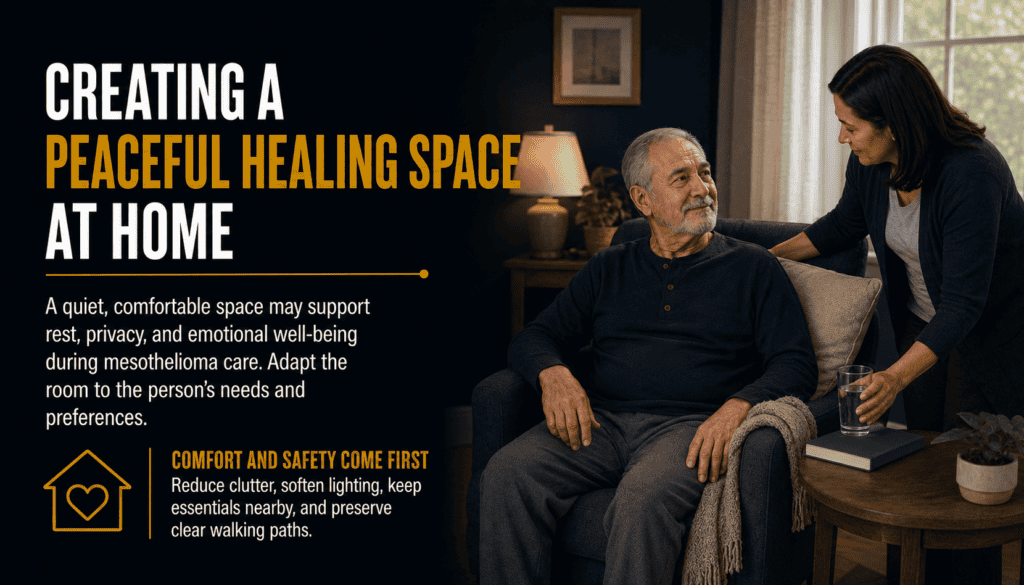
Creating a Peaceful Healing Space at Home
Practical comfort, safety and choice for people living with mesothelioma
A comfortable home can make daily life easier during mesothelioma treatment and recovery. The aim is to reduce avoidable stress and support the patient’s preferences—not to suggest that décor or environmental changes cure cancer. Start with the changes that matter most to the person receiving care.
Start With the Patient’s Preferences
A peaceful home is one that fits the person living there—not a perfect-looking room. Ask whether they prefer quiet or music, daylight or softer lighting, company or privacy, and which objects feel familiar. For someone with mesothelioma, comfort may change with pain, fatigue, breathlessness and treatment. Make small, reversible changes and ask permission before moving important belongings.
| Ask | Possible adjustment | Check back |
|---|---|---|
| What feels calming? | Favorite blanket, photographs or music | Does it still feel pleasant? |
| What feels tiring? | Reduce clutter and visitors | Is rest easier? |
| What needs to stay close? | Phone, water if permitted, call device | Can the person reach it? |
Support Comfortable Indoor Air
Avoid smoking indoors and prevent exposure to dust, strong fragrances, aerosol sprays and other irritants. Follow any instructions from the care team about oxygen and respiratory equipment. Keep ventilation comfortable, but do not assume that an air purifier treats cancer or replaces removal of an actual hazard. Suspected asbestos-containing materials should not be disturbed; seek qualified assessment rather than sanding or removing them yourself.
| Potential irritant | Lower-exposure option | Important note |
|---|---|---|
| Smoke | Keep home and entrances smoke-free | Smoking cessation support is available |
| Fragrance | Choose unscented products | Ask about individual sensitivities |
| Dust | Use gentle cleaning without stirring dust | Avoid disturbing suspect asbestos |
| Extreme temperatures | Adjust heating and cooling | Match patient preference |
Arrange the Room for Safety and Easy Reach
Clear walking paths and remove loose rugs and trailing cords. Keep frequently used supplies at an accessible height. Use stable furniture, appropriate night lighting and prescribed mobility aids. If falls are a concern, request an occupational or physical therapy home-safety assessment. Do not use a walker, rolling table or unstable chair as a support for standing unless its manufacturer and clinician specifically indicate it is appropriate.
| Area | Practical change | Safety check |
|---|---|---|
| Bedside | Phone, glasses and call bell within reach | Avoid reaching or twisting |
| Floor | Clear cords and clutter | Check routes to bathroom |
| Lighting | Soft lamp plus safe night light | Prevent glare and dark spots |
| Seating | Supportive chair recommended by care team | Check safe transfers |
Create a Restful Sleep and Recovery Area
Use comfortable bedding and adjustable layers so the person can control temperature. Ask the clinical team about positioning if lying flat worsens breathlessness; do not independently change prescribed oxygen or medical equipment. Keep a simple rest routine and limit noise when the patient wishes. A quiet area should still allow the person to summon help promptly.
| Concern | Comfort idea | When to ask for help |
|---|---|---|
| Noise | Agree on quiet hours | Persistent sleep problems |
| Breathlessness when lying down | Discuss positioning with clinician | New or worsening breathing symptoms |
| Nighttime trips | Light the path to bathroom | Falls or near-falls |
| Pain | Record timing and triggers | Pain not controlled by plan |
Add Meaningful, Low-Effort Comforts
Choose a few personal touches: family photographs, familiar music at a comfortable volume, a favorite book or a view of a garden. Offer options without making activities obligatory. Some patients enjoy brief visits; others need rest. Check whether plants, candles or scented products create allergies, fire risks or respiratory irritation; flameless lighting may be a safer alternative.
| Preference | Low-effort option | Adaptation |
|---|---|---|
| Music | Short playlist | Lower volume or stop on request |
| Family | Photos or brief video call | Allow patient to decline |
| Nature | Window view | Avoid heat or outdoor air irritants |
| Reading | Audiobook | Pause for fatigue |
Organize Medicines and Care Supplies Without Clutter
Keep a current medication list and care-team phone numbers in a known place, but store medicines securely and follow pharmacy directions. Do not place oxygen near flames or smoking materials; follow the oxygen supplier’s specific safety instructions. A small labeled basket can hold approved comfort supplies without turning the entire room into a treatment station. Protect privacy by asking before sharing medical information with visitors.
| Item | Organization idea | Boundary |
|---|---|---|
| Medication list | Update after care changes | Do not change doses independently |
| Appointments | Calendar near phone | Share only with permission |
| Medical devices | Follow supplier instructions | Keep oxygen away from ignition |
| Personal records | Secure folder | Limit access to authorized people |
Coordinate Visitors, Caregivers and Quiet Time
Ask the patient whom they want to see and for how long. Schedule short visits when energy is best, encourage visitors to stay home when sick and follow the oncology team’s infection-prevention guidance if the patient is immunocompromised. Designate one family contact for updates if the patient agrees. Give caregivers a separate place to take breaks; a peaceful space should support the household without removing the patient’s control.
| Situation | Helpful agreement | Patient choice |
|---|---|---|
| Many visitors | Short scheduled windows | May decline any visit |
| Infection concerns | Follow clinical guidance | Offer video or phone calls |
| Caregiver fatigue | Plan respite coverage | Explain changes in advance |
| Family updates | One designated contact | Share only authorized details |
Review Comfort and Know When to Seek Medical Help
Ask once a day what is helping and what needs changing. Keep changes modest and document symptoms that should be discussed with the care team. New or worsening shortness of breath, fever during cancer treatment, uncontrolled pain or confusion merits prompt medical advice. Sudden severe breathing difficulty, severe chest pain or fainting requires emergency care. A calming room complements professional treatment and palliative care; it does not treat mesothelioma itself.
| Daily check | Question | Next action |
|---|---|---|
| Comfort | Is anything irritating or exhausting? | Change one thing at a time |
| Mobility | Is the route to bathroom safe? | Request home-safety evaluation |
| Symptoms | Any new or worsening concerns? | Contact clinical team |
| Urgent change | Severe breathing trouble or chest pain? | Seek emergency help |
Frequently Asked Questions
Can a peaceful room treat mesothelioma?
No. Home changes may improve comfort and daily functioning, but they do not treat or cure the cancer.
What if fragrances make breathing uncomfortable?
Choose unscented products, stop the fragrance and tell the care team about persistent or worsening symptoms.
Should I buy an air purifier?
It may be a comfort choice for some households, but it does not remove asbestos-containing building materials or replace professional hazard assessment or medical treatment.
How can I make the bedroom safer?
Clear walking routes, improve night lighting, keep essentials within reach and request a clinician-guided home-safety assessment if falls are a concern.
Can the patient use candles near oxygen?
No. Oxygen increases fire risk. Follow supplier instructions and keep oxygen away from flames, smoking and ignition sources.
How many visitors should we allow?
Follow the patient’s wishes and energy level, plus the oncology team’s infection-prevention guidance when relevant.
What if the patient prefers company instead of silence?
Let them choose familiar music, brief visits or conversation. A peaceful space does not have to be silent.
When should we call for medical help?
Contact the care team for new or worsening symptoms; seek emergency care for sudden severe breathing difficulty, severe chest pain or fainting.
Authoritative Resources
Use the care team’s individualized instructions alongside these general resources. Links and guidance may change.
Support for Patients and Families
Call 800.291.0963. Live chat is available 24/7, 365 days a year. Submit Your Case using the form below. Contact does not guarantee eligibility for compensation.
⚕️ Legal & Medical Information Disclaimer
This article provides general educational information, not medical or legal advice. Ask your healthcare team about symptoms, oxygen safety and individual care needs; consult a qualified attorney for legal questions.