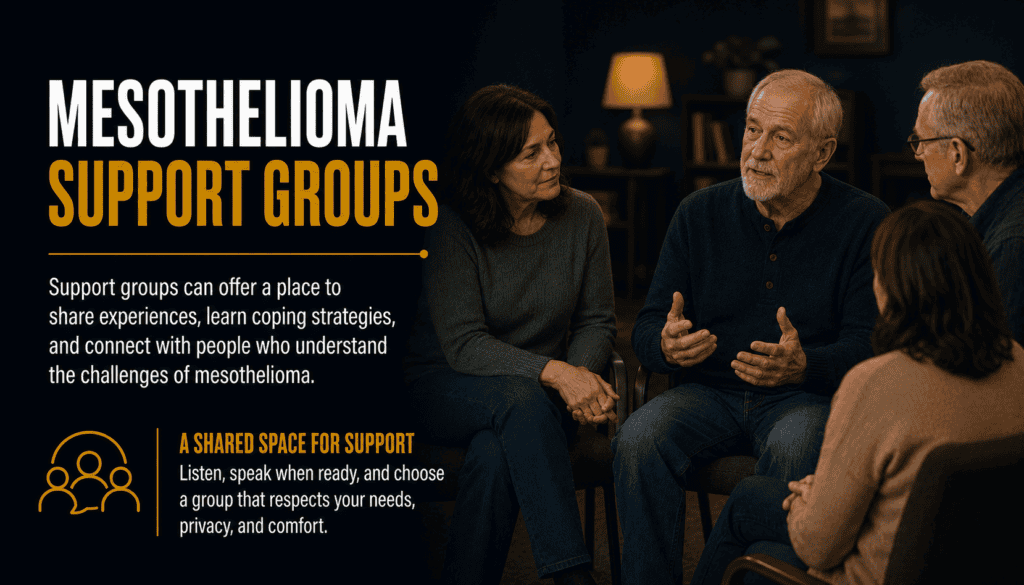
Mesothelioma Support Groups
Finding peer connection, caregiver support and trustworthy resources
Support groups can offer connection during mesothelioma treatment and caregiving. This guide explains the different formats, how to find and evaluate a group, and when to seek more personalized support.
🤝 Why Support Groups Can Help
A mesothelioma diagnosis can change daily routines, relationships and future plans. A support group offers a place to exchange experiences and feel less isolated. Groups can complement—but do not replace—oncology, counseling or emergency care.
| Potential benefit | What it may look like |
|---|---|
| Shared experience | Talking with people who understand treatment uncertainty and caregiving demands. |
| Practical ideas | Exchanging questions to bring to a care team, rather than copying another patient’s treatment. |
| Emotional connection | A place to discuss fear, anger, hope or grief without pressure to stay positive. |
You can listen without speaking. Participation is optional, and it is reasonable to try more than one group before deciding whether one feels helpful.
🧭 Types of Mesothelioma Support Groups
Options differ in purpose, leadership and access. Ask whether a group is specific to mesothelioma, open to people with other cancers, or designed for family members.
| Group type | Considerations |
|---|---|
| Mesothelioma-specific | Members may share rare-cancer experiences, but availability can be limited. |
| General cancer | Often offered by hospitals and community organizations; may be easier to find locally. |
| Caregiver or family | Focuses on caregiving strain, practical coordination and relationships. |
| Bereavement | Supports people grieving a death; timing and readiness vary. |
| Professionally facilitated | May offer structured discussions and referral pathways. |
A group may be online, by telephone, in person or a combination. No single format works for everyone.
🔎 How to Find a Credible Group
Start with your oncology social worker, nurse navigator or treating cancer center. Ask for an established group with a clear contact person, privacy policy and a way to report unsafe behavior.
| Starting point | Useful question |
|---|---|
| Cancer center | Do you host or refer to groups for thoracic cancer, mesothelioma or caregivers? |
| Oncology social worker | Is there a virtual option if travel or infection precautions make attendance difficult? |
| National Cancer Institute | Where can I find support services and help locating a cancer center? |
| Cancer support nonprofit | Who facilitates the group and is there any membership cost? |
Official starting points include the National Cancer Institute coping resources, Cancer Support Community and CancerCare. Contact providers directly to confirm current groups, eligibility, meeting times and fees; this page does not claim a particular meeting is currently available.
💻 Virtual vs. In-Person Meetings
Virtual groups can reduce travel burdens and may offer more disease-specific options. In-person groups may provide local relationships. Both can be useful when led and moderated appropriately.
| Format | Benefits and trade-offs |
|---|---|
| Video meeting | Attend from home; requires a private space and reliable connection. |
| Telephone group | May be easier during fatigue or limited internet access. |
| In-person meeting | Local contact; consider travel, accessibility and infection precautions. |
| Asynchronous forum | Flexible timing; information and moderation quality can vary. |
If treatment has weakened your immune defenses, ask your care team about in-person gathering precautions. Avoid posting medical records, addresses or financial details in public forums.
🛡️ Questions to Ask Before Joining
A trustworthy group should explain who runs it, how personal information is handled, and what happens if someone promotes unsafe medical advice or solicits money.
| Ask the organizer | Why it matters |
|---|---|
| Who facilitates and moderates meetings? | Clarifies accountability and discussion boundaries. |
| Are meetings confidential or recorded? | Helps you decide what to share; confidentiality cannot always be guaranteed. |
| Are there fees or commercial sponsors? | Makes financial interests visible. |
| What happens if someone gives treatment advice? | Peer experience should not be presented as individualized medical guidance. |
| Can I attend once before committing? | Lets you assess fit and comfort. |
Be cautious of promises of cures, pressure to stop prescribed treatment, requests for large payments, or unsolicited legal or financial pitches. Report concerning behavior to the organizer and discuss treatment claims with your oncology team.
👨👩👧 Patients, Caregivers and Family Members
Patients and caregivers sometimes need different spaces. A patient may want to discuss treatment fears privately; a caregiver may need room to discuss exhaustion without worrying about upsetting the patient.
| Participant | Possible discussion topics |
|---|---|
| Patient | Uncertainty, identity, symptom communication and treatment decisions. |
| Caregiver | Task-sharing, respite, boundaries and emotional strain. |
| Partner | Relationship changes, intimacy and future planning. |
| Adult child | Care coordination, work and family responsibilities. |
| Bereaved family member | Grief, anniversaries and adjusting to life after loss. |
Families may choose separate groups and occasionally attend a joint session. Respect each person’s privacy and do not pressure someone to share.
📝 Preparing for Your First Meeting
You do not need a polished story. Decide what you want from the meeting, arrange a comfortable place to attend, and allow yourself to leave if the conversation feels overwhelming.
| Before or during | Simple action |
|---|---|
| Before | Ask about registration, accessibility, duration and whether family can attend. |
| At the start | Introduce yourself briefly or say you would prefer to listen. |
| During | Note helpful questions to discuss with your medical team. |
| After | Check how you feel and decide whether to return, switch groups or take a break. |
A simple introduction might be: “I’m navigating mesothelioma in my family and I’m here to listen and learn how others find support.” If a meeting brings up intense distress, contact your care team or a mental health professional.
❤️ When a Group Is Not Enough
Support groups are one part of a broader care network. Persistent anxiety, depression, sleep problems or overwhelming caregiver strain deserve individual attention from a clinician or counselor.
| Need | Next step |
|---|---|
| Treatment or symptom questions | Contact the oncology team or nurse navigator. |
| Emotional distress | Ask for psycho-oncology, counseling or an oncology social worker. |
| Transportation or bills | Request a social work referral and ask about assistance eligibility. |
| Urgent mental health crisis | In the United States, call or text 988 for crisis support; call 911 for immediate danger. |
| Difficulty finding a group | Ask the cancer center about one-to-one peer matching or remote counseling. |
Explore related resources: mesothelioma and mental health, caregiver and family resources, and reducing isolation during infection precautions.
❓ Frequently Asked Questions
Are there support groups specifically for mesothelioma?
Some organizations and cancer centers offer disease-specific or rare-cancer groups, but programs change. Ask your treating center and contact organizers to confirm current availability.
Can I join a group if I am a caregiver rather than a patient?
Many organizations offer caregiver or family groups. Check the eligibility and format before attending.
Are online mesothelioma groups safe?
Safety varies. Prefer clearly moderated groups, review privacy rules, avoid sharing identifying information publicly and verify medical claims with clinicians.
Do I have to talk during my first meeting?
Usually not. Ask the facilitator whether listening-only attendance is welcome.
Are support groups free?
Some are free and others may charge fees. Ask about costs and sponsorship before registering.
Can a support group help me choose a treatment?
Peers may help you prepare questions, but treatment decisions require your oncology team’s individualized assessment.
What if a group makes me feel worse?
You may leave, try another format or seek individual counseling. Tell your care team if distress persists or interferes with daily life.
Where can I get immediate emotional help?
In the United States, call or text 988 for mental health crisis support. If there is immediate danger, call 911 or seek emergency care.
Additional Support Resources
Read our mesothelioma support overview, support calendar guide, and anxiety and depression guide. For independent medical and emotional resources, visit the National Cancer Institute, Cancer Support Community or CancerCare. Confirm individual programs directly with their providers.
Get Help and Explore Your Options
Call 800.291.0963 · Chat 24/7, 365 days a year · Submit Your Case using the form below.
⚕️ Legal & Medical Information Disclaimer
This page provides general educational information and is not medical, mental health or legal advice. Support groups do not replace individualized professional care. Ask your medical team about your needs; contact a qualified attorney about legal questions.