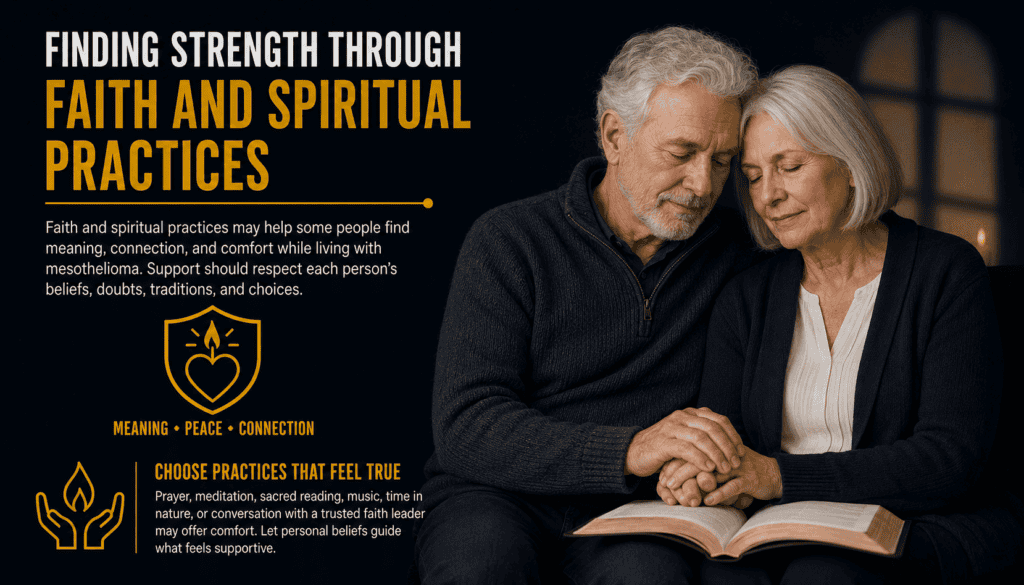
Finding Strength Through Faith and Spiritual Practices During Mesothelioma
Living with mesothelioma can bring questions about purpose, connection, and hope. Faith and spiritual practices may provide comfort for some people, while others prefer secular sources of support. This guide offers choices without assuming any belief system or promising medical benefits.
🧭 On This Page
Finding strength on your own terms
Spiritual support can mean prayer, worship, meditation, time in nature, meaningful conversations, or simply being listened to. Some people find strength in a religious tradition; others prefer secular reflection or no spiritual practice at all. A diagnosis can also raise doubt, anger, or questions about meaning. None of these reactions is a failure. Choose what feels supportive, and change course whenever you wish.
| What may help | How to adapt |
|---|---|
| Prayer or reflection | Use a short phrase or silent moment when energy is limited. |
| Community connection | Ask for a brief call rather than a long visit. |
| Quiet presence | Invite someone to sit with you without requiring conversation. |
Gentle spiritual practices for difficult days
Small, flexible activities can offer comfort without requiring stamina. Try a two-minute reflection, listen to a favorite reading or piece of music, keep a gratitude or questions journal, or ask a trusted person to share a ritual. Stop when tired or uncomfortable. Spiritual practices may support coping but do not treat cancer or replace medical care.
| Practice | Low-energy version |
|---|---|
| Meditation or prayer | Listen to a short recording while seated. |
| Reading | Ask someone to read a paragraph aloud. |
| Nature | Look out a window or sit in a shaded accessible area. |
Finding a respectful community
A faith leader, hospital chaplain, spiritual care professional, or community group may offer companionship, practical assistance, or rituals. Ask about remote meetings, transportation, accessible spaces, and infection precautions recommended by the medical team. You can request help without joining a religion, and you may decline invitations or conversations that do not feel right.
| Support option | Question to ask |
|---|---|
| Hospital chaplain | Do you support patients of all beliefs, including none? |
| Congregation or community | Can volunteers provide meals or rides without unannounced visits? |
| Virtual gathering | Can I join without speaking or appearing on camera? |
Making room for fear, anger, and uncertainty
People sometimes wonder why illness happened or feel pressure to remain hopeful. A supportive listener should not blame the patient, promise a cure, or imply that faith determines outcomes. You can say that you want someone to listen rather than offer explanations. Persistent distress, panic, or depression deserves attention from the care team and a qualified mental health professional.
| Experience | Possible next step |
|---|---|
| Feeling angry or doubtful | Share it with a nonjudgmental listener. |
| Pressure to stay positive | Set a boundary: “I need space to feel what I feel.” |
| Distress affecting daily life | Ask the oncology team for psychosocial support. |
Respecting different beliefs within a family
Relatives may have different religious or spiritual views. Ask the patient what they want before arranging visits, rituals, or conversations. Avoid using a family gathering to debate beliefs. Designate one person to coordinate requests and communicate visiting preferences; children can participate in age-appropriate ways only if they wish.
| Situation | Respectful response |
|---|---|
| Family members disagree | Center the patient’s expressed wishes. |
| Unwanted religious advice | Thank the person and decline the discussion. |
| Children have questions | Answer honestly in simple, noncoercive language. |
Spiritual care alongside medical care
Palliative care can address physical symptoms, emotional needs, and spiritual concerns at any stage of serious illness. Hospice care may also offer chaplain or spiritual support when appropriate. Ask the care team for a referral to a chaplain, social worker, counselor, or palliative care clinician. Tell clinicians about fasting, supplements, or rituals that could affect medication, nutrition, or safety.
| Need | Who may help |
|---|---|
| Questions of meaning or faith | Chaplain or chosen spiritual adviser. |
| Pain, breathlessness, or nausea | Oncology or palliative care team. |
| Depression or overwhelming anxiety | Licensed mental health professional. |
Privacy, consent, and practical boundaries
You decide what to share about your diagnosis and beliefs. Ask visitors to arrange times in advance, stay home when sick, follow the clinical team’s infection guidance, and avoid sharing your story online without permission. Be cautious of anyone requesting money or selling an unproven spiritual “cure.” Never delay recommended treatment in response to such claims.
| Boundary | Sample wording |
|---|---|
| Privacy | “Please do not post updates or photos.” |
| Visit length | “A ten-minute visit works best today.” |
| Medical claims | “I discuss treatment decisions with my clinical team.” |
A simple personal support plan
Start with one comforting practice and one trusted contact. Write down the kind of help you welcome and what you would rather avoid. Revisit the plan after treatment changes or difficult days. If you are caring for someone, ask permission rather than assuming that your preferred rituals are theirs. Comfort may come from many sources, and it is acceptable to ask for a different kind of support.
| Plan item | Your choice |
|---|---|
| Comfort practice | Choose one optional five-minute activity. |
| Support person | Name one person who listens without pressure. |
| Boundary | Identify one topic or activity you prefer to avoid. |
Frequently Asked Questions
Do I need to be religious to receive spiritual care?
No. Hospital spiritual care professionals commonly support people across faith traditions and those with no religious affiliation. Ask how a particular service approaches your preferences.
Can prayer or meditation cure mesothelioma?
No. Spiritual practices may help some people cope, but they have not been shown to cure mesothelioma and should not replace evidence-based medical care.
What if my faith feels shaken after diagnosis?
Doubt, anger, and uncertainty can be part of a response to serious illness. A trusted, nonjudgmental listener or counselor may help you explore those feelings.
Can a chaplain visit if I do not belong to a church?
Often, yes. Ask your hospital or care team what spiritual care services are available and whether remote visits are offered.
How can family members help without imposing their beliefs?
Ask what the patient wants, obtain permission before arranging visits or rituals, and respect a refusal without debate.
Are online faith communities safe for immunocompromised patients?
Remote participation avoids in-person exposure, but protect personal information and check the credibility and privacy practices of each group.
What if spiritual advice conflicts with my treatment plan?
Discuss the advice with your oncology team before changing medications, nutrition, or treatment. Be wary of promised cures.
Can spiritual support be part of palliative or hospice care?
Yes. These services may address spiritual and emotional concerns as well as physical comfort; ask the care team what is available locally.
Related support resources
Explore mesothelioma support, support groups, mental health support, faith community assistance, and caregiver and family resources.
Authoritative reference resources
For medical and supportive care information, consult the National Cancer Institute: Coping With Cancer and National Cancer Institute: Palliative Care. For spiritual support services, ask your hospital or hospice team about its chaplaincy program. Confirm current resource availability directly with providers.
Get Support and Explore Your Options
Call 800.291.0963 or use live chat 24/7, 365 days a year. Submit Your Case using the form below.
⚕️ Legal & Medical Information Disclaimer
This information is educational, not medical, legal, or mental health advice. Spiritual practices are optional comfort measures, not cancer treatment. Consult qualified professionals for individualized care and legal guidance.