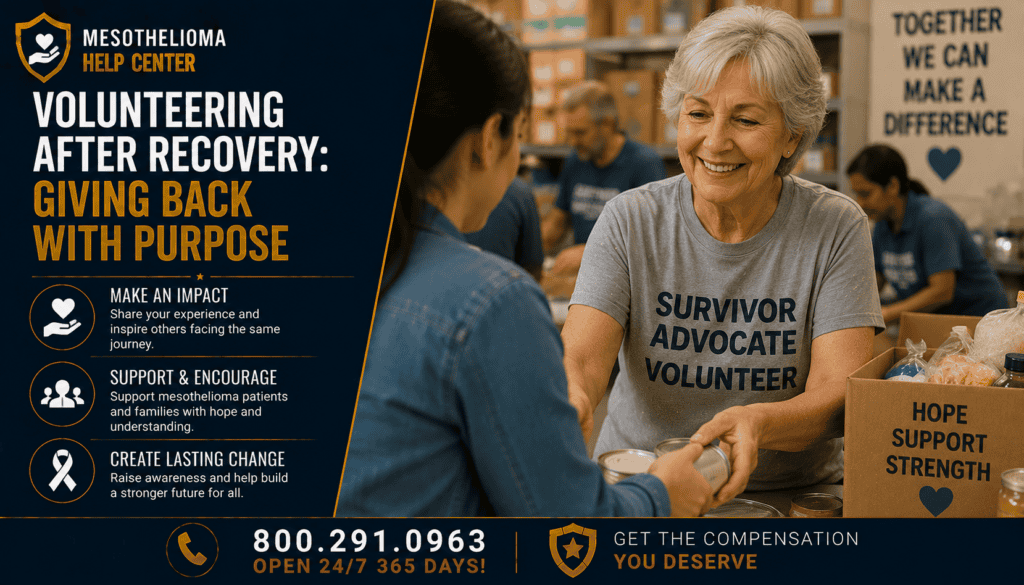
Volunteering After Recovery: Giving Back With Purpose
A practical guide for patients, survivors and caregivers
After mesothelioma treatment, some people want to reconnect with their communities or help others. Volunteering can be meaningful, but recovery, ongoing care and personal choice come first. This guide explains how to explore low-pressure opportunities without treating volunteering as a medical therapy or an obligation.
🧭 On This Page
1. Finding purpose without pressure
Volunteering can offer connection and meaning, but it is optional. Recovery is not a debt to repay. Start with what matters to you and ask whether you want to help people, share skills, or simply reconnect socially.
| Goal | Possible activity |
|---|---|
| Connection | Short phone calls with a trusted organization |
| Creativity | Making cards or writing encouraging notes |
| Advocacy | Sharing a personal experience only if comfortable |
2. Check readiness with your care team
Mesothelioma recovery differs by treatment and individual. Before starting, ask your oncology team about activity limits, infection precautions, breathlessness, fatigue and whether travel or group settings are appropriate. A patient receiving ongoing treatment may need a different plan than someone who has completed treatment.
| Question | Why it matters |
|---|---|
| Are there activity restrictions? | Helps match tasks to current capacity |
| Do I need infection precautions? | May change in-person plans |
| What symptoms should stop activity? | Supports a clear safety plan |
3. Choose flexible ways to contribute
Look for roles with adjustable hours, seated options, no lifting and the ability to cancel without penalty. Remote roles can be especially useful during periods of fatigue or infection risk.
| Role | Adaptation |
|---|---|
| Mentoring | Short scheduled calls |
| Writing | Draft at home and submit asynchronously |
| Community outreach | Help with email or event planning remotely |
| Practical help | Organize supplies only within lifting limits |
4. Build a sustainable schedule
Begin with a brief trial, schedule rest before and afterward, and avoid committing to a fixed weekly shift immediately. Track energy the following day: delayed fatigue can matter as much as how you feel during the activity.
| Step | Example |
|---|---|
| Start | One 15–30 minute trial, if medically appropriate |
| Observe | Note symptoms during and after |
| Adjust | Shorten or switch to remote tasks |
| Review | Reassess with your care team as needed |
5. Protect privacy and emotional boundaries
You decide whether to disclose a diagnosis or discuss your experience. Ask organizations how they handle personal stories, photos, contact details and requests for donations. You can decline interviews, fundraising or conversations that feel draining.
| Boundary | Practical wording |
|---|---|
| Privacy | “Please do not share my diagnosis or photograph.” |
| Time | “I can help for 20 minutes today.” |
| Emotional | “I am not available to discuss treatment details.” |
| Availability | “My schedule may change for medical reasons.” |
6. Volunteering for caregivers and families
Caregivers may want to give back too, but their own rest and financial security come first. Family members can choose independent projects, help with a single event or support a community group without sharing a loved one’s medical information.
| Need | Approach |
|---|---|
| Respite | Arrange reliable coverage before volunteering |
| Consent | Ask permission before sharing a patient story |
| Budget | Choose roles without unexpected expenses |
| Grief | Consider bereavement support if volunteering stirs difficult feelings |
7. Know when to stop and seek help
Stop an activity if you develop new or worsening breathlessness, dizziness, chest discomfort or unusual weakness. Seek urgent medical assessment for severe or sudden symptoms; call emergency services for severe breathing difficulty, chest pain or fainting. Follow your own care team’s instructions.
| Situation | Response |
|---|---|
| Unusual fatigue | Stop, rest and discuss persistent changes with care team |
| Fever during treatment | Contact oncology team promptly per its instructions |
| Severe shortness of breath | Seek emergency care |
| Emotional overload | Pause and seek support from a trusted professional |
8. Make a simple giving-back plan
Choose one cause, define a small role, check the organization’s legitimacy and confirm accessibility. Keep a backup plan for days when you need rest. Success means contributing in a way that respects your health and wishes—not meeting an hours target.
| Plan item | Your answer |
|---|---|
| Cause | What matters to me? |
| Role | What can I do comfortably? |
| Limit | How much time can I offer? |
| Backup | What happens if I must cancel? |
9. Frequently Asked Questions
Do I have to finish treatment before volunteering?
Not necessarily. Ask your oncology team whether your treatment, blood counts, infection risk and symptoms make a proposed role appropriate.
Can I volunteer from home?
Yes. Writing, mentoring by phone and administrative tasks may be possible remotely, depending on the organization.
What if I get tired halfway through?
Stop and rest. Choose a role that allows you to leave or reschedule without guilt.
Should I tell an organization about my diagnosis?
You control what you share. You may need to communicate practical accommodations without disclosing details.
Can volunteering improve survival?
There is no basis for promising that volunteering improves mesothelioma survival. It may offer personal meaning or social connection.
Can caregivers volunteer too?
Yes, if they have sufficient respite and choose an activity that does not add harmful demands.
How do I avoid scams?
Verify the organization through its official website and avoid pressure to donate, share financial information or pay to participate.
What if sharing my story makes me upset?
You can stop, decline future storytelling requests and ask a counselor or support group for help.
Related Mesothelioma Support Resources
Explore mesothelioma support, support groups, caregiver resources, exercise guidance and mental health support.
Authoritative Resources
For individualized advice, consult your treatment team. General information is available from the National Cancer Institute: Coping With Cancer and American Cancer Society: Survivorship. Resource links and their current contents should be checked before publication.
Get Support
Call 800.291.0963 · Live chat 24/7, 365 days a year · Submit Your Case using the form below.
⚕️ Legal & Medical Information Disclaimer
This article is general information, not individualized medical or legal advice. Ask your healthcare team before changing activities or treatment, and consult a qualified professional about legal questions.