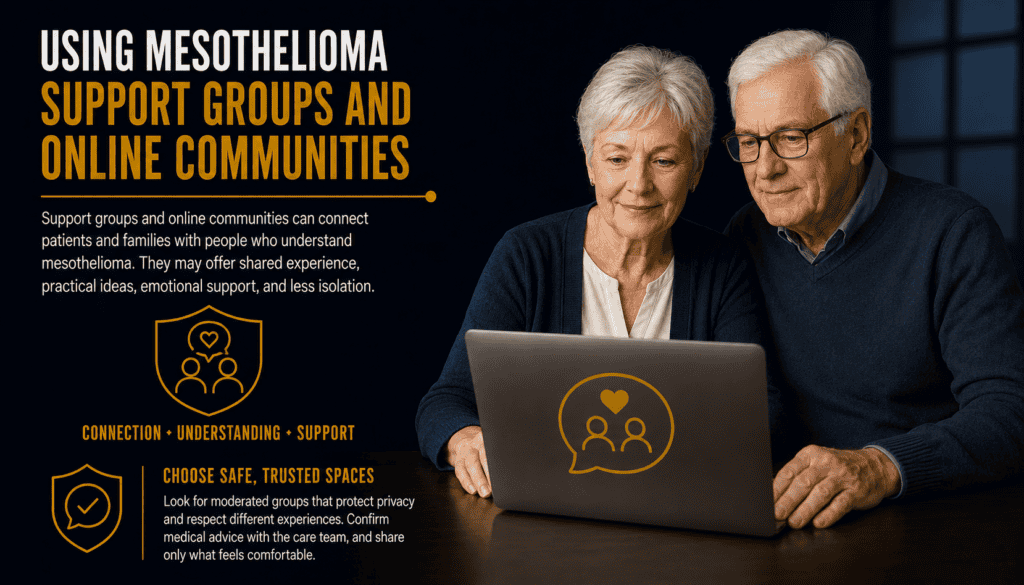
Using Support Groups and Online Communities for Mesothelioma
Connecting with people who understand cancer can offer reassurance, companionship, and practical ideas. For people living with mesothelioma and their families, the most useful community is one that feels respectful, protects privacy, and encourages decisions with qualified healthcare professionals.
🤝 Why Peer Support Can Help
Peer communities can make an isolating diagnosis feel less lonely by offering companionship and practical perspectives. They cannot diagnose, recommend a personalized treatment, or replace an oncology team.
| Potential benefit | How to use it |
|---|---|
| Emotional connection | Share only what feels comfortable; listening is participation. |
| Practical ideas | Ask about appointment organization or transportation, then verify options locally. |
| Shared experience | Recognize that each person’s diagnosis, treatment, and outcome differs. |
A helpful first goal is modest: identify one welcoming space and attend once without committing to regular participation.
💻 Choose a Group Format
Support is available through hospital programs, nonprofit organizations, moderated online meetings, discussion boards, and caregiver-focused groups. Availability, eligibility, cost, and moderation change; confirm details directly with each provider.
| Format | Consideration |
|---|---|
| Hospital or cancer-center group | Ask the oncology social worker about local and virtual meetings. |
| Live video or phone group | Check time zones, access needs, and privacy settings. |
| Discussion forum | Posts may remain searchable or visible to other members. |
| Caregiver-only group | Offers a space for family members to discuss their own needs. |
A group does not need to be mesothelioma-only to be useful; some people prefer a broader cancer or bereavement community.
🔎 Find a Credible Community
Start with your treatment center’s oncology social worker or patient navigator. Established cancer organizations can provide directories or referral pathways, although a listing is not a guarantee of quality or current availability.
| Starting point | Question to ask |
|---|---|
| Cancer center | Do you host a patient or caregiver group? |
| Cancer nonprofit | Are sessions moderated and currently accepting members? |
| Online platform | Who administers the group and what rules are enforced? |
| Local community | Are there transportation, language, or accessibility options? |
Useful starting points include the National Cancer Institute’s support resources and the American Cancer Society’s support programs. Contact organizations directly to confirm what is currently offered.
🛡️ Protect Privacy and Avoid Scams
Public posts can reveal health details, location, and family information. Read group privacy rules before joining and assume screenshots may be shared even in a private group. Be cautious of anyone requesting payment, records, or personal identifiers through direct messages.
| Warning sign | Safer response |
|---|---|
| Promises of a guaranteed cure | Discuss claims with your oncology team; avoid purchasing unproven treatments. |
| Requests for Social Security or banking details | Do not share; report the account to moderators. |
| Pressure to move to private messaging | Keep conversations on a moderated platform. |
| Claims that doctors are hiding a remedy | Seek evidence from reputable medical sources and your care team. |
Use a separate display name if permitted, enable account security features, and avoid posting medical record numbers, full birth dates, addresses, or financial details.
🗣️ Make the First Meeting Easier
You can join simply to listen. A moderator should explain confidentiality expectations, meeting rules, and how to leave or take a break. Consider preparing a few nonmedical questions and setting a time limit if discussions become tiring.
| Before | During or after |
|---|---|
| Ask about moderation and attendance | Introduce yourself only if you want to. |
| Choose a quiet, private location | Mute or turn off video when needed. |
| Write one question | Note practical suggestions for later verification. |
| Plan a rest break | Leave if the conversation becomes distressing. |
Sample introduction: “I’m new here and mainly listening today. I’m hoping to learn how others organize day-to-day support.”
🩺 Separate Shared Stories From Medical Advice
Members may describe treatments, side effects, or survival experiences. These stories can help you formulate questions but cannot establish what is safe or effective for you. Do not change medicines, delay care, or start supplements because of a post.
| Community statement | Next step |
|---|---|
| “This treatment worked for me.” | Ask your oncologist whether it applies to your diagnosis and health. |
| “You should stop your medication.” | Do not change treatment without your prescribing clinician. |
| “This supplement is safe for everyone.” | Ask about interactions and quality concerns. |
| “A scan means recurrence.” | Request interpretation from your treating team. |
For a new or worsening symptom, contact your clinical team rather than waiting for a community reply. Seek emergency help for severe breathing difficulty, chest pain, or other acute emergencies.
❤️ Support for Caregivers and Families
Caregivers may need a different conversation from patients. Caregiver-only meetings can address fatigue, changing responsibilities, guilt, grief, and asking relatives for practical help without placing additional emotional demands on the patient.
| Need | Possible support |
|---|---|
| Respite and scheduling | Ask the care team about social work and community services. |
| Emotional overload | Consider a caregiver group or licensed mental health professional. |
| Family coordination | Use a shared calendar with permission and clear task owners. |
| Anticipatory grief | Ask about counseling, spiritual care, or bereavement resources. |
Respect the patient’s preferences about what health information can be shared. A caregiver’s participation does not automatically confer access to the patient’s medical records.
📅 Build a Sustainable Connection Plan
The right level of participation may change during treatment. Choose manageable contact, review how you feel afterward, and maintain other sources of support, including clinicians, trusted friends, and family.
| When | Small action |
|---|---|
| This week | Ask a navigator for one credible group recommendation. |
| First session | Attend for 15–30 minutes or listen without speaking. |
| Afterward | Note whether the group felt respectful and helpful. |
| Next month | Continue, switch formats, or pause without guilt. |
If persistent sadness, anxiety, sleep changes, or loss of interest affects daily life, tell your healthcare team. In the United States, call or text 988 for immediate suicide or emotional crisis support; call 911 for an immediate life-threatening emergency.
❓ Frequently Asked Questions
Are mesothelioma support groups free?
Some are free, while others may have fees or eligibility rules. Confirm costs, membership, and current schedules directly with the organizer.
Can I attend without speaking?
Often yes. Ask the moderator beforehand; listening can be a useful first step.
Are private Facebook groups truly private?
Not completely. Other members may copy or screenshot posts, and platform privacy settings can change. Avoid sharing identifying or sensitive details.
Can a support group tell me which treatment to choose?
No. Members can share experiences, but personalized treatment decisions belong with your oncology team.
What if a group makes me more anxious?
Take a break, change groups, try a professionally facilitated option, or seek individual counseling.
Can family members join patient groups?
Rules differ. Ask whether caregivers are welcome or whether a separate family group is available.
How do I recognize a trustworthy online community?
Look for clear moderation, respectful rules, transparent sponsorship, privacy guidance, and prompt removal of scams or miracle-cure claims.
Where should I start if I cannot find a group?
Ask an oncology social worker or patient navigator and contact established cancer organizations for current options.
🔗 Related Mesothelioma Resources
Explore Mesothelioma Support Groups, Mesothelioma Caregivers, Mesothelioma and Mental Health, and How Caregivers Can Prevent Burnout.
Authoritative Starting Points
National Cancer Institute: Cancer Support Groups · American Cancer Society: Support Programs and Services · 988 Suicide & Crisis Lifeline. Confirm current programs and links with the organizations before publication.
Get Help and Support
Call 800.291.0963 or use live chat 24/7, 365 days a year.
Submit Your Case using the form below.
⚕️ Legal & Medical Information Disclaimer
This article is educational and is not medical, mental health, or legal advice. Group availability and privacy practices can change. Consult qualified professionals about individual circumstances. If you or someone else is in immediate danger, contact emergency services.