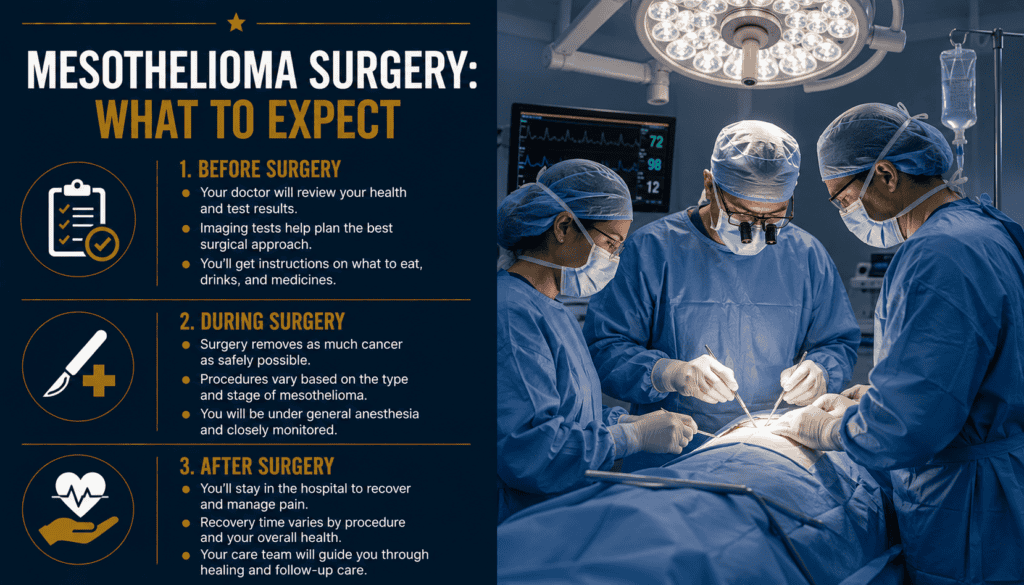
Mesothelioma Surgery: What to Expect
A patient and caregiver guide to surgical options, preparation, hospitalization, recovery, and informed decisions.
Learning that surgery might be an option can bring both hope and uncertainty. This guide explains the major steps and questions to discuss with a mesothelioma-experienced care team. It is educational information, not an individualized treatment recommendation.
What mesothelioma surgery can and cannot do
Mesothelioma surgery is not one single operation. A specialist may recommend an operation to remove as much visible cancer as feasible, obtain tissue for diagnosis, manage fluid, or relieve a particular symptom. The proposed procedure depends on whether the disease involves the lining of the lung (pleura), abdomen (peritoneum), or another site; its extent; the patient’s overall health; and the goals of care.
Even extensive surgery cannot guarantee that every cancer cell is removed. Some patients receive chemotherapy, immunotherapy, or other treatment before or after an operation. Others benefit more from nonsurgical treatment or supportive care. Ask the team to describe the specific purpose of your proposed operation rather than assuming surgery is always curative.
| Question | Why it matters |
|---|---|
| What is the goal? | Diagnosis, tumor reduction, fluid control, or symptom relief |
| What is the expected benefit? | Discuss realistic outcomes for your situation |
| What alternatives exist? | Compare systemic treatment, procedures, and supportive care |
Pleural and peritoneal operations
For pleural mesothelioma, selected patients may be considered for pleurectomy/decortication (P/D), which removes involved pleural tissue while generally preserving the lung. Extended P/D may also remove and reconstruct portions of the diaphragm or pericardium. Extrapleural pneumonectomy (EPP) removes the affected lung together with involved pleura and other structures; it is a major operation used only in highly selected circumstances. The balance of benefit and harm is debated, and specialized multidisciplinary review is important.
For peritoneal mesothelioma, selected patients may undergo cytoreductive surgery to remove visible abdominal tumors, sometimes combined with heated intraperitoneal chemotherapy (HIPEC). This approach is not suitable for everyone and requires an experienced center. Less extensive operations or procedures may instead address a specific complication.
| Procedure | General purpose |
|---|---|
| Pleurectomy/decortication | Remove involved pleural tissue while preserving lung |
| Extrapleural pneumonectomy | Remove lung and surrounding involved structures in selected cases |
| Cytoreductive surgery ± HIPEC | Treat selected peritoneal disease at specialist centers |
| Fluid-control procedure | Relieve symptoms; not equivalent to tumor-removal surgery |
How doctors decide whether surgery is appropriate
The decision should involve clinicians experienced with mesothelioma, including thoracic or surgical oncology specialists, medical oncologists, radiologists, and supportive-care professionals. They review the confirmed diagnosis and cell type, imaging, possible spread, breathing capacity, heart health, nutritional status, other conditions, and what matters most to the patient.
Fitness for surgery is not determined by age alone. A person may be medically able to undergo an operation yet reasonably choose another approach after discussing recovery burden, uncertain benefits, and personal goals. Consider requesting a second opinion from a center that routinely evaluates mesothelioma.
| Assessment | What it helps establish |
|---|---|
| Pathology review | Diagnosis and histologic subtype |
| CT/PET or other imaging | Extent and distribution of disease |
| Pulmonary and cardiac testing | Ability to tolerate anesthesia and operation |
| Functional and nutrition assessment | Recovery needs and modifiable risks |
Preparing for the operation
Ask for a written explanation of the procedure, expected hospital stay, possible intensive-care monitoring, and recovery plan. Bring an up-to-date medication list that includes vitamins, herbal products, anticoagulants, and over-the-counter drugs. Do not stop prescribed medications unless your surgical team tells you how and when.
Discuss smoking cessation if relevant, nutrition support, prehabilitation or breathing exercises when recommended, advance care preferences, and who will provide transportation and help at home. The team may ask you to avoid food and drink for a specified period before anesthesia; follow its instructions rather than a generic schedule.
Related planning resources include your mesothelioma care team and traveling for treatment.
| Before surgery | Action |
|---|---|
| Medication review | Confirm which medicines to take or hold |
| Home support | Arrange rides, meals, and help with chores |
| Recovery supplies | Ask what equipment is actually needed |
| Questions | Record goals, risks, and alternatives |
What happens on surgery day and in the hospital
On arrival, the hospital team confirms the procedure and consent, reviews allergies, and prepares anesthesia and monitoring. The exact operation and time in surgery vary widely. Afterward, patients may wake in a recovery area or intensive-care unit. Chest drains are common after some thoracic operations; abdominal drains may be used after abdominal surgery. Staff monitor breathing, blood pressure, pain, bleeding, and fluid balance.
Early recovery may include assisted walking, breathing exercises, clot-prevention measures, and a gradual return to eating as directed. A long hospital stay does not necessarily mean something went wrong; complex operations require individualized monitoring. Ask which milestones must be met before discharge and what could extend the stay.
| Hospital phase | What to ask |
|---|---|
| Immediately after | Where will the patient recover? |
| Pain control | Which medicines and non-drug supports are planned? |
| Mobility | When should walking and breathing exercises begin? |
| Discharge | Which drains, wounds, or medicines need home care? |
Possible complications and warning signs
Major operations carry risks, including infection, bleeding, blood clots, pneumonia, breathing problems, irregular heart rhythms, prolonged air leaks after chest surgery, and complications related to anesthesia. Abdominal cytoreductive surgery with HIPEC can also involve bowel or kidney complications and a substantial recovery period. Your surgeon can explain which risks are most relevant to the exact operation and your health.
Seek emergency help immediately for severe or sudden breathing difficulty, chest pain, fainting, uncontrolled bleeding, or signs of stroke. Contact the surgical team promptly for fever, worsening wound redness or drainage, new leg swelling, escalating pain, inability to keep fluids down, or any change specified in your discharge instructions. Do not assume new symptoms are a normal part of recovery.
| Symptom | Response |
|---|---|
| Severe breathlessness or chest pain | Emergency evaluation |
| Uncontrolled bleeding or fainting | Emergency evaluation |
| Fever or worsening incision drainage | Contact surgical team promptly |
| New calf swelling or worsening pain | Prompt clinical assessment |
Recovery at home and follow-up
Recovery may take weeks or months, depending on the procedure and complications. Expect a tailored plan for incision care, movement and lifting limits, breathing exercises, nutrition, pain medicine, and follow-up visits. Ask whether rehabilitation, physical therapy, or home nursing would help. Keep a simple log of temperature if instructed, symptoms, medications, activity, and questions.
Do not drive while taking medicines that impair alertness or until your team clears you. Ask when it is safe to resume work, travel, and exercise. Pathology findings and postoperative imaging may affect the next treatment discussion. The team should explain whether chemotherapy, immunotherapy, surveillance, or symptom-focused care is being considered and why.
For related guidance, see breathing exercises and pulmonary rehabilitation, rebuilding strength and mobility, and managing chronic pain.
| Recovery topic | Practical question |
|---|---|
| Wounds and drains | Who should I call about changes? |
| Movement | What are my walking and lifting limits? |
| Medication | What is the safe pain-control plan? |
| Follow-up | When will pathology and next steps be reviewed? |
Questions to ask and treatment alternatives
Ask your surgeon to explain the operation in plain language and to compare it with alternatives. For pleural disease, those may include systemic treatment or symptom-directed procedures. For peritoneal disease, candidacy for cytoreductive surgery and HIPEC requires specialized assessment. Palliative care can be provided at any stage alongside cancer-directed treatment and can help address pain, breathlessness, anxiety, and family needs.
Useful related pages include comparing surgery, chemotherapy, and radiation, immunotherapy options, managing breathing problems and pleural effusion, and understanding palliative care and hospice.
Need help now? Call 800.291.0963 / Live chat 24/7, 365 days a year / Submit Your Case.
| Ask the team | Reason |
|---|---|
| What is the goal and evidence for this operation? | Clarifies realistic benefit |
| What are the major risks for me? | Supports informed consent |
| What happens if I do not have surgery? | Clarifies alternatives |
| Who handles problems after discharge? | Establishes a safe contact plan |
Frequently Asked Questions
Can surgery cure mesothelioma?
Surgery may help selected patients, but it cannot guarantee a cure. Ask what outcome your team realistically expects and whether other treatments are planned.
Is every person with pleural mesothelioma eligible for surgery?
No. Disease extent, tumor subtype, breathing and heart function, other health conditions, and personal goals all matter.
What is the difference between P/D and EPP?
Pleurectomy/decortication generally preserves the lung while removing involved pleura. Extrapleural pneumonectomy removes the affected lung and additional involved structures; it is a much more extensive operation.
What is HIPEC?
Heated intraperitoneal chemotherapy is delivered into the abdomen during or after cytoreductive surgery at specialized centers for selected patients with peritoneal mesothelioma.
How long will I stay in the hospital?
It varies substantially by operation and recovery. Ask your surgical team for a procedure-specific estimate and discharge criteria.
Will I need chemotherapy or immunotherapy after surgery?
Possibly. The decision depends on the diagnosis, procedure, pathology, prior treatments, and multidisciplinary assessment.
When should I call after discharge?
Follow the written instructions. Seek emergency care for severe breathing difficulty, chest pain, fainting, or uncontrolled bleeding; promptly report fever, worsening wound problems, or new swelling.
Should I get a second opinion?
A second opinion from a mesothelioma-experienced multidisciplinary team can help clarify surgical eligibility, alternatives, and expected recovery.
Medical Sources and Further Reading
For authoritative, regularly updated information, consult the National Cancer Institute’s mesothelioma treatment information and its overview of cancer surgery. Ask your care team which recommendations apply to your diagnosis and procedure.
Questions About Mesothelioma and Your Options?
Call 800.291.0963 to discuss available assistance. Live chat is available 24/7, 365 days a year. Submit Your Case.
Eligibility and compensation depend on individual circumstances; no outcome is guaranteed.
⚕️ Legal & Medical Information Disclaimer
This article provides general educational information, not medical or legal advice. Treatment decisions should be made with qualified medical professionals; consult an attorney about legal rights and deadlines.