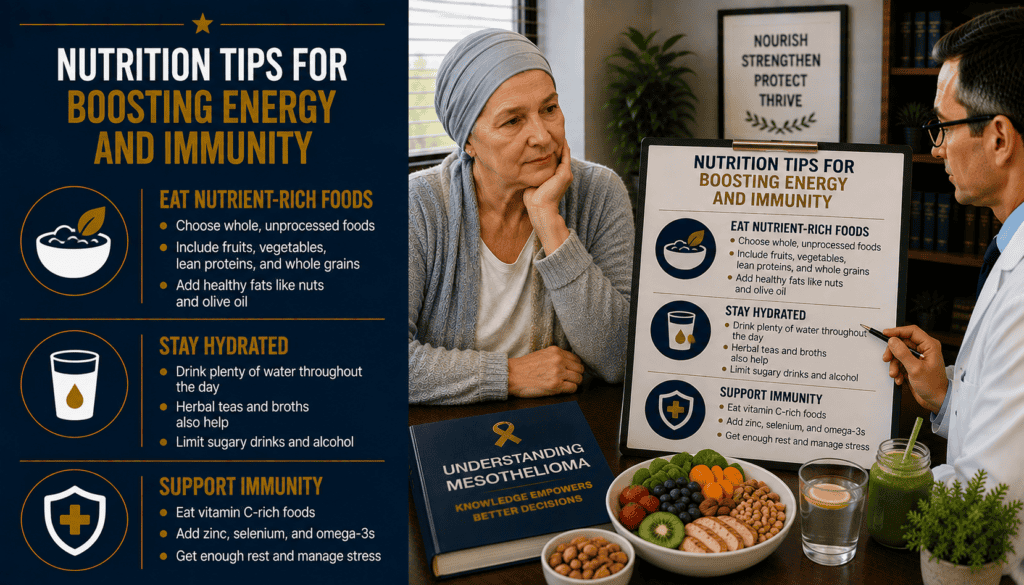
Nutrition Tips for Energy and Immune Health During Mesothelioma Treatment
A practical, evidence-informed food guide for patients and caregivers—not a promise that diet can treat cancer.
Mesothelioma and its treatments can make eating difficult just when the body needs nourishment. The most useful goal is often to eat enough, preserve muscle and strength, stay hydrated, and reduce foodborne infection risk. There is no food that has been shown to cure mesothelioma or reliably “boost” immunity beyond normal function. Your oncology team can tailor nutrition advice to your symptoms, other medical conditions, and treatment plan.
1. Set nutrition goals that fit your treatment
During cancer treatment, a balanced eating pattern may need to change. Some patients need more calories and protein than usual, especially after surgery or during weight loss. Others need adjustments for diabetes, kidney disease, swallowing problems, fluid retention, or treatment-specific restrictions. A registered dietitian with oncology experience can make a plan based on your weight trend, intake and symptoms.
| Goal | Why it matters | First practical step |
|---|---|---|
| Maintain intake | Inadequate intake can worsen weakness and malnutrition | Keep appealing foods and snacks within reach |
| Preserve muscle | Protein and enough overall calories support muscle maintenance | Include a protein source at meals and snacks |
| Hydrate appropriately | Dehydration can worsen fatigue and dizziness | Ask the team for a fluid goal if you have restrictions |
| Manage symptoms | Nausea, mouth sores and early fullness can limit intake | Report barriers early rather than waiting for major weight loss |
For a broader treatment overview, see mesothelioma treatment options. Nutrition supports care; it is not a substitute for prescribed therapy.
2. Choose foods that provide usable energy
Calories from carbohydrates, fats and protein provide energy; no single “superfood” reverses cancer-related fatigue. When appetite is normal, choose a varied mix of grains, fruits, vegetables, protein foods and fats. When eating is hard or weight is dropping, calorie-dense foods may be more practical than a restrictive diet. Ask your clinician to investigate fatigue that is new, severe or worsening because anemia, infection, dehydration, sleep disruption and other causes may need treatment.
| Food or meal | What it offers | Easy adaptation |
|---|---|---|
| Oatmeal with milk and nut butter | Carbohydrate, protein and extra calories | Use a tolerated milk alternative if needed |
| Eggs with toast and avocado | Protein and energy | Use fully cooked eggs during higher infection risk |
| Yogurt with fruit and oats | Protein, carbohydrate and convenient calories | Choose pasteurized yogurt |
| Rice, beans and olive oil | Energy, plant protein and fat | Use soft textures if chewing is difficult |
| Soup with chicken or tofu | Fluid and protein | Add noodles, rice or oil if extra calories are needed |
Read more about treatment-related exhaustion in managing fatigue during chemotherapy and radiation.
3. Protect weight and muscle with protein and adequate calories
Protein supports tissue maintenance and healing, but protein alone cannot prevent muscle loss if overall calorie intake is inadequate. Good options include thoroughly cooked fish or poultry, eggs, beans, lentils, tofu, nut butters and pasteurized dairy. Patients who cannot tolerate large meals may find five or six smaller meals and snacks easier than three full meals. A dietitian can advise whether a commercial oral nutrition drink is appropriate.
| Eating challenge | Food strategy | Important qualification |
|---|---|---|
| Small appetite | Eat protein-rich foods first; snack every few hours | Avoid forcing large portions |
| Unintentional weight loss | Add olive oil, nut butter, cheese or other tolerated calorie sources | Tell the oncology team promptly |
| Too tired to cook | Use prepared meals, frozen portions or caregiver assistance | Store and reheat foods safely |
| Difficulty chewing | Try soft eggs, yogurt, smooth nut butter or pureed meals | Ask about swallowing assessment if coughing or choking occurs |
Weight can be misleading when fluid collects in the chest or abdomen. Report a shrinking appetite, looser clothing, or loss of strength even if the scale is unchanged. For broader guidance, see nutrition and exercise during treatment.
Need help now? Call 800.291.0963 / Live chat available 24/7, 365 days a year / Submit Your Case.
4. Adjust meals to treatment-related eating problems
Mesothelioma care can involve chemotherapy, immunotherapy, surgery or radiation. Nausea, altered taste, mouth discomfort, diarrhea, constipation and early fullness can all interfere with eating. The right response depends on the symptom and its cause; tell your care team rather than trying to manage persistent problems with food alone.
| Symptom | Possible food adjustment | When to involve the team |
|---|---|---|
| Nausea | Try small portions, bland foods and cool foods if smells trigger nausea | If anti-nausea medicine is not working or fluids will not stay down |
| Metallic taste | Try nonmetal utensils and alternate proteins | If taste changes cause substantial intake decline |
| Mouth soreness | Choose soft, moist, mild foods; avoid irritating textures | If eating or swallowing becomes painful |
| Early fullness | Use smaller frequent meals and sip most drinks between meals | If abdominal swelling or rapid worsening occurs |
| Diarrhea | Replace fluids as instructed and ask about tolerable foods | If severe, persistent, bloody, or accompanied by fever—especially on immunotherapy |
| Constipation | Ask about fluids, fiber and medications appropriate to your situation | If severe pain, vomiting or inability to pass stool/gas occurs |
Do not assume new diarrhea during immunotherapy is a simple food intolerance; it may require urgent assessment. See immunotherapy for mesothelioma for treatment context.
5. Support immune health through food safety—not “immune-boosting” claims
Good nutrition helps the body function, but it does not guarantee protection from infection. Some cancer treatments reduce infection-fighting white blood cells, making food safety especially important. Ask your oncology team whether you have neutropenia or additional precautions.
| Safer practice | Why it matters |
|---|---|
| Wash hands, produce and preparation surfaces | Reduces contamination |
| Keep raw meat separate from ready-to-eat foods | Prevents cross-contamination |
| Cook meat, poultry, seafood and eggs thoroughly | Reduces foodborne illness risk |
| Choose pasteurized milk, cheese and juices | Avoids some foodborne pathogens |
| Refrigerate perishables promptly; follow storage instructions | Limits bacterial growth |
| Ask before eating raw seafood, raw sprouts or unpasteurized foods | These can be higher-risk during immune suppression |
Follow the specific instructions from your cancer center; a restrictive “neutropenic diet” is not automatically required for everyone. Contact the oncology team immediately for a fever at or above the threshold they gave you—often 100.4°F (38°C)—or chills or other signs of infection. Do not wait to see whether a special food or supplement helps.
6. Make an easy meal and caregiver plan
Fatigue, travel and appointments can make shopping and cooking difficult. Preparing flexible options before treatment, accepting grocery help, and keeping a short symptom-and-intake record can reduce the daily burden. Caregivers should ask the patient which textures, smells and foods are currently appealing rather than insisting on a fixed menu.
| Time | Low-effort option | If appetite is poor |
|---|---|---|
| Morning | Cooked eggs and toast or oatmeal with milk | Half portion now; remainder later |
| Midmorning | Pasteurized yogurt or nut-butter toast | Small smoothie if solids are unappealing |
| Lunch | Chicken, tofu or bean soup with bread | Enrich soup with tolerated protein and calories |
| Afternoon | Cheese and crackers or a nutrition drink | Sip between meals |
| Dinner | Rice or potatoes with cooked protein and vegetables | Serve a small plate; save leftovers safely |
| Evening | Pudding, yogurt or another tolerated snack | Use a bedtime snack if helpful |
This is an illustrative menu, not a prescribed diet. Food allergies, diabetes, kidney disease, fluid limits, swallowing problems and other conditions may require changes. When traveling for treatment, pack shelf-stable snacks and follow food storage rules; see traveling for mesothelioma treatment.
7. Be cautious with supplements and special diets
No vitamin, herb, detox, alkaline diet or other nutrition trend has been proven to cure mesothelioma or prevent its recurrence. High-dose supplements and herbal products can interfere with cancer drugs or create side effects. Tell your oncologist and pharmacist about everything you take, including over-the-counter vitamins, powders and teas. Correcting a documented deficiency may be appropriate under medical supervision; taking extra nutrients without a deficiency is not the same thing.
| Claim or product | What patients should know |
|---|---|
| “Immune-boosting” supplement | Marketing claims do not establish benefit or safety |
| High-dose antioxidant vitamins | Ask the oncology team before use during treatment |
| Herbal teas and concentrated extracts | Ingredients may interact with cancer drugs |
| Very restrictive or fasting diets | May worsen inadequate intake and weight loss |
| Commercial oral nutrition drinks | May help fill calorie/protein gaps when recommended by a dietitian |
For related cautions, see herbal medicines for mesothelioma.
8. Know when to ask for nutrition support
Ask for an oncology dietitian referral early—ideally before major weight loss. Contact your team if you are eating substantially less, losing weight without trying, unable to drink enough, experiencing persistent vomiting or diarrhea, or struggling to swallow. Sudden severe weakness, confusion, fainting, severe shortness of breath, or signs of infection need prompt medical evaluation.
| What to track | Useful detail to bring to an appointment |
|---|---|
| Weight trend | Dates, measurements and whether fluid buildup is present |
| Food intake | Typical meals, snacks and skipped meals |
| Fluid intake | Approximate intake and any prescribed limits |
| Symptoms | Nausea, diarrhea, constipation, pain, swallowing trouble |
| Medicines and supplements | Complete names, doses and timing |
| Functional changes | Difficulty shopping, cooking, walking or doing usual activities |
Ask: “Could I have a nutrition assessment? What protein and calorie goals fit my situation? Do I need symptom treatment, a supplement drink or a swallowing evaluation?” The team can assess malnutrition, investigate causes and discuss additional nutrition support when needed.
9. Frequently Asked Questions
Can food boost my immune system enough to fight mesothelioma?
No food has been proven to treat mesothelioma or supercharge immunity. Adequate nutrition helps maintain normal body functions and supports recovery; prescribed cancer treatment remains essential.
What should I eat when I have no appetite?
Try small frequent meals, calorie- and protein-dense foods, and tolerated drinks between meals. Ask your team to address nausea, pain, constipation or other causes of appetite loss.
Is protein important during chemotherapy?
Adequate protein helps maintain and repair tissues. Your individual needs depend on your weight, kidney function, intake and treatment; an oncology dietitian can advise.
Do I need to avoid all fresh fruit and vegetables?
Not automatically. Wash produce thoroughly and follow your oncology team’s food-safety advice, especially if your white blood cell count is low.
Will vitamins or herbs make treatment work better?
That has not been established. Some supplements can interact with cancer medicines. Check every supplement with your oncologist or pharmacist.
What if my weight looks stable but I am getting weaker?
Fluid buildup can mask loss of muscle or body weight. Report weakness, poor intake or changes in how clothing fits even if the scale is stable.
Can I use a nutrition shake instead of meals?
Oral nutrition drinks can supplement intake for some patients, but the best product and amount depend on your needs. Ask a dietitian before relying on them as your primary food source.
When should I call my care team about eating problems?
Call for persistent poor intake, unintended weight loss, inability to keep fluids down, painful swallowing or persistent diarrhea. Follow urgent instructions for fever or severe symptoms.
Medical sources and further reading
The following National Cancer Institute resources explain nutrition needs, weight changes, food safety, fatigue and supplement interactions. Recommendations on this page should be individualized with a licensed care team.
Get Help With Mesothelioma Questions
Call 800.291.0963. Live chat is available 24/7, 365 days a year. Submit Your Case.
Contacting us does not guarantee eligibility for compensation or any particular medical or legal outcome.
⚕️ Legal & Medical Information Disclaimer
This page provides general education, not personalized medical, nutrition or legal advice. Consult your oncology team, a registered dietitian and qualified legal counsel for advice about your circumstances.