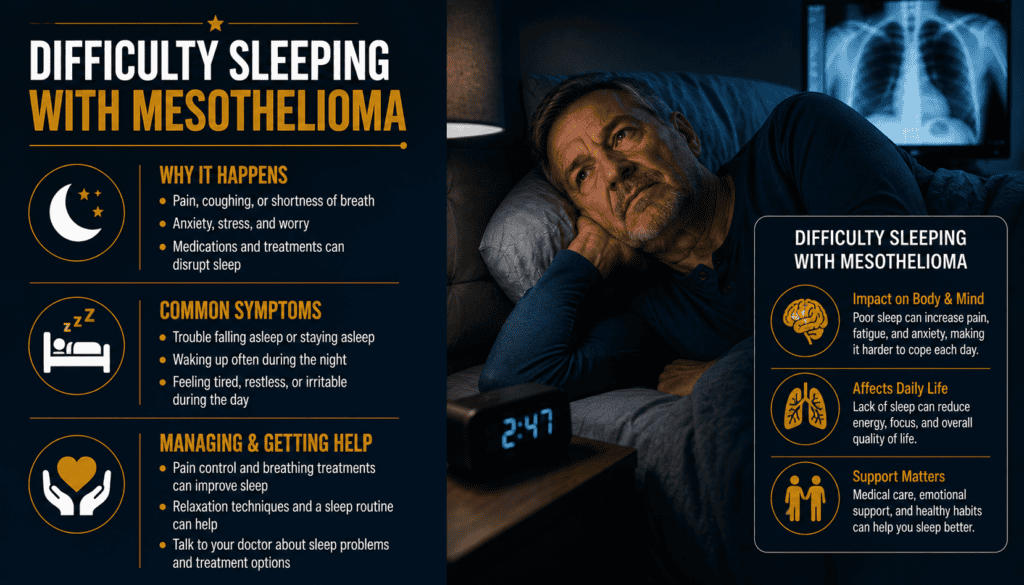
Difficulty Sleeping with Mesothelioma
😴 Why It Happens, What Disrupts Sleep & Treatments That Help You Rest Better
Difficulty sleeping is one of the most common and exhausting symptoms mesothelioma patients face. Whether caused by pain, shortness of breath, nighttime coughing, anxiety, or treatment side effects, poor sleep dramatically impacts quality of life. Over time, sleep loss worsens fatigue, confusion, mood changes, appetite, pain perception, and overall wellbeing.
This guide explains why mesothelioma disrupts sleep, what symptoms commonly appear at night, how doctors diagnose the cause, and which treatments help patients finally get meaningful rest.
📘 Why Mesothelioma Causes Sleep Problems
Sleep issues come from several overlapping factors related to the cancer itself, treatment side effects, and emotional stress.
Here are the leading causes:
🫁 1. Shortness of Breath at Night
Pleural mesothelioma restricts lung expansion.
Lying flat often worsens:
-
Air hunger
-
Tightness in the chest
-
Rapid breathing
-
Waking up suddenly gasping
Fluid buildup around the lungs (pleural effusion) becomes more noticeable at night.
💨 2. Chronic Nighttime Coughing
Coughing fits are extremely common at night due to:
-
Fluid shifting when lying down
-
Irritated pleura
-
Airway sensitivity
-
Tumor pressure
This makes uninterrupted sleep nearly impossible.
🔥 3. Pain
Depending on tumor location, patients may feel:
-
Chest pain
-
Back pain
-
Abdominal pain
-
Rib or nerve pain
Pain that worsens when lying down is especially disruptive.
😔 4. Anxiety and Racing Thoughts
Patients often struggle with:
-
Fear of disease progression
-
Worries about loved ones
-
Financial concerns
-
Emotional stress
Anxiety makes it difficult to fall asleep or stay asleep.
💊 5. Medication Side Effects
Drugs that may interfere with sleep include:
-
Steroids
-
Pain medications
-
Anti-nausea drugs
-
Immunotherapy or chemo premedications
These can cause insomnia, restlessness, or nighttime alertness.
🥵 6. Night Sweats & Fever
Inflammation from cancer may trigger sweating, fever, and chills — all of which interrupt sleep.
🥱 7. Extreme Fatigue
Ironically, severe fatigue can make falling asleep harder because the body’s circadian rhythm becomes disrupted.
😣 8. Difficulty Finding a Comfortable Position
Chest pain, abdominal swelling, or nerve pain contribute to discomfort when lying in bed.
🍽️ 9. Poor Appetite or Nausea
Stomach discomfort from treatment side effects may worsen at night.
🔍 Common Sleep Problems in Mesothelioma Patients
Patients often report:
🌙 Trouble Falling Asleep
Caused by anxiety, pain, or nighttime symptoms.
😵💫 Frequent Waking
Coughing, pain, or breathing issues may wake patients multiple times.
🛌 Restlessness
Difficulty staying in one position due to discomfort.
😫 Insomnia
Complete inability to sleep despite exhaustion.
☁️ Nighttime Confusion
Disorientation caused by hypoxia or interrupted REM sleep.
🧊 Chills or Sweats
Inflammation cycles worsen at night.
Sleep problems can quickly become overwhelming without treatment.
📸 How Doctors Diagnose Sleep Problems in Mesothelioma
Doctors investigate the underlying cause to determine the best treatment.
1️⃣ Symptom Review & Sleep History
🩺 Patients describe:
-
How long it takes to fall asleep
-
How many times they wake
-
What triggers nighttime discomfort
-
How sleep loss affects daytime functioning
2️⃣ Physical Examination
Checks for:
-
Breathing difficulty
-
Fluid buildup
-
Airway irritation
-
Chest or abdominal tenderness
3️⃣ Imaging Tests
📸 Used when lung or tumor causes are suspected.
CT Scan / Chest X-Ray / MRI
Detect:
-
Pleural effusion
-
Tumor pressure
-
Chest wall involvement
4️⃣ Blood Tests
🩸 Identify:
-
Anemia
-
Infection
-
Thyroid imbalance
-
Dehydration
All of these may worsen sleep.
5️⃣ Pulse Oximetry & Oxygen Studies
🫁 Detect nighttime drops in oxygen levels — a major cause of sleep disturbance.
6️⃣ Sleep Study (if appropriate)
Used to evaluate:
-
Sleep apnea
-
Breathing irregularities
-
Severe insomnia
💉 Treatments That Improve Sleep
Because sleep problems have multiple causes, treatments often involve a combination of strategies.
1️⃣ Improve Breathing During Sleep
💧 Thoracentesis
Removing fluid around the lungs dramatically improves nighttime breathing.
💨 Oxygen Therapy
Supplemental oxygen reduces:
-
Air hunger
-
Nighttime awakenings
-
Rapid breathing
🛏️ Sleeping Upright
Elevating the upper body (45–60 degrees) helps patients breathe more easily.
2️⃣ Treat Nighttime Coughing
💊 Effective options include:
-
Cough suppressants
-
Nebulizers
-
Steroids to reduce airway inflammation
-
Humidifiers to moisten airways
-
Warm liquids before bed
Controlling nighttime coughing significantly improves sleep.
3️⃣ Manage Pain More Effectively
Pain control is essential for sleep.
Options include:
-
Long-acting opioids for overnight relief
-
Nerve pain medications
-
Steroids for inflammation
-
Localized radiation for tumor-related pain
-
Heat therapy
-
Gentle stretching
Pain should be reassessed regularly to ensure nighttime comfort.
4️⃣ Reduce Anxiety & Nighttime Mental Stress
🧠 Anxiety contributes heavily to insomnia.
Helpful strategies:
-
Counseling or therapy
-
Anti-anxiety medications
-
Relaxation breathing
-
Guided meditation
-
Nighttime routines that promote calmness
-
Support groups
Mental health support often improves sleep within days.
5️⃣ Treat Night Sweats & Fever
🔥 Managing inflammation and body temperature helps prevent nighttime awakenings.
Treatments may include:
-
Anti-inflammatory medication
-
Cooling blankets
-
Hydration
-
Adjusting nighttime room temperature
-
Steroids (when appropriate)
6️⃣ Safe Sleep Medications
Doctors may prescribe:
-
Low-dose benzodiazepines (short-term)
-
Melatonin
-
Antidepressants that improve sleep
-
Prescription-grade sleep aids
All medications must be carefully monitored to avoid interactions with treatment.
7️⃣ Improve Sleep Hygiene
🌙 Small habits can help the brain shift into “sleep mode.”
Helpful techniques:
-
Maintain a consistent bedtime
-
Reduce light and noise in the room
-
Use supportive pillows for comfort
-
Avoid caffeine in the afternoon
-
Use relaxation apps
-
Keep the bedroom cool
8️⃣ Nutrition Support
🥗 A nutritionist can prevent nighttime discomfort by recommending:
-
Small evening meals
-
Foods that reduce nausea
-
Hydration strategies
-
Avoiding acidic or heavy foods
🔄 Lifestyle Tips That Help at Night
🛏️ Elevate head & chest
Helps breathing and reduces coughing.
💧 Use bedside humidifier
Moistens airways.
🧣 Use weighted blankets (if tolerated)
Promotes relaxation.
📺 Avoid screens before bed
Blue light disrupts melatonin.
🧘 Do 5 minutes of slow breathing
Lowers anxiety and relaxes the chest muscles.
🚨 When Sleep Difficulty Is a Warning Sign
Seek immediate medical help if nighttime sleep issues include:
-
Waking gasping for air
-
Blue lips or fingertips
-
Severe chest pain
-
Confusion or hallucinations
-
High fever
-
Vomiting
-
Rapid heartbeat
These may indicate:
-
Severe oxygen loss
-
Infection
-
Worsening pleural effusion
-
Pulmonary complications
⚖️ Legal Importance of Sleep Problems in Mesothelioma Claims
Chronic sleep difficulty demonstrates the daily suffering and reduced quality of life caused by mesothelioma.
💰 Increases Pain & Suffering Compensation
Sleep loss impacts:
-
Physical function
-
Mental health
-
Emotional stability
-
Ability to perform daily tasks
Attorneys use these documented symptoms to increase settlement value.
📑 Strengthens Medical Evidence
Medical notes about:
-
Nighttime coughing
-
Shortness of breath
-
Anxiety
-
Pain
Help support the severity of illness.
🏭 Helps Connect Exposure
Pleural symptoms like nighttime shortness of breath strongly point to asbestos-related disease, supporting compensation claims.
📞 🚨 Urgent: Get Legal Help for Mesothelioma or Asbestos Lung Cancer
If you or a loved one is losing sleep, struggling to breathe, or suffering because of mesothelioma or asbestos-related lung cancer, do not wait.
You may qualify for significant financial compensation — but deadlines apply.
⚖️ What Our Legal Team Can Do Right Now
- 🏭 Pinpoint where asbestos exposure occurred
- 🧾 File asbestos trust fund claims worth millions
- 💼 Pursue lawsuits against responsible companies
- 🚀 Fast-track your case due to severe symptoms
- 💰 Recover compensation for treatment, bills & pain
⏳ Time matters. Your rights may depend on acting quickly.
📞 Call Now for Immediate Legal Help: 800.291.0963
Your case review is free, confidential, and available 24/7.
🛑 Disclaimer:
This 50-page guide provides general information only. It should not be used as medical or legal advice. If you suspect mesothelioma or have related symptoms, seek medical evaluation right away. For legal concerns, including asbestos exposure and compensation, consult a licensed attorney.