Guide to Asbestos Trust Fund Claims - (800) 291-0963

Navy Ships Asbestos Exposure

Navy Ship Asbestos Exposure Lawsuit

Navy Ship Asbestos Exposure Lawsuit

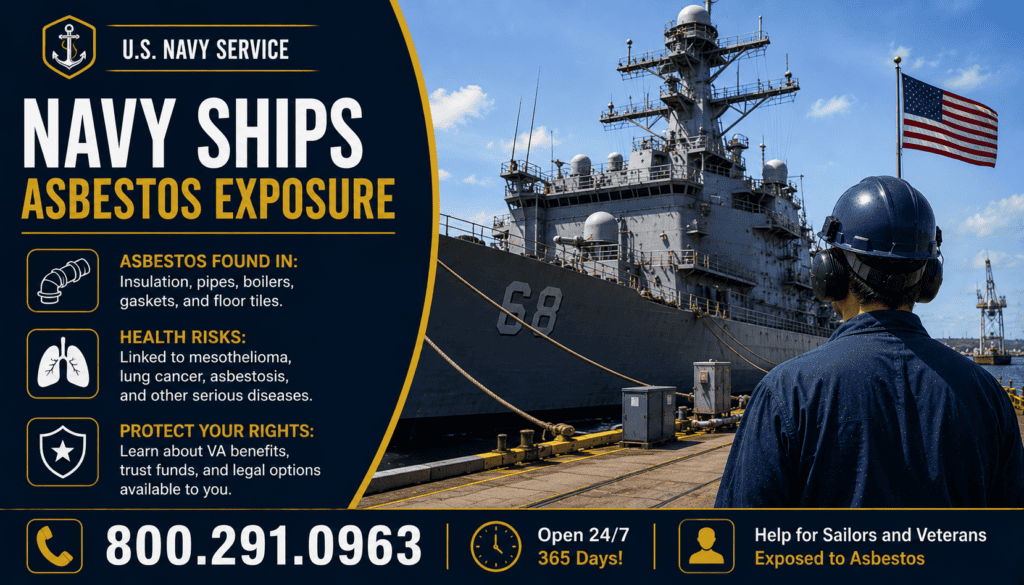
For decades, U.S. Navy veterans were exposed to asbestos while serving aboard ships where the material was used extensively for fireproofing, insulation, and mechanical durability. From World War II through the 1980s, asbestos was considered vital for ship safety—but its microscopic fibers put thousands of sailors and shipyard workers at risk of developing serious illnesses, including mesothelioma, asbestos lung cancer, and asbestosis. This guide explains where and how the exposure occurred, how to prove it, and what compensation and benefits may be available.

Visit Our List of Navy Ship Asbestos Exposure Articles.

Here’s what you’ll learn when you read this page:

  • 🚢 Asbestos was on nearly every Navy ship — from engine rooms to sleeping quarters.

  • 📋 Experts can trace exposure through ship logs, duty stations, and medical records.

  • ⚠️ Sailors were never warned — they breathed in asbestos dust during repairs and routine work.

  • 🎖️ Many veterans are now sick with mesothelioma, lung cancer, or asbestosis—often decades after service.


⚓ History of Asbestos Exposure on U.S. Navy Ships

Between the 1940s and late 1980s, nearly every class of Navy vessel—from battleships to submarines—contained asbestos in hundreds of components.

  • 🔥 Why Asbestos?
    Fire-resistant and lightweight, asbestos was perfect for the confined, high-heat environments aboard naval vessels.

  • 🛠️ Widespread Use:
    Asbestos was used in insulation, piping, boilers, gaskets, and many other ship components.

  • 🚶‍♂️ Close Quarters Exposure:
    Sailors often lived and worked near asbestos materials without any warning about the health risks.

  • Long-Term Risk:
    Diseases caused by asbestos exposure, like mesothelioma, typically take 20–50 years to develop.


⚓ Common Places of Asbestos Exposure on Navy Ships

Navy veterans were exposed in many areas of the ship, especially during maintenance, engineering, or long deployments:

  • 🔥 Engine Rooms & Boiler Rooms:
    Asbestos insulated pipes, turbines, pumps, and boilers to control heat.

  • 🚰 Pipe Systems:
    Pipes wrapped in asbestos insulation ran throughout living quarters and passageways.

  • Electrical Rooms:
    Wire insulation, panels, and cable trays often contained asbestos to reduce fire risk.

  • 🛏️ Sleeping Quarters & Mess Halls:
    Bulkhead insulation and ceiling panels were often asbestos-laden.

  • ⚙️ Pump & Valve Compartments:
    Gaskets and seals made from asbestos materials to resist heat and pressure.

  • 🏗️ Shipyards & Overhauls:
    Repairs often stirred up large amounts of asbestos dust.

  • 🛡️ Weapon & Radar Rooms:
    Fireproofing materials near electronic and weapons systems included asbestos.

  • 🍳 Kitchen & Laundry Areas:
    Oven insulation and dryer systems often contained asbestos.


🔍 How to Know If You Were Exposed

  • 📜 Ship Assignment Records: Time aboard vessels known to contain asbestos

  • 👷‍♂️ Military Job Roles: Boiler technician, machinist mate, electrician, pipefitter

  • 🩺 Medical Diagnosis: Mesothelioma or asbestos-related lung disease

  • 🤝 Buddy Letters: Crewmates describing asbestos use and dust on the ship

  • 📅 Work Logs: Repair records showing proximity to high-risk areas

  • 🏗️ Attorney Support: Linking ship blueprints and materials to asbestos manufacturers


💼 Compensation Eligibility for Navy Veterans

Veterans diagnosed with asbestos-related illnesses may qualify for:

  • 🏦 Asbestos Trust Funds

  • 🇺🇸 VA Disability Benefits

  • ⚖️ Personal Injury Lawsuits

You may qualify if:

  • 🚢 You served aboard Navy ships before 1990, especially in engineering or mechanical roles

  • 🧰 You were exposed to asbestos in insulation, gaskets, cement, or boiler systems

  • 🩺 You’ve been diagnosed with mesothelioma, asbestos-related lung cancer, or asbestosis

  • 🔧 You worked in or near engine rooms, pump rooms, or power generation areas

  • 💔 A family member passed from asbestos illness tied to shipboard service


👪 Support for Family Members

Spouses and children of Navy veterans may be eligible for:

  • 💵 VA Dependency & Indemnity Compensation (DIC) for surviving spouses and dependents

  • ⚖️ Wrongful Death Settlements from asbestos manufacturers

  • ⚰️ Funeral & Burial Expense Reimbursement through VA

  • 🧥 Secondhand Exposure Claims if family members were exposed to fibers from uniforms or sea bags

  • 📑 Assistance Filing Asbestos Trust Fund Claims

  • 💰 Monthly Financial Support to offset income loss


U.S. Navy Ships With Asbestos Exposure

U.S. Navy veterans have long faced a heightened risk of asbestos exposure due to the widespread use of asbestos-containing materials in military aircraft construction and maintenance. Below are some common types of Navy aircraft and how personnel were exposed to asbestos during their service:

Navy Aircraft Carriers (CV)

Service members aboard Navy aircraft carriers faced repeated and widespread asbestos exposure, especially those working in engineering spaces, repair divisions, or aviation maintenance. Due to the high risk of fire at sea, asbestos was heavily used for its fireproofing and heat-resistant qualities throughout the ship’s structure and systems.

Asbestos-containing materials included insulation on steam pipes and boilers, gaskets in pump and valve systems, packing materials in turbines, deck underlayment, and fireproof bulkhead paneling. Maintenance and repair work often disturbed these materials, releasing hazardous fibers into enclosed ship compartments. Prolonged exposure placed many carrier crew members—especially those below deck—at risk of inhaling airborne asbestos daily.


Navy Escort Carriers (VW)

Sailors and maintenance crews aboard Navy escort carriers were frequently exposed to asbestos, particularly in machinery spaces, engine rooms, and maintenance bays. Asbestos was widely used throughout these smaller carriers to insulate against the high heat of mechanical operations and to prevent fire in combat situations.

Key asbestos-containing components included pipe insulation, boiler and engine room gaskets, pump packing, electrical wiring insulation, and wall paneling. During repairs or retrofits, these materials often deteriorated or were removed, releasing microscopic fibers into the air. Tight, enclosed working conditions below deck increased the risk, making daily operations aboard escort carriers a major source of asbestos exposure.


Navy Battleships (BB)

Sailors aboard Navy battleships faced high levels of asbestos exposure due to the ship’s massive size, extensive mechanical systems, and the military’s reliance on asbestos for fireproofing and heat insulation. These powerful vessels used asbestos throughout engine rooms, boiler spaces, weapons stations, and crew areas.

Asbestos materials included pipe insulation, turbine and boiler gaskets, pump packing, deck tiles, electrical wiring insulation, and fire-retardant wall panels. Maintenance crews often disturbed these materials during repairs, releasing dangerous fibers into the air. Extended deployments, combined with confined quarters, poor ventilation, and constant mechanical operations, made battleship service one of the most hazardous for long-term asbestos exposure.


Navy Destroyers (DD)

Known for their speed and maneuverability, Navy destroyers were densely packed with asbestos-containing materials used for insulation, fireproofing, and heat resistance in critical systems. Sailors assigned to these ships often worked in tight, enclosed spaces filled with asbestos-laden components.

High-risk areas included engine rooms, fire control centers, boiler compartments, and ventilation systems. Common asbestos materials were pipe insulation, pump gaskets, exhaust lagging, and bulkhead panels. Routine maintenance and emergency repairs frequently disturbed these components, releasing airborne fibers. The combination of high operational tempo and confined spaces made destroyer crews especially vulnerable to long-term asbestos-related health risks.


Navy Submarines (SS)

Submariners operated in tightly sealed vessels filled with asbestos-containing materials. Used extensively for insulation, heat resistance, and noise reduction, asbestos was present in nearly every compartment, from engineering sections to crew quarters and control rooms.

Exposure came from thermal insulation on steam pipes, gaskets in engine systems, pump linings, and fireproof panels. Repairs in cramped, unventilated spaces made submariners particularly vulnerable to inhaling asbestos fibers dislodged during routine maintenance, emergency fixes, or long-term underwater patrols and extended deployments.


Navy Cruisers (CG)

Navy cruisers were heavily equipped warships that carried advanced weapons systems and powerful propulsion units—systems that relied on asbestos for heat insulation and fire protection. Asbestos was widely used throughout engineering spaces, weapons areas, and crew quarters to manage extreme heat and reduce fire risk on extended deployments.

Key asbestos-containing materials included steam pipe insulation, turbine and pump gaskets, brake linings, valve packing, and fireproof bulkhead panels. Sailors performing routine maintenance or emergency repairs frequently disturbed these materials, causing asbestos fibers to become airborne. Prolonged service in these confined environments placed cruiser crews at serious risk for asbestos exposure and long-term illness.


Navy Amphibious Assault Ships (LHA)

Navy amphibious assault ships were large vessels designed to deploy troops, vehicles, and aircraft in combat zones, and they contained extensive asbestos materials throughout their mechanical and living areas. Asbestos was used for fireproofing and heat insulation in critical ship systems and high-traffic areas across multiple decks and compartments.

Common sources of exposure included boiler insulation, steam pipe lagging, engine gaskets, pump seals, electrical wiring insulation, and fire-resistant bulkheads. Sailors working in engine rooms, vehicle bays, and repair divisions frequently disturbed these materials during operations and maintenance. The combination of heavy machinery, enclosed quarters, and combat readiness made asbestos exposure a daily hazard on LHAs.


Naval Auxiliary Ships (AOG)

Navy auxiliary ships, primarily used for transporting gasoline and other flammable liquids, contained extensive asbestos materials to reduce fire hazards and insulate mechanical systems. Due to their role in fueling operations, fire protection was a top priority—making asbestos a standard material throughout the ship’s critical operating spaces.

Asbestos was found in pipe insulation, boiler rooms, pump gaskets, valve packing, engine exhaust coverings, and fireproof wall panels. Crew members performing fueling, machinery maintenance, or general repairs often disturbed these materials, releasing fibers into the air. The confined design and constant handling of volatile cargo heightened asbestos risks for sailors on these vessels.


Navy Landing Ship Tank (LST)

Navy landing ship tanks, built to transport tanks, vehicles, and troops directly onto shorelines, were constructed with extensive asbestos materials to handle heat, fire risk, and mechanical stress. Their design required durable insulation across multiple ship systems, exposing sailors to asbestos on a daily basis during missions and routine operations.

Asbestos was commonly found in engine and boiler room insulation, pipe lagging, pump gaskets, deck materials, and fireproof wall panels. Crew members operating machinery or conducting maintenance on propulsion systems and cargo areas frequently disturbed these materials. The ship’s enclosed spaces and frequent beach landings made LST service a high-risk environment for asbestos exposure.


Navy Tugboats (YTB)

Navy tugboats, essential for towing ships and maneuvering vessels in harbors and at sea, were small but densely packed with asbestos-containing materials. These vessels relied on asbestos for insulating engine systems, reducing fire risk, and managing extreme mechanical heat in confined areas with poor ventilation and constant vibration.

Asbestos was commonly found in engine insulation, pipe coverings, exhaust gaskets, pump seals, and electrical wiring. Due to their compact design, sailors worked in tight quarters where disturbed asbestos fibers could linger in the air. Routine maintenance, overhauls, and engine work made tugboat duty a frequent source of exposure to airborne asbestos.


Navy Landing Ship Dock (LSD)

Navy landing ship docks, designed to transport and launch amphibious craft and vehicles, contained extensive asbestos throughout their engineering spaces and support areas. These vessels used asbestos for thermal insulation, fireproofing, and to withstand the intense heat generated during operations and vehicle deployment cycles in combat and training.

Asbestos materials included pipe lagging, boiler insulation, pump and valve gaskets, engine exhaust coverings, and fire-resistant wall panels. Sailors working below deck or in machinery spaces routinely encountered these materials during maintenance, loading, and launch operations. The enclosed workspaces and constant wear on equipment made LSDs a high-risk environment for prolonged asbestos exposure.


Navy Hospital Ships (AH)

Navy hospital ships, though designed for medical care and humanitarian missions, were constructed with asbestos materials throughout the vessel for fireproofing and thermal insulation. Medical and engineering personnel were at risk due to asbestos in critical systems and structural components, especially during emergencies or unexpected maintenance at sea.

Asbestos was commonly found in boiler and engine room insulation, pipe lagging, electrical wiring, bulkhead panels, and floor tiles. Routine maintenance and ship repairs disturbed materials, allowing fibers to become airborne. Despite their non-combat role, the confined spaces and long service life of hospital ships made them a serious source of asbestos exposure.


Navy Fleet Oilers (AO)

Fleet oilers, designed to refuel ships at sea, relied heavily on asbestos for fire prevention and insulation around fuel handling systems and propulsion machinery. Given the constant movement of flammable liquids, asbestos was considered essential to reduce heat and fire hazards onboard during both routine operations and emergency situations requiring immediate response.

Asbestos materials were found in pipe and pump insulation, boiler room lagging, valve gaskets, electrical wiring, and fireproof wall panels. Sailors responsible for fuel transfer operations, engine maintenance, and ship repairs often encountered these materials. The combination of hazardous cargo, confined machinery spaces, and routine mechanical work made AO vessels a high-risk source of asbestos exposure.


Navy Auxiliary Repair Ships (AR)

Auxiliary repair ships functioned as floating maintenance facilities, outfitted to service and repair other vessels while at sea or in port. These ships were built with large quantities of asbestos, used to insulate mechanical systems and protect against fire in onboard workshops and engine spaces, where heat and sparks were a constant threat.

Asbestos was present in pipe insulation, boiler lagging, pump gaskets, electrical paneling, and fireproof wall materials. Repair crews working with machinery, welding equipment, and power tools frequently disturbed asbestos during daily operations. The constant handling of aging components and long hours in enclosed work areas made AR ships a major source of asbestos exposure.


Navy Amphibious Cargo Ships (LKA)

Navy amphibious cargo ships, built to transport and offload equipment, supplies, and troops during amphibious operations, contained extensive asbestos throughout their mechanical and cargo-handling systems. Asbestos was used for its durability, heat resistance, and fireproofing capabilities across key ship components, especially in high-traffic and mission-critical areas.

Common asbestos materials included boiler and engine room insulation, pipe lagging, pump and valve gaskets, electrical wiring insulation, and fire-resistant panels in cargo holds. Sailors performing maintenance, cargo operations, or system repairs often disturbed these materials. The combination of enclosed spaces, heavy machinery, and constant movement made LKA vessels a significant source of asbestos exposure.

Navy Attack Transport Ships (APA)

Crew members aboard Navy attack transport ships faced significant asbestos exposure, particularly in engineering compartments, propulsion systems, and living quarters. These ships, used to deliver troops and equipment to shore during amphibious assaults, relied on fire-resistant materials to protect against combat-related fires and mechanical heat.

Asbestos was commonly used in steam pipe insulation, boiler linings, pump gaskets, deck tiles, and fire-retardant coatings. Maintenance crews working in tight, poorly ventilated compartments regularly disturbed these materials, causing airborne fibers to circulate throughout the ship. Prolonged exposure—especially below deck—posed long-term health risks to service members.


Navy Ammunition Ships (AE)

Sailors serving aboard Navy ammunition ships were at high risk of asbestos exposure due to the critical need for fire prevention in ships carrying volatile munitions. These vessels were outfitted with extensive insulation and fireproofing systems throughout machinery rooms, storage compartments, and living areas.

Asbestos-containing materials included pipe lagging, boiler insulation, valve and pump gaskets, electrical paneling, and bulkhead sheeting. Repair work and retrofitting often disturbed aging asbestos products, releasing hazardous fibers. The confined nature of these ships compounded exposure risks for those working in lower decks or near engineering systems.


Navy Aviation Store Ships (T-AK/T-AKE)

Personnel aboard Navy aviation store ships—responsible for delivering aircraft parts and supplies—were frequently exposed to asbestos in both cargo handling systems and ship infrastructure. Built during eras of heavy asbestos use, these vessels relied on asbestos materials to safeguard against fire and machinery heat.

Common sources of exposure included pipe insulation, engine gaskets, turbine packing, and fireproof storage room linings. Maintenance in aviation equipment storage bays and engine rooms often disturbed deteriorating asbestos, creating airborne fibers. Repeated exposure during deployment cycles placed sailors at risk for asbestos-related illnesses.


Navy Barrack Craft Ships (APL)

Barrack craft ships—used to house sailors in non-operational harbor settings—were not exempt from asbestos exposure. These stationary ships often contained asbestos insulation in their boiler rooms, heating units, and plumbing systems, especially in older converted hulls or repurposed vessels.

Materials such as pipe wrap insulation, ceiling tiles, fireproof doors, and deck underlayment posed risks when damaged or removed during upgrades. Though not operational ships, routine maintenance and renovations exposed sailors and dock personnel to asbestos dust in sleeping quarters, restrooms, and common areas.


Navy Cable Repair Ships (ARC)

Sailors assigned to Navy cable repair ships worked in environments where asbestos was widely used in electrical systems, propulsion equipment, and insulation for cable storage compartments. These ships required heat-resistant and fireproof materials due to the nature of their electrical operations.

Asbestos-containing materials included pipe lagging, control panel insulation, gasket seals, and engine room coverings. Routine repair of communications cables or ship machinery frequently released asbestos dust, especially in enclosed compartments. Long-term service aboard cable repair ships often resulted in dangerous cumulative exposure.


Navy Fast Combat Ships (AOE)

Fast combat support ships were designed to resupply Navy fleets at sea with fuel, ammunition, and stores—making speed and endurance critical. Many were constructed before asbestos regulations, using asbestos extensively in propulsion systems, electrical areas, and berthing compartments.

Asbestos was found in boiler insulation, turbine casings, pipe lagging, pump and valve gaskets, and fireproof wall materials. Sailors working in engineering, electrical, and repair duties often disturbed these materials during operations. Poor ventilation below deck contributed to long-term asbestos exposure for many crew members on AOE-class vessels.


Navy Fleet Replenishment Ships (AFS/TAFS

Fleet replenishment ships played a vital role in sustaining naval operations by transferring supplies at sea. Due to their large machinery and storage spaces, these ships contained asbestos-based insulation to guard against fire and heat hazards during long voyages.

Sailors were exposed to asbestos in steam pipes, boiler rooms, engine gaskets, pump housings, and storage compartments lined with fireproofing. Routine maintenance and system upgrades dislodged asbestos fibers, which lingered in tight quarters. Crew members working in below-deck areas faced particularly high exposure risks aboard replenishment ships.

Navy fast combat support ships and frigates were built to protect fleets and deliver fuel, ammunition, and supplies—making speed and endurance essential. Many entered service before asbestos restrictions, using asbestos in propulsion systems, electrical spaces, and crew quarters.

Asbestos was found in boiler insulation, turbine housings, pipe lagging, pump and valve gaskets, and fireproof wall panels. Sailors serving in engineering, electrical, and repair roles frequently disturbed these materials during operations. Limited airflow below deck increased asbestos exposure for many crew members on frigates and AOE-class ships.


Navy Minesweepers (MSO/AM)

Navy minesweepers, despite their smaller size, contained asbestos in vital operational and safety systems. Built to withstand underwater explosions, these ships required thermal and shock-resistant materials—many of which were asbestos-based and placed throughout mechanical spaces and electrical systems.

Common asbestos materials included engine and boiler insulation, exhaust lagging, pipe wrapping, electrical cable coatings, and bulkhead paneling. Regular maintenance, especially in cramped engine rooms, released asbestos dust into the air. Prolonged exposure placed crew members at risk for long-term health issues, even on relatively small vessels.


Navy Oil Transporter Ships (AO)

Navy oil transporter ships, or fleet oilers, carried fuel for aircraft and surface ships—making fire prevention a top priority. Asbestos was used extensively for insulation and fireproofing in engine rooms, pump systems, cargo compartments, and crew quarters.

Materials such as pipe insulation, steam turbine gaskets, boiler lining, tank lagging, and fire barriers routinely exposed crew members to asbestos. Maintenance or leaks in these systems often released fibers into poorly ventilated compartments. Many sailors aboard oil transporters unknowingly inhaled asbestos daily during fueling missions.


Navy Patrol Torpedo Boats (PT Boats)

Though smaller and faster than most Navy ships, patrol torpedo boats still relied on asbestos for insulation and fireproofing. Their high-performance engines and tight spaces required heat-resistant materials—many of which included asbestos components.

Asbestos was present in exhaust systems, engine gaskets, fireproof panels, and insulation around fuel lines. Due to the boats’ size, exposure risks were amplified in confined engine compartments where ventilation was poor. Crews often performed repairs while underway, disturbing asbestos fibers that lingered in the air during missions.


Navy Seaplane Tenders (AV/AVP)

Navy seaplane tenders were vital for launching, retrieving, and maintaining seaplanes in forward operations—often in remote areas. These ships were equipped with machine shops, fueling systems, and aviation repair bays that relied heavily on asbestos insulation for fire protection and thermal control.

Asbestos was commonly used in boiler insulation, steam pipes, exhaust systems, aviation equipment housing, pump gaskets, and below-deck fireproof panels. Crew members working in engine rooms, aircraft maintenance areas, or ventilation systems frequently disturbed these materials. Asbestos fibers circulated in confined compartments, putting tender personnel at risk of long-term exposure.


🛩️ Service Branch & Role Comparisons

Ship asbestos research includes vessel blueprints, shipyard records, military specifications, medical studies, and crew testimony. This information helps identify exposure locations, connect diseases to shipboard components, and support successful asbestos claims decades after maritime service.

Air Force Ships Asbestos Exposure
Air Force support and transport vessels contained asbestos in engine rooms and insulation systems.

Navy Ships Asbestos Exposure
Navy ship crews worked daily around asbestos-insulated boilers, turbines, and pipe systems.

Marine Corps Ships Asbestos Exposure
Amphibious assault ships and transport vessels exposed Marines during deployment operations.

Army Ships Asbestos Exposure
Army transport and logistics vessels used asbestos insulation in mechanical compartments.

National Guard Ships Asbestos Exposure
Guard maritime support units encountered asbestos during maintenance and repair duties.

Coast Guard Ships Asbestos Exposure
Cutters and patrol vessels exposed crews to asbestos during inspections, overhauls, and shipboard repairs.

Merchant Marine Ships Asbestos Exposure
Cargo ships and tankers exposed crews to asbestos during engine maintenance, retrofits, and shipboard repairs.


🛩️ Navy Ship Workers With the Most Asbestos Exposure

For decades, U.S. Navy shipyards and vessels relied heavily on asbestos to insulate piping, equipment, and ship structures. From World War II through the late 1980s, shipboard environments exposed thousands of sailors and civilian workers to airborne asbestos fibers, often in tight, poorly ventilated areas below deck or in engine and boiler rooms. These hazardous conditions persisted during both active duty and shipyard maintenance periods. The following roles were among the most at risk due to frequent contact with asbestos-containing insulation, gaskets, panels, and protective materials used extensively throughout Navy vessels, especially during repairs, retrofits, and damage control situations.

Navy Boilermen asbestos exposure lawsuits risks from boiler insulation, gasket removal, and asbestos dust in boiler rooms.Navy Boilermen were responsible for operating and maintaining high-pressure boilers used to power naval vessels. These massive boilers were insulated with thick asbestos lagging to retain heat, prevent fire, and protect surrounding equipment and crew from intense temperatures.

Repair work often included removing worn gaskets, deteriorated insulation wraps, and crumbling refractory lining—materials that released harmful asbestos fibers into the air when disturbed. Boilermen spent hours in hot, cramped, poorly ventilated compartments where asbestos dust easily accumulated. Routine tasks like scraping, welding, and repacking increased direct contact with these hazardous materials. The constant heat, vibration, and steam in boiler rooms degraded insulation rapidly, compounding the exposure risks over time.


Navy Machinist's Mates asbestos exposure lawsuits risks from gaskets, valve packing, pipe insulation, and heat shields.Navy Machinist’s Mates were responsible for operating, maintaining, and repairing shipboard engines, turbines, pumps, and auxiliary systems that kept naval vessels running. These systems were insulated with asbestos to withstand extreme heat, pressure, and the risk of onboard fires during long deployments.

Their duties involved working directly with asbestos-containing components such as gaskets, valve packing, pipe insulation, and heat shields. Routine maintenance tasks like grinding, cutting, and removing worn parts disturbed asbestos fibers, releasing them into the confined air of engine rooms. Long hours in hot, poorly ventilated spaces increased inhalation risks. Over time, repeated exposure made Machinist’s Mates highly vulnerable to asbestos-related diseases, including mesothelioma and lung cancer.


Navy Pipefitters asbestos exposure lawsuits risks from cutting, welding, and replacing asbestos-insulated pipes and gaskets.Navy Pipefitters installed and maintained the complex piping systems that ran throughout naval vessels, including steam lines, fuel systems, and hydraulic networks. These pipes were often insulated with asbestos-containing materials to handle extreme temperatures and prevent fire in high-risk areas aboard ships and submarines, especially in propulsion rooms and auxiliary machinery spaces.

Their duties included cutting, welding, threading, and removing pipe sections wrapped in asbestos lagging. Replacing gaskets, valves, and flanges also disturbed asbestos-based packing materials. Pipefitters frequently worked in tight compartments where fibers could linger in the air. The combination of hands-on contact, daily repairs, and confined environments placed Navy Pipefitters at high risk for inhaling asbestos over long periods.


Navy Shipfitters were responsible for fabricating, assembling, and repairing the structural components of naval vessels, including bulkheads, frames, and ventilation systems—many of which were coated or lined with asbestos. Their work often required cutting into asbestos-insulated spaces or replacing fireproof wall panels throughout ship interiors and enclosed compartments.

Tasks such as welding, grinding, and fitting metal sections disturbed surrounding asbestos materials. In many cases, shipfitters also assisted in installing or removing insulation, unknowingly releasing fibers into the air. With long hours spent in engine rooms, storage compartments, and behind structural panels, Navy Shipfitters faced chronic asbestos exposure that significantly increased their risk of respiratory disease.


Navy Electrician's Mates asbestos exposure lawsuits risks from asbestos-lined wiring, circuit boards, and electrical panels.Navy Electrician’s Mates worked on shipboard electrical systems, from lighting to power distribution and control circuits. Asbestos was commonly used in wire insulation, circuit boards, and panel linings for its fire-resistant properties aboard older Navy vessels and throughout confined mechanical spaces.

Maintenance required stripping cables, drilling into junction boxes, or working behind panels insulated with asbestos. Older ships used high-temperature electrical components lined with asbestos, especially near propulsion systems and switchgear compartments. These mates often worked in low-clearance areas with little airflow, further increasing the danger of inhaling disturbed fibers and handling degraded insulation during routine electrical repairs and upgrades.


Navy Firemen asbestos exposure lawsuits risks from working in asbestos-laden engine and boiler rooms during maintenance.Navy Firemen were entry-level engineering personnel who assisted in engine rooms, boiler rooms, and auxiliary spaces—all known hotspots for asbestos use aboard ships and submarines.

Firemen cleaned, oiled, and repaired machinery alongside senior enlisted personnel, often in asbestos-laden environments with minimal ventilation and intense heat. Because their duties were general and wide-ranging, firemen were frequently exposed without understanding the risks or having protective equipment or training on asbestos hazards. Many worked long hours in high-heat zones surrounded by insulated pipes, valves, and equipment. Routine cleaning stirred settled fibers, creating invisible clouds of dust that circulated throughout compartments and clung to uniforms, tools, and surfaces.


Navy Insulators (Laggers), also known as Laggers, were directly responsible for installing and repairing insulation on pipes, boilers, turbines, and bulkheads—nearly all of which involved asbestos-based materials. Their work required handling raw asbestos cloth, wraps, boards, and cement to cover high-temperature systems throughout various compartments, including engine rooms and propulsion spaces.

Cutting, mixing, and fitting these materials released large quantities of asbestos dust into the air, especially in enclosed areas below deck with little to no ventilation. Laggers worked for hours without protective gear, often unaware of the long-term dangers or the presence of airborne fibers. Due to their direct and repeated contact with asbestos products across different ship systems.


Navy Hull Maintenance Technicians asbestos exposure lawsuits risks from working on asbestos-insulated piping and bulkheads.Navy Hull Maintenance Technicians were responsible for maintaining the structural integrity of ships, including plumbing systems, metalwork, and fabrication tasks. Their duties often brought them into contact with asbestos-insulated spaces, especially when working on piping, bulkheads, and ventilation systems in aging ship compartments.

They regularly cut, welded, and ground through materials that contained or were adjacent to asbestos—such as pipe lagging, gasket materials, and fireproof panels found throughout engineering spaces. During retrofits or emergency repairs, asbestos dust was easily released into the air. Long hours spent in machinery spaces and confined compartments placed Hull Maintenance Technicians at a high risk of repeated asbestos exposure throughout their careers.


Navy Damage Controlmen asbestos exposure lawsuits risks from emergency repairs disturbing asbestos materials in confined spaces.Navy Damage Controlmen were essential for shipboard safety, trained to respond to fires, flooding, and structural damage. Their work placed them in the most hazardous areas of the ship—many of which were filled with asbestos used for fireproofing and insulation across multiple compartments and systems.

They handled emergency repairs in engine rooms, boiler spaces, and damaged compartments, disturbing asbestos-containing materials such as wall panels, pipe coverings, and gasket seals. Cutting through bulkheads or sealing ruptures released asbestos dust, especially when protective gear was unavailable or insufficient. Due to the emergency nature of their work, Damage Controlmen often faced high-intensity asbestos exposure in poorly ventilated environments.

Navy Welders asbestos exposure lawsuits risks from welding near asbestos lagging, gaskets, and fireproof panels.

Navy Welders played a vital role in shipbuilding and repair, working in engine rooms, hull sections, and structural compartments that were often insulated with asbestos materials. Their job involved cutting, joining, and repairing metal components—frequently adjacent to or embedded within asbestos-insulated areas across multiple ship systems.

Welding near asbestos lagging, gaskets, or fireproof panels disturbed fibers, sending them into the air. Sparks and heat could degrade nearby asbestos materials, increasing the spread of airborne particles that settled on clothing, skin, and tools. Navy Welders often worked in confined ship compartments with limited ventilation and high humidity, making inhalation of asbestos fibers a common and serious risk during both routine and emergency repairs on aging vessels.


Shipbuilder Companies and Asbestos Exposure

Shipbuilding companies were crucial to expanding the U.S. military fleet during World War II and the Cold War. The urgent need for naval vessels led to rapid construction of battleships, aircraft carriers, destroyers, submarines, and support ships. To meet safety and operational demands, shipbuilders widely used asbestos-containing materials because of their heat resistance, durability, and fireproofing abilities. Asbestos was installed in insulation, boiler rooms, engine compartments, pipe coverings, and gaskets, exposing workers like welders, pipefitters, mechanics, and engineers to airborne asbestos fibers during construction and maintenance.

Major shipbuilding companies such as Newport News Shipbuilding, Ingalls Shipbuilding, Bath Iron Works, and Puget Sound Naval Shipyard built many U.S. Navy vessels containing asbestos. These include famous ships like the USS Enterprise and USS Missouri, as well as numerous submarines and destroyers. Workers faced asbestos exposure from insulation around boilers and pipes, fireproofing in engine rooms, and brake linings on shipyard equipment. The widespread use of asbestos by these shipbuilders has caused serious health problems, including mesothelioma, among veterans and civilian shipyard workers.

⚓ Newport News Shipbuilding and Drydock Company

Newport News Shipbuilding constructed many U.S. Navy ships, including aircraft carriers and battleships.

🛳️ Aircraft Carriers: USS Enterprise (CVN-65) built with asbestos in insulation, gaskets, and fireproofing.
Battleships: USS Iowa (BB-61) used asbestos insulation in engine rooms and boilers.
👷 Exposure: Navy personnel and shipyard workers faced asbestos exposure during construction and maintenance.


⚓ Bath Iron Works

Bath Iron Works built destroyers and frigates for the Navy.

🚢 Destroyers: USS Porter (DDG-78) had asbestos materials in engine compartments and insulation.
🛥️ Frigates: USS Nicholas (FFG-47) used asbestos in insulation, wiring, and gaskets.
👷‍♂️ Exposed Personnel: Shipbuilders, maintenance workers, and sailors were exposed to asbestos fibers.


⚓ General Dynamics Electric Boat Division

Key builder of U.S. Navy submarines.

🚢 Submarines: USS Los Angeles (SSN-688) used asbestos around pipes, engines, and wiring.
⚛️ Nuclear Submarines: USS Seawolf (SSN-21) built with asbestos for heat resistance.
👷 Exposure Areas: Construction and maintenance workers, especially in engine and machinery spaces, faced high risk.


⚓ Ingalls Shipbuilding (HII)

Constructed amphibious assault ships and destroyers.

🚢 Amphibious Assault Ships: USS Wasp (LHD-1) had asbestos in insulation and fireproofing.
Destroyers: USS Arleigh Burke (DDG-51) contained asbestos in engine and propulsion systems.
👷‍♀️ Worker Exposure: Shipyard workers and military personnel were exposed during maintenance.


⚓ Sun Shipbuilding & Drydock Company

Built various naval vessels during and after WWII.

🚢 Cargo Ships: USS Lejeune (APA-157) insulated with asbestos around engines, pipes, and boilers.
Amphibious Ships: USS Fairfax County (LST-1193) contained significant asbestos use.
👷 Exposure Risks: Shipyard workers and military personnel faced exposure during repairs and maintenance.


⚓ Todd Shipyards Corporation

Major shipbuilder of Navy vessels in the 20th century.

🛳️ Aircraft Carriers: USS Franklin D. Roosevelt (CV-42) with asbestos in insulation and fireproofing.
🚢 Cruisers: USS Cleveland (CL-55) built using asbestos gaskets and insulation.
👷‍♂️ Exposure: Workers involved in construction, repair, and maintenance exposed to asbestos fibers.


⚓ Kaiser Shipyards

Constructed many ships during WWII.

🚢 Liberty Ships: SS Jeremiah O’Brien built with asbestos insulation and fireproofing.
Victory Ships: Contained asbestos in various components essential during WWII.
👷 Exposure Risks: Shipyard workers in confined spaces faced heavy asbestos fiber exposure.


⚓ Manitowoc Shipbuilding Company

Produced naval vessels during WWII.

🚢 Submarines & Landing Crafts: Insulated with asbestos in wiring and pipes.
⚙️ Machinery: Asbestos used in gaskets and seals, exposing workers during construction and repairs.
👷 Exposed Personnel: Both workers and Navy personnel were at risk during operations.


⚓ Puget Sound Naval Shipyard

Built and repaired numerous Navy ships with extensive asbestos use.

🚢 Battleships & Destroyers: USS Tacoma (CL-20) contained asbestos in engine rooms and other areas.
🛠️ Repairs & Maintenance: Exposure during routine work handling insulation and seals.
⚠️ Risk: High risk for mesothelioma among workers due to asbestos in ship repairs.


⚓ Norfolk Naval Shipyard

Constructed and repaired several naval vessels.

🛳️ Aircraft Carriers: USS John F. Kennedy (CV-67) built with asbestos insulation.
🚢 Destroyers & Submarines: Extensive asbestos use in insulation and gaskets.
👷 Exposure: Maintenance personnel exposed to asbestos dust, especially in engine rooms.

Asbestos exposure in shipyards and Navy ships was widespread. Its use for insulation, fireproofing, and critical ship components has caused serious health issues, including mesothelioma and lung diseases. Veterans and shipyard workers exposed to asbestos should understand the risks and consider seeking compensation for asbestos-related illnesses.


⚓ Asbestos Products Used on Navy Ships

The U.S. Navy has had significant exposure to asbestos due to its widespread use in ship construction, maintenance, and repair. Asbestos was valued for its fire-resistant, insulating, and durable qualities—ideal for military vessels operating under extreme conditions. However, this extensive use caused dangerous, prolonged exposure for Navy personnel, especially in confined, poorly ventilated areas like engine rooms, boiler rooms, and mechanical compartments. Below are the 12 most commonly used asbestos products found on U.S. Navy ships.


🧰 Asbestos Insulation

Used extensively to insulate pipes, boilers, and machinery. Exposure occurred during installation, maintenance, and removal in high-heat areas such as engine and boiler rooms.


🏗️ Asbestos-Cement Sheets

Common in walls, ceilings, and roofs. Exposure happened when cutting, installing, or removing these materials during shipbuilding and repairs.


🔧 Asbestos Gaskets

Used to seal machinery, pipes, and valves. Workers exposed while replacing or maintaining engine and pump equipment.


🏠 Asbestos Roofing Materials

Applied for fireproofing on ship roofs. Exposure occurred during installation, repair, and removal, especially during maintenance or decommissioning.


🧱 Asbestos Floor Tiles

Found in ship flooring and facilities. Exposure happened when laying, replacing, or removing tiles during maintenance or renovations.


🚗 Asbestos Brake Pads

Used in Navy vehicles and heavy machinery. Maintenance workers exposed when repairing or replacing brake pads.


🏷️ Asbestos Caulking and Sealants

Used to seal joints and gaps in machinery, floors, and walls. Exposure occurred during application, maintenance, or removal in repair projects.


🎨 Asbestos Textured Paint

Applied for fireproofing various surfaces. Exposure happened when applying, scraping, or disturbing during maintenance.


🔩 Asbestos Piping Insulation

Used to insulate pipes to prevent heat loss and increase fire safety. Exposure during installation, removal, or maintenance.


🔥 Asbestos Fireproofing Materials

Coated structural steel to protect from high temperatures. Exposure during installation, repair, or removal in high-risk ship areas.


🏛️ Asbestos Plaster

Used in walls and ceilings, especially in older ships. Exposure occurred during installation, maintenance, or removal during refurbishments.


🏗️ Asbestos Concrete

Used to strengthen ship foundations and structures. Workers exposed during handling, mixing, and pouring in construction and repairs.


⚓ Asbestos Exposure Aboard U.S. Navy Ships: Verdicts and Settlements

Asbestos was widely used on U.S. Navy ships until the early 1980s—including destroyers, aircraft carriers, cruisers, and submarines. Sailors were exposed in confined spaces like engine rooms, boiler rooms, sleeping quarters, and during dry dock repairs. Veterans who served aboard these vessels and later developed mesothelioma are now receiving significant legal compensation.

Case Details Compensation
Electrician Exposed in Ship Rewiring Projects Shipboard electrician inhaled asbestos dust while cutting insulated cables and wall panels aboard a guided missile cruiser. Later developed asbestos lung cancer. $4.8 Million Settlement
Machinist Mate Diagnosed After Service Worked on submarine repairs with asbestos gaskets and valve packing in tight engine spaces. Diagnosed with mesothelioma. $5.6 Million Structured Settlement
Wrongful Death from Shipyard Overhaul Exposure Navy veteran exposed to asbestos insulation during amphibious ship overhauls. Family filed wrongful death lawsuit. $6.2 Million Verdict
Pipefitter Exposed in Engine & Fire Control Rooms Veteran regularly cut and replaced asbestos pipe insulation aboard naval ships in the 1960s and 70s. Diagnosed with mesothelioma. $7.0 Million Settlement
Boilermaker Exposed in Engine Room Maintenance Boilermaker working in ship engine rooms was exposed to asbestos insulation and fireproofing materials. Later diagnosed with mesothelioma. $3.9 Million Settlement
Electrician’s Mate Exposed During Overhaul Electrician’s mate exposed to asbestos dust during ship overhaul and maintenance in confined spaces. Developed asbestos-related lung disease. $4.5 Million Settlement

📌 Key Takeaways for Navy Veterans and Families

  • Asbestos was present in nearly all ship compartments pre-1980s

  • High-risk roles: engineers, boiler technicians, electricians, machinists

  • Verdicts and settlements have reached upwards of $9 million

  • Shipyards and dry docks were especially hazardous during maintenance and retrofits

  • VA benefits and legal compensation are available for diagnosed veterans and their families


⚠️ Important

If you or a loved one served on a Navy ship and developed mesothelioma or asbestos-related cancer, you may qualify for compensation. Legal assistance is free unless you win your case.


👩‍✈️ Women Veterans and Asbestos Exposure

Women veterans, like their male counterparts, face serious health risks related to asbestos exposure during military service. While most exposure historically occurred in male-dominated roles, women in the U.S. military—especially during and after World War II—were also exposed, often unknowingly. Asbestos was used in military buildings, vehicles, and ships, putting both men and women at risk for developing mesothelioma.


📜 The History of Asbestos Exposure for Women Veterans

From the 1940s through the 1980s, asbestos was widely used across military facilities. Women often served in non-combat roles such as administrative, clerical, medical, or maintenance positions, frequently near hazardous asbestos materials. Though not always handling asbestos directly, women were exposed to fibers and dust in barracks, medical buildings, and other military sites.


🏢 Common Areas of Asbestos Exposure for Women Veterans

  • 🏠 Barracks and Administrative Buildings: Asbestos insulation, flooring, and ceiling tiles exposed women in clerical and administrative roles as materials deteriorated.

  • 🏥 Medical Facilities: Insulation and fireproofing in hospitals exposed nurses and medical staff to asbestos dust during renovations and repairs.

  • 🛠️ Military Equipment Maintenance: Women working on vehicles, aircraft, or ships faced asbestos exposure from gaskets, seals, and insulation materials.


⚠️ Health Risks for Women Veterans Exposed to Asbestos

Women veterans exposed to asbestos may develop diseases such as mesothelioma, lung cancer, and asbestosis. Although mesothelioma risk is generally lower in women, symptoms often appear 20–50 years after exposure due to the disease’s long latency period.


🦠 Types of Asbestos-Related Diseases Among Women Veterans

  • 🫁 Mesothelioma: Rare cancer affecting lung, abdomen, or heart lining. Symptoms include shortness of breath, chest pain, fatigue, and difficulty swallowing.

  • 🩺 Lung Cancer: Elevated risk for women exposed to asbestos, especially smokers. Symptoms include persistent cough, chest pain, shortness of breath, and weight loss.

  • 🫀 Asbestosis: Chronic lung scarring disease causing shortness of breath, chronic cough, and chest pain, worsening over time.


Legal Rights for Women Veterans Exposed to Asbestos

Women veterans who have been diagnosed with asbestos-related diseases may be eligible for compensation through a variety of legal channels. These can include:

  • VA Benefits: The Department of Veterans Affairs offers compensation for veterans diagnosed with asbestos-related diseases. This can include financial assistance for medical treatment and disability benefits.
     
  • Asbestos Trust Funds: Many companies that manufactured asbestos-containing materials have established trust funds to compensate victims of asbestos exposure. Women veterans may be able to file claims against these funds.
     
  • Lawsuits Against Asbestos Manufacturers: Women veterans may also file lawsuits against companies responsible for producing or using asbestos-containing materials, seeking compensation for medical costs, lost wages, and pain and suffering. 

❓ FAQs About Mesothelioma Lawsuits


🧱 What is asbestos, and why is it dangerous?

Asbestos is a natural mineral once used widely for its heat resistance and insulation. It becomes dangerous when tiny fibers are inhaled, leading to serious diseases like mesothelioma and lung cancer. These illnesses often take decades to develop, making early detection difficult.


⚠️ What are the risks of asbestos exposure?

Exposure is common in industries like construction, shipbuilding, and manufacturing. Asbestos was used in insulation, pipes, boilers, and gaskets. Prolonged inhalation of asbestos fibers can cause mesothelioma, lung cancer, and other lung diseases, often with delayed symptoms.


🦠 What is mesothelioma, and how does it develop?

Mesothelioma is a rare cancer caused by inhaling asbestos fibers that lodge in the lung, abdomen, or heart lining. This leads to inflammation and tumor growth. Symptoms can appear 20 to 50 years after exposure.


👃 How can I tell if I’m experiencing symptoms of asbestos exposure?

Watch for:

  • Persistent coughing

  • Chest pain or tightness

  • Shortness of breath

  • Unexplained fatigue or weight loss

  • Difficulty swallowing

  • Wheezing or coughing up blood

If you notice these signs, see a healthcare professional immediately.


🏥 What should I do if diagnosed with mesothelioma or lung cancer?

  • Seek legal advice: Consult an asbestos attorney.

  • Document exposure: Keep service or work records.

  • Explore treatment: Talk to doctors about surgery, chemo, or radiation.

  • Join support groups: Get emotional and practical help.


💰 Can individuals exposed to asbestos get compensation?

Yes. Victims may qualify for compensation through asbestos trust funds, workers’ comp, or lawsuits covering medical bills, lost wages, and pain and suffering.


🏦 Are asbestos trust funds available for mesothelioma victims?

Many companies have set up trust funds to pay victims. A skilled attorney can help you file claims and maximize your compensation.


⏳ How long does mesothelioma take to develop after exposure?

Mesothelioma usually develops 20 to 50 years after exposure, so monitoring your health over time is critical—even decades later.


⚖️ Get Legal Help Today

If you are a woman veteran diagnosed with mesothelioma or another asbestos-related disease, it’s crucial to consult with an experienced asbestos litigation attorney. Legal experts can guide you through the claims process and help secure the compensation you deserve for your service-related asbestos exposure.

Don’t wait—contact a mesothelioma lawyer today to explore your legal options and get the support you need.


✅ Find Out If You Qualify Today!

🕰️ 25 Years of Experience working with mesothelioma victims and their families.

💼 Our mesothelioma lawyers work on a contingency fee basis, meaning NO MONEY OUT OF POCKET for victims or their families.

📉 You’ll find our contingency fees among the lowest in the country.


📞 Talk to a Real Live Person!

Contact a mesothelioma lawyer now for a free, no-obligation case evaluation.
📱 Call 800.291.0963 to see if you have a valid claim.


Find Out If You Qualify Today!

25 Years Working With Diagnosed Mesothelioma Victims!

Our Mesothelioma lawyers work on a contingency fee basis.

This means NO MONEY OUT OF POCKET EXPENSES by the asbestos victims or their families. You will find the contingency fees to be among the lowest in the country.

Talk to a real live person!
Contact a mesothelioma lawyer today for a free, no-obligation case evaluation. 

Call (800) 291-0963 to find out if you have a valid claim.

Free Mesothelioma Case Evaluation

Get Answers From Expert Mesothelioma Attorneys