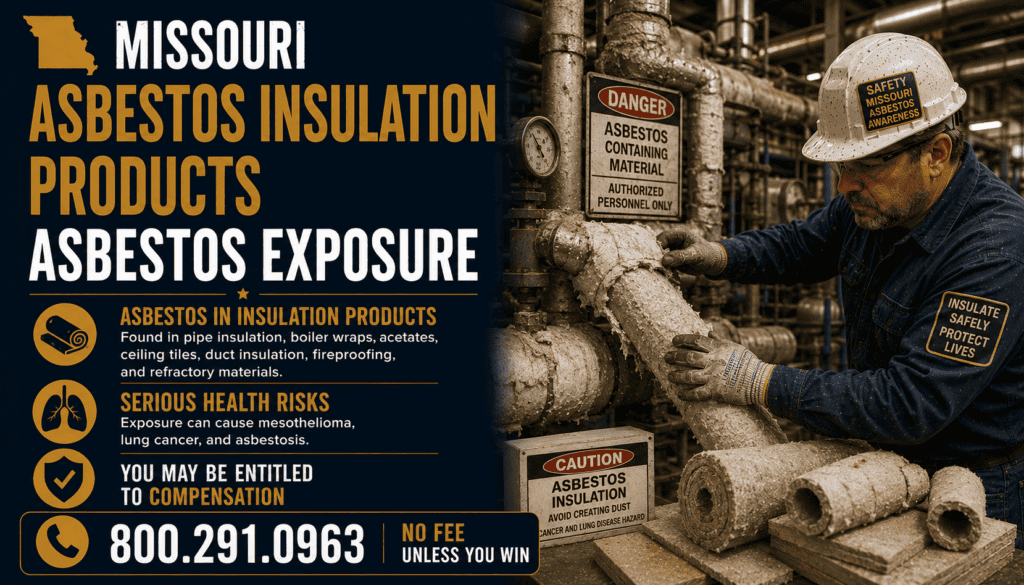
Missouri Asbestos Insulation Products
Missouri Asbestos Insulation Products and Occupational Exposure
For much of the twentieth century, asbestos insulation products were widely used throughout Missouri in homes, schools, hospitals, power plants, factories, refineries, commercial buildings, military facilities, and public buildings. Thousands of workers installed, repaired, maintained, removed, and replaced insulation products that contained asbestos. While these materials were valued for their fire resistance and insulating properties, many workers were unknowingly exposed to dangerous asbestos fibers throughout their careers. Asbestos insulation was one of the most common sources of occupational asbestos exposure in the United States.
Before the health risks of asbestos became widely known, manufacturers incorporated asbestos into countless insulation products because it provided exceptional heat resistance, fire protection, thermal insulation, and durability. Pipe insulation, boiler insulation, block insulation, spray-on insulation, attic insulation, duct insulation, insulation cement, insulating blankets, rope insulation, and high-temperature insulation frequently contained asbestos. As these materials aged or were disturbed during maintenance, renovation, or demolition, microscopic asbestos fibers could become airborne and be inhaled by nearby workers.
Unlike many workplace injuries, asbestos-related diseases often take 20 to 50 years to develop after exposure. Today, many retired Missouri workers are being diagnosed with mesothelioma, asbestos lung cancer, asbestosis, and other serious illnesses linked to years of occupational asbestos exposure involving asbestos insulation products.
For broader statewide context, review Missouri Asbestos Products, Missouri Asbestos Insulation Products, and Missouri Asbestos Exposure Lawsuits.
🔥 Why Asbestos Was Used in Insulation Products
For decades, engineers, architects, contractors, and manufacturers relied on asbestos insulation because it could withstand extremely high temperatures while helping prevent fires and reducing heat loss. Asbestos became one of the insulation industry’s preferred materials because it was durable, inexpensive, chemically resistant, and highly effective at insulating equipment and buildings.
Manufacturers commonly used asbestos because it provided:
- Excellent heat resistance
- Superior fire protection
- Thermal insulation
- Electrical insulation
- Moisture resistance
- Chemical resistance
- Long service life
- Lower maintenance costs
Because of these qualities, asbestos was incorporated into thousands of insulation products used throughout Missouri. Pipe insulation, boiler insulation, duct insulation, block insulation, spray-on insulation, insulating cement, asbestos blankets, asbestos rope, asbestos paper, millboard, calcium silicate insulation, and high-temperature insulation commonly contained asbestos for many decades.
As these materials deteriorated, cracked, or were removed during maintenance or renovation projects, asbestos fibers could become airborne and expose workers throughout the facility.
Related product information is available in Missouri Industrial Asbestos Products and Missouri Asbestos Products Used in Construction.
🏭 Missouri Facilities Where Asbestos Insulation Products Were Used
Asbestos insulation products were installed in countless facilities across Missouri during the twentieth century. Workers responsible for installing, maintaining, repairing, or removing insulation frequently encountered asbestos-containing materials throughout their careers.
Asbestos insulation products were commonly found in:
- Power plants
- Manufacturing plants
- Chemical plants
- Oil refineries
- Paper mills
- Schools
- Hospitals
- Commercial buildings
- Government buildings
- Military installations
- Apartment buildings
- Residential homes
Workers routinely installed, repaired, removed, or replaced insulation on boilers, pipes, turbines, generators, HVAC systems, furnaces, tanks, and other equipment that frequently contained asbestos insulation products. Related facility research includes Missouri Public & Government Buildings Asbestos Exposure and Missouri Construction Asbestos Exposure.
To learn more about industrial facilities where exposure occurred, review Missouri Industrial Asbestos Exposure, Missouri Manufacturing Asbestos Exposure, and Missouri Asbestos Exposure Sites & Industries.
🔧 Common Asbestos Insulation Products
Workers frequently encountered asbestos insulation without realizing it because manufacturers incorporated asbestos into numerous insulation products used throughout commercial, industrial, and residential construction. Routine installation, maintenance, repair, renovation, or removal often released asbestos fibers into the surrounding air.
Common asbestos-containing insulation products included:
- Pipe insulation
- Boiler insulation
- Block insulation
- Spray-on insulation
- Duct insulation
- Attic insulation
- Insulating cement
- Calcium silicate insulation
- Millboard
- Asbestos blankets
- Asbestos rope
- Asbestos paper
- Pipe covering
- Thermal insulation
- Furnace insulation
- Tank insulation
- Mechanical insulation
- High-temperature insulation
Repeated exposure during years of installing, maintaining, or removing insulation products significantly increased the risk of developing asbestos-related diseases later in life. Related worker pages include Missouri Pipefitters Mesothelioma, Missouri Electricians Asbestos Exposure, and Missouri Construction Workers Mesothelioma.
🏗️ High-Risk Work Areas for Insulation Exposure
Although asbestos insulation products could be found throughout many facilities, certain work areas historically presented a greater opportunity for occupational exposure because they involved frequent installation, maintenance, repair, or removal of insulation materials.
Higher-risk work areas included:
- Boiler rooms
- Mechanical rooms
- Utility tunnels
- Pipe chases
- Powerhouses
- Turbine rooms
- Generator rooms
- Maintenance shops
- Industrial facilities
- Mechanical equipment rooms
- HVAC equipment rooms
- Construction and renovation projects
Workers assigned to these areas routinely disturbed aging asbestos-containing insulation products while installing, repairing, replacing, or removing insulation materials.
👷 Occupations With the Highest Exposure to Asbestos Insulation Products
Thousands of Missouri workers were exposed to asbestos insulation products while installing, repairing, maintaining, or removing insulation from buildings, industrial facilities, power plants, schools, hospitals, manufacturing plants, and commercial buildings. Many workers handled asbestos-containing insulation every day without knowing the fibers they inhaled could remain in their lungs for decades before causing disease.
Workers with the highest occupational exposure included:
- Insulation Workers
- Pipefitters
- Steamfitters
- Plumbers
- HVAC Technicians
- Boiler Mechanics
- Electricians
- Welders
- Millwrights
- Industrial Maintenance Workers
- Power Plant Workers
- Construction Laborers
- Demolition Workers
- Building Maintenance Workers
- Refinery Workers
- Chemical Plant Workers
- Manufacturing Workers
- Shipyard Workers
- Mechanical Contractors
- General Contractors
Many of these workers also encountered asbestos while servicing boilers, turbines, steam lines, furnaces, and mechanical equipment. Related pages include Missouri Industrial Asbestos Exposure, Missouri Boiler Equipment Asbestos Exposure, and Missouri Equipment & Machinery Asbestos Exposure.
🔧 Installing, Repairing, and Removing Insulation Released Asbestos Fibers
Routine insulation work frequently disturbed asbestos-containing materials and released microscopic fibers into the surrounding air. Workers often had to cut, saw, drill, scrape, tear away, or replace old insulation before equipment could be serviced or buildings renovated.
Common insulation work included:
- Installing pipe insulation
- Removing damaged insulation
- Replacing boiler insulation
- Repairing furnace insulation
- Wrapping steam pipes
- Installing duct insulation
- Applying insulation cement
- Repairing HVAC insulation
- Renovating mechanical rooms
- Demolishing insulated equipment
- Replacing valve insulation
- Removing thermal insulation
These activities often generated airborne asbestos dust that could remain suspended for hours, exposing both insulation workers and nearby trades.
🧱 Common Asbestos Insulation Products
For decades, manufacturers produced hundreds of insulation products containing asbestos because the mineral provided outstanding heat resistance, fire protection, durability, and thermal insulation. These products were installed throughout Missouri in industrial, commercial, institutional, military, and residential buildings.
Common asbestos insulation products included:
- Pipe Insulation
- Boiler Insulation
- Block Insulation
- Spray-On Insulation
- Duct Insulation
- Attic Insulation
- Thermal Insulation
- Mechanical Insulation
- Insulating Cement
- Calcium Silicate Insulation
- Pipe Covering
- Furnace Insulation
- Tank Insulation
- Asbestos Blankets
- Asbestos Rope
- Asbestos Paper
- Millboard
- High-Temperature Insulation
- Valve Insulation
- Elbow Insulation
Many of these products were also installed alongside asbestos-containing building materials. Learn more at Missouri Asbestos Products Used in Construction.
🏭 Missouri Industries That Frequently Used Asbestos Insulation
Asbestos insulation products were used throughout nearly every major industry in Missouri. Workers routinely encountered insulation while maintaining boilers, steam systems, turbines, generators, furnaces, piping systems, and other high-temperature equipment.
Industries with extensive asbestos insulation included:
- Power Plants
- Manufacturing Facilities
- Chemical Plants
- Oil Refineries
- Paper Mills
- Food Processing Plants
- Steel Fabrication Facilities
- Railroad Shops
- Commercial Construction Projects
- Government Buildings
- Military Installations
- Public Utilities
Power plants were among the largest users of asbestos insulation because boilers, steam pipes, turbines, generators, and auxiliary equipment required extensive thermal insulation. Related resources include Missouri Power Plant Asbestos Exposure, Missouri Power Plant Workers Mesothelioma, and Missouri Power Generation Equipment Asbestos Exposure.
👨👩👧 Secondary (Take-Home) Asbestos Exposure
Many Missouri workers unknowingly carried asbestos fibers home on dusty clothing, work boots, gloves, hard hats, lunch boxes, and personal vehicles. Before employers recognized the dangers of asbestos, contaminated clothing was commonly washed at home, exposing family members to airborne asbestos fibers.
Family members could be exposed by:
- Washing contaminated work clothing
- Shaking out dusty uniforms
- Cleaning work boots
- Handling work gloves
- Cleaning lunch boxes and tool bags
- Riding in contaminated vehicles
- Greeting workers after their shift
Medical researchers now recognize that secondary asbestos exposure has caused mesothelioma in some spouses and family members of workers who regularly handled asbestos insulation products.
📅 Years of Occupational Exposure Increased Health Risks
Unlike a single workplace accident, asbestos exposure usually occurred repeatedly over many years. Workers who spent decades installing, repairing, maintaining, or removing asbestos insulation products generally experienced the greatest cumulative exposure.
Workers faced higher risks if they:
- Removed aging insulation
- Installed steam pipe insulation
- Repaired boilers
- Worked in boiler rooms
- Maintained power plant equipment
- Renovated older buildings
- Performed demolition work
- Serviced insulated industrial machinery
Many retired Missouri workers were not diagnosed with mesothelioma until decades after their last occupational exposure because asbestos-related diseases often take 20 to 50 years to develop. For broader legal information, review Missouri Mesothelioma Lawsuits & Claims and Missouri Asbestos Exposure Lawsuits.
🩺 Asbestos Diseases Linked to Insulation Products
Many former Missouri workers who installed, repaired, maintained, or removed asbestos insulation products developed serious asbestos-related diseases decades after their occupational exposure. Because asbestos fibers remain in the body for many years, symptoms often do not appear until 20 to 50 years after the original exposure.
Workers exposed to asbestos insulation products have been diagnosed with:
- Mesothelioma
- Asbestos Lung Cancer
- Asbestosis
- Pleural Plaques
- Pleural Thickening
- Pleural Effusions
Early warning signs may include:
- Persistent cough
- Chest pain
- Shortness of breath
- Fatigue
- Unexplained weight loss
- Difficulty breathing
- Fluid around the lungs
If you worked around asbestos insulation products anywhere in Missouri and later developed one of these conditions, be sure to inform your physician about your occupational history. For lung-cancer-specific legal information, review Missouri Asbestos Lung Cancer Lawsuits.
⚖️ Can Missouri Workers Exposed to Asbestos Insulation Products File a Lawsuit?
A diagnosis of mesothelioma or another asbestos-related disease may lead a former insulation worker or family to investigate where exposure occurred and which products, manufacturers, contractors, or companies may have been involved. Eligibility and legal options depend on the facts and applicable law.
Depending on the circumstances, a legal claim may involve issues such as:
- Medical expenses
- Lost wages
- Reduced earning capacity
- Pain and suffering
- Travel for specialized medical care
- Home health assistance
- Funeral expenses
- Wrongful death damages
For broader legal information, review Missouri Mesothelioma Lawsuits & Claims, Missouri Asbestos Trust Fund Claims, and Missouri Asbestos Exposure Lawsuits.
📋 Evidence That May Help Support Your Claim
Although asbestos exposure often occurred decades ago, documentation of your employment history and medical diagnosis can help establish an asbestos claim.
Helpful records may include:
- Employment records
- Union records
- Social Security earnings history
- Medical records
- Pathology reports
- Imaging studies
- Employment applications
- Coworker statements
- Job descriptions
- Construction or maintenance records
Even if these documents are no longer available, additional investigation may help identify historical job sites, insulation products, manufacturers, employers, and coworkers associated with a worker’s history.
⏳ Missouri Filing Deadlines for Asbestos Claims
Missouri law limits the amount of time individuals have to file asbestos-related claims. In many cases, the legal filing period begins when an asbestos-related disease is diagnosed—not when exposure originally occurred decades earlier.
Because every case is different, filing deadlines should be evaluated under the law that applies to the particular claim.
Families who lost a loved one to mesothelioma may also want to review Missouri Wrongful Death Mesothelioma Lawsuits. For deadline information, see Missouri Mesothelioma Statute of Limitations.
❓ Frequently Asked Questions
How long after exposure can mesothelioma develop?
Mesothelioma usually develops 20 to 50 years after asbestos exposure, which is why many retired Missouri workers are diagnosed long after leaving their jobs.
Which workers had the highest exposure to asbestos insulation products?
Insulation workers, pipefitters, steamfitters, plumbers, boiler mechanics, HVAC technicians, electricians, millwrights, maintenance mechanics, power plant workers, and demolition workers experienced some of the highest levels of occupational exposure.
Which insulation products commonly contained asbestos?
Asbestos was commonly used in pipe insulation, boiler insulation, spray-on insulation, block insulation, duct insulation, insulation cement, calcium silicate insulation, furnace insulation, asbestos blankets, rope insulation, pipe covering, millboard, and other high-temperature insulation products.
Can family members become sick from take-home exposure?
Yes. Family members have developed mesothelioma after repeated exposure to asbestos fibers brought home on contaminated work clothing, boots, gloves, lunch boxes, and personal vehicles.
Is compensation still available?
Some people diagnosed with mesothelioma or another asbestos-related disease may qualify for an asbestos trust fund claim or other legal claim, depending on exposure history, medical requirements, applicable law, and other circumstances.
🔗 Related Missouri Asbestos Exposure Resources
Continue your research with these Missouri asbestos resources:
- Missouri Asbestos Products
- Missouri Asbestos Insulation Products
- Missouri Asbestos Products Used in Construction
- Missouri Industrial Asbestos Products
- Missouri Equipment & Machinery Asbestos Exposure
- Missouri Boiler Equipment Asbestos Exposure
- Missouri Power Generation Equipment Asbestos Exposure
- Missouri Industrial Asbestos Exposure
- Missouri Workers & Occupational Asbestos Exposure
- Missouri Pipefitters Mesothelioma
- Missouri Electricians Asbestos Exposure
- Missouri Construction Workers Mesothelioma
- Missouri Power Plant Workers Mesothelioma
- Missouri Asbestos Exposure Sites & Industries
- Missouri Manufacturing Asbestos Exposure
- Missouri Power Plant Asbestos Exposure
- Missouri Construction Asbestos Exposure
- Missouri Public & Government Buildings Asbestos Exposure
- Missouri Mesothelioma Lawsuits & Claims
- Missouri Asbestos Trust Fund Claims
- Missouri Asbestos Lung Cancer Lawsuits
- Missouri Wrongful Death Mesothelioma Lawsuits
- Missouri Mesothelioma Statute of Limitations
Call 800.291.0963 — Open 24/7, 365 Days
MesotheliomaHelp.Center provides legal and medical information to help Missouri workers and families understand historical asbestos insulation exposure, related diseases, filing deadlines, compensation options, and possible next steps.