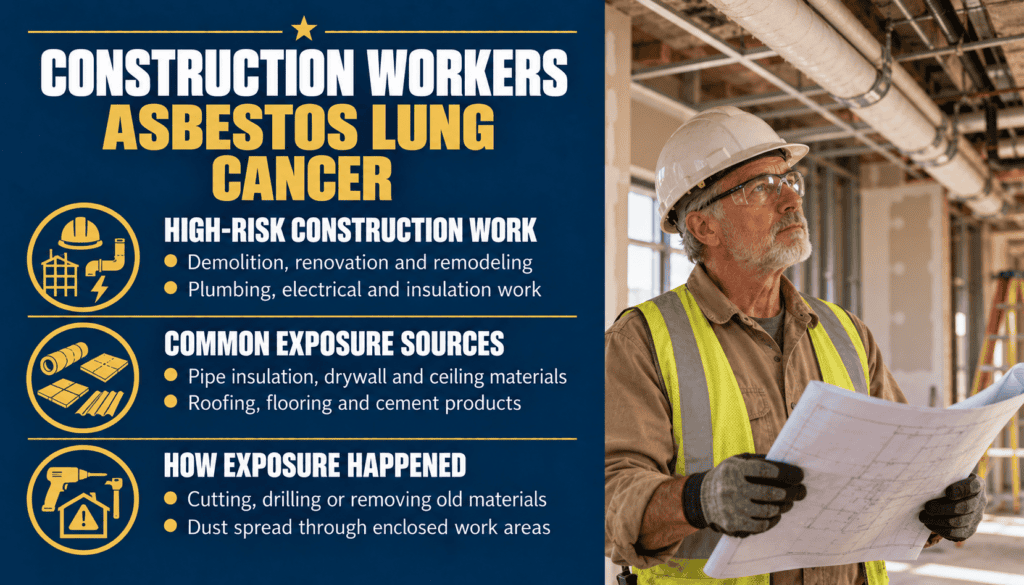
Construction Workers Asbestos Lung Cancer
Construction workers may face asbestos lung cancer risk when older asbestos-containing materials are disturbed during demolition, renovation, repair, maintenance, or new work tied into existing buildings. Historically, asbestos was used in many construction products because it resisted heat, fire, moisture, and wear.
Construction work alone does not prove asbestos exposure, and a lung cancer diagnosis alone does not establish that asbestos caused the disease. A credible investigation looks at the worker’s trade, jobsites, years worked, specific tasks, materials handled, nearby trades, building age, renovation history, and the manufacturers or products involved.
This page is a child of the Workers at Risk for Asbestos Lung Cancer hub within the broader Diagnosed With Lung Cancer silo. It focuses specifically on construction trades, building materials, demolition and renovation exposure, evidence reconstruction, diagnosis, treatment, prognosis, and potential legal claims.
🏗️ Construction Asbestos Exposure and Lung Cancer
Asbestos was historically used in a wide range of construction materials. Exposure can occur when fibers are released during cutting, drilling, sanding, grinding, scraping, removal, repair, demolition, or cleanup.
Workers can be exposed directly by handling asbestos-containing materials or indirectly by working near another trade disturbing them. Enclosed spaces, poor ventilation, dry removal methods, and repeated dusty work can increase potential exposure.
Not every old building or construction material contained asbestos. Product composition varied by manufacturer, product line, installation date, geographic market, and application. Exposure should therefore be based on evidence rather than assumptions.
For broader medical background, see Asbestos Lung Cancer Risk.
🧱 Construction Materials and Products to Investigate
Historical asbestos-containing construction products could be found in multiple parts of a building. Potentially relevant categories include:
| Material or Product | Possible Exposure Task | Evidence to Investigate |
|---|---|---|
| Pipe and boiler insulation | Removal, repair, cutting, or work nearby during mechanical upgrades | Building specifications, mechanical plans, product records |
| Floor tile and adhesive | Removal, sanding, scraping, or demolition | Renovation records, product identification, installation era |
| Roofing and siding materials | Cutting, removal, replacement, or demolition | Manufacturer, product type, project records |
| Cement board and pipe products | Sawing, drilling, breaking, or demolition | Product records, plans, witness testimony |
| Fireproofing and spray-applied materials | Removal, renovation, or nearby disturbance | Building age, specifications, abatement records |
| Ceiling and wall materials | Cutting, demolition, remodeling, or repair | Construction documents, product identification |
| Gaskets and mechanical components | HVAC, boiler, plumbing, pump, or valve maintenance | Equipment manuals, parts records, maintenance history |
A category name alone does not prove asbestos content. Manufacturer, product, year, and installation records should be used whenever available.
🛠️ Construction Tasks That Can Disturb Asbestos
Potential exposure can be greater during tasks that break, abrade, or remove older asbestos-containing materials.
- Demolition of older walls, ceilings, flooring, or mechanical systems
- Cutting or drilling asbestos-cement products
- Removing insulation from pipes or boilers
- Scraping flooring adhesive or old tile
- Removing roofing or siding
- Renovating boiler rooms or utility spaces
- Repairing HVAC, pumps, valves, or piping
- Dry sweeping or cleaning asbestos-containing debris
- Working in confined spaces near disturbed asbestos
Modern asbestos regulations and abatement practices are designed to reduce these exposures, but workers may still encounter legacy materials in older structures.
👷 Construction Trades That May Face Asbestos Exposure
Different construction trades can encounter different exposure pathways depending on the jobsite and project.
| Trade | Possible Exposure Pathway |
|---|---|
| Carpenters | Cutting, remodeling, demolition, wall and ceiling work, work near other trades |
| Electricians | Opening walls and ceilings, working near insulation, older electrical and fire-resistant materials |
| Plumbers and pipefitters | Pipe insulation, boilers, valves, pumps, gaskets, and mechanical rooms |
| HVAC workers | Ducts, insulation, boilers, furnaces, mechanical systems, and renovation work |
| Roofers | Removal or cutting of certain historical roofing materials |
| Flooring workers | Removal of certain older floor tiles and mastics |
| Drywall and demolition crews | Disturbing walls, ceilings, joint materials, insulation, and debris |
| General laborers | Cleanup, debris handling, demolition support, and nearby exposure |
A trade title helps identify likely tasks, but it does not prove exposure by itself. The specific project and materials matter.
🏚️ Renovation and Demolition Exposure
Renovation and demolition can create significant exposure potential when asbestos-containing materials are disturbed without proper controls.
Workers may enter buildings where the original products were installed decades earlier. Renovation can uncover asbestos-containing insulation, flooring, fireproofing, cement products, roofing, or mechanical-system materials that are hidden behind walls or ceilings.
Demolition can release large amounts of dust if asbestos-containing materials are not identified and handled correctly before work begins.
Important evidence can include pre-demolition surveys, asbestos inspection reports, abatement records, building plans, renovation specifications, contractor records, and coworker testimony.
🌫️ Bystander Exposure From Nearby Construction Trades
A construction worker did not necessarily have to handle asbestos directly to inhale fibers. Bystander exposure can occur when another worker disturbs asbestos-containing material nearby.
For example, one trade may remove insulation while electricians, carpenters, laborers, painters, or other workers remain in the same room or work area.
Relevant factors can include:
- Distance from the asbestos-disturbing task
- How often the work occurred
- Duration of exposure
- Ventilation
- Dust levels
- Whether cleanup re-suspended dust
- Whether respiratory protection was used
A credible case should identify the nearby work activity and evidence that the disturbed material actually contained asbestos.
⏳ Latency and Lung Cancer Diagnosis After Construction Work
Asbestos-related lung cancer can develop after a latency period measured in decades. A construction worker may therefore be diagnosed long after leaving the trade or retiring.
This long interval can make earlier jobs difficult to remember. Workers should tell healthcare providers about significant construction, demolition, industrial, military, and mechanical exposure histories even when they occurred many years earlier.
Exposure history does not itself diagnose lung cancer. Diagnosis generally requires imaging, medical evaluation, and usually tissue or cell testing.
See Asbestos Lung Cancer Symptoms and Diagnosing Asbestos-Related Lung Cancer for more information.
📁 Documenting Construction Asbestos Exposure
Construction workers may have moved between many employers and jobsites over a career. A strong exposure investigation reconstructs the work history as precisely as possible.
| Evidence | What It May Help Establish |
|---|---|
| Employment records | Employers, job titles, and years worked |
| Union records | Trade, contractor, dispatch, and jobsite history |
| Project records | Buildings, contractors, renovation or demolition work |
| Building specifications | Materials and systems installed |
| Product invoices and catalogs | Manufacturers and products used on the project |
| Coworker testimony | Tasks, dust conditions, materials, and nearby work |
| Abatement records | Later confirmation that asbestos-containing materials were present |
| Medical records | Lung cancer diagnosis and treatment history |
Because jobsites can disappear and contractors can go out of business, older records and witness information can be especially valuable.
⚖️ Lawsuits, Trust Funds, and Compensation for Construction Workers
A construction worker diagnosed with lung cancer after asbestos exposure may be able to investigate legal compensation depending on the evidence and applicable law.
Potential paths can include:
- Asbestos lawsuits against legally responsible companies
- Asbestos bankruptcy trust fund claims
- Wrongful death claims in qualifying cases
- Workers’ compensation or other benefits depending on jurisdiction
Claims may involve manufacturers, suppliers, contractors, premises owners, or bankruptcy trusts depending on the facts. Not every company connected to a jobsite is legally responsible.
For broader legal information, visit Asbestos Lung Cancer Lawsuits & Compensation, Asbestos Lung Cancer Trust Fund Claims, and Who Qualifies for Asbestos Lung Cancer Compensation?.
Construction worker diagnosed with lung cancer after possible asbestos exposure? Call 800.291.0963 or Submit Your Case. Live help is available 24/7, 365 days a year.
❓ Frequently Asked Questions
Can construction workers develop lung cancer from asbestos exposure?
Yes. Asbestos is an established cause of lung cancer. Whether asbestos contributed to an individual worker’s cancer depends on the actual exposure history and other risk factors.
Which construction materials may have contained asbestos?
Historical examples can include certain insulation, flooring, roofing, cement products, fireproofing, pipe covering, gaskets, and other building materials. Not every product in these categories contained asbestos.
Which construction trades may face the greatest asbestos exposure?
Potentially exposed trades can include plumbers, pipefitters, electricians, carpenters, HVAC workers, roofers, flooring workers, demolition crews, and laborers depending on the jobsite and tasks.
Can construction workers be exposed without handling asbestos directly?
Yes. Bystander exposure can occur when another trade disturbs asbestos-containing material nearby, especially in enclosed or poorly ventilated areas.
Does working in an old building prove asbestos exposure?
No. Building age can justify investigation, but exposure should be supported by evidence showing that asbestos-containing materials were present and disturbed.
Can a construction worker who smoked still have an asbestos-related claim?
Potentially. Smoking and asbestos are separate established lung cancer risk factors. A smoking history does not automatically eliminate a documented asbestos exposure claim.
Can construction workers file asbestos trust fund claims?
Potentially. A claim may be available if the worker’s exposure can be connected to products or companies associated with an asbestos bankruptcy trust and the trust’s criteria are met.
What records help prove construction asbestos exposure?
Employment records, union records, project documents, building specifications, product records, abatement reports, coworker testimony, and medical records may help reconstruct exposure.
📞 Construction Worker Diagnosed With Lung Cancer?
If you or a family member worked in construction, demolition, renovation, plumbing, electrical work, HVAC, roofing, flooring, or another building trade and later developed lung cancer, an exposure review can examine jobsites, contractors, materials, products, and work practices from decades earlier.
Call 800.291.0963 to discuss the worker’s construction history and possible asbestos exposure. Live help is available 24/7, 365 days a year.
Submit Your Case for a case-specific review of potential asbestos lawsuits, trust fund claims, and other legal options. Eligibility for compensation depends on the evidence, responsible parties, jurisdiction, and applicable filing deadlines.
⚕️ Legal & Medical Information Disclaimer
This page provides general educational information only. It does not establish diagnosis, medical causation, legal liability, claim eligibility, or entitlement to compensation. Consult qualified medical and legal professionals about your specific situation.