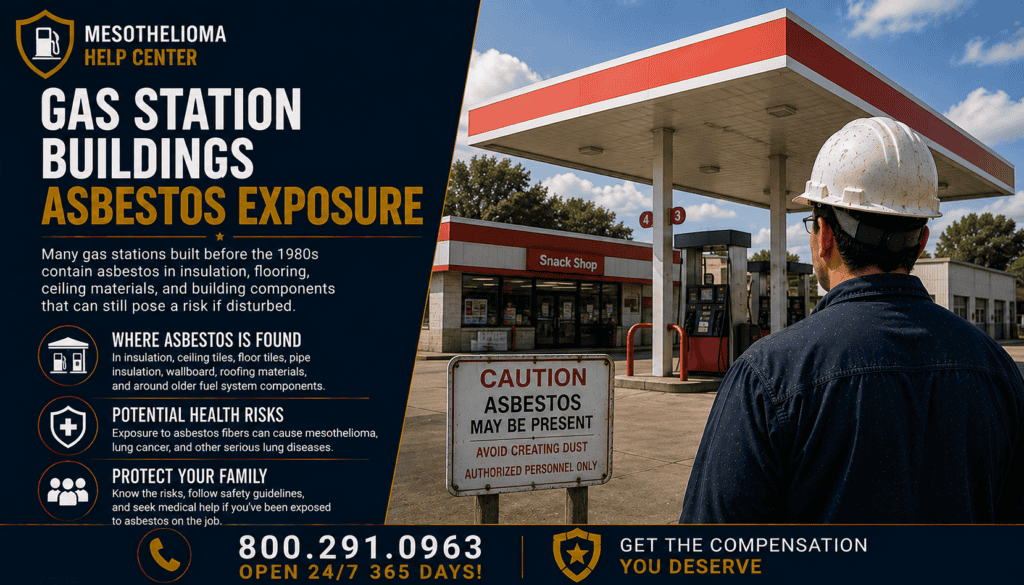
⛽ Gas Station Buildings Asbestos Exposure
Gas station buildings may include convenience-store areas, cashier spaces, offices, restrooms, storage rooms, service bays, utility rooms, canopies, roofs, electrical systems, heating and ventilation equipment and, at some older locations, automotive repair or maintenance areas. These properties can remain in service for decades while fueling systems, store interiors, mechanical equipment and building finishes are repeatedly upgraded.
Depending on a gas station building’s age, construction history and installed products, some older properties may have contained asbestos-containing building materials. Working in, owning, maintaining, renovating, delivering to or visiting an older gas station does not by itself prove asbestos exposure. This page focuses on potential exposure involving the building or facility itself. Potential exposure from vehicle components, petroleum operations or other products should be investigated separately.
A useful building-exposure investigation connects a person to a specific gas station, building area, dates, job or task, material and disturbance event. See the broader Commercial & Office Buildings Asbestos Exposure hub and Buildings Asbestos Exposure resource.
⛽ How Asbestos Exposure Could Occur in Gas Station Buildings
Potential building exposure depended on whether asbestos-containing material was actually present and whether maintenance, repair, renovation or demolition disturbed it. Gas stations can have distinctive histories because properties may be converted between fueling stations, service garages and convenience-store operations while utility systems and building interiors are repeatedly modified.
Building projects worth investigating include:
- Convenience-store remodeling or expansion.
- Removal or replacement of older flooring, walls or ceilings.
- Electrical upgrades for pumps, lighting, refrigeration and signs.
- Heating, ventilation and HVAC repairs or replacement.
- Plumbing and restroom renovations.
- Service-bay or garage conversions where present.
- Roof and canopy repairs.
- Utility-system replacement or rerouting.
- Major site redevelopment involving the station building.
- Partial or complete demolition.
EPA describes an asbestos operations and maintenance program as a combination of training, cleaning, work practices and surveillance intended to maintain ACM in good condition and minimize exposure to asbestos fibers. Similar commercial facilities may use such procedures when asbestos-containing materials are managed in place.
🏪 Gas Station Areas and Building Systems to Investigate
🛒 Convenience-Store and Cashier Areas
Retail portions of a station can undergo repeated flooring, ceiling, lighting, refrigeration and interior-partition changes. Different portions of the store may therefore contain materials installed during different renovation periods.
🔧 Service Bays and Garage Areas
Older gas stations may have included lubrication bays, repair garages or attached automotive-service spaces. These areas can have exposed structural materials, ceilings, walls, mechanical equipment and utility runs. Building exposure should be documented separately from any exposure involving automotive products.
⚡ Electrical and Lighting Systems
Fueling equipment, canopy lighting, store refrigeration, signage and shop machinery can require substantial electrical infrastructure. Upgrades may involve electrical panels, conduit, walls, ceilings and utility spaces.
🌬️ Heating, Ventilation and Mechanical Systems
Ducts, heaters, air handlers and rooftop equipment may require repeated repair or replacement. Older thermal insulation or adjacent surfacing materials may be relevant when records or testing show that ACM or PACM was present.
🚻 Restrooms, Offices and Storage Areas
Interior support areas can have separate flooring, wall, plumbing and ceiling renovation histories from the public retail space.
🏗️ Roofs, Canopies and Exterior Areas
Station roofs, canopy structures and exterior walls may be repaired or replaced during the life of the property. The presence of asbestos-containing roofing, siding or cement products must be established rather than assumed.
⚙️ Utility and Back-of-House Spaces
Older properties may contain pipes, water heaters, heating equipment and other utility systems. These spaces can be important when reconstructing work around thermal-system insulation.
🧱 Asbestos-Containing Building Materials to Investigate
No installed material should be labeled asbestos-containing simply because a gas station is old. Historical specifications, asbestos surveys, professional inspections, sampling records and appropriate laboratory analysis provide stronger evidence.
| Station Area | Material or System to Investigate | Potential Disturbance |
|---|---|---|
| Utility/mechanical areas | Pipe, boiler, tank or duct insulation where present | Repair, removal or replacement |
| Store, office and service-bay floors | Certain historical flooring and associated mastics | Removal, cutting or renovation |
| Walls and ceilings | Certain compounds, panels, plasters or ceiling materials | Drilling, cutting or demolition |
| Structural areas | Certain surfacing or fireproofing materials | Renovation or demolition |
| Heating/HVAC systems | Certain thermal insulation and associated materials | Maintenance or modernization |
| Roof, canopy and exterior | Certain historical roofing, siding or cement products | Repair, removal or replacement |
OSHA defines thermal-system insulation as ACM applied to pipes, fittings, boilers, tanks, ducts and other components to prevent heat loss or gain. OSHA’s Class II asbestos-work definition includes removal of asbestos-containing wallboard, floor tile and sheeting, roofing, siding shingles and construction mastics.
Under OSHA’s construction standard, thermal-system insulation and surfacing material in buildings constructed no later than 1980 are treated as presumed asbestos-containing material unless that presumption is properly rebutted. Asphalt and vinyl flooring installed no later than 1980 must also be considered asbestos-containing unless properly demonstrated otherwise under the standard.
For broader historical material information, see Common Asbestos Materials Found in Pre-1970s Buildings.
👷 Gas Station Workers and Contractors Potentially at Risk
Building-related exposure opportunities can vary greatly by occupation and task. Workers who directly cut, removed, drilled, repaired or disturbed installed building materials may have had different exposure opportunities from employees working around intact finished surfaces.
- Station maintenance workers — walls, ceilings, floors, utilities and mechanical systems.
- Electricians — panels, conduit, lighting, refrigeration circuits and walls.
- HVAC technicians — ducts, heaters, air handlers and rooftop equipment.
- Plumbers and pipefitters — restrooms, water lines, drains and utility spaces.
- Carpenters and remodelers — convenience-store interiors, offices, ceilings and service-bay conversions.
- Flooring workers — removal or alteration of historical flooring and mastics.
- Roofers — station roofs, canopies and roof penetrations.
- Construction and demolition workers — station expansions, conversions and redevelopment.
- Cashiers, attendants and service employees — building exposure requires evidence that ACM was disturbed in or near their work areas.
Workers at stations with automotive-service operations may also have separate exposure histories involving vehicle components or other asbestos-containing products. Those pathways should be documented separately from the building itself. See High-Risk Jobs for Asbestos Exposure.
🔨 Station Renovation, Utility and Maintenance Exposure
Gas stations can be remodeled repeatedly as operators add convenience stores, replace refrigeration, modernize electrical systems, remove or add service bays, upgrade restrooms and modify heating or ventilation. These projects may affect several generations of building materials.
EPA states that renovations, including remodeling or redecorating, and replacement of utility systems increase the potential for disturbing ACM. Before renovation work, EPA recommends reviewing asbestos inspection and assessment records, visually reinspecting affected areas and evaluating whether suspect or assumed ACM could be disturbed.
OSHA’s asbestos construction standard covers demolition, alteration, repair, maintenance and renovation involving asbestos. OSHA defines Class III asbestos work as repair and maintenance operations where ACM, including thermal-system insulation, surfacing ACM or PACM, is likely to be disturbed.
Before work subject to OSHA’s asbestos standard begins, building and facility owners must determine the presence, location and quantity of ACM and/or PACM at the work site and provide required information to specified employers, employees and tenants.
Gas-station projects worth investigating include:
- Convenience-store expansion or remodeling.
- Service-bay conversion or removal.
- Electrical-panel and lighting upgrades.
- HVAC, heating and ventilation replacement.
- Floor, wall and ceiling renovations.
- Plumbing and restroom projects.
- Roof and canopy repairs.
- Utility-system replacement.
- Building conversion, redevelopment and demolition.
See Historic Building Renovation Job Sites Asbestos Exposure.
📂 How to Document Gas Station Building Exposure
A stronger reconstruction moves beyond “I worked at an old gas station” toward:
Person → Gas Station → Building Area → Date → Job/Task → Material → Disturbance
- Identify the gas station and exact historical address.
- Record the store, service bay, office, mechanical area or other work location.
- List employment or contractor dates.
- Identify the person’s occupation and specific duties.
- Separate building exposure from automotive-product exposure.
- List station renovations, utility projects and service-bay changes.
- Search for asbestos surveys, inspection reports and sample results.
- Locate building plans, permits, work orders and renovation specifications.
- Identify contractors, asbestos consultants and abatement companies.
- Locate coworkers, former station owners, maintenance workers or other witnesses.
Gas station properties can change brands, franchisees, owners and uses while the building remains in place. Relevant records may be held by current or former station operators, petroleum companies, franchisees, property owners, landlords, property managers, architects, contractors or asbestos consultants.
OSHA requires written records of certain building-owner notifications concerning the identification, location and quantity of ACM and PACM to be maintained for the duration of ownership and transferred to successive owners. Where those records survive, they may help identify known or presumed materials and their locations.
Other useful evidence can include asbestos surveys, bulk-sample results, abatement files, renovation plans, permits, historical photographs, employment records and witness statements.
🫁 Health Risks and Potential Legal Options
Asbestos exposure is associated with serious diseases including mesothelioma, asbestos-related lung cancer and asbestosis. These conditions may be diagnosed many years after exposure.
A diagnosis does not establish that a particular gas station building caused the exposure. A complete investigation may need to examine installed building materials, automotive products, other employers, other job sites, military service and additional possible exposure sources.
When evidence connects exposure to identifiable asbestos-containing materials, products, contractors or potentially responsible companies, legal options may be investigated. See Mesothelioma Lawsuit and Asbestos Exposure Lawsuit.
Compensation is not guaranteed and depends on the diagnosis, exposure evidence, potentially responsible parties, applicable law and filing deadlines.
❓ Gas Station Buildings Asbestos Exposure Questions
Did every older gas station building contain asbestos?
No. Building age can justify investigation, but it does not prove that any particular installed material contained asbestos.
Is gas station building exposure different from automotive-product exposure?
Yes. A worker may have separate potential exposure pathways involving installed building materials and vehicle components or products. Each should be documented independently.
Why can convenience-store remodeling matter?
Store renovations can involve flooring, ceilings, walls, lighting, electrical systems and plumbing. Exposure depends on whether asbestos-containing material was present and disturbed.
Which workers may have had more direct building exposure opportunities?
Maintenance workers, electricians, HVAC technicians, plumbers, carpenters, flooring workers, roofers and renovation or demolition contractors may have directly worked on installed building materials.
Could cashiers or station attendants have had building-related exposure?
Potentially, if asbestos-containing material was disturbed in or near occupied work areas. Employment at an older gas station alone does not prove exposure.
Why does the exact station address matter?
Gas stations can change brands, operators and uses. The exact address helps trace prior businesses, property owners, renovation permits and surviving building records.
What records may help document gas station exposure?
Asbestos surveys, building plans, permits, work orders, HVAC or electrical project records, abatement files, photographs, employment records and witness accounts may help reconstruct exposure.
Can a closed or demolished gas station still be investigated?
Potentially. Historical property records, surveys, permits, contractor files, photographs, former employees and other witnesses may survive after the business closes or the property is redeveloped.
🚀 Turn a Gas Station Work History Into a Clear Exposure Record
📞 Separate Building Exposure From Other Station-Related Exposure
If you or a loved one worked in a gas station building and later developed mesothelioma or asbestos-related lung cancer, a focused review can help identify possible building exposure sources and surviving records.
- Station — business name, brand, exact historical address, work area and dates.
- Work — employer, occupation, duties, maintenance and renovation projects.
- Building exposure — insulation, flooring, ceilings, walls, HVAC systems, roofing and canopy materials.
- Other exposure — separately document automotive products and other job sites.
- Evidence — surveys, plans, permits, work orders, contracts, abatement files and witnesses.
Call 800.291.0963 now, use live chat 24/7, 365 days a year, or Submit Your Case for a free, confidential case review.
Compensation is not guaranteed. Potential legal options depend on the diagnosis, exposure evidence, potentially responsible parties, applicable law and filing deadlines.
⚕️ Legal & Medical Information Disclaimer
This page provides general educational information and is not legal or medical advice. Working in, owning, maintaining, renovating, delivering to or visiting a gas station does not by itself prove asbestos exposure, disease causation, legal liability or eligibility for compensation.