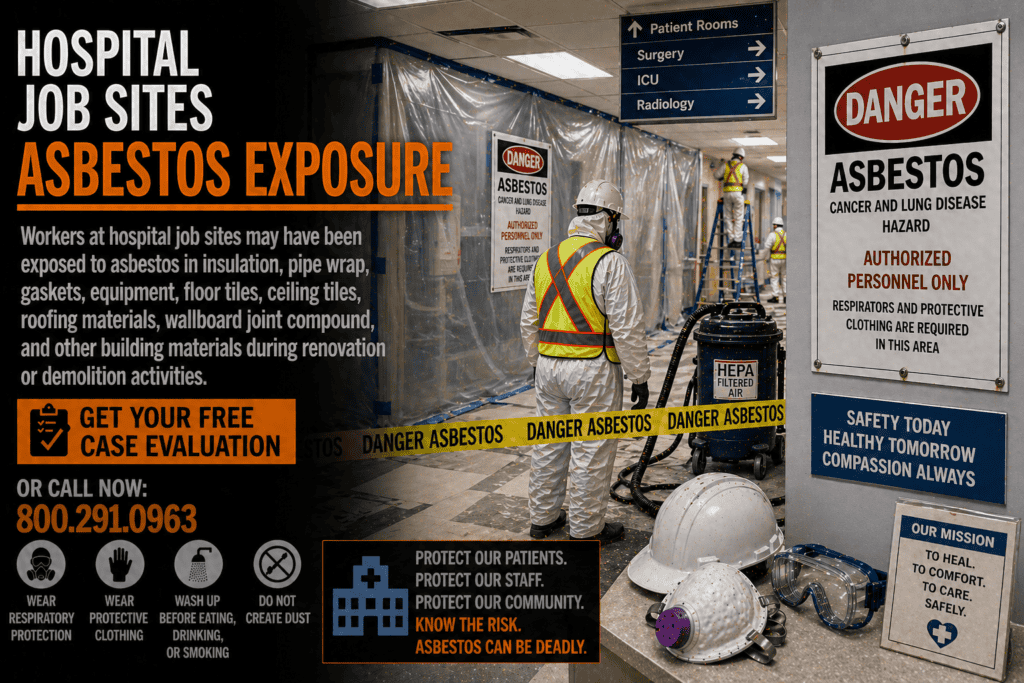
🏥 Hospital Job Sites Asbestos Exposure
People who worked at hospital facilities may have encountered historical asbestos-containing insulation, gaskets, friction products or building materials during repairs and renovation. If you have received a mesothelioma or asbestos-related lung cancer diagnosis, the location, time period and work activities can help clarify potential exposure circumstances.
This guide examines hospital boiler rooms, utility tunnels, ventilation systems and renovation projects, affected occupations, medical considerations and potential legal options. A job title or an older facility alone does not establish exposure, product identification or eligibility for compensation.
🏭 Where Asbestos Was Found
Clinical Areas versus Utility Areas
Patient rooms and clinical departments should not be treated as equivalent to boiler rooms, service tunnels or renovation zones. Hospital exposure histories require floor plans, department assignments and renovation dates.
Hospital Renovation and Infection-control Barriers
Construction in occupied hospitals may involve containment barriers and off-hour work. Historical maintenance records can help identify the exact work area and whether asbestos-containing material was disturbed.
Contractor Records
Facilities departments, engineering vendors and construction contractors may retain work orders and materials surveys even when individual staff records are limited.
A patient-care role does not automatically imply asbestos exposure. The most useful analysis distinguishes direct maintenance work from possible bystander exposure during documented renovations.
For related background, see milling operations. These resources help distinguish the relevant worksite, duties and historical materials.
For related background, see Job Sites Asbestos Exposure. These resources help distinguish the relevant worksite, duties and historical materials.
Boiler Rooms and Central Plants
Hospitals often depended on continuous steam, heat and hot-water service. Older boilers, valves and insulated distribution piping may have contained asbestos, especially when maintenance removed old thermal materials.
A practical review distinguishes routine operation from removal, scraping, cutting, drilling or dry cleanup. Intact material may present a different exposure situation than material broken apart during repairs. Historical accounts should also record ventilation, distance from the work and any dust-control procedures described by witnesses.
Mechanical Floors and Ventilation Rooms
Air handlers, duct insulation, fireproofing and mechanical equipment sometimes involved legacy asbestos-containing components. Work orders help establish whether a material was actually disturbed.
Operating-room and Laboratory Support Areas
Sterilization, laundry and laboratory support systems can involve steam lines, heat-resistant gaskets and equipment repairs. Clinical job titles alone do not establish exposure; proximity to maintenance is central.
Ceiling Spaces, Flooring and Corridors
Some older healthcare buildings used asbestos-containing floor products, ceiling materials or fireproofing. Remodeling while the hospital remained open could place staff and contractors near controlled work areas.
Renovation, Demolition and Additions
Hospitals frequently add wings or modernize systems. Abatement records, construction permits, air-monitoring reports and contractor documentation can identify when asbestos-containing materials were encountered.
For a more detailed look at related historical equipment and materials, see Hospital Workers Asbestos Exposure. The linked page provides related background, not proof of exposure at an individual workplace.
For a more detailed look at related historical equipment and materials, see Hospital Electrical Systems & Fireproofing Asbestos Exposure. The linked page provides related background, not proof of exposure at an individual workplace.
Hospital Building Materials, Equipment & Systems Asbestos Exposure — Explore historical asbestos exposure risks associated with hospital construction materials, mechanical equipment, and building systems. Potential sources included pipe insulation, boilers, heating and ventilation equipment, floor tiles, ceiling materials, and fire-resistant construction products. Maintenance workers, electricians, plumbers, renovation contractors, and other hospital personnel may have encountered asbestos during repairs, equipment replacement, and building renovations. Learn about exposure documentation, affected occupations, mesothelioma lawsuits, asbestos trust fund claims, and potential compensation options.
👷 Workers and Daily Jobs
Hospital staff, maintenance crews, and outside contractors can find more information in Hospital and Healthcare Worker Asbestos Risks for information about asbestos-containing materials, affected jobs, and options after an asbestos-related diagnosis.
Occupational titles help identify possible tasks, but they do not establish exposure by themselves. In older facilities, direct maintenance personnel and people working in adjoining spaces may have had different exposure patterns. Each job should be evaluated against the specific materials, dates and duties involved.
A related occupational resource is industrial plant lawsuits. These resources help distinguish the relevant worksite, duties and historical materials.
A related occupational resource is manufacturing plants. These resources help distinguish the relevant worksite, duties and historical materials.
Hospital Engineers and Boiler Operators
Hospital engineers and boiler operators may have encountered suspect dust while opening equipment for repairs, replacing old seals, or removing thermal coverings. The question is whether a confirmed asbestos-containing product was disturbed, not simply whether the worker entered an older facility.
Maintenance Mechanics and Pipefitters
Maintenance mechanics and pipefitters may have encountered suspect dust while working beside scheduled maintenance and mechanical rebuilds. The question is whether a confirmed asbestos-containing product was disturbed, not simply whether the worker entered an older facility.
Electricians, HVAC Technicians and Contractors
Electricians, HVAC technicians and contractors may have encountered suspect dust while handling pipe joints, valves, insulation or adjacent equipment. The question is whether a confirmed asbestos-containing product was disturbed, not simply whether the worker entered an older facility.
Environmental Services and Custodial Staff
Environmental services and custodial staff may have encountered suspect dust while entering service spaces during retrofits or shutdowns. The question is whether a confirmed asbestos-containing product was disturbed, not simply whether the worker entered an older facility.
Nurses, Laboratory Workers and Nearby Staff
Nurses, laboratory workers and nearby staff may have encountered suspect dust while cleaning shared areas after repairs or assisting other trades. The question is whether a confirmed asbestos-containing product was disturbed, not simply whether the worker entered an older facility.
Hospital Workers & Occupations Asbestos Exposure — Learn how hospital maintenance mechanics, electricians, plumbers, boiler operators, custodians, construction contractors, and other healthcare facility employees may have encountered asbestos-containing insulation, floor tiles, ceiling materials, and mechanical equipment. Explore historical exposure risks, affected occupations, mesothelioma lawsuits, asbestos trust fund claims, and potential compensation options for eligible workers and their families.
🧱 Products and Equipment
For hospital boiler rooms and mechanical systems, see Hospital Pipe Insulation, Valves & Gaskets Asbestos Exposure for information about asbestos-containing materials, affected jobs, and options after an asbestos-related diagnosis.
Historically, asbestos was used in certain thermal, fire-resistant and mechanical applications. These are categories for record review, not a statement that every product or facility contained asbestos.
| Potential historical product | Evidence to check |
|---|---|
| Thermal pipe and boiler insulation | Specifications, insulation-removal logs and equipment dates |
| Flange gaskets and valve packing | Replacement invoices, supplier names and part numbers |
| Mechanical friction materials | Maintenance procedures and brake or clutch component records |
| Flooring, fireproofing and ceiling products | Building surveys, renovation plans and laboratory reports |
| Heat-resistant boards and textiles | Product catalogs, labels and procurement records |
Non-asbestos substitutes have also been used in these categories. A reliable determination requires documentation or appropriate professional testing; workers and families should not cut, scrape or sample suspect materials themselves.
OSHA regulates asbestos in general industry, construction and shipyard employment under different standards. The applicable requirements depend on the activity rather than the label of the employer. Historical practices should not be confused with current safe-handling procedures.
For a more detailed look at related historical equipment and materials, see Hospital Asbestos Exposure Articles. The linked page provides related background, not proof of exposure at an individual workplace.
For a more detailed look at related historical equipment and materials, see Hospital HVAC & Ventilation Systems Asbestos Exposure. The linked page provides related background, not proof of exposure at an individual workplace.
🌫️ How Exposure Occurred
Direct Repair and Removal
Replacing damaged insulation, scraping an old gasket or pulling packing from equipment can disturb material. The actual airborne exposure depends on product content, task method, ventilation, duration and controls.
For hospital buildings and campuses, document the precise task, the person performing it, any visible debris and whether the area was occupied. A reconstruction based on contemporaneous records is preferable to assuming that every renovation or maintenance task released asbestos.
Nearby or Bystander Work
A person did not necessarily need to handle a component to breathe dust from nearby work. Room size, air movement, the location of other trades and the time spent nearby matter.
Overhauls and Renovation
Shutdowns and building alterations often brought several employers together. The timing of asbestos work, isolation procedures and cleaning practices may help establish whether employees shared an affected area.
Contaminated Clothing and Cleanup
In some historical workplaces, dust settled on clothing, tools and floors. Work practices such as dry sweeping could redistribute fibers, and contaminated work clothing could potentially carry material outside the facility.
Research hospital renovation and modernization separately from hospital demolition and facility closure. Project records can help establish which building areas were affected and whether the work coincided with the person’s employment.
🩺 Mesothelioma After Workplace Exposure
If you or a family member worked at hospital job sites and have symptoms or a confirmed diagnosis, the Mesothelioma Diagnosis guide explains biopsies, imaging, pathology review, and questions to discuss with a specialist. Keep copies of test results and tell your medical team about past asbestos exposure.
Mesothelioma is a malignancy affecting the lining of the lungs or other body cavities. Asbestos exposure is an established major cause, and disease may not become apparent until decades after exposure. A medical diagnosis should be confirmed by qualified clinicians, often using imaging, pathology and specialist assessment.
For related background, see depots. These resources help distinguish the relevant worksite, duties and historical materials.
For related background, see shipyards. These resources help distinguish the relevant worksite, duties and historical materials.
Someone diagnosed with mesothelioma can gather medical records while separately preparing a chronological history of employers, job sites and duties. These records serve different purposes: medical records establish the condition, while occupational evidence may help identify exposure circumstances and potentially responsible products.
Questions for the treating team may include the confirmed disease type, recommended specialist consultations, treatment goals, symptom management and whether a second pathology review is appropriate. Legal questions about causation and responsibility should be discussed with qualified counsel rather than inferred from the diagnosis alone.
If an employer closed, useful historical evidence may remain with unions, contractors, local archives, equipment vendors or former coworkers. Preserve original documents and record where each item came from. A missing workplace file does not mean the exposure history is impossible to investigate.
Further background on asbestos exposure and associated health concerns is available in Hospital Wrongful Death Lawsuit. The linked page provides related background, not proof of exposure at an individual workplace.
Further background on asbestos exposure and associated health concerns is available in Mesothelioma Filing Deadlines. The linked page provides related background, not proof of exposure at an individual workplace.
🫁 Asbestos-Related Lung Cancer
People diagnosed with lung cancer after workplace asbestos exposure can review Asbestos Lung Cancer Lawsuits for information about possible claims, evidence, filing deadlines, and financial recovery. A diagnosis alone does not establish legal eligibility.
Asbestos is also an established cause of lung cancer. Smoking is an independent risk factor, and the combination of smoking and asbestos exposure can increase lung-cancer risk more than either alone. A smoking history does not automatically exclude asbestos as a contributing exposure.
A related occupational resource is mesothelioma lawsuit overview. These resources help distinguish the relevant worksite, duties and historical materials.
A related occupational resource is paper mills. These resources help distinguish the relevant worksite, duties and historical materials.
People with lung cancer should discuss relevant work histories with their medical team, including suspected asbestos materials, job dates, frequency of dust-producing work and other occupational exposures. The medical evaluation may include imaging, pathology and assessment of additional risk factors.
Legal eligibility for a lung-cancer claim varies with the evidence, jurisdiction, defendants and filing deadlines. Not every diagnosis is attributable to a workplace product. Clinical advice and individualized legal advice are separate and should both be sought when appropriate.
Further background on asbestos exposure and associated health concerns is available in Hospital Mesothelioma Lawsuit. The linked page provides related background, not proof of exposure at an individual workplace.
Further background on asbestos exposure and associated health concerns is available in Construction Material Manufacturing Plants. The linked page provides related background, not proof of exposure at an individual workplace.
📋 Work History and Evidence
An effective record begins with a timeline: the name and address of each facility, dates of work, employer and subcontractor names, departments, shifts, and major maintenance projects. Note which details are firsthand recollections and which are supported by documents.
| Record to seek | Why it can matter |
|---|---|
| Hospital campus, building name, floor and work location | May help connect a person, location, time period and specific work activity |
| Facilities department work orders and boiler logs | May help connect a person, location, time period and specific work activity |
| Renovation dates, permits, asbestos surveys and abatement records | May help connect a person, location, time period and specific work activity |
| Shift schedules showing who occupied adjacent areas | May help connect a person, location, time period and specific work activity |
| Equipment vendors, maintenance contractors and former colleagues | May help connect a person, location, time period and specific work activity |
Also preserve Social Security earnings records, union dispatch slips, employment contracts, photographs, equipment manuals and correspondence if available. Medical records, pathology reports and treatment dates can establish the diagnosis and chronology. Never alter original documents or guess about details you do not remember.
Witness accounts are strongest when they describe specific events: who removed the material, where others stood, how long the activity lasted and how the product was identified. An account that merely states “the building was old” is much less specific. Former workers can document uncertainty as well as remembered facts.
Records may be incomplete, especially after mergers or facility closures. A professional review may compare archived corporate names, contractor histories, industrial hygiene reports and asbestos product records without assuming that all plants or facilities followed identical practices.
Hospital Mesothelioma Lawsuits & Compensation — Learn about potential legal options for hospital employees, maintenance personnel, construction contractors, and other workers who developed mesothelioma following historical asbestos exposure in hospital buildings and mechanical systems. Explore asbestos exposure documentation, mesothelioma lawsuits, asbestos trust fund claims, applicable filing deadlines, and potential compensation for eligible patients and their families.
⚖️ Compensation and Legal Options
Potential legal avenues may include a personal-injury lawsuit, a wrongful-death action where applicable, or claims against asbestos bankruptcy trusts associated with particular products or companies. The availability of each route depends on diagnosis, evidence, jurisdiction, responsible parties and filing deadlines.
A lawsuit is not the same as a trust claim. Some claims involve solvent manufacturers or other defendants; trust claims follow separate criteria and proof requirements. A legal professional can assess whether multiple claims may be available and how they interact. No compensation outcome can be guaranteed.
Statutes of limitations vary by state and type of claim. Waiting to reconstruct a work history can create practical and legal difficulties. If a person has recently received a diagnosis, seeking timely, qualified legal guidance may help clarify applicable deadlines without committing to a particular course of action.
A review should also consider whether the person worked for several employers, performed contract work or served in the military. Each exposure setting should be documented separately; claims should not be based on a generic assumption that an industry used asbestos.
The following related resources can help organize an exposure history. They are topical references, not proof that a particular site contained asbestos.
For additional information about filing options, see the mesothelioma lawsuit overview. Eligibility, liability and deadlines must be assessed individually.
📚 Confirmed Sources
OSHA — Hospitals: Facilities Management and Asbestos Exposure
The following public sources support the general medical and occupational safety information; they do not document asbestos at every individual facility:
- OSHA — Asbestos Standards
- OSHA — General Industry Asbestos Standard
- OSHA — Construction Asbestos Requirements
- National Cancer Institute — Asbestos Exposure and Cancer Risk
❓ Frequently Asked Questions
Were Nurses Exposed to Asbestos in Hospitals?
The answer depends on the age of the site, the specific product and the work performed. In hospital buildings and campuses, historical records and documented disturbance are more informative than assumptions about an occupation or facility.
What Hospital Records May Show Old Asbestos Work?
A credible evaluation distinguishes direct handling from nearby exposure. Work orders, shift records, former coworkers and contractor logs can help describe when and where dust-producing activities took place.
Are Modern Hospital Buildings Automatically Asbestos-free?
Records may still be available through archives, unions, vendors, insurers or former employees. Preserve employment dates and the names of the people who can identify equipment or products.
Can A Hospital Employee Make A Claim after Retirement?
The legal route depends on the diagnosis, jurisdiction, product identification and potentially responsible parties. Qualified counsel can explain deadlines, available trust claims and whether a lawsuit is appropriate.
Helpful Resources for Workers and Families
After a diagnosis, understanding medical results and legal options can help you decide what to do next. See Mesothelioma Diagnosis for medical guidance and Asbestos Lung Cancer Lawsuits for legal information.
🧭 Summary
A careful hospital facilities exposure history identifies actual products, tasks, years and witnesses. People diagnosed with mesothelioma or asbestos-related lung cancer can seek medical care and timely legal guidance without assuming every historical worksite contained asbestos.
GET THE COMPENSATION YOU DESERVE
Find out if you may qualify for asbestos compensation today. Call 800.291.0963 or Submit Your Case Here.
Helping people for more than 25 years. Open 24/7, 365 days!
Disclaimer: Mesothelioma Help Center is not a law firm or medical provider and does not determine legal or VA eligibility. This information is not individualized medical or legal advice.