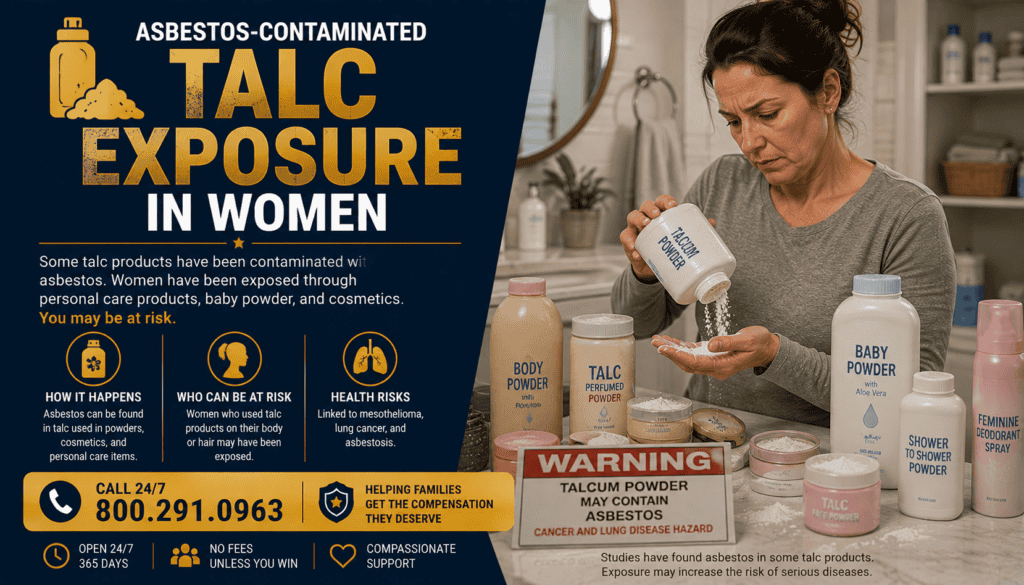
🧴 Asbestos-Contaminated Talc Exposure in Women
Cosmetic powders and talc-based products exposed women to asbestos fibers during daily use.
For decades, millions of women used talc-based cosmetic and personal-care products without knowing that talc mined near asbestos deposits can be contaminated with asbestos fibers. Body powders, face powders, makeup, and hygiene products were marketed as safe for daily use—even for infants—while manufacturers failed to adequately test or warn consumers.
Unlike occupational exposure, talc-related asbestos exposure occurred directly on the body, often daily and over many years. Today, this exposure pathway has been linked to mesothelioma, ovarian cancer, lung cancer, and pleural disease in women—frequently diagnosed decades after first use.
🧱 Why Talc Products Were Contaminated with Asbestos
Talc and asbestos are naturally occurring minerals that often form in close proximity underground. When talc was mined without strict separation and testing, asbestos contamination occurred.
Key reasons contamination persisted:
-
⛏️ Talc deposits located near asbestos veins
-
❌ Inadequate testing standards
-
❌ Failure to disclose contamination risks
-
💄 Aggressive marketing to women and families
-
📦 Long-term consumer use without warnings
Many manufacturers continued selling talc products even after internal testing revealed contamination.
🚧 How Women Were Exposed Through Talc Products
Exposure occurred during normal personal-care routines.
🧴 Daily Application of Body and Face Powders
Applying powder released microscopic fibers into the air, which were:
-
Inhaled into the lungs
-
Swallowed and absorbed
-
Trapped in clothing and bedding
Many women applied powder multiple times per day.
👶 Use During Feminine Hygiene and Childcare
Talc products were commonly used:
-
For feminine hygiene
-
During diaper changes
-
On infants and children
These practices increased duration and intensity of exposure.
🛏️ Household Contamination
Airborne fibers settled on:
-
Furniture and carpets
-
Towels and bedding
-
Bathroom surfaces
Cleaning often re-released fibers into indoor air.
👩 Women Most at Risk from Talc-Related Asbestos Exposure
Women most affected include:
-
👩 Daily cosmetic and body-powder users
-
👩🍼 Mothers using talc during childcare
-
👧 Girls exposed from infancy
-
👵 Women with decades of cumulative use
Because exposure often began early in life, latency periods were longer—raising lifetime disease risk.
🩺 Health Risks Linked to Asbestos-Contaminated Talc
Asbestos fibers from talc products lodge permanently in the body.
⚠️ Asbestos-Related Diseases in Women
-
Mesothelioma (including peritoneal)
-
Ovarian cancer (strongly linked to talc exposure)
-
Asbestos-related lung cancer
-
Pleural plaques and thickening
Talc-related exposure is one of the most significant non-occupational causes of asbestos disease in women.
⏳ Why Talc-Related Illness Appears Decades Later
Asbestos diseases develop slowly over time.
-
⏱️ Latency period: 20–50 years
-
Symptoms often subtle at first
-
Diagnosis commonly occurs later in life
Many women never suspect cosmetic products played a role until diagnosis.
⚖️ Legal Options for Women Harmed by Talc Asbestos Exposure
Women diagnosed with asbestos-related disease from talc exposure may qualify for compensation.
🧾 Available Compensation Paths
-
⚖️ Product-liability mesothelioma lawsuits
-
🏦 Asbestos trust fund claims (when applicable)
-
👨👩👧 Wrongful death lawsuits for families
-
💰 Settlements from talc manufacturers
Claims focus on product manufacturers, not retailers or consumers.
🧑⚖️ How a Mesothelioma Lawyer Can Help Women
Talc cases require product history and scientific evidence. An experienced asbestos lawyer can:
-
🔍 Identify talc products used and timeframes
-
📂 Link medical diagnoses to asbestos contamination
-
🧪 Use testing and corporate records to prove exposure
-
⚖️ File lawsuits against responsible manufacturers
-
👨👩👧 Handle wrongful death and survivor claims
Most cases are handled on a contingency basis — no upfront cost.
⌛ Statute of Limitations for Talc-Related Asbestos Claims
Deadlines vary by state and typically begin:
-
🩺 At medical diagnosis, or
-
⚰️ At death for wrongful death claims
Delays can permanently bar compensation.
❓ Frequently Asked Questions (FAQs)
❓ Can cosmetic talc really cause mesothelioma?
Yes. Asbestos-contaminated talc is a recognized cause.
❓ Is ovarian cancer linked to asbestos exposure?
Yes. Asbestos exposure—including talc use—has been linked to ovarian cancer.
❓ Do women need proof of specific products?
Not always. Lawyers can often identify products based on usage history and time period.
❓ Are talc manufacturers still liable?
Yes. Many lawsuits involve past conduct and historical exposure.
❓ Is it too late to file a claim?
Often no. Most claims begin at diagnosis, not first exposure.
📞 Get Help for Women Harmed by Asbestos-Contaminated Talc
If you or a loved one developed mesothelioma, ovarian cancer, or another asbestos-related illness after using talc-based products, help is available now.
📌 You May Be Eligible For:
-
Significant financial compensation
-
Product-liability settlements
-
Wrongful death benefits for families
-
Nationwide legal representation
📞 Call 800-291-0963 for a free, confidential case review
⏱️ No upfront costs • Women-focused claims • Nationwide representation
Everyday products should not cost lives.