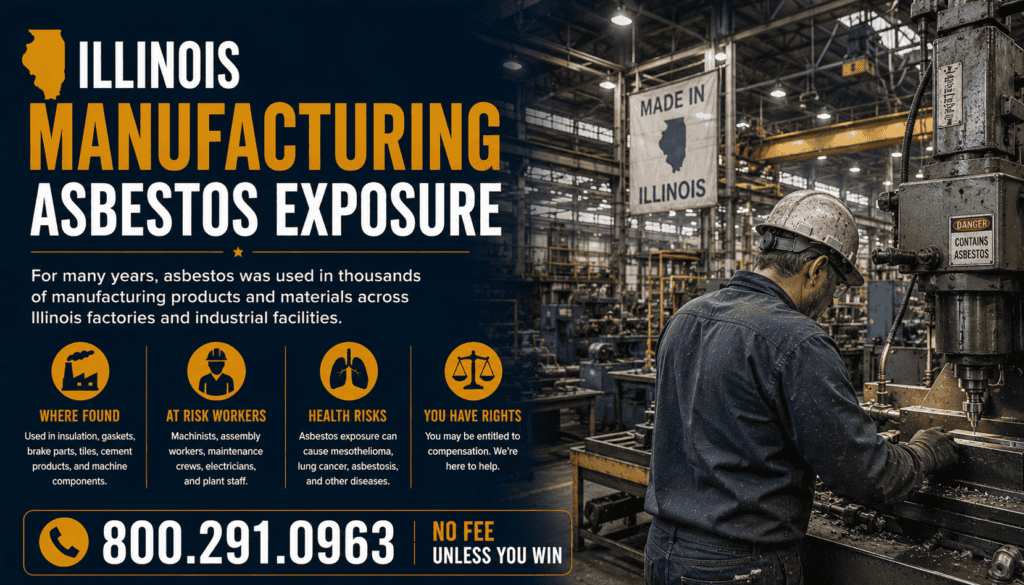
🏭 Illinois Manufacturing Asbestos Exposure
Illinois has been one of America’s largest manufacturing states for more than a century. From steel mills and heavy machinery plants to food processing facilities, automotive factories, chemical manufacturers, and industrial equipment producers, manufacturing helped shape the state’s economy while also creating thousands of workplaces where asbestos exposure occurred.
Before the dangers of asbestos became widely known, manufacturers relied on asbestos because it was durable, inexpensive, resistant to fire, and able to withstand extremely high temperatures. As a result, asbestos was commonly used throughout manufacturing facilities in insulation, boilers, furnaces, steam systems, machinery, electrical equipment, roofing materials, flooring products, and countless industrial components.
Thousands of Illinois factory workers, maintenance employees, electricians, machinists, welders, pipefitters, millwrights, mechanics, and contractors may have been exposed to asbestos while performing their daily jobs. Many later developed mesothelioma, asbestos lung cancer, asbestosis, and other asbestos-related diseases decades after their exposure.
If you worked in manufacturing and were diagnosed with an asbestos-related illness, you may have legal options. Learn more on our Illinois Mesothelioma Lawsuits page.
🏗️ Why Illinois Manufacturing Facilities Used Asbestos
For much of the twentieth century, asbestos was considered one of the best industrial materials available. Manufacturing plants generated enormous amounts of heat from furnaces, boilers, steam lines, presses, ovens, and industrial machinery. Plant owners installed asbestos insulation throughout these facilities to reduce fire hazards, conserve energy, and protect expensive equipment.
Asbestos was commonly installed in:
- Boiler systems
- Steam pipes
- Industrial furnaces
- Manufacturing ovens
- Electrical panels
- Turbines
- Pumps
- Valves
- Compressors
- HVAC systems
- Pipe insulation
- Roofing materials
- Fireproof wall systems
- Floor tiles
- Mechanical rooms
- Utility tunnels
- Maintenance shops
As manufacturing facilities expanded throughout Illinois, asbestos became a standard component of factory construction and equipment. Workers often disturbed these materials during routine maintenance, repairs, equipment upgrades, and plant modernization projects.
Learn more about similar workplaces on our Illinois Industrial Asbestos Exposure and Illinois Asbestos Exposure Sites pages.
⚙️ Common Illinois Manufacturing Facilities Where Asbestos Was Used
Illinois became home to thousands of manufacturing operations producing everything from automobiles and farm equipment to machinery, chemicals, steel products, food products, electrical equipment, and industrial components.
Manufacturing facilities where asbestos exposure commonly occurred included:
- Steel mills
- Automotive assembly plants
- Farm equipment manufacturers
- Heavy machinery factories
- Industrial equipment plants
- Chemical manufacturing facilities
- Food processing plants
- Paper mills
- Cement manufacturing plants
- Glass manufacturing facilities
- Metal fabrication plants
- Machine shops
- Foundries
- Textile mills
- Electrical equipment manufacturers
- Warehouse distribution facilities
- Packaging plants
- Industrial fabrication shops
- Railroad equipment manufacturers
- Construction material plants
Many of these facilities also relied on large steam systems similar to those found in Illinois Power Plant Asbestos Exposure and Illinois Railroad Asbestos Exposure facilities.
👷 Manufacturing Workers Most Frequently Exposed to Asbestos
Although nearly every employee inside an older manufacturing plant may have encountered asbestos, workers who repaired equipment or worked around steam systems generally experienced the highest exposure levels.
High-risk manufacturing occupations included:
- Factory workers
- Maintenance mechanics
- Pipefitters
- Steamfitters
- Electricians
- Boiler operators
- Millwrights
- Welders
- Machinists
- Industrial mechanics
- HVAC technicians
- Engineers
- Production workers
- Laborers
- Carpenters
- Plumbers
- Insulators
- Sheet metal workers
- Equipment operators
- Plant supervisors
Many employees worked throughout several manufacturing facilities during their careers, increasing their cumulative asbestos exposure over time.
You can learn more about these occupations on our:
- Illinois Factory Workers Asbestos Exposure
- Illinois Electricians Asbestos Exposure
- Illinois Pipefitters Mesothelioma Lawsuit
- Illinois Construction Workers Mesothelioma
- Illinois Power Plant Workers Mesothelioma
🔥 Manufacturing Equipment That Frequently Contained Asbestos
Manufacturing plants relied on heavy industrial equipment designed to operate under high heat and pressure. To improve safety and efficiency, many manufacturers installed asbestos-containing insulation and components throughout their production systems.
Equipment commonly associated with asbestos exposure included:
- Industrial boilers
- Steam piping
- Manufacturing furnaces
- Industrial ovens
- Pumps
- Valves
- Compressors
- Heat exchangers
- Industrial dryers
- Kilns
- Generators
- Electrical switchgear
- Control panels
- Conveyors
- Hydraulic systems
- Industrial presses
- Mechanical seals
- Expansion joints
- Pressure vessels
- Ventilation systems
Additional information about these systems is available on our Illinois Equipment & Machinery Asbestos Exposure and Illinois Industrial Asbestos Products pages.
🏭 Historic Illinois Manufacturing Facilities Where Asbestos May Have Been Present
Illinois has been home to thousands of manufacturing facilities that helped build automobiles, farm equipment, steel products, machinery, electrical equipment, chemicals, construction materials, and countless consumer goods. Many of these factories were built during the years when asbestos was considered an essential industrial material.
Before the 1980s, asbestos was commonly installed throughout manufacturing plants because it resisted heat, reduced fire hazards, and helped insulate high-temperature equipment. As factories expanded and modernized, asbestos remained a standard component in boilers, furnaces, steam systems, electrical equipment, roofing materials, insulation, and production machinery.
Examples of Illinois manufacturing facilities where asbestos may have been present include:
- Caterpillar manufacturing facilities
- International Harvester plants
- John Deere manufacturing facilities
- U.S. Steel manufacturing operations
- Republic Steel facilities
- Inland Steel facilities
- Acme Steel Company
- Commonwealth Edison manufacturing shops
- Western Electric manufacturing plants
- Motorola manufacturing facilities
- Zenith Electronics plants
- Navistar International facilities
- BorgWarner manufacturing plants
- Case equipment manufacturing facilities
- General Motors manufacturing plants
- Ford Motor Company assembly plants
- Chrysler manufacturing facilities
- Archer Daniels Midland processing facilities
- Owens-Illinois manufacturing plants
- Numerous local machine shops and industrial fabrication facilities
Employees who worked at these and similar facilities may have encountered asbestos during maintenance, equipment repairs, plant expansions, or routine manufacturing operations.
Many of these facilities also contained industrial equipment discussed in our Illinois Equipment & Machinery Asbestos Exposure and Illinois Industrial Asbestos Products guides.
🔧 Maintenance and Equipment Repairs Often Released Asbestos Fibers
The greatest asbestos exposure in manufacturing plants often occurred during maintenance rather than normal production.
Maintenance crews regularly removed insulation, replaced worn gaskets, repaired steam systems, rebuilt pumps, serviced boilers, overhauled machinery, and replaced industrial valves. These activities frequently disturbed aging asbestos materials and released microscopic fibers into the surrounding air.
Maintenance work commonly included:
- Boiler rebuilding
- Steam pipe repairs
- Turbine maintenance
- Pump overhauls
- Valve replacement
- Compressor repairs
- Electrical upgrades
- Furnace rebuilding
- Kiln maintenance
- Conveyor repairs
- HVAC replacement
- Roof replacement
- Insulation removal
- Machinery modernization
- Plant demolition
These projects often involved multiple trades working in the same area, increasing the number of employees who may have been exposed.
Learn more by visiting:
- Illinois Industrial Asbestos Exposure
- Illinois Construction Asbestos Exposure
- Illinois Power Plant Asbestos Exposure
- Illinois Railroad Asbestos Exposure
⚠️ Secondary Asbestos Exposure Affected Manufacturing Families
Asbestos exposure was not always limited to workers inside the factory.
For decades, many manufacturing employees left work wearing dusty uniforms, jackets, gloves, and boots covered with asbestos fibers. Before workplace safety standards improved, few employers required workers to change clothes or shower before leaving the plant.
Family members sometimes encountered asbestos while:
- Washing contaminated work clothes
- Cleaning dusty boots
- Handling lunch boxes and tool bags
- Riding in contaminated vehicles
- Hugging family members before they changed clothes
Medical studies have shown that repeated household exposure can increase the risk of mesothelioma and other asbestos-related diseases, even among individuals who never worked directly with asbestos.
🧱 Asbestos Products Commonly Found in Manufacturing Plants
Manufacturing facilities relied on thousands of asbestos-containing products designed to tolerate heat, pressure, and continuous industrial use. These materials often remained in service for decades before being replaced.
Common asbestos-containing products included:
- Pipe insulation
- Boiler insulation
- Block insulation
- Thermal insulation
- Spray-on fireproofing
- Industrial cement
- Furnace insulation
- Refractory brick
- Industrial gaskets
- Valve packing
- Pump packing
- Mechanical seals
- Rope insulation
- Expansion joints
- Electrical insulation
- Ceiling tiles
- Floor tiles
- Roofing materials
- Wall panels
- Industrial adhesives
Many of these products are discussed in greater detail on our:
- Illinois Asbestos Insulation Products
- Illinois Industrial Asbestos Products
- Illinois Automotive Asbestos Products
- Illinois Power Generation Equipment Asbestos Exposure
🏢 Manufacturing Was Closely Connected to Other Illinois Industries
Many Illinois workers spent their careers at more than one industrial employer. A machinist might begin in a steel mill, move to an equipment manufacturer, later work at a power plant, and eventually perform maintenance at a railroad facility.
Because of this, many individuals experienced asbestos exposure across multiple industries during their working lives.
Other Illinois workplaces with similar asbestos hazards include:
- Steel mills
- Power plants
- Chemical plants
- Oil refineries
- Railroad maintenance facilities
- Construction sites
- Public utility facilities
- Government buildings
- Industrial warehouses
- Equipment repair facilities
You can learn more by visiting:
- Illinois Asbestos Exposure Sites
- Illinois Power Plant Asbestos Exposure
- Illinois Public & Government Buildings Asbestos Exposure
- Illinois Mesothelioma Lawsuits
💰 Compensation May Be Available for Illinois Manufacturing Workers
Thousands of Illinois manufacturing employees worked around asbestos-containing insulation, machinery, steam systems, boilers, furnaces, pumps, valves, electrical equipment, and industrial products without knowing the health risks. Many were exposed daily over the course of decades before asbestos regulations became more widespread.
If you were diagnosed with mesothelioma, asbestos lung cancer, asbestosis, or another asbestos-related illness after working in an Illinois manufacturing facility, you may have legal options to pursue compensation.
Depending on your individual circumstances, compensation may be available through:
- Mesothelioma lawsuits
- Asbestos personal injury claims
- Asbestos bankruptcy trust funds
- Wrongful death lawsuits
- Settlements with asbestos manufacturers
- Veterans benefits for qualifying military service
- Other compensation available under Illinois law
Every asbestos exposure case is unique. Factors such as your diagnosis, work history, exposure locations, and the manufacturers responsible for the asbestos-containing products may all affect your eligibility for compensation.
Learn more about your legal options on our Illinois Mesothelioma Lawsuits page.
⚖️ Illinois Filing Deadlines for Manufacturing Asbestos Claims
Illinois law places time limits on filing asbestos-related lawsuits. Because these deadlines can vary depending on the facts of each case, individuals diagnosed with an asbestos-related disease should investigate their legal options as soon as possible.
Many former manufacturing workers may also qualify for compensation through asbestos bankruptcy trust funds established by companies that manufactured asbestos insulation, industrial machinery, boilers, pumps, valves, gaskets, refractory products, and other equipment commonly used in factories.
Learn more about these legal resources by visiting:
- Illinois Mesothelioma Statute of Limitations
- Illinois Asbestos Trust Fund Claims
- Illinois Wrongful Death Mesothelioma Lawsuits
- Illinois Asbestos Lung Cancer Lawsuits
❓ Frequently Asked Questions About Illinois Manufacturing Asbestos Exposure
Why was asbestos widely used in Illinois manufacturing plants?
Manufacturing facilities generated high temperatures and relied on heavy industrial equipment. Asbestos was used because it resisted heat, insulated steam systems, reduced fire hazards, and protected boilers, furnaces, pipes, pumps, valves, and machinery.
Which manufacturing workers faced the greatest asbestos exposure?
Factory workers, maintenance mechanics, pipefitters, steamfitters, electricians, millwrights, welders, machinists, boiler operators, insulators, engineers, and contractors often experienced the highest levels of occupational asbestos exposure.
Did maintenance work increase asbestos exposure?
Yes. Equipment repairs, insulation replacement, boiler maintenance, pipe repairs, machinery overhauls, and plant renovations frequently disturbed asbestos-containing materials and released microscopic fibers into the air.
Could asbestos exposure occur at small manufacturing facilities?
Yes. While large industrial plants used substantial amounts of asbestos, many smaller factories, fabrication shops, warehouses, machine shops, and processing facilities also relied on asbestos-containing insulation, machinery, and construction materials.
Can family members develop mesothelioma from manufacturing workers?
Yes. Workers often carried asbestos fibers home on work clothes, boots, gloves, tool bags, and vehicles. Family members exposed to this dust over time have also developed mesothelioma and other asbestos-related diseases.
Are older Illinois manufacturing facilities still a concern today?
Some older manufacturing plants continue to contain asbestos in insulation, roofing, floor tiles, pipe coverings, and industrial equipment. Renovation, maintenance, and demolition projects require specialized asbestos safety procedures.
Can retired manufacturing workers still pursue compensation?
Possibly. Many workers receive a mesothelioma diagnosis decades after retiring. Depending on the facts of the case and applicable filing deadlines, compensation may still be available.
Where can I learn more about asbestos exposure in Illinois industries?
Our Illinois asbestos resource library includes detailed information about manufacturing facilities, power plants, construction sites, railroads, industrial products, occupations, counties, cities, and legal options throughout the state.
📚 Related Illinois Asbestos Resources
Continue exploring our Illinois asbestos resource center:
- Illinois Mesothelioma Lawsuits
- Illinois Asbestos Exposure Articles
- Illinois Asbestos Exposure Sites
- Illinois Industrial Asbestos Exposure
- Illinois Power Plant Asbestos Exposure
- Illinois Construction Asbestos Exposure
- Illinois Railroad Asbestos Exposure
- Illinois Factory Workers Asbestos Exposure
- Illinois Equipment & Machinery Asbestos Exposure
- Illinois Industrial Asbestos Products
- Illinois Asbestos Insulation Products
- Illinois Asbestos Trust Fund Claims
- Illinois Mesothelioma Statute of Limitations
- Illinois Wrongful Death Mesothelioma Lawsuits
📞 Free Case Evaluation – Illinois Manufacturing Asbestos Exposure
If you or a loved one has been diagnosed with mesothelioma, asbestos lung cancer, or another asbestos-related disease after asbestos exposure in an Illinois manufacturing facility, you may have legal options to pursue compensation.
✔️ Free, confidential case evaluation
✔️ No upfront legal fees
✔️ Nationwide asbestos law support
📲 Call 800-291-0963 today to discuss your options.