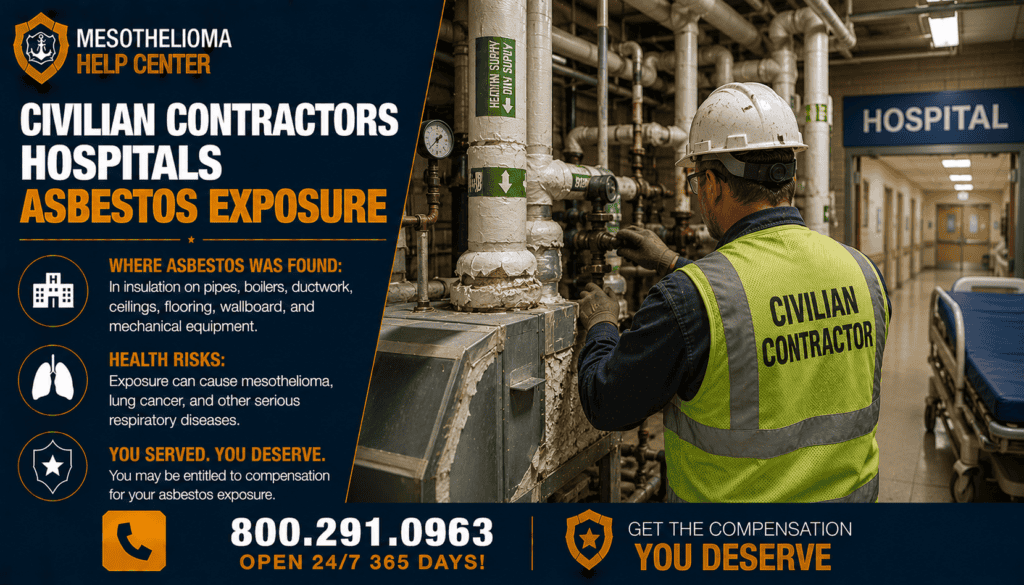
🏥 Civilian Contractors Hospitals Asbestos Exposure
Civilian contractors may have encountered asbestos while constructing, renovating, repairing or demolishing older hospitals and medical facilities. Potential sources can include certain historical pipe and boiler insulation, flooring, ceiling materials, fireproofing, wall systems, electrical insulation, mechanical equipment and laboratory heat-resistant products.
Working in an older hospital does not by itself prove asbestos exposure. A reliable history identifies the facility, building, department, dates, contractor, task, material, work area, nearby trades and protective controls.
🧭 On This Page
- Hospital projects and contractor roles
- Building materials and mechanical systems
- Hospital-work exposure pathways
- Work areas, occupations and nearby trades
- Verified hospital and asbestos facts
- Current renovation and safety controls
- Health and household exposure risks
- Documenting hospital work and possible claims
- Frequently asked questions
🏗️ Hospital Projects and Contractor Roles
Hospitals are complex facilities that may remain occupied while buildings, utilities and clinical departments are upgraded. Civilian contractors can work on additions, patient-room renovations, operating suites, laboratories, utility plants, mechanical rooms, electrical systems, roofs, flooring, fire protection and demolition.
Potentially relevant workers include construction laborers, electricians, plumbers, pipefitters, steamfitters, HVAC technicians, boiler workers, insulators, maintenance mechanics, flooring installers, roofers, painters, engineers, inspectors, environmental contractors and demolition crews.
Short assignments can be important. A worker may have entered a hospital only during a shutdown, emergency repair, equipment replacement or phased renovation. Record temporary projects and subcontractors as well as long-term employment.
The Civilian Contractor Military Bases and Facilities Asbestos Exposure hub organizes facility-related pages. The Civilian Contractors Asbestos Exposure main guide connects hospital projects with occupations, products, equipment, health risks and legal options.
🧱 Building Materials and Mechanical Systems
Asbestos was historically used in some insulation, fire-resistant products, flooring and other building materials. Hospital-related categories that may require investigation include certain pipe insulation, boiler insulation, duct insulation, sprayed fireproofing, ceiling products, floor tile and adhesive, wallboard systems, joint compounds, roofing, electrical-wire insulation and gaskets or packing in mechanical equipment.
Possible locations include boiler rooms, central utility plants, mechanical floors, ceiling plenums, pipe chases, basements, tunnels, electrical rooms, laboratories, kitchens, laundries, maintenance shops and older patient-care wings. Materials can differ from one addition or renovation phase to another.
Not every hospital or older building material contained asbestos. Product use varied by construction date, specification, manufacturer, renovation history and location. A 1960s wing and a later addition on the same campus may have different materials.
OSHA’s hospital facilities guidance identifies possible hospital exposures involving asbestos-insulated boilers, repairs to old piping, electrical wiring insulation, floor tiles and other products. OSHA’s construction asbestos standard separately defines thermal-system insulation and establishes requirements for covered construction work.
The Civilian Contractor Buildings and Construction Asbestos Exposure hub helps organize building-material pathways that can also occur inside hospitals.
🔧 Hospital-Work Exposure Pathways
Potential exposure depends on whether an asbestos-containing material was present, disturbed and able to release fibers. Work behind finished surfaces or around older utilities may reveal concealed products, but dust alone does not establish asbestos content.
Tasks that may deserve investigation include:
- Cutting walls or ceilings for new utilities and medical equipment.
- Removing floor tile, backing, adhesive or base materials.
- Opening pipe chases, shafts, tunnels and ceiling plenums.
- Repairing boilers, steam lines, valves, pumps or HVAC equipment.
- Removing insulation to replace piping or mechanical systems.
- Drilling fireproofed structural members or deck assemblies.
- Replacing electrical panels, wiring, conduit or control systems.
- Demolishing an older wing, laboratory, laundry or utility area.
- Cleaning mixed renovation debris after other trades finish.
- Working near an abatement or maintenance crew in a shared area.
Material condition, work method, ventilation, containment, distance, duration and cleanup practice all matter. Hospital construction dust can include gypsum, concrete, insulation, microorganisms and many other substances; it should not be identified as asbestos without supporting evidence.
📞 Need Help Identifying a Hospital Project or Material?
Campus drawings, renovation files, asbestos surveys, work orders and former coworkers may help connect a diagnosis with a specific building, department and project.
Call 800.291.0963, use our live chat 24/7/365 or tell us about the hospital work through the contact form for a free, confidential review.
👷 Work Areas, Occupations and Nearby Trades
Hospital projects often involve several contractors in a limited work zone. A plumber may open insulated piping before an electrician enters the ceiling. A flooring crew may remove finishes while laborers move debris. Engineers and inspectors may enter mechanical rooms while maintenance or abatement work is underway.
Occupied hospitals add logistical challenges. Contractors may work during nights, weekends or short utility shutdowns to protect clinical operations. Temporary barriers and infection-control measures can be essential, but they do not automatically satisfy asbestos requirements. The work plan must address each hazard separately.
Hospital utility plants can contain boilers, pumps, valves, generators, switchgear and extensive steam piping. Renovations may also reach fireproofing, flooring, roofing and wall systems. A complete history should distinguish equipment work from building-material disturbance.
The Civilian Maintenance Workers Asbestos Exposure guide focuses on repair duties. Other relevant occupation pages include Civilian Electricians Asbestos Exposure and Civilian Pipefitters Asbestos Exposure.
📌 Verified Hospital and Asbestos Facts
The following evidence defines the topic without assuming every hospital contained asbestos:
- OSHA’s hospital eTool identifies several possible hospital-facility exposures, including asbestos-insulated boilers, older piping, electrical wiring insulation and flooring materials.
- OSHA states that asbestos has historically been used in steam-line insulation, floor tile and building products.
- EPA’s asbestos NESHAP overview states that institutional, commercial and industrial demolition or renovation operations are subject to a thorough-inspection requirement.
- An EPA hospital enforcement record documents alleged asbestos-regulation violations during a specific hospital renovation. This example proves that hospital renovation can involve regulated material, not that every hospital project does.
- A separate EPA administrative decision describes asbestos-containing pipe, fitting and heat-exchanger insulation removed from a hospital boiler-room area.
The strongest evidence identifies the correct campus, building, floor, room, project, contractor, material and time period. Records and qualified analysis are more reliable than assumptions based only on building age.
🦺 Current Renovation and Safety Controls
Current contractors should not cut, drill, scrape, remove or sample suspect legacy material merely to determine its composition. Review the hospital’s asbestos-management information, preconstruction surveys, drawings, specifications, project files and permits before work begins.
When asbestos is known or suspected, qualified personnel should determine applicable requirements and controls. Depending on the project, controls may include restricted access, containment, negative-pressure arrangements, wet methods, HEPA-filtered equipment, exposure assessment, protective clothing, hygiene facilities, air monitoring and a properly administered respiratory-protection program.
Hospital infection-control risk assessments and dust barriers help protect vulnerable patients, but they are not substitutes for an asbestos assessment or legally required controls. Asbestos procedures must also be coordinated with electrical safety, lockout/tagout, medical-gas isolation, fire protection, life-safety systems and emergency access.
Dry sweeping, compressed air and ordinary shop vacuums can spread fine debris. A disposable paper mask is not a substitute for required respiratory protection. Suspect waste should not be carried through occupied corridors without an approved handling and transport plan.
EPA’s asbestos NESHAP overview explains federal inspection, notification and work-practice requirements that can apply to qualifying renovation or demolition activities. State and local requirements may be more stringent.
🫁 Health and Household Exposure Risks
Breathing asbestos fibers can increase the risk of mesothelioma, lung cancer, asbestosis and other asbestos-related disease. Symptoms may not appear until many years after exposure. Silica, lead, mold, infectious agents, solvents and other hospital-construction hazards should be documented separately.
A webpage cannot diagnose illness or determine its source. Former contractors should tell their clinician about employers, hospital campuses, buildings, project dates, materials disturbed, nearby trades and protective practices. The Civilian Contractor Asbestos Exposure Health Risks guide provides additional medical context.
Dust may leave a jobsite on coveralls, boots, tools, vehicles and personal items when decontamination is inadequate. Household members who handled dusty work clothing may have a separate potential exposure history. The Civilian Contractor Secondhand Asbestos Exposure guide explains how to document this pathway.
🗂️ Documenting Hospital Work and Possible Claims
Organize the history by employer, hospital campus and project. Record:
- Employer, general contractor, subcontractor, union local and supervisor.
- Hospital, medical center, building, wing, floor, department and room.
- Job title, dates, shift and whether the facility remained occupied.
- New construction, renovation, maintenance, utility work or demolition.
- Pipe, boiler, floor, ceiling, wall, roof or equipment material involved.
- Exact cutting, drilling, removal, repair, installation or cleanup task.
- Nearby trades, work-zone barriers, ventilation and containment.
- Tools, visible debris, cleanup and protective equipment.
- Coworkers who can confirm the project and routine work practices.
Preserve contracts, campus plans, renovation drawings, specifications, asbestos surveys, abatement records, work orders, daily logs, permits, invoices, photographs, union records and medical documents. A file that never says “asbestos” can still establish the worker, building, project and time period.
Use the Civilian Contractor Asbestos Exposure Timeline to organize employment, hospital projects, materials and medical events. Do not enter a restricted hospital area or collect construction debris as evidence.
A case may investigate product manufacturers, suppliers, contractors, premises owners, employers and other entities. Responsibility depends on the evidence and governing law. The Civilian Contractor Mesothelioma Lawsuit guide and Civilian Contractor Asbestos Trust Fund Claims guide explain possible claim paths.
Deadlines vary by jurisdiction and claim type. Review the Civilian Contractor Asbestos Statute of Limitations guide and seek case-specific advice promptly.
❓ Frequently Asked Questions
Did every older hospital contain asbestos?
No. Material use varied by construction date, building, product, manufacturer and renovation history.
Where might asbestos be found during hospital work?
Possible categories include certain historical pipe and boiler insulation, flooring, ceiling products, fireproofing, wall systems, roofing, electrical insulation and mechanical-equipment components.
Can a newer hospital campus include older asbestos materials?
Yes. A modern campus may retain older wings, tunnels, utility plants or concealed systems. Research the specific building and project rather than relying on the hospital’s current appearance.
Can a contractor be exposed without personally removing material?
Potentially. Nearby disturbance, shared ceiling spaces, inadequate containment or cleanup may create a separate pathway that requires factual investigation.
Are infection-control barriers enough for asbestos work?
No. Infection-control measures and asbestos controls serve different purposes. The project must satisfy all applicable requirements.
Why are building and department names important?
Large campuses can contain many additions and systems. A precise location helps match the worker with surveys, drawings, contractors and renovation files.
Should someone return to collect hospital construction debris?
No. Do not enter restricted areas or disturb suspect material. Preserve records and photographs and use qualified professionals for current evaluation.
Can demolition records help years later?
Yes. Notifications, surveys, abatement files, permits and waste records may identify materials and contractors involved in a particular project.
🚀 Trace the Hospital, Building and Project Now
A campus plan, asbestos survey, renovation file or former coworker may identify the hospital materials and companies involved. Starting now can preserve evidence before records disappear or memories fade.
Call 800.291.0963 now, use our live chat any time—24/7/365—or submit the hospital-project work history through our contact form for a free, confidential case review.