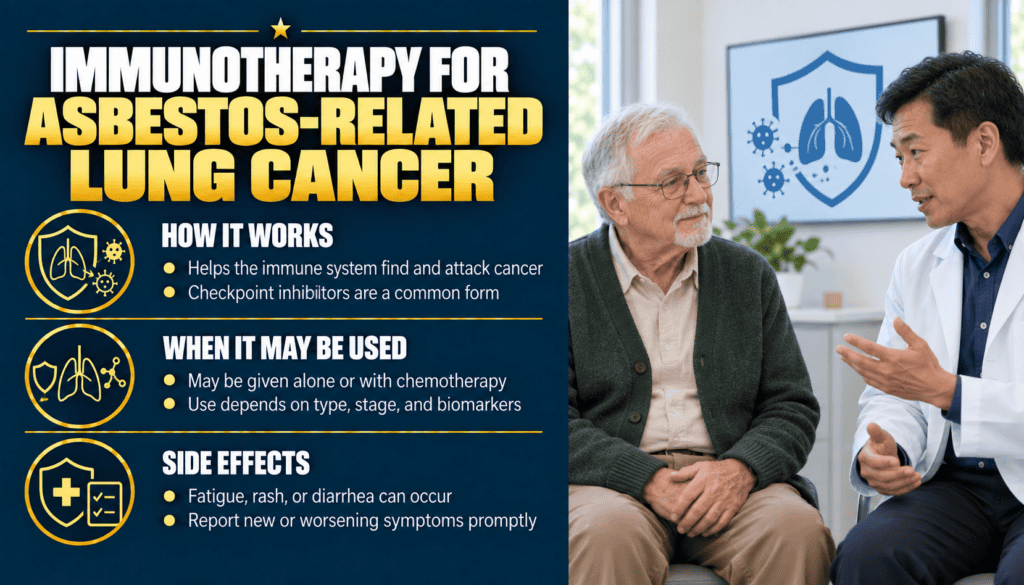
Immunotherapy for Asbestos-Related Lung Cancer
Immunotherapy can be an important treatment option for some people with asbestos-related lung cancer. These medicines help the immune system recognize or attack cancer cells, and immune checkpoint inhibitors are now used in multiple non-small cell lung cancer (NSCLC) and small cell lung cancer (SCLC) treatment settings.
Asbestos exposure itself does not determine whether a patient should receive immunotherapy. Treatment is chosen according to the lung cancer type, stage, pathology, biomarker and molecular findings, previous treatment, overall health, and other medical factors.
This page is a child of the Asbestos Lung Cancer Treatment hub. Related treatment pages include Chemotherapy for Asbestos-Related Lung Cancer and Surgery for Asbestos-Related Lung Cancer. Patients still establishing the cancer type can review Diagnosing Asbestos-Related Lung Cancer.
🛡️ How Lung Cancer Immunotherapy Works
The immune system normally identifies and destroys abnormal cells, but cancer cells can develop ways to avoid immune attack. Some lung cancer immunotherapies interfere with these escape mechanisms so immune cells can better recognize and attack the tumor.
The most widely used lung cancer immunotherapies are immune checkpoint inhibitors. These medicines target proteins involved in regulating immune responses rather than directly killing cancer cells in the same way as traditional chemotherapy.
| Treatment Approach | General Role |
|---|---|
| Immunotherapy alone | May be appropriate for selected cancers based on stage, biomarkers, and other factors. |
| Immunotherapy plus chemotherapy | Common treatment strategy for several advanced NSCLC and SCLC settings. |
| Immunotherapy before surgery | May be combined with chemotherapy in selected resectable NSCLC. |
| Immunotherapy after surgery | May be used in selected patients after resection and other treatment. |
| Immunotherapy after chemoradiation | Can be used in selected locally advanced lung cancer settings. |
The exact regimen should be chosen by the oncology team using current clinical evidence and the patient’s individual tumor characteristics.
🔬 Immune Checkpoint Inhibitors
Immune checkpoints help prevent the immune system from becoming overactive. Cancer cells can exploit these pathways to reduce immune attack. Checkpoint inhibitors block certain signals and can restore immune activity against the tumor.
Important checkpoint pathways in lung cancer treatment include PD-1, PD-L1, and CTLA-4. Drugs used in appropriate lung cancer settings can include pembrolizumab, nivolumab, atezolizumab, durvalumab, cemiplimab, ipilimumab, tremelimumab, and other agents depending on the current indication.
These drugs are not interchangeable in every situation. FDA approvals and guideline recommendations depend on stage, cancer type, biomarkers, previous treatment, surgical status, and the combination in which the drug is used.
🫁 Immunotherapy for Non-Small Cell Lung Cancer
Immunotherapy is used across several stages of NSCLC. In advanced disease, checkpoint inhibitors may be used alone or with chemotherapy depending on PD-L1 expression, molecular findings, histology, and other factors.
Immunotherapy is also used in selected potentially resectable NSCLC. Some patients may receive immunotherapy with platinum-based chemotherapy before surgery, and certain treatment strategies continue immunotherapy after surgery.
| NSCLC Setting | How Immunotherapy May Be Used |
|---|---|
| Resectable NSCLC | Selected patients may receive perioperative or neoadjuvant immunotherapy with chemotherapy. |
| After surgery | Adjuvant immunotherapy may be appropriate for certain patients. |
| Locally advanced unresectable disease | Immunotherapy may follow definitive chemoradiation in selected cases. |
| Metastatic NSCLC | Checkpoint inhibitors may be given alone, with chemotherapy, or in immunotherapy combinations depending on tumor features. |
| Recurrent disease | Immunotherapy may be considered depending on previous treatments and tumor characteristics. |
For metastatic NSCLC, tumor genomic changes and PD-L1 expression are important parts of treatment selection. Some cancers with actionable driver alterations are better treated initially with targeted therapies rather than standard immunotherapy approaches.
🧬 Immunotherapy for Small Cell Lung Cancer
Immunotherapy is also part of modern small cell lung cancer treatment. For extensive-stage SCLC, immune checkpoint inhibitors such as atezolizumab or durvalumab can be combined with platinum chemotherapy and etoposide in appropriate patients.
For limited-stage SCLC, treatment commonly includes chemotherapy and chest radiation. Immunotherapy can also be used after chemoradiation in selected patients according to current treatment recommendations.
SCLC treatment evolves rapidly, so patients should discuss current options with a medical oncologist familiar with lung cancer.
💉 Immunotherapy With Chemotherapy
Combining immunotherapy with chemotherapy is a major treatment strategy in lung cancer. The two approaches work differently: chemotherapy directly damages rapidly dividing cancer cells, while immunotherapy helps the immune system attack cancer.
In appropriate patients, combination therapy may provide better cancer control than chemotherapy alone. The specific drugs and schedule depend on lung cancer type, histology, stage, biomarkers, previous treatment, and general health.
Combination treatment can also produce overlapping side effects. Blood counts, kidney and liver function, breathing symptoms, endocrine function, and other health indicators may be monitored throughout treatment.
For a more detailed discussion of systemic chemotherapy, see Chemotherapy for Asbestos-Related Lung Cancer.
🔪 Immunotherapy Before or After Lung Cancer Surgery
Immunotherapy is no longer limited to metastatic disease. For selected patients with resectable NSCLC, checkpoint inhibitors may be incorporated into treatment before surgery, after surgery, or both.
Neoadjuvant treatment
Neoadjuvant therapy is given before surgery. Some current treatment approaches combine an immune checkpoint inhibitor with platinum-based chemotherapy before the operation.
Adjuvant treatment
Adjuvant therapy is given after surgery. Selected patients may receive immunotherapy after resection based on stage, pathology, biomarker findings, molecular testing, and previous treatment.
Perioperative treatment
Perioperative treatment includes systemic therapy surrounding surgery—typically therapy before the operation and additional treatment afterward.
Whether surgery and immunotherapy are appropriate should be decided by a multidisciplinary team. See Surgery for Asbestos-Related Lung Cancer for more information about surgical candidacy.
🎯 PD-L1 and Biomarker Testing
Biomarker testing can be important when deciding how immunotherapy fits into an NSCLC treatment plan.
| Test or Tumor Feature | Why It May Matter |
|---|---|
| PD-L1 expression | Can help guide whether certain checkpoint inhibitors are appropriate alone or in combination. |
| EGFR alterations | May indicate use of targeted therapy rather than a standard immunotherapy-first strategy. |
| ALK rearrangements | Can identify cancers for which targeted therapy is particularly important. |
| Other actionable alterations | ROS1, BRAF, MET, RET, NTRK, KRAS, HER2, and other findings may affect treatment choices. |
| Histology | Squamous and nonsquamous cancers can have different treatment options. |
Asbestos exposure does not substitute for tumor testing. A patient may have a well-documented asbestos history and still need the same pathology, molecular, and biomarker evaluation used for other lung cancers.
⚠️ Immunotherapy Side Effects
Checkpoint inhibitors can cause side effects because activating the immune system against cancer can sometimes cause immune cells to attack healthy organs.
Possible immune-related adverse effects can involve:
- Lungs
- Skin
- Colon and intestines
- Liver
- Thyroid and other endocrine glands
- Kidneys
- Heart
- Nervous system
- Other organs
Symptoms can be mild or severe. New cough, worsening shortness of breath, severe diarrhea, unusual weakness, jaundice, significant rash, chest symptoms, confusion, or other new problems should be reported promptly according to the oncology team’s instructions.
Some immune-related complications require corticosteroids or other treatments and may require immunotherapy to be delayed or stopped. Patients should not attempt to manage potentially serious immune-related symptoms without medical guidance.
🫁 Asbestos-Related Lung Disease and Immunotherapy Planning
Some asbestos-exposed patients have asbestosis, pleural abnormalities, COPD, emphysema, or other pulmonary disease in addition to lung cancer. These conditions can be relevant when evaluating breathing symptoms before and during immunotherapy.
One important immune-related complication is pneumonitis—an inflammatory lung reaction that can occur with checkpoint inhibitors. Because an asbestos-exposed patient may already have abnormal lung imaging or reduced pulmonary function, the oncology team may need to carefully distinguish baseline disease from new treatment-related changes.
Preexisting lung disease does not automatically mean that immunotherapy cannot be used. Treatment decisions require individualized assessment of risks and potential benefits.
For more background on exposure-related risk, see Asbestos Lung Cancer Risk.
Receiving treatment for lung cancer after occupational or military asbestos exposure? Call 800.291.0963 or Submit Your Case. Live help is available 24/7, 365 days a year.
❓ Frequently Asked Questions
Can immunotherapy treat asbestos-related lung cancer?
Yes. Immunotherapy can be used for many patients with NSCLC and SCLC. Eligibility depends on the cancer type, stage, biomarkers, molecular findings, previous treatment, and overall health.
Is there a special immunotherapy only for asbestos lung cancer?
No. Asbestos-related lung cancer is treated according to the tumor’s medical characteristics. Asbestos exposure is relevant to possible causation but does not create a separate immunotherapy category.
What immunotherapy drugs are used for lung cancer?
Depending on the specific clinical setting, checkpoint inhibitors can include pembrolizumab, nivolumab, atezolizumab, durvalumab, cemiplimab, ipilimumab, tremelimumab, and other approved agents.
Can immunotherapy and chemotherapy be used together?
Yes. Immunotherapy combined with chemotherapy is a standard approach in multiple advanced NSCLC and SCLC treatment settings and can also be used around surgery in selected NSCLC patients.
Can immunotherapy be given before lung cancer surgery?
Yes. Selected patients with resectable NSCLC may receive checkpoint immunotherapy with chemotherapy before surgery.
Can immunotherapy be given after surgery?
Yes. Adjuvant or perioperative immunotherapy may be used for selected patients depending on stage, pathology, biomarkers, molecular findings, and prior treatment.
What is PD-L1 testing?
PD-L1 testing measures expression of a protein involved in immune checkpoint signaling. The result can help guide use of certain immunotherapies, although treatment decisions may also depend on molecular testing and other clinical factors.
Does asbestos-related lung disease make immunotherapy unsafe?
Not automatically. Preexisting lung disease can affect risk assessment and symptom monitoring, particularly because immunotherapy can cause pneumonitis. The oncology team should evaluate each patient’s pulmonary health individually.
📞 Immunotherapy After an Asbestos-Related Lung Cancer Diagnosis?
If you or a family member is receiving immunotherapy for lung cancer after years in construction, shipyards, industrial facilities, military service, mechanical trades, power generation, refineries, or another potentially exposed environment, medical treatment should remain the priority. A separate exposure investigation can determine whether past asbestos contact may also be legally relevant.
Call 800.291.0963 to discuss jobs, military assignments, worksites, equipment, and materials that may help reconstruct historical asbestos exposure. Live help is available 24/7, 365 days a year.
Submit Your Case for a case-specific review of potential asbestos exposure and legal options. Eligibility depends on diagnosis, exposure evidence, responsible companies or trusts, jurisdiction, and applicable filing deadlines.
For additional legal information, visit Lung Cancer Asbestos Lawsuit.
⚕️ Legal & Medical Information Disclaimer
This page provides general educational information only. It does not establish a diagnosis, treatment plan, medical causation, legal liability, VA eligibility, or entitlement to compensation. Consult qualified medical and legal professionals about your specific situation.