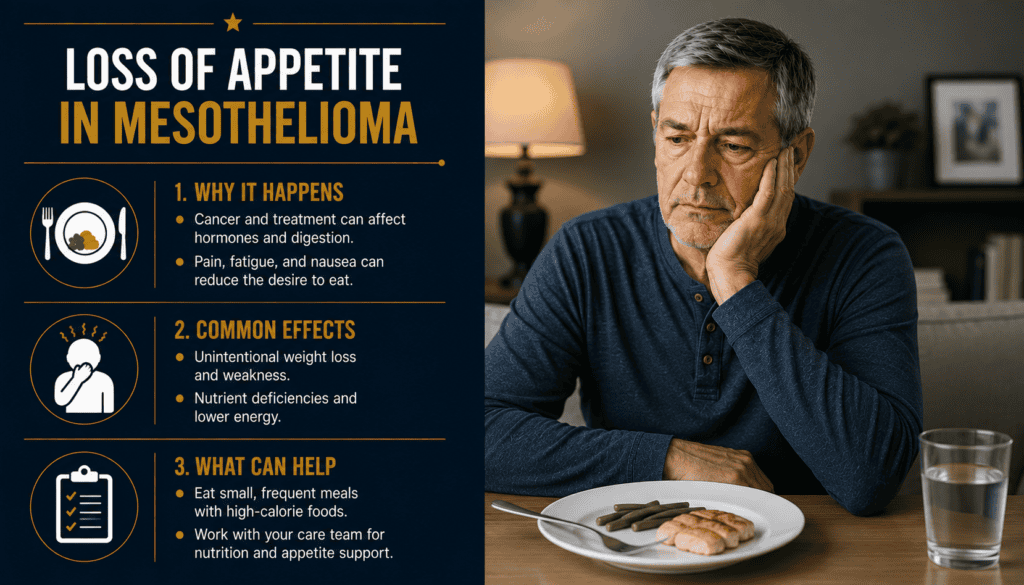
Loss of Appetite in Mesothelioma
Causes, early fullness, weight changes, nutrition support, and when to call your care team
Loss of appetite can affect people with pleural or peritoneal mesothelioma. It may mean food seems unappealing, meals feel exhausting, or a person becomes full after only a few bites. The symptom can be related to cancer, treatment effects, abdominal discomfort, medications, or other treatable problems. It is not enough by itself to diagnose mesothelioma. See the broader mesothelioma symptoms guide for context.
Key point: Tell your oncology team promptly about a new decrease in eating or unintentional weight loss. Seek urgent assessment for inability to keep fluids down, fainting, confusion, severe abdominal pain, or a swollen abdomen with repeated vomiting. Do not wait for a scheduled visit if symptoms are rapidly worsening.
What loss of appetite can mean
Appetite is the desire to eat; early satiety means feeling full sooner than expected. A person can experience one or both. The American Cancer Society lists appetite loss among general mesothelioma symptoms and also among possible symptoms of peritoneal disease. However, infection, medication effects, and many other conditions can cause similar changes. A clinician must assess the cause rather than assuming cancer progression.
| What someone notices | Why it matters |
|---|---|
| Food does not sound appealing | Intake may decline before weight changes become obvious. |
| Full after several bites | Abdominal pressure, constipation, or other causes may limit meal size. |
| Skipping meals because of fatigue | Meal preparation and chewing can become difficult. |
| Weight loss despite trying to eat | A nutritional or metabolic assessment is important. |
Appetite loss and cancer cachexia are not identical. Cachexia involves changes in metabolism and loss of muscle and fat that cannot be reversed by eating more alone. A team may evaluate for it when weakness and weight loss persist. A fuller discussion appears in the unexplained weight loss guide.
| Term | Plain-language meaning |
|---|---|
| Appetite loss | Less desire to eat. |
| Early satiety | Feeling full unusually quickly. |
| Malnutrition | Not getting enough nutrients or energy. |
| Cachexia | Complex cancer-related wasting that needs medical management beyond calories alone. |
Why appetite may decrease
There is rarely just one cause. Mesothelioma-related symptoms and treatment effects can overlap, and identifying the main barriers helps clinicians choose useful interventions. For example, a patient with nausea needs a different plan from someone who cannot swallow safely.
| Possible contributor | What to discuss |
|---|---|
| Abdominal fluid or pressure | Bloating, tighter clothing, fullness after small meals. |
| Nausea or vomiting | Timing, triggers, and whether prescribed anti-nausea medicine helps. |
| Constipation | Last bowel movement, abdominal pain, medication changes. |
| Pain | Whether discomfort increases during or after eating. |
| Taste and smell changes | Foods that suddenly seem unpleasant or metallic. |
| Low mood or anxiety | Emotional symptoms affecting interest in food. |
For peritoneal mesothelioma, abdominal swelling or fluid can contribute to discomfort and early fullness; see bloating and abdominal distention and peritoneal mesothelioma. People with pleural disease can also lose appetite, including from fatigue, pain, and treatment-related symptoms.
| Context | Important distinction |
|---|---|
| Before diagnosis | Appetite loss is nonspecific; evaluation should consider many causes. |
| During chemotherapy | Nausea, mouth soreness, and taste changes may interfere with intake. |
| After surgery | Recovery and pain can temporarily change eating needs. |
| With progressive weakness | Ask about muscle loss and a formal nutrition assessment. |
Symptoms that affect eating
Ask which symptom makes eating difficult instead of focusing only on the number of meals. A brief diary of intake, nausea, bowel movements, and weight can reveal a pattern to share with the care team.
| Eating barrier | Potential next step |
|---|---|
| Nausea | Ask the team to review anti-nausea medication and timing. |
| Pain on swallowing | Request evaluation before changing food texture or crushing pills. |
| Constipation | Review medications and a safe bowel plan. |
| Shortness of breath at meals | Tell the oncology team; smaller portions may be easier while the cause is assessed. |
| Severe fatigue | Arrange ready-to-eat snacks and help with meal preparation. |
Related symptom guides include nausea and vomiting, constipation and bowel obstruction, difficulty swallowing, and severe fatigue. These problems should not be managed with dietary changes alone when severe.
| Pattern to record | Useful detail |
|---|---|
| Time of day | When appetite is best or worst. |
| Amount eaten | Approximate portions or nutrition drinks consumed. |
| Associated symptoms | Pain, nausea, fullness, coughing, or swallowing trouble. |
| Fluid intake | Whether drinking is also difficult. |
When to contact a medical team
Contact the treating clinician when appetite falls for more than a brief period, meals are repeatedly missed, weight declines without trying, or eating becomes painful. The National Cancer Institute advises reporting appetite changes and weight loss promptly so the team can intervene early.
| Situation | Action |
|---|---|
| New appetite loss or ongoing reduced intake | Call the oncology team and request advice. |
| Unintentional weight loss | Report promptly and ask about dietitian referral. |
| Repeated vomiting or inability to keep liquids down | Seek urgent medical advice; dehydration can develop. |
| Severe abdominal pain, marked swelling, and inability to pass stool or gas | Seek emergency assessment for possible obstruction. |
| Confusion, fainting, or severe weakness | Seek urgent medical assessment. |
People with abdominal pain or suspected bowel obstruction should not simply increase fiber or take laxatives without clinician guidance. If there is trouble swallowing or choking, ask for a swallowing assessment before using thickened drinks or modified textures.
| What to tell the clinician | Example |
|---|---|
| Timeline | “I have eaten about half my usual amount for four days.” |
| Weight | “My weight has dropped since the last visit.” |
| Hydration | “I cannot keep water down.” |
| Bowel changes | “My abdomen is swollen and I have not passed gas.” |
How clinicians assess nutrition
Clinicians may ask about recent weight trends, typical intake, symptoms, medications, treatment schedule, and ability to shop or cook. A registered dietitian can develop an individualized plan. A changing scale number alone does not always reflect nutritional improvement: fluid retention can conceal muscle or fat loss.
| Assessment component | Purpose |
|---|---|
| Weight history | Identify unintentional change over time. |
| Food and fluid review | Estimate intake and identify practical barriers. |
| Symptom and medication review | Find potentially treatable reasons for poor eating. |
| Physical and functional assessment | Look for loss of strength or muscle and effects on daily life. |
| Dietitian consultation | Set individualized nutrition goals and follow-up. |
Depending on the situation, the care team may evaluate dehydration, infection, constipation, abdominal fluid, swallowing problems, or treatment toxicity. No single blood test proves that someone is adequately nourished. Discuss the broader diagnostic process if appetite loss is occurring before a diagnosis has been established.
| Question to ask | Why ask it |
|---|---|
| “Can I see an oncology dietitian?” | Obtain tailored food and supplement advice. |
| “Could my medicines affect appetite?” | Identify side effects or interactions. |
| “Should we evaluate abdominal fluid?” | Assess pressure and early fullness when present. |
| “How often should I report my weight?” | Agree on a practical monitoring plan. |
Practical eating and drinking strategies
The goal is to make each bite more useful without forcing large meals. NCI guidance suggests eating small, frequent meals, prioritizing protein and calories, and trying nutrient-dense drinks when solid foods are difficult. Individual needs differ, especially with diabetes, kidney disease, fluid restrictions, or swallowing problems; confirm a plan with the treating team.
| Strategy | Practical example |
|---|---|
| Eat smaller amounts more often | Try five or six small eating opportunities instead of three large meals. |
| Prioritize protein | Eat eggs, yogurt, beans, tofu, fish, or another tolerated protein first. |
| Increase energy density | Add nut butter, olive oil, cheese, or other tolerated additions. |
| Use drinks when solids are difficult | Ask about smoothies or oral nutrition supplements. |
| Choose the best time | Make the largest meal when appetite and energy are strongest. |
For some people, sipping most fluids between meals leaves more room for food; this is not appropriate if a clinician has advised a different hydration plan. Food preferences may change daily, so keep several easy options available rather than insisting on a single “healthy” meal. Read mesothelioma diet and nutrition for broader food-planning information.
| Low-effort option | Why it may help |
|---|---|
| Greek yogurt with nut butter | Combines protein and energy in a small portion. |
| Eggs or soft tofu | Soft protein option if safely swallowed. |
| Soup enriched with beans or dairy | Adds nutrients in a familiar format. |
| Smoothie with yogurt or fortified milk | May be easier than a full plate. |
| Prepared individual portions | Reduces cooking demands during fatigue. |
Food safety matters during cancer treatment. Follow the oncology team’s advice about food handling, refrigeration, and avoiding foods that carry higher infection risks. Supplements and herbal appetite remedies can interact with treatment; discuss them before starting.
Medical treatment and caregiver support
Treating the underlying barrier is often as important as choosing foods. Clinicians may adjust anti-nausea therapy, manage pain or constipation, investigate abdominal fluid, or recommend a swallowing evaluation. For persistent appetite loss, they may discuss prescription appetite-related medicines after reviewing benefits, risks, and the patient’s goals. Do not start steroids or appetite stimulants without medical supervision.
| Support option | When it may be considered |
|---|---|
| Symptom-directed medicines | When nausea, pain, or constipation limits eating. |
| Registered dietitian | For reduced intake, weight loss, or treatment planning. |
| Oral nutrition supplements | When regular food alone is not meeting needs. |
| Medical appetite treatments | Selected cases after individualized risk-benefit review. |
| Additional nutrition support | Only when appropriate to the clinical situation and care goals. |
If appetite loss accompanies persistent muscle loss, ask whether cancer cachexia is a concern. NCI explains that cachexia is a complex syndrome; additional calories alone do not reverse it. Palliative care can help address symptoms and quality of life alongside cancer-directed treatment. Learn more about palliative care for mesothelioma and mesothelioma treatment options.
| Caregiver action | Supportive approach |
|---|---|
| Offer choices | Ask whether a small snack or drink sounds tolerable. |
| Prepare portions ahead | Reduce work when energy is limited. |
| Record concerns | Share changes with the patient’s care team. |
| Avoid pressure | Offer encouragement without turning meals into conflict. |
| Ask for practical help | Request dietitian, social work, or symptom-management support. |
Confirmed medical sources
Frequently asked questions
Is appetite loss an early sign of mesothelioma?
It can occur with mesothelioma, but it is nonspecific and has many other possible causes. Persistent symptoms warrant medical evaluation.
Why do I feel full after just a few bites?
Early satiety may be associated with abdominal pressure, constipation, nausea, or other conditions. Tell your clinician, particularly if you also have swelling or pain.
Can chemotherapy make food taste different?
Yes. Cancer treatments can cause taste changes, mouth soreness, nausea, and other effects that interfere with eating. Ask the team for symptom-specific treatment.
Should I force myself to eat large meals?
Large meals are often difficult. Smaller, frequent, nutrient-dense meals may be more manageable, but your dietitian can tailor the approach.
Are protein shakes helpful?
Oral nutrition drinks can help some people increase intake. Ask a dietitian which product fits your medical needs and swallowing ability.
Does appetite loss always mean the cancer is worsening?
No. Medicines, treatment effects, constipation, pain, mood, and other problems can contribute. Your clinician can evaluate the pattern.
What if I am losing weight even though I eat?
Report it promptly. Your team may assess muscle loss, fluid changes, absorption, and cancer cachexia rather than recommending calories alone.
When is loss of appetite an emergency?
Seek urgent assessment if you cannot keep fluids down, have severe abdominal pain or swelling with repeated vomiting, become confused or faint, or have other rapidly worsening symptoms.
| Takeaway | Next step |
|---|---|
| Appetite loss has multiple possible causes | Report the change and associated symptoms. |
| Weight loss should not be ignored | Request early nutrition assessment. |
| Small frequent meals may help | Individualize food choices with a dietitian. |
| Severe symptoms require prompt care | Seek urgent or emergency evaluation as appropriate. |
Get help and explore your options
For information about asbestos exposure history and potential legal options, call 800.291.0963. Live chat is available 24/7, 365 days a year. Submit Your Case using the form below. A conversation does not guarantee eligibility, compensation, or any legal outcome.
⚕️ Legal & Medical Information Disclaimer
This page is general information, not medical or legal advice. Consult your treating medical team for symptoms and nutrition decisions and a qualified attorney for advice about individual legal rights.