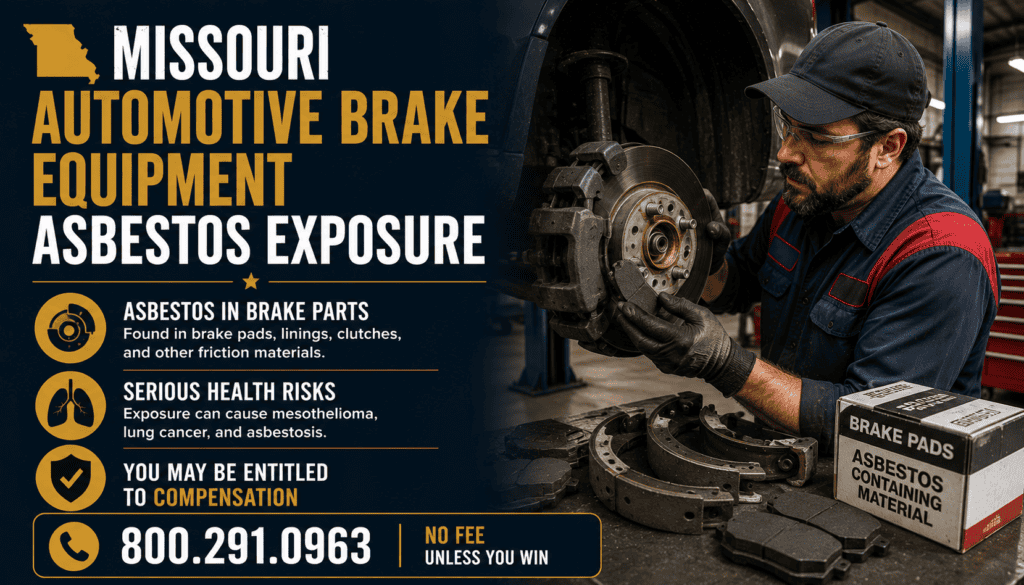
🚗 Missouri Automotive Asbestos Products
How Missouri Mechanics, Auto Manufacturing Workers, and Vehicle Repair Professionals Were Exposed to Asbestos
For decades, automotive asbestos products were used throughout Missouri’s automobile manufacturing plants, truck repair facilities, dealerships, fleet maintenance garages, body shops, machine shops, heavy equipment repair centers, and independent repair businesses. From passenger vehicles and commercial trucks to buses, farm equipment, and industrial vehicles, asbestos-containing parts were considered standard throughout much of the twentieth century.
Automotive manufacturers relied on asbestos because it could withstand extreme heat, friction, and constant wear. Brake systems, clutches, engine gaskets, transmission components, heat shields, hood liners, and numerous other vehicle parts contained asbestos. These products protected equipment from heat while extending the life of mechanical components.
Unfortunately, every time these products were repaired, removed, sanded, ground, drilled, cleaned, or replaced, microscopic asbestos fibers could become airborne. Mechanics and repair technicians often worked only inches away from these fibers without knowing the long-term health risks.
Today, many former Missouri automotive workers have been diagnosed with mesothelioma, asbestos-related lung cancer, asbestosis, and other serious illnesses decades after working around asbestos-containing vehicle components.
Workers who repaired vehicles may also have experienced asbestos exposure in factories, industrial facilities, construction projects, and other workplaces throughout their careers. For broader statewide context, review Missouri Asbestos Exposure Lawsuits, Missouri Asbestos Products, and Missouri Equipment & Machinery Asbestos Exposure.
🏭 Why Asbestos Was Used in Automotive Products
During much of the 1900s, vehicle manufacturers searched for materials that could tolerate constant heat, pressure, and friction. Asbestos met those requirements better than many other products available at the time.
Because asbestos resisted heat while remaining durable and inexpensive, manufacturers incorporated it into thousands of automotive replacement parts used throughout Missouri.
Common asbestos-containing automotive products included:
- Brake linings
- Brake shoes
- Brake pads
- Clutch facings
- Engine gaskets
- Exhaust gaskets
- Valve gaskets
- Transmission components
- Heat shields
- Hood insulation
- Firewalls
- Friction materials
- Industrial vehicle brakes
- Heavy equipment components
- Commercial truck brake systems
Many of these products remained in service for decades before safer replacement materials became common.
Vehicle owners rarely recognized these components as potential asbestos hazards. Mechanics often removed worn parts without respiratory protection, while compressed air, wire brushes, grinders, and sanders released invisible fibers into the surrounding work area.
Many of the same asbestos materials used in automobiles were also installed throughout Missouri factories and industrial facilities. Related product information is available in Missouri Industrial Asbestos Products.
🚙 Common Missouri Automotive Asbestos Products
Automotive asbestos exposure was not limited to one replacement part. Numerous vehicle systems historically contained asbestos because they generated significant heat during normal operation.
Brake Components
Brake linings and brake shoes represented some of the most common asbestos-containing automotive products.
Every time brakes were replaced, drilled, sanded, cleaned, or adjusted, asbestos dust could accumulate on surrounding components, shop floors, tools, clothing, and work benches.
Technicians frequently used compressed air to remove brake dust—a practice now recognized as one of the highest-risk methods of airborne asbestos exposure.
Clutches
Manual transmission vehicles commonly contained asbestos clutch facings designed to tolerate continuous friction.
Removing worn clutch assemblies often required scraping, sanding, grinding, or cleaning asbestos-containing materials before installing replacement parts.
Engine Gaskets
Engine, intake manifold, cylinder head, valve cover, and exhaust gaskets frequently contained asbestos.
Mechanics often scraped old gasket material from metal surfaces before installing new gaskets. This work could release asbestos fibers directly into the mechanic’s breathing zone.
Many gasket products used in automotive repair were similar to those found throughout Missouri industrial machinery. Additional information is available in Missouri Industrial Machinery Asbestos Exposure.
Heat Shields and Insulation
Manufacturers also installed asbestos insulation around engine compartments, firewalls, mufflers, exhaust systems, and heat shields to reduce heat transfer into passenger compartments.
Removing deteriorated insulation during restoration or major repairs could disturb asbestos fibers that had remained inside vehicles for decades.
🏭 Missouri Automotive Manufacturing
Missouri has a long history of automobile manufacturing, truck production, parts manufacturing, and commercial vehicle assembly.
Workers employed in manufacturing plants may have encountered asbestos from two different sources.
First, many automotive components arriving at assembly plants already contained asbestos.
Second, the manufacturing facilities themselves frequently contained asbestos insulation, boilers, steam systems, industrial machinery, pipe insulation, fireproofing materials, and mechanical equipment.
Maintenance shutdowns, equipment repairs, and building renovations often released additional asbestos fibers throughout production areas.
Employees who never repaired vehicles could still experience occupational exposure simply by working near maintenance crews or equipment repairs.
Workers interested in Missouri manufacturing exposure can also review Missouri Manufacturing Asbestos Exposure and Missouri Asbestos Exposure Sites & Industries.
Factory employees who worked around production equipment, industrial maintenance, or mechanical systems should also review Missouri Factory Workers Asbestos Exposure.
🔧 Where Missouri Automotive Workers May Have Been Exposed
Automotive asbestos exposure occurred in many different work environments throughout Missouri.
Potential exposure locations included:
- Automobile manufacturing plants
- Truck manufacturing facilities
- Automobile dealerships
- Fleet maintenance garages
- Bus maintenance facilities
- Heavy equipment repair shops
- Farm equipment dealerships
- Independent repair garages
- Tire and brake shops
- Transmission repair centers
- Engine rebuilding facilities
- Municipal vehicle maintenance departments
- County highway maintenance shops
- State transportation maintenance facilities
- School bus maintenance garages
- Warehouse vehicle maintenance departments
- Commercial trucking companies
- Equipment rental businesses
Some workers spent their entire careers in one repair shop. Others worked for several employers while also repairing personal vehicles or helping family members with automotive projects at home.
👨🔧 How Missouri Mechanics Were Exposed to Asbestos
Automotive mechanics often experienced repeated asbestos exposure throughout the workday.
Routine repairs frequently required removing worn brake assemblies, replacing clutch components, scraping old gaskets, cleaning engine parts, rebuilding transmissions, and repairing exhaust systems.
Common activities that could release asbestos fibers included:
- Removing brake drums
- Cleaning brake dust
- Blowing parts clean with compressed air
- Grinding replacement brake shoes
- Sanding clutch components
- Scraping gasket material
- Replacing engine seals
- Repairing exhaust systems
- Cleaning shop floors
- Emptying shop vacuum systems
- Handling contaminated work clothing
Even mechanics who specialized in tune-ups, engine repair, suspension work, or fleet maintenance could encounter asbestos because so many automotive systems contained asbestos materials.
Many mechanics also repaired commercial trucks, industrial vehicles, forklifts, buses, agricultural equipment, and heavy machinery, increasing the variety of asbestos-containing products they encountered throughout their careers.
Some mechanics later accepted maintenance positions at factories, industrial plants, utilities, or government facilities where additional asbestos exposure occurred from boilers, pumps, valves, machinery, and mechanical systems. Workers with these mixed employment histories should also review Missouri Industrial Asbestos Exposure.
👷 Bystander Automotive Exposure
Not every automotive worker personally handled asbestos-containing parts.
Parts managers, service advisors, shop supervisors, apprentices, cleanup crews, warehouse employees, painters, body shop technicians, inspectors, and office staff working near repair bays could also inhale asbestos fibers released during brake and clutch repairs.
Brake dust often settled throughout repair facilities before becoming airborne again when floors were swept, equipment was moved, or compressed air was used.
This secondary workplace exposure sometimes affected employees who never performed mechanical repairs themselves.
🏠 Secondary Household Asbestos Exposure
Automotive asbestos exposure was not always limited to the repair shop or manufacturing facility. Many Missouri mechanics unknowingly carried asbestos fibers home on their work clothing, boots, gloves, tools, and even inside their personal vehicles.
Before employers began providing changing rooms and protective clothing, it was common for mechanics to leave work wearing the same uniforms they had worn while replacing brakes, rebuilding clutches, scraping engine gaskets, or cleaning repair bays.
Family members could be exposed while:
- Washing dusty work clothes
- Hugging a family member returning from work
- Cleaning work boots
- Riding in contaminated vehicles
- Handling mechanic’s tools
- Sweeping garages where contaminated clothing was stored
Although secondary exposure generally involved fewer asbestos fibers than occupational exposure, medical studies have shown that repeated household exposure could still contribute to serious asbestos-related illnesses decades later.
🫁 Diseases Linked to Automotive Asbestos Exposure
Because asbestos diseases often develop slowly, many Missouri automotive workers did not experience symptoms until 20 to 50 years after their exposure occurred.
Common asbestos-related diseases include:
Mesothelioma
Mesothelioma is a rare but aggressive cancer affecting the lining surrounding the lungs, abdomen, heart, or testes. Nearly every confirmed case is associated with asbestos exposure.
Former mechanics, brake specialists, clutch repair technicians, fleet maintenance workers, manufacturing employees, and automotive parts workers have all been diagnosed with mesothelioma many years after working around asbestos-containing products.
Asbestos-Related Lung Cancer
Repeated exposure to airborne asbestos fibers may significantly increase the risk of lung cancer, particularly among workers who experienced long-term occupational exposure.
Learn more at Missouri Asbestos Lung Cancer Lawsuits.
Asbestosis
Asbestosis is a chronic lung disease caused by inhaling asbestos fibers over many years. Scar tissue develops within the lungs, making breathing increasingly difficult.
Pleural Plaques and Pleural Thickening
Some workers develop thickened tissue or calcified plaques around the lungs. While these conditions are not cancer, they often indicate significant previous asbestos exposure.
Workers frequently develop more than one asbestos-related condition over their lifetime.
⚖️ Legal Options for Missouri Automotive Workers
Workers diagnosed with an asbestos-related disease may investigate several potential legal or compensation options depending on work history, products encountered, applicable law, and other case-specific facts.
Potential claims may include:
- Personal injury lawsuits
- Product liability lawsuits
- Premises liability claims
- Asbestos bankruptcy trust fund claims
- Veterans benefits for military mechanics
- Wrongful death lawsuits filed by surviving family members
Many automotive workers repaired products from numerous manufacturers during their careers, so more than one company or asbestos trust may need to be evaluated.
A detailed review of employment records, military service, repair history, vehicle types, and products handled can help reconstruct potential exposure sources.
💰 Missouri Asbestos Trust Fund Claims
Many manufacturers of asbestos-containing automotive products later filed for bankruptcy protection.
As part of the bankruptcy process, numerous companies established asbestos trust funds to compensate current and future victims diagnosed with asbestos-related diseases.
Former mechanics, automotive manufacturing employees, truck repair technicians, fleet maintenance workers, and other qualified individuals may be eligible to file one or more asbestos trust claims if the applicable medical and exposure requirements are satisfied.
Learn more by visiting Missouri Asbestos Trust Fund Claims.
⏳ Missouri Filing Deadlines
Missouri law limits the amount of time available to file many asbestos-related legal claims.
Because filing deadlines depend on individual circumstances, waiting too long may affect whether a claim can proceed.
Missouri filing deadlines should be investigated promptly after a diagnosis.
Additional information is available in Missouri Mesothelioma Statute of Limitations.
🕊️ Wrongful Death Lawsuits
Sadly, many Missouri families lose loved ones to mesothelioma or other asbestos-related illnesses.
In certain situations, surviving spouses, children, or other eligible family members may have legal options involving a wrongful death claim, depending on the facts and applicable law.
These claims may seek compensation for financial losses and other damages recognized under Missouri law.
Learn more by visiting Missouri Wrongful Death Mesothelioma Lawsuits.
❓ Frequently Asked Questions
Can replacing brakes expose someone to asbestos?
Yes. Older brake linings frequently contained asbestos. Removing, grinding, sanding, or cleaning brake components could release asbestos fibers into the air.
Were clutch replacements also dangerous?
Many older clutch facings contained asbestos. Removing worn clutch materials or cleaning clutch housings could disturb asbestos fibers.
Could automotive factory workers also be exposed?
Yes. Manufacturing facilities often contained asbestos in both vehicle components and the buildings themselves, including insulation, boilers, steam systems, industrial machinery, and fireproofing materials. Workers can learn more through Missouri Manufacturing Asbestos Exposure and Missouri Factory Workers Asbestos Exposure.
Can family members become sick from automotive asbestos exposure?
Yes. Some family members experienced secondary exposure after asbestos dust was carried home on contaminated clothing, shoes, tools, or personal vehicles.
How long after exposure can mesothelioma develop?
Mesothelioma commonly develops 20 to 50 years after asbestos exposure, although the latency period may be longer in some individuals.
Where can I learn about other Missouri asbestos exposure sites?
Our comprehensive Missouri Asbestos Exposure Sites guide covers many of the factories, industrial facilities, railroads, power plants, government buildings, and other workplaces where asbestos exposure may have occurred.
🔗 Related Missouri Resources
Continue your research with these Missouri asbestos guides:
- Missouri Asbestos Exposure Lawsuits
- Missouri Asbestos Exposure Articles
- Missouri Manufacturing Asbestos Exposure
- Missouri Industrial Asbestos Exposure
- Missouri Industrial Asbestos Products
- Missouri Industrial Machinery Asbestos Exposure
- Missouri Asbestos Trust Fund Claims
- Missouri Asbestos Lung Cancer Lawsuits
- Missouri Wrongful Death Mesothelioma Lawsuits
- Missouri Mesothelioma Statute of Limitations
🔗 Related Missouri Resources
Continue your research with these Missouri asbestos resources:
- Missouri Asbestos Products
- Missouri Automotive Asbestos Products
- Missouri Automotive Brake Equipment Asbestos Exposure
- Missouri Equipment & Machinery Asbestos Exposure
- Missouri Industrial Machinery Asbestos Exposure
- Missouri Industrial Asbestos Exposure
- Missouri Industrial Asbestos Products
- Missouri Manufacturing Asbestos Exposure
- Missouri Factory Workers Asbestos Exposure
- Missouri Asbestos Exposure Sites & Industries
- Missouri Asbestos Exposure Lawsuits
- Missouri Mesothelioma Lawsuits & Claims
- Missouri Asbestos Trust Fund Claims
- Missouri Asbestos Lung Cancer Lawsuits
- Missouri Wrongful Death Mesothelioma Lawsuits
- Missouri Mesothelioma Statute of Limitations
Call 800.291.0963 — Open 24/7, 365 Days
MesotheliomaHelp.Center provides legal and medical information to help Missouri mechanics, automotive workers, manufacturing employees, and families understand historical asbestos exposure, related diseases, filing deadlines, compensation options, and possible next steps.