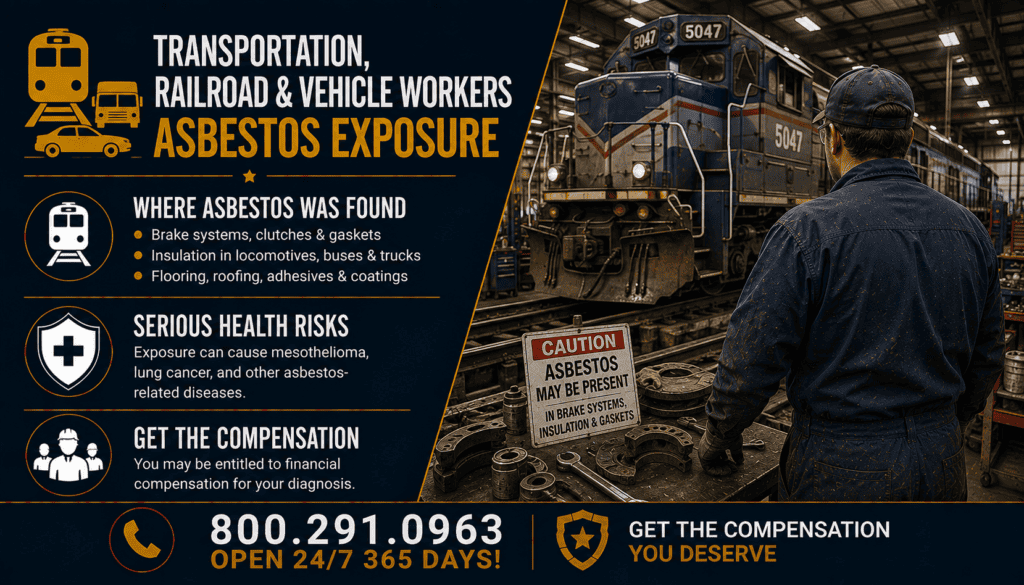
Transportation, Railroad & Vehicle Workers Asbestos Exposure
Transportation workers have maintained, operated and repaired locomotives, railcars, automobiles, trucks, buses and other vehicles. Historical asbestos exposure could occur in certain railroad shops and during work with documented asbestos-containing insulation, brake linings, clutch facings and other heat-resistant components.
Federal evidence supports several distinct exposure pathways. NIOSH educational material on railroad workers describes historical asbestos use in steam-locomotive boiler insulation, pipes and railcars, while EPA confirms that some automotive brakes and clutches may contain asbestos. Exposure depended on the worker’s occupation, equipment, era, materials and actual tasks rather than transportation employment alone.
Transportation, Railroad and Vehicle Workers Asbestos Exposure
Transportation occupations include railroad machinists, boilermakers, locomotive and railcar repair workers, mechanics, fleet employees, bus and truck mechanics, vehicle technicians and other maintenance personnel. Potential asbestos exposure differed substantially among these jobs.
NIOSH training material describing an investigation of mesothelioma among railroad workers states that a railroad shop constructed and repaired locomotives and passenger cars and that, during the steam-locomotive era, asbestos was used in blocks and powder to insulate engine boilers. It also describes asbestos-containing insulation on pipes and railway and refrigeration cars.
For vehicle maintenance, EPA states that some, but not all, brakes and clutches may contain asbestos. Dust can be released when a brake disk, drum, clutch cover or wheel is removed from a car, truck or other equipment.
These are different occupational pathways and should not be blended together. A railroad boilermaker working around steam-locomotive insulation had a different potential exposure history from a fleet mechanic servicing friction components.
Related resources include high-risk jobs asbestos exposure, automotive mechanics and heavy equipment workers asbestos exposure, fleet garage workers asbestos exposure and truck mechanics asbestos exposure.
Railroad Shops, Locomotives and Railcar Exposure
Historical railroad asbestos exposure could occur where workers constructed, repaired or maintained steam locomotives, boilers, piping and railcars containing asbestos insulation.
Steam Locomotive Boilers
NIOSH educational material based on a railroad mesothelioma investigation describes asbestos in blocks and powder used to insulate steam-locomotive engine boilers before the mid-1950s. Workers removing, repairing or working close to disturbed insulation could have encountered airborne fibers.
Locomotive and Boiler Shops
The same NIOSH material identifies locomotive shops, boiler shops, car shops and engine houses as locations associated with historical asbestos work. Occupations such as machinists and boilermakers could perform tasks near insulated boilers, pipes and other heat-resistant systems.
Railway and Refrigeration Cars
NIOSH’s railroad teaching case also describes asbestos-containing insulation used on pipes and in railway and refrigeration cars. The specific railcar, material and work activity still need to be documented for an individual exposure history.
Railroad Exposure Should Be Era-Specific
Historical steam-era evidence should not be used to claim that every modern railroad worker encounters asbestos. Diesel exhaust, noise, silica and other railroad hazards are separate from asbestos and require separate analysis.
Vehicle Brake, Clutch and Maintenance Exposure
Vehicle mechanics and transportation maintenance workers may encounter a separate asbestos pathway through certain friction products.
EPA explains that some, but not all, automotive brakes and clutches may contain asbestos. If a brake contains asbestos, dust inside the assembly may contain fibers that can be inhaled during servicing.
OSHA’s general-industry asbestos standard specifically addresses automotive brake and clutch operations. Mandatory Appendix F specifies engineering controls and work practices for covered inspection, disassembly, repair and assembly tasks.
NIOSH has also published dedicated recommendations for controlling asbestos exposure during brake-drum service. Historical research found that cleaning and friction-material handling methods could strongly affect airborne exposure where asbestos-containing components were present.
Related vehicle resources include auto mechanics brake and clutch dust exposure, repair shop auto mechanics asbestos exposure, bus mechanics asbestos exposure and equipment mechanics asbestos exposure.
Asbestos-Containing Materials and Work Tasks
Potential sources and tasks depended on the transportation sector, equipment and era. Historically relevant examples include:
- Steam-locomotive insulation: asbestos-containing blocks and powder used around engine boilers
- Pipe insulation: asbestos-containing thermal insulation on railroad piping systems
- Railcar insulation: documented asbestos-containing insulation in certain railway and refrigeration cars
- Brake linings and shoes: older friction products where asbestos content is documented
- Clutch facings: older asbestos-containing clutch friction material
- Brake cleaning: disturbing residue from asbestos-containing brake components
- Repair and overhaul: removing or disturbing documented asbestos-containing insulation or friction products
- Nearby work: working close to coworkers who disturbed asbestos-containing materials
NIOSH identifies asbestos as a known occupational carcinogen and notes historical uses including automobile brakes and insulation materials. The material must still be identified in the worker’s actual job setting.
Visible transportation or shop dust is not automatically asbestos. Diesel particulate, silica, metal dust, road dirt and non-asbestos friction material are separate hazards.
Need help now? Call 800.291.0963
Live chat available 24/7, 365 days a year.
Submit Your Case
Mesothelioma and Other Occupational Health Risks
Asbestos exposure is associated with mesothelioma, lung cancer and asbestosis. NIOSH states that exposure to asbestos fibers causes cancer and asbestosis in humans.
NIOSH’s railroad teaching material was developed around mesothelioma cases among longtime railroad workers and illustrates why detailed occupational questioning can reveal historical insulation exposure that a worker may not initially recognize as asbestos work.
Transportation workers may also encounter diesel exhaust, silica, solvents, welding fumes, noise and other hazards. Those exposures are distinct from asbestos and should not be treated as evidence of asbestos exposure.
Medical questions about occupational exposure, symptoms, screening or diagnosis should be discussed with a qualified healthcare professional.
Documenting a Transportation Exposure History
A useful investigation identifies the employer, occupation, dates, facility, equipment, materials and tasks associated with possible asbestos exposure.
- Employment evidence: railroad, transit agency, fleet operator, trucking company, repair facility, payroll, union and Social Security records
- Occupation evidence: machinist, boilermaker, mechanic, car repairer, technician, operator or maintenance worker
- Equipment evidence: steam or diesel locomotives, passenger cars, refrigeration cars, automobiles, trucks, buses and other vehicles
- Material evidence: insulation, brake linings, clutch facings, manufacturer records and laboratory analysis
- Task evidence: boiler repair, insulation removal, pipe work, brake cleaning, grinding, clutch repair and overhaul
- Facility evidence: locomotive shops, boiler shops, car shops, engine houses, fleet garages and repair facilities
- Witness evidence: coworkers, mechanics, supervisors, parts employees and union members
Railroad work histories can span decades and multiple crafts. Identifying the specific shop and craft can be more useful than relying only on the broad label “railroad worker.” Vehicle-maintenance histories likewise benefit from identifying the component brands and cleaning methods used.
Questions That Can Strengthen an Exposure History
Which employer and years? What craft or job title? Which locomotives, railcars or vehicles were serviced? Was steam-era boiler or pipe insulation disturbed? Were brakes or clutches repaired? Was compressed air used? What product brands were present? Are union, purchasing, shop, maintenance or coworker records available?
Asbestos Lawsuits, Trust Funds and Compensation
A transportation, railroad or vehicle worker diagnosed with mesothelioma or another asbestos-related disease may have potential legal or compensation options when evidence supports occupational asbestos exposure and applicable requirements are met.
Occupation alone does not establish liability, trust eligibility or compensation. Each claim has separate medical, exposure, company, product, jurisdiction and filing requirements. Railroad workers may also have legal considerations that differ from ordinary vehicle repair employees, so the applicable employment and legal framework should be evaluated individually.
Potential evidence includes employment and Social Security records, railroad or union records, shop assignments, equipment records, parts invoices, manufacturer catalogs, insulation specifications, maintenance documents, photographs, coworker statements and medical documentation.
Related Transportation and Vehicle Resources
Automotive and heavy equipment: Automotive Mechanics & Heavy Equipment Workers Asbestos Exposure
Fleet and repair shops: Fleet Garage Workers Asbestos Exposure · Repair Shop Auto Mechanics Asbestos Exposure
Heavy-duty vehicles: Truck Mechanics Asbestos Exposure · Bus Mechanics Asbestos Exposure
Authoritative Sources
This page was researched using NIOSH, OSHA and EPA government sources. The evidence distinguishes historical railroad insulation exposure from vehicle brake and clutch exposure and avoids assuming that every transportation worker encountered asbestos.
- NIOSH — Teaching Epidemiology in Occupational Health: Mesothelioma in Railroad Workers
- NIOSH — Workplace Exposure to Asbestos: Review and Recommendations
- NIOSH — Pocket Guide to Chemical Hazards: Asbestos
- EPA — Current Best Practices for Brake and Clutch Repair Workers
- OSHA — 29 CFR 1910.1001 Asbestos Standard
- OSHA — Mandatory Appendix F for Automotive Brake and Clutch Work
Transportation Workers Asbestos Exposure FAQ
Were all railroad and transportation workers exposed to asbestos?
No. Exposure depended on the occupation, equipment, facility, era, materials and tasks. Transportation employment alone does not prove asbestos exposure.
Where was asbestos historically used around steam locomotives?
NIOSH educational material describes asbestos-containing blocks and powder used to insulate steam-locomotive boilers and asbestos-containing insulation on pipes and certain railway and refrigeration cars.
Which railroad shops could involve historical asbestos work?
NIOSH’s railroad teaching case identifies locomotive shops, boiler shops, car shops and engine houses in connection with historical asbestos-containing equipment and insulation.
Could vehicle mechanics encounter asbestos in brakes and clutches?
Yes, when the serviced friction component contained asbestos. EPA states that some, but not all, automotive brakes and clutches may contain asbestos.
Is all railroad or vehicle dust asbestos?
No. Transportation workplaces can contain diesel particulate, silica, metal dust, road dirt and other materials. The asbestos-containing source should be identified rather than assumed.
What records can document transportation-worker asbestos exposure?
Employment, union, railroad craft, shop assignment, equipment, maintenance, product, purchasing and coworker records can help reconstruct an exposure history.
Can long latency matter in a railroad asbestos history?
Yes. Asbestos-related diseases can develop decades after exposure, making historical steam-era and shop records potentially important when evaluating an older worker’s history.
Can transportation workers qualify for asbestos claims?
Some may have potential claims if medical and exposure evidence satisfies applicable legal or trust requirements. Occupation alone does not establish eligibility or compensation.
Get Help Reviewing Transportation Asbestos Exposure
Call 800.291.0963
Live chat is available 24/7, 365 days a year.
Prior railroad, transportation, fleet or vehicle work does not automatically prove asbestos exposure, disease causation, liability, claim eligibility or compensation. Each situation depends on the employer, dates, occupation, equipment, materials, worksite, tasks, asbestos-content evidence, medical evidence and applicable legal requirements. Compensation is not guaranteed.
⚕️ Legal & Medical Information Disclaimer
This page provides general educational information and is not medical or legal advice. The information does not establish asbestos exposure, diagnosis, causation, liability, claim eligibility or compensation. Medical concerns should be discussed with a qualified healthcare professional, and legal questions should be reviewed with a qualified attorney.