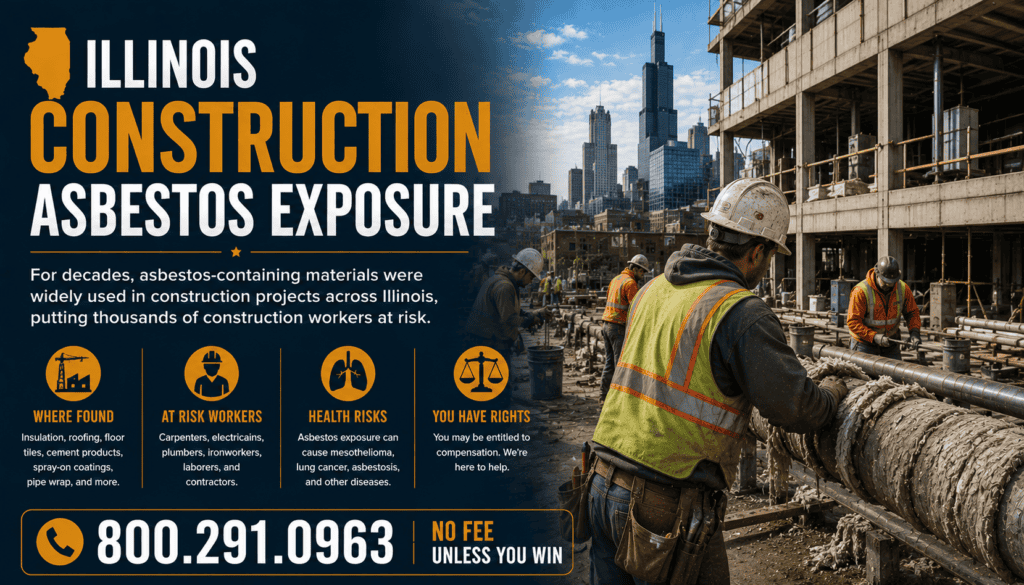
🏗️ Illinois Construction Asbestos Exposure
Illinois construction workers helped build many of the state’s factories, power plants, schools, hospitals, office buildings, bridges, highways, and commercial developments throughout the twentieth century. Unfortunately, many of these projects involved asbestos-containing materials that exposed thousands of construction workers to dangerous airborne asbestos fibers.
For decades, asbestos was widely used because it was inexpensive, durable, resistant to heat, and highly effective as an insulator and fireproofing material. Contractors installed asbestos in pipe insulation, boilers, roofing materials, floor tiles, ceiling tiles, cement products, wallboard, joint compound, HVAC systems, and countless other construction products.
Carpenters, electricians, plumbers, pipefitters, insulators, laborers, roofers, demolition crews, and other skilled trades often worked around these materials every day. Many later developed mesothelioma, asbestos lung cancer, asbestosis, and other asbestos-related diseases decades after their exposure.
If you worked in the Illinois construction industry and were diagnosed with an asbestos-related illness, you may have legal options. Learn more on our Illinois Mesothelioma Lawsuits page.
🚧 Why Asbestos Was Widely Used in Illinois Construction
Throughout much of the twentieth century, asbestos became one of the most common building materials used in commercial, industrial, and residential construction. Architects, engineers, and contractors selected asbestos products because they resisted fire, insulated against heat, reduced noise, and increased the durability of buildings.
Construction projects throughout Illinois commonly incorporated asbestos into:
- Commercial office buildings
- Manufacturing plants
- Steel mills
- Power plants
- Schools
- Universities
- Hospitals
- Government buildings
- Apartment complexes
- Shopping centers
- Hotels
- Warehouses
- Municipal buildings
- Water treatment facilities
- Industrial plants
- High-rise buildings
Many of these structures still stand today. During renovations, remodeling projects, maintenance work, and demolition, asbestos-containing materials may be disturbed, creating exposure risks for workers.
Learn more about these workplaces on our Illinois Asbestos Exposure Sites, Illinois Industrial Asbestos Exposure, and Illinois Public & Government Buildings Asbestos Exposure pages.
🧱 Common Construction Materials That Contained Asbestos
Construction workers frequently handled asbestos-containing products without knowing they could release microscopic fibers into the air when cut, drilled, sanded, or removed.
Common asbestos-containing construction materials included:
- Pipe insulation
- Boiler insulation
- Block insulation
- Spray-on fireproofing
- Roofing shingles
- Roofing felt
- Roof coatings
- Floor tiles
- Vinyl floor tile adhesive
- Ceiling tiles
- Acoustic ceiling materials
- Wallboard
- Joint compound
- Drywall finishing products
- Cement pipe
- Cement siding
- Cement board
- Plaster
- Fire doors
- Fireproof wall panels
- HVAC duct insulation
- Electrical insulation
- Expansion joints
- Caulking
- Industrial sealants
Many of these materials are discussed in greater detail on our Illinois Asbestos Insulation Products and Illinois Industrial Asbestos Products pages.
👷 Illinois Construction Workers Most Frequently Exposed
Construction sites brought together many skilled trades, and nearly every trade had the potential to encounter asbestos while installing, repairing, or removing building materials.
High-risk occupations included:
- Construction laborers
- Carpenters
- Electricians
- Pipefitters
- Steamfitters
- Plumbers
- Insulators
- Roofers
- Drywall installers
- Painters
- Welders
- Sheet metal workers
- HVAC technicians
- Cement finishers
- Masonry workers
- Heavy equipment operators
- Demolition workers
- Building maintenance workers
- General contractors
- Industrial mechanics
Workers performing renovation and demolition projects often faced the greatest exposure because older asbestos-containing materials were disturbed during removal.
Learn more about these occupations by visiting:
- Illinois Construction Workers Mesothelioma
- Illinois Electricians Asbestos Exposure
- Illinois Pipefitters Mesothelioma Lawsuit
- Illinois Factory Workers Asbestos Exposure
- Illinois Power Plant Workers Mesothelioma
🔨 Construction Activities That Frequently Released Asbestos
Construction workers often encountered asbestos while cutting, drilling, sanding, removing, or replacing building materials during new construction and renovation projects.
Activities that commonly released asbestos fibers included:
- Demolition work
- Building renovations
- Roof replacement
- Pipe replacement
- Boiler removal
- Flooring removal
- Ceiling demolition
- Wall demolition
- HVAC replacement
- Electrical upgrades
- Plumbing repairs
- Drywall removal
- Concrete cutting
- Fireproofing removal
- Mechanical room renovations
- Utility tunnel repairs
- Industrial remodeling
- Bridge rehabilitation
- School modernization
- Hospital renovations
Many of these projects also involved workplaces discussed in our Illinois Manufacturing Asbestos Exposure, Illinois Power Plant Asbestos Exposure, and Illinois Railroad Asbestos Exposure guides.
🏢 Historic Illinois Construction Projects Where Asbestos May Have Been Present
Illinois experienced tremendous growth throughout the twentieth century. Cities expanded rapidly, factories multiplied, highways stretched across the state, and thousands of commercial and public buildings were constructed. During much of this period, asbestos was considered a standard construction material because of its strength, fire resistance, and insulating properties.
Construction workers involved in building, remodeling, or maintaining these projects may have encountered asbestos throughout their careers.
Examples of construction projects where asbestos may have been present include:
- Commercial office buildings
- Manufacturing plants
- Steel mills
- Power plants
- Oil refineries
- Chemical plants
- Schools
- Colleges and universities
- Hospitals
- Courthouses
- Municipal buildings
- State office buildings
- Military facilities
- Warehouses
- Shopping malls
- Hotels
- Apartment buildings
- High-rise office towers
- Bridges
- Water treatment plants
- Wastewater treatment facilities
- Airports
- Railroad terminals
- Industrial maintenance facilities
Construction workers often moved from one project to another over many years, increasing the likelihood of repeated asbestos exposure.
Many of these job sites are covered in greater detail on our Illinois Asbestos Exposure Sites and Illinois Public & Government Buildings Asbestos Exposure pages.
🔧 Renovation and Demolition Created the Greatest Exposure Risks
Many construction workers experienced their highest asbestos exposure while renovating or demolishing older buildings rather than during new construction.
As older insulation, ceiling tiles, roofing materials, flooring, wallboard, and pipe coverings deteriorated, they could release microscopic asbestos fibers when disturbed. Cutting, drilling, sanding, grinding, or removing these materials often created airborne dust throughout the work area.
Construction activities that commonly disturbed asbestos included:
- Interior demolition
- Structural demolition
- Roof replacement
- Floor tile removal
- Ceiling tile replacement
- Drywall demolition
- Pipe replacement
- Boiler replacement
- HVAC renovations
- Electrical upgrades
- Plumbing renovations
- Mechanical room remodeling
- Fireproofing removal
- Window replacement
- Bridge rehabilitation
- School remodeling
- Hospital expansion
- Industrial modernization
- Utility tunnel repairs
- Historic building restoration
Even workers who were not directly handling asbestos materials could be exposed if they worked nearby while insulation or fireproofing products were being removed.
Additional information is available on our:
- Illinois Industrial Asbestos Exposure
- Illinois Manufacturing Asbestos Exposure
- Illinois Power Plant Asbestos Exposure
- Illinois Railroad Asbestos Exposure
⚠️ Secondary Asbestos Exposure Among Construction Families
Construction workers often returned home wearing dusty clothing after working around asbestos-containing materials. Before modern workplace safety practices were adopted, few employers required workers to change clothes or shower before leaving the job site.
Asbestos fibers could remain on:
- Work uniforms
- Jackets
- Boots
- Gloves
- Hard hats
- Tool belts
- Tool bags
- Lunch boxes
- Personal vehicles
Family members sometimes encountered asbestos while washing contaminated clothing, cleaning work boots, or handling tools brought home from construction sites. Medical research has shown that repeated secondary exposure can increase the risk of mesothelioma and other asbestos-related illnesses.
🧱 Building Products Frequently Used on Illinois Construction Sites
Construction projects relied on thousands of asbestos-containing products manufactured for commercial, industrial, and residential buildings. Many remained in place for decades before renovation or demolition disturbed them.
Common asbestos-containing construction products included:
- Pipe insulation
- Boiler insulation
- Block insulation
- Spray-applied fireproofing
- Roofing shingles
- Roofing felt
- Flashing materials
- Floor tiles
- Vinyl flooring
- Ceiling tiles
- Wallboard
- Joint compound
- Plaster
- Cement siding
- Cement pipe
- Fire doors
- Fireproof wall panels
- Expansion joints
- Industrial sealants
- Mechanical insulation
Learn more about these products by visiting:
- Illinois Asbestos Insulation Products
- Illinois Industrial Asbestos Products
- Illinois Equipment & Machinery Asbestos Exposure
- Illinois Automotive Asbestos Products
🏗️ Construction Workers Often Worked Across Multiple High-Risk Industries
Construction professionals rarely spent an entire career at one location. Many worked on factories, power plants, schools, hospitals, bridges, government buildings, and manufacturing facilities throughout Illinois.
As a result, many individuals experienced asbestos exposure across multiple industries and job sites over the course of their careers.
Industries commonly connected with construction work included:
- Manufacturing
- Power generation
- Steel production
- Oil refining
- Chemical processing
- Railroad maintenance
- Public utilities
- Government construction
- Commercial building maintenance
- Industrial contracting
Explore these related topics:
- Illinois Manufacturing Asbestos Exposure
- Illinois Power Plant Asbestos Exposure
- Illinois Asbestos Exposure Sites
- Illinois Mesothelioma Lawsuits
💰 Compensation May Be Available for Illinois Construction Workers
For decades, Illinois construction workers helped build the state’s factories, schools, hospitals, power plants, office buildings, highways, bridges, and commercial developments. Unfortunately, many worked around asbestos-containing insulation, roofing materials, flooring, cement products, boilers, pipes, and fireproofing materials without being warned of the long-term health risks.
If you later developed mesothelioma, asbestos lung cancer, asbestosis, or another asbestos-related disease after working in the Illinois construction industry, you may have legal options to pursue compensation.
Depending on your work history and diagnosis, compensation may be available through:
- Mesothelioma lawsuits
- Asbestos personal injury claims
- Asbestos bankruptcy trust funds
- Wrongful death lawsuits
- Settlements with asbestos product manufacturers
- Veterans benefits for qualifying military service
- Other compensation available under Illinois law
Every asbestos case is different. The type of diagnosis, years of exposure, construction projects worked on, and asbestos-containing products involved can all affect eligibility for compensation.
Learn more about your legal rights on our Illinois Mesothelioma Lawsuits page.
⚖️ Illinois Filing Deadlines for Construction Asbestos Claims
Illinois law establishes deadlines for filing asbestos-related lawsuits. Because these deadlines vary depending on individual circumstances, workers diagnosed with an asbestos-related disease should investigate their legal options as soon as possible.
Many former construction workers may also qualify for compensation through asbestos bankruptcy trust funds established by companies that manufactured insulation, roofing materials, boilers, floor tiles, pipe coverings, cement products, and other asbestos-containing construction materials.
Learn more about these legal resources by visiting:
- Illinois Mesothelioma Statute of Limitations
- Illinois Asbestos Trust Fund Claims
- Illinois Wrongful Death Mesothelioma Lawsuits
- Illinois Asbestos Lung Cancer Lawsuits
❓ Frequently Asked Questions About Illinois Construction Asbestos Exposure
Why was asbestos commonly used in Illinois construction?
Asbestos was valued because it resisted heat and fire, provided excellent insulation, and increased the durability of many building products. It was commonly used in commercial, industrial, and residential construction throughout much of the twentieth century.
Which construction workers had the highest asbestos exposure?
Construction laborers, carpenters, electricians, pipefitters, plumbers, insulators, roofers, sheet metal workers, HVAC technicians, demolition crews, and maintenance workers often experienced the highest occupational exposure.
When were construction workers most likely to be exposed?
Exposure frequently occurred during renovation, remodeling, demolition, roof replacement, pipe removal, boiler replacement, flooring removal, and mechanical upgrades that disturbed older asbestos-containing materials.
Can workers renovating older buildings still encounter asbestos?
Yes. Many buildings constructed before the early 1980s still contain asbestos insulation, flooring, roofing, pipe coverings, ceiling materials, cement products, and fireproofing. Renovation and demolition work should follow proper asbestos safety procedures.
Could family members also have been exposed?
Yes. Construction workers sometimes carried asbestos dust home on work clothes, boots, gloves, tools, and vehicles. Repeated household exposure has been linked to mesothelioma and other asbestos-related diseases.
Can retired construction workers still file an asbestos claim?
Possibly. Mesothelioma and other asbestos diseases often develop 20 to 50 years after exposure. Many retired construction workers remain eligible to pursue compensation depending on their diagnosis and the applicable legal deadlines.
What types of construction materials commonly contained asbestos?
Many older construction products contained asbestos, including insulation, roofing materials, ceiling tiles, floor tiles, cement siding, pipe coverings, joint compound, fireproofing, and boiler insulation.
Where can I learn more about Illinois asbestos exposure?
Our Illinois asbestos resource library includes detailed information about construction sites, manufacturing facilities, power plants, railroad operations, industrial products, occupations, counties, cities, and legal options available to workers and their families.
📚 Related Illinois Asbestos Resources
Continue exploring our Illinois asbestos resource center:
- Illinois Mesothelioma Lawsuits
- Illinois Asbestos Exposure Articles
- Illinois Asbestos Exposure Sites
- Illinois Industrial Asbestos Exposure
- Illinois Manufacturing Asbestos Exposure
- Illinois Power Plant Asbestos Exposure
- Illinois Railroad Asbestos Exposure
- Illinois Construction Workers Mesothelioma
- Illinois Electricians Asbestos Exposure
- Illinois Pipefitters Mesothelioma Lawsuit
- Illinois Equipment & Machinery Asbestos Exposure
- Illinois Asbestos Insulation Products
- Illinois Industrial Asbestos Products
- Illinois Asbestos Trust Fund Claims
- Illinois Mesothelioma Statute of Limitations
- Illinois Wrongful Death Mesothelioma Lawsuits
📞 Free Case Evaluation – Illinois Construction Asbestos Exposure
If you or a loved one has been diagnosed with mesothelioma, asbestos lung cancer, or another asbestos-related disease after asbestos exposure while working in the Illinois construction industry, you may have legal options to pursue compensation.
✔️ Free, confidential case evaluation
✔️ No upfront legal fees
✔️ Nationwide asbestos law support
📲 Call 800-291-0963 today to discuss your options.