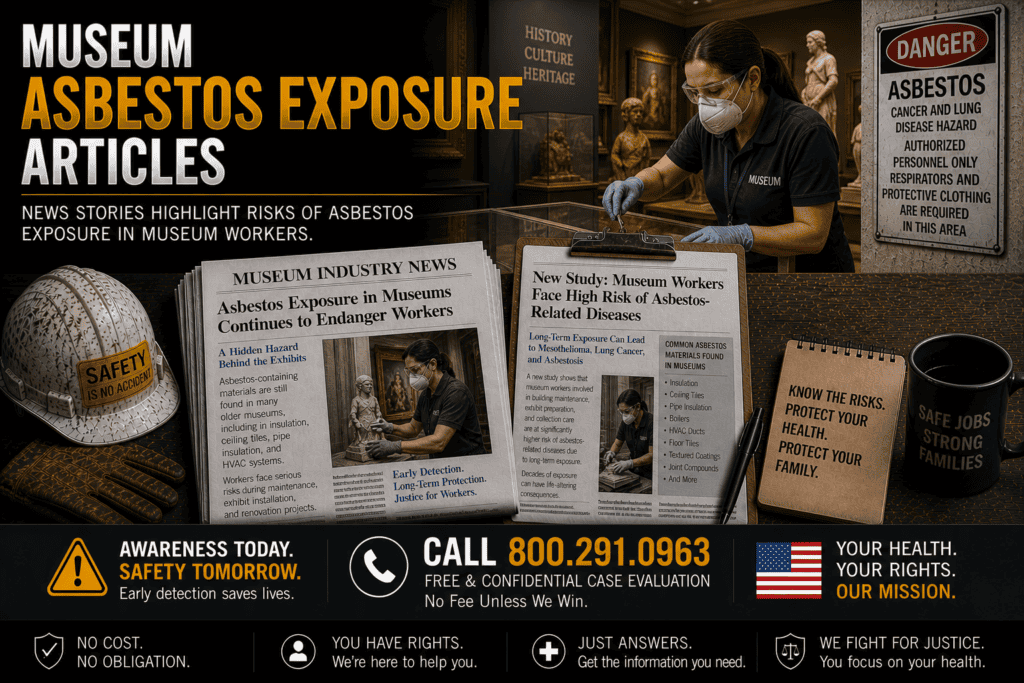
🏛️Museum Asbestos Exposure Articles
Museums across the United States—especially those housed in historic or older buildings—were significant sources of asbestos exposure throughout much of the 20th century. Many museums were constructed or renovated before asbestos regulations were introduced, relying heavily on asbestos for fireproofing, insulation, soundproofing, and durability. Asbestos-containing materials were commonly found in walls, ceilings, flooring, pipe insulation, boilers, HVAC systems, and exhibit construction materials.
Museum employees, maintenance staff, curators, conservators, contractors, and renovation crews were exposed to asbestos when materials were disturbed during routine maintenance, exhibit installation, climate-control upgrades, and building renovations. Dust from asbestos-containing materials often circulated throughout galleries, storage areas, and mechanical rooms. Decades later, many former museum workers have been diagnosed with mesothelioma, lung cancer, and asbestosis linked directly to occupational asbestos exposure.
This hub organizes Museum Asbestos Exposure Articles into focused categories to help workers and families understand where exposure occurred, who was at risk, and what legal options may be available.
🏛️ Museum Buildings & Facilities Asbestos Exposure
Museums relied on asbestos throughout structural and mechanical systems—particularly in older or historic buildings.
Museum Buildings Asbestos Exposure
Older museum buildings used asbestos in insulation, drywall, ceiling tiles, flooring, and fireproofing materials.
Museum Boiler Rooms & Mechanical Systems Asbestos Exposure
Boilers, steam pipes, pumps, and mechanical rooms contained asbestos insulation disturbed during servicing.
Museum HVAC & Climate Control Systems Asbestos Exposure
Ductwork, air handlers, and insulation spread asbestos fibers throughout galleries, archives, and storage areas.
🧱 Museum Materials, Exhibits & Maintenance Tasks Asbestos Exposure
Asbestos exposure often occurred during exhibit work and building upkeep.
Museum Renovation & Restoration Asbestos Exposure
Restoration projects disturbed hidden asbestos behind walls, ceilings, and historic finishes.
Exhibit Construction & Display Materials Asbestos Exposure
Exhibit panels, fire-resistant boards, adhesives, and fillers sometimes contained asbestos.
Museum Flooring, Ceiling Tiles & Adhesives Asbestos Exposure
Replacing tiles, carpets, and ceilings released asbestos fibers during removal and installation.
Museum Electrical Systems & Fireproofing Asbestos Exposure
Electrical panels, wiring insulation, and fireproofing materials contained asbestos components.
Exhibit Construction & Display Materials Asbestos Exposure
Exhibit panels, fire-resistant boards, adhesives, and fillers sometimes contained asbestos.
👷 Museum Workers & Occupations Asbestos Exposure
Many museum-related job roles involved repeated asbestos exposure over long periods.
Museum Maintenance & Facilities Staff Asbestos Exposure
Maintenance workers handled asbestos materials during repairs, upgrades, and daily system upkeep.
Museum Curators, Conservators & Collections Staff Asbestos Exposure
Curators and conservators were exposed while working in storage areas and during exhibit preparation.
Museum Contractors & Renovation Crews Asbestos Exposure
Outside contractors disturbed asbestos during remodeling, expansion, and modernization projects.
🏗️ Museum Renovation, Demolition & Environmental Exposure
Asbestos exposure increased during large-scale changes to museum facilities.
Museum Renovation & Expansion Asbestos Exposure
Building expansions disturbed asbestos in walls, ceilings, ductwork, and mechanical systems.
Museum Demolition & Closure Asbestos Exposure
Demolition or closure of older museums released asbestos dust into surrounding areas.
⚖️ Museum Asbestos Exposure Lawsuits
Museum workers and families have pursued legal claims for asbestos-related diseases.
Lawsuits filed by museum employees diagnosed with mesothelioma due to occupational asbestos exposure.
Compensation through asbestos trust funds established by bankrupt asbestos product manufacturers.
Museum Asbestos Exposure Wrongful Death Lawsuit
Legal claims filed by families who lost loved ones to asbestos-related illnesses.
⚠️ Why Museum Asbestos Exposure Was So Dangerous
Museums combined multiple high-risk asbestos exposure factors:
-
Aging asbestos materials in historic buildings
-
Frequent renovations and exhibit changes
-
Enclosed galleries and storage spaces
-
Long-term exposure for staff over many years
Because asbestos-related diseases have long latency periods, many diagnoses occur 20–50 years after exposure.
❓ Museum Asbestos Exposure FAQs
Did museums really contain asbestos?
Yes. Many museums built or renovated before 1980 used asbestos in insulation, flooring, ceilings, fireproofing, and mechanical systems.
Which museum workers were most at risk?
Maintenance staff, facilities managers, curators, conservators, contractors, and renovation crews.
Can visitors be exposed to asbestos in museums?
Yes. Disturbed asbestos can circulate through HVAC systems into public galleries.
Can claims still be filed decades later?
Yes. Asbestos claims typically begin after diagnosis, not at the time of exposure.
Free Case Evaluation – Museum Asbestos Exposure
If you or a loved one worked in a museum and later developed mesothelioma or another asbestos-related disease, legal compensation may still be available.
✔️ Free, confidential case evaluation
✔️ No upfront legal fees
✔️ Nationwide asbestos law support
📞 Call 800-291-0963 today to learn your legal options.