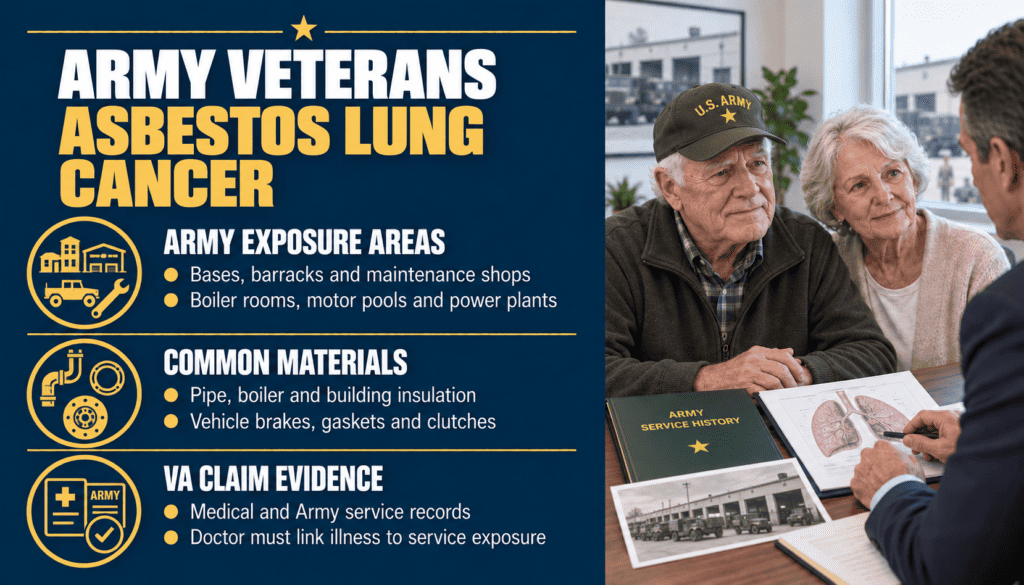
Army Veterans and Asbestos Lung Cancer
Exposure locations, high-risk duties, diagnosis, VA benefits, and compensation evidence
Army veterans may have encountered asbestos in barracks, motor pools, maintenance shops, boiler rooms, power plants, hospitals, administrative buildings, vehicles, and construction materials. Disturbing older insulation, gaskets, brakes, flooring, roofing, cement products, or fireproof materials could release fibers into the air.
Lung cancer may develop decades after military exposure. Veterans should tell their cancer team about Army occupations, installations, maintenance tasks, renovations, and later civilian work. A smoking history does not erase the medical importance of documented asbestos exposure.
🪖 Army Veterans and Asbestos-Related Lung Cancer
Asbestos was historically valued for heat resistance, durability, insulation, and fire protection. On Army installations, it could be present in mechanical systems and building materials. It was also used in some vehicle and equipment components. Exposure risk increased when material was cut, drilled, sanded, removed, repaired, damaged, or reduced to dust.
Asbestos-related lung cancer begins in lung or airway tissue. It is different from pleural mesothelioma, which develops in the lining around the lungs, although both diseases can follow asbestos exposure and produce overlapping symptoms.
| Army exposure issue | Why it matters |
|---|---|
| Older installations | Legacy insulation, flooring, roofing, wallboard, and fireproofing could be disturbed during upkeep |
| Vehicle maintenance | Brake, clutch, gasket, and heat-resistant components could release dust during servicing |
| Mechanical systems | Boilers, pipes, pumps, valves, generators, and heating plants used heat-resistant materials |
| Construction and demolition | Renovation, repair, and removal could make embedded fibers airborne |
| Long latency | Disease may appear decades after Army service ends |
🏢 Army Bases, Buildings, and Exposure Locations
Possible exposure depended on the installation, building age, assignment dates, materials present, and work performed. Being stationed at an older post alone does not establish exposure; records connecting a veteran to disturbed materials and specific duties make the history more useful.
| Location | Potential asbestos-containing materials or work |
|---|---|
| Barracks and family housing | Pipe insulation, floor tile, adhesives, wallboard, roofing, siding, and heating systems |
| Motor pools and maintenance shops | Brakes, clutches, gaskets, vehicle parts, insulated piping, and shop cleanup |
| Boiler and mechanical rooms | Boiler insulation, refractory products, pipe covering, valves, pumps, and packing |
| Power and utility plants | Generators, turbines, electrical components, steam systems, and thermal insulation |
| Hospitals and administrative buildings | Heating systems, ceiling materials, flooring, fire doors, and renovation debris |
| Warehouses and depots | Stored parts, equipment repair, insulated systems, roofing, and building maintenance |
| Training ranges and field facilities | Temporary structures, vehicle repair areas, generators, and demolition activities |
Exposure could occur overseas as well as at installations in the United States. A complete history should list every post, deployment, training site, temporary duty location, and building where dusty maintenance or renovation occurred.
🛠️ Army Occupations and Duties With Potential Exposure
Army jobs involving construction, vehicle repair, utilities, engineering, and mechanical maintenance often created more opportunities for direct exposure. Soldiers working nearby could also experience bystander exposure.
| Occupation or duty group | Potential exposure tasks |
|---|---|
| Vehicle mechanics | Replacing brakes, clutches, gaskets, and engine components; cleaning dusty parts |
| Combat engineers | Construction, demolition, repair, debris removal, and work in damaged buildings |
| Plumbers and pipefitters | Cutting pipe covering and repairing steam lines, valves, pumps, and boilers |
| Power-generation specialists | Maintaining generators, turbines, electrical gear, insulation, and heat-resistant parts |
| HVAC and utility personnel | Servicing heating plants, ducts, furnaces, boilers, and insulated systems |
| Construction trades | Handling flooring, roofing, siding, cement, wallboard, fireproofing, and insulation |
| Ordnance and equipment repair | Maintaining friction components, machinery, vehicles, and heat-protected equipment |
| Building maintenance and custodial staff | Renovation, damaged-material cleanup, floor work, and dust removal |
This list is not complete. Job title alone does not determine exposure. Actual tasks, frequency, ventilation, protective equipment, nearby work, and the materials handled are more important.
🚛 Army Vehicles, Equipment, and Field Operations
Some historical military vehicles and heavy equipment used asbestos-containing friction and sealing products. Mechanics could inhale dust while removing worn brake linings, blowing out assemblies, sanding replacement parts, scraping gaskets, or changing clutches. Drivers and operators might be exposed while assisting with repairs or remaining near maintenance work.
Activities that could release fibers
- Removing or installing drum brakes, brake linings, clutches, and gaskets
- Grinding, sanding, wire-brushing, or scraping friction and sealing materials
- Using compressed air or dry sweeping to clean components and shop floors
- Repairing generators, heaters, boilers, pumps, and insulated piping
- Renovating or demolishing barracks, shops, hospitals, and utility buildings
- Working beside civilian contractors or other soldiers disturbing old materials
- Handling dusty work clothing, replacement parts, or demolition debris
Useful records may include MOS codes, duty assignments, unit histories, equipment lists, maintenance manuals, work orders, installation records, deployment histories, and statements from soldiers who observed the same conditions.
⏳ Asbestos Risk, Latency, and Smoking
Asbestos exposure and cigarette smoking independently cause lung cancer. Together they can produce a risk substantially greater than either exposure alone. Army veterans who never smoked can still develop asbestos-related lung cancer, while smoking does not make credible military exposure medically irrelevant.
The interval between first asbestos exposure and lung cancer diagnosis is often measured in decades. Clinicians and claims reviewers may consider exposure intensity, frequency, duration, dust conditions, ventilation, respiratory protection, smoking, and exposure before and after service.
| Factor | What to document |
|---|---|
| Army service | Units, installations, dates, MOS codes, buildings, equipment, deployments, and tasks |
| Work conditions | Visible dust, enclosed spaces, cleanup methods, ventilation, and respiratory protection |
| Civilian employment | Employers, trades, job sites, products, dates, and protective practices |
| Smoking | Start and quit dates, average use, and estimated pack-years |
| Other hazards | Radon, silica, diesel exhaust, welding fumes, and additional carcinogens |
🔬 Diagnosis and Treatment for Army Veterans
Symptoms can include a persistent or changing cough, coughing up blood, shortness of breath, chest pain, hoarseness, repeated pneumonia, fatigue, appetite loss, and unexplained weight loss. Early lung cancer may cause no symptoms.
Imaging may reveal a suspicious area, but biopsy and pathology are generally needed to confirm cancer and distinguish primary lung cancer from mesothelioma. Staging evaluates disease extent. Molecular biomarker and PD-L1 testing may guide therapy for appropriate patients.
Treatment may include surgery, radiation therapy, chemotherapy, immunotherapy, targeted therapy, supportive care, or a clinical trial. Choices depend on the type and stage of cancer, biomarkers, lung function, overall health, and the patient’s goals—not the branch in which the veteran served.
Learn more about diagnosing asbestos-related lung cancer and asbestos lung cancer treatment.
🇺🇸 VA Disability Benefits and Health Care
VA disability compensation may be available when evidence supports a current disability, an in-service exposure or event, and a connection between the two. Army service or a particular MOS does not automatically make lung cancer service-connected; VA evaluates the evidence in each claim.
| Claim element | Possible supporting evidence |
|---|---|
| Current diagnosis | Pathology, biopsy, imaging, staging, oncology, and treatment records |
| In-service exposure | Personnel file, MOS, units, installations, buildings, vehicles, work orders, and buddy statements |
| Medical nexus | A qualified opinion addressing Army and civilian exposure, smoking, latency, and diagnosis |
| Severity and residuals | Treatment, symptoms, functional limitations, complications, and continuing impairment |
Veterans can apply through VA and seek help from an accredited Veterans Service Organization representative, accredited claims agent, or VA-accredited attorney. Accreditation should be verified through VA. Eligible veterans may also receive VA health care under current enrollment and eligibility rules.
⚖️ Asbestos Claims and an Army Evidence Checklist
VA compensation, asbestos bankruptcy trust claims, and civil lawsuits are separate systems. Veterans generally pursue responsible manufacturers, suppliers, contractors, premises owners, or bankruptcy trusts rather than suing the federal government solely because exposure happened during military service. Deadlines and proof requirements vary.
Army exposure records
- DD Form 214 and complete Official Military Personnel File
- MOS codes, unit assignments, training, qualifications, and performance records
- Installation, deployment, and temporary-duty names with approximate dates
- Buildings, motor pools, vehicles, equipment, maintenance tasks, and cleanup practices
- Unit histories, work orders, technical manuals, and facility records when available
- Buddy or supervisor statements describing the same work and conditions
Medical and civilian records
- Pathology, imaging, oncology, pulmonary, staging, and treatment records
- Pre-service and post-service employment, union, and Social Security earnings records
- Smoking history and other occupational or environmental lung hazards
- Bills, insurance statements, wage loss, travel, and caregiving costs
Do not postpone cancer care while gathering records. Legal filing deadlines may start at diagnosis and differ by state and claim type. Review the main veterans and asbestos lung cancer guide and the lawsuits and compensation section.
❓ Frequently Asked Questions
Where could Army veterans have encountered asbestos?
Possible locations include barracks, motor pools, maintenance shops, boiler rooms, power plants, hospitals, warehouses, depots, and older buildings undergoing renovation or demolition.
Which Army jobs had greater asbestos-exposure potential?
Vehicle mechanics, combat engineers, plumbers, pipefitters, power-generation specialists, HVAC personnel, construction trades, and building-maintenance workers often had more opportunities for exposure. Actual duties and conditions matter more than job title alone.
Could Army vehicle maintenance release asbestos fibers?
Yes. Some historical brakes, clutches, gaskets, and heat-resistant components contained asbestos. Grinding, sanding, scraping, compressed-air cleaning, and dry sweeping could release or redistribute dust.
Is Army asbestos lung cancer automatically service-connected?
No. VA generally requires a current diagnosis, credible evidence of an in-service exposure or event, and a medical connection between service and the disease.
Can an Army veteran who smoked still file a claim?
Potentially, yes. Smoking does not automatically eliminate VA, trust, or civil claim eligibility, although it may be evaluated with military, civilian, and environmental exposures.
What if I cannot remember the asbestos product brand?
Begin with units, posts, buildings, MOS duties, vehicles, equipment, dates, and coworkers. Personnel records, manuals, work orders, installation documents, and witness statements may help identify exposure circumstances.
Can I seek VA benefits and file an asbestos trust claim?
Potentially. They are separate systems, though disclosure and coordination rules may apply. Veterans should obtain individualized guidance from accredited and qualified professionals.
How long after Army exposure can lung cancer appear?
Asbestos-related lung cancer can appear decades after exposure, so military duties performed many years earlier may remain medically relevant.
Authoritative Sources
- U.S. Department of Veterans Affairs: VA Disability Compensation
- U.S. Department of Veterans Affairs: VA Health Care
- U.S. Department of Veterans Affairs: Get Help From an Accredited Representative
- National Cancer Institute: Asbestos Exposure and Cancer Risk
- National Cancer Institute: Lung Cancer
- Agency for Toxic Substances and Disease Registry: Asbestos and Your Health
- U.S. Army Center of Military History
Related information: Asbestos lung cancer causes and risk | Prognosis and survival | Asbestos lung cancer lawsuits
This page provides general information and does not replace individualized medical, VA-accredited benefits, or legal advice. VA eligibility, benefits, and claim rules can change.